Inheritance War Explodes as Jimi Wanjigi and His Mother Close Ranks Against Sonny Mbui Over Family Wealth
N
Nyakundi Report
Newsroom · 5h
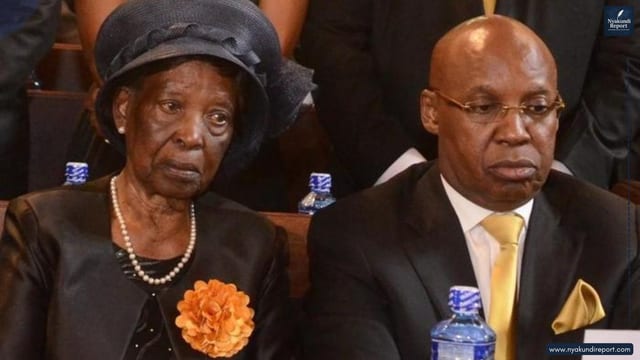
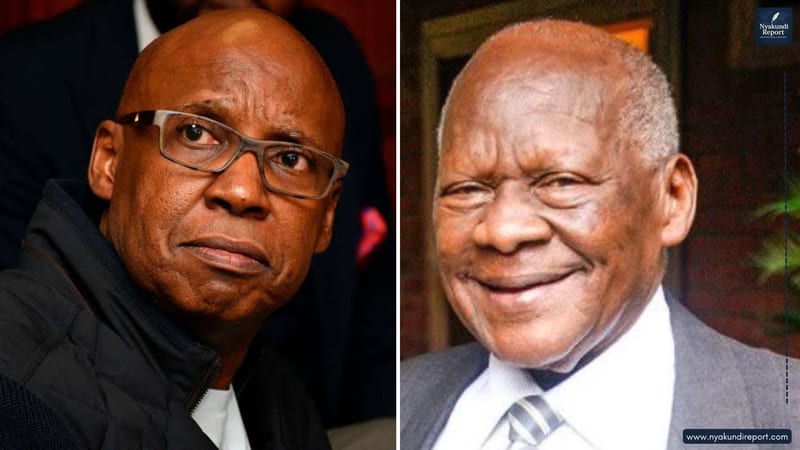
A bitter succession dispute has erupted within the family of former Cabinet minister Maina Wanjigi, with businessman Jimi Wanjigi and his mother, Mary Wambui, seeking to remove Sonny Mbui Wanjigi as an executor of their late patriarch’s will.
The court battle exposes deep divisions over the administration of a wealthy family’s estate, the ownership of corporate interests, and the disposal of properties allegedly linked to the inheritance.
At the centre of the dispute is a will signed on August 31, 2000, which named the widow and two sons as executors and trustees, placing them in positions of shared responsibility over the estate.
The court battle places the administration of Maina Wanjigi’s estate under scrutiny, with disputed property sales, corporate changes and inheritance arrangements awaiting resolution.
Inside the Wanjigi Family’s Fight Over Maina Wanjigi’s Estate 
The legal dispute raises fundamental questions about who should control the administration of Maina Wanjigi’s estate, how its assets have been managed, and whether the beneficiaries have fulfilled their obligations under the late minister’s will.
Jimi Wanjigi and Mary Wambui want the court to remove Sonny Mbui from his position as an executor, a move that would alter the arrangement established by their father’s testamentary instructions.
The will appointed Wambui and her two sons to serve as executors and trustees, entrusting them with responsibilities over the estate’s administration and distribution. Such responsibilities require the parties involved to act within the law and the terms of the will while safeguarding the interests of the beneficiaries.
However, the family’s disagreement suggests that the administration process has become contentious, with competing accounts emerging over the assets placed under the family trust and decisions affecting the estate.
Mbui has questioned the distribution of the inheritance, claiming that the family trust received only modest assets while most of the estate went elsewhere. His allegations put the composition of the inheritance and the handling of the deceased’s business interests at the heart of the proceedings.
The available account does not establish the total value of Maina Wanjigi’s estate or provide a comprehensive inventory of its assets. The precise financial implications of the dispute therefore remain unclear.
Nevertheless, the disagreement over the trust’s assets illustrates how succession disputes can extend beyond the distribution of property to questions of corporate control, transparency, and the interpretation of a deceased person’s wishes.
Seven Companies Drawn Into the Succession Dispute 
The disagreement extends beyond the family’s immediate inheritance arrangements to seven companies associated with the case, including Chania Merchants, East African Office Equipment (1976), and Kitamaiyu.
Mbui alleges that company records and directorships were changed without his consent. He has also raised objections over the disposal of four properties, arguing that the transactions form part of the wider dispute over the administration of the estate.
These allegations introduce a corporate governance dimension to the succession battle. Changes to company records, ownership interests, and directorships can affect how businesses are controlled and how their assets are managed, making the accuracy of those records particularly important when family companies intersect with inheritance proceedings.
However, the allegations remain contested. The available information does not establish which specific records were changed, who authorized the changes, or whether a court has determined that any transaction was unlawful.
Wambui has rejected Mbui’s account of the four properties, maintaining that they were sold while her husband was still alive. Her position challenges the suggestion that the disputed disposals were necessarily decisions made during the administration of his estate.
She has also argued that Mbui participated in administering the estate before raising objections. That assertion introduces another point of contention: whether his earlier involvement is relevant to his present objections and what records exist to establish the circumstances surrounding the disputed decisions.
Resolving these questions will require evidence concerning the properties, company records, transactions, and the responsibilities assigned to each executor.
Jimi Wanjigi has joined his mother, Mary Wambui, in seeking to oust his brother Sonny Mbui as executor, deepening divisions over their father’s estate.
Justice Hilary Chemitei has allowed the family to proceed with administering and distributing the estate, providing a path for the succession process to continue despite the disagreement.
The decision is significant because the dispute over Mbui’s role has not prevented the family from moving forward with the administration and distribution process.
Wambui has indicated that continued delays could prompt her to ask the deputy registrar to sign transfer documents on Mbui’s behalf. Such a move would be aimed at advancing the transfer process despite the disagreement among the executors.
The proposal highlights the practical difficulties that can arise when people entrusted with jointly administering an estate disagree over the steps required to complete the process.
However, the available account does not establish whether Wambui has made a formal application for the deputy registrar to sign the documents or whether such an application has been granted. The legal basis and scope of any proposed intervention would depend on the relevant court orders and applicable procedures.
The dispute has also reportedly reached the police, although the available report provides no details about the circumstances, the nature of any complaint, or whether an investigation has resulted in formal action. The police aspect should therefore be distinguished from the civil succession proceedings, and no wrongdoing can be inferred from the report alone.
Neither the estate’s total value nor a hearing date for the dispute was disclosed in the available account.
The Wanjigi family dispute reflects the challenges that can emerge when inheritance arrangements involve multiple executors, private companies, and valuable property interests.
The central issues are whether the estate has been administered in accordance with the will, whether the disputed corporate changes and property transactions were properly authorized, and whether the beneficiaries have received the assets to which they are entitled.
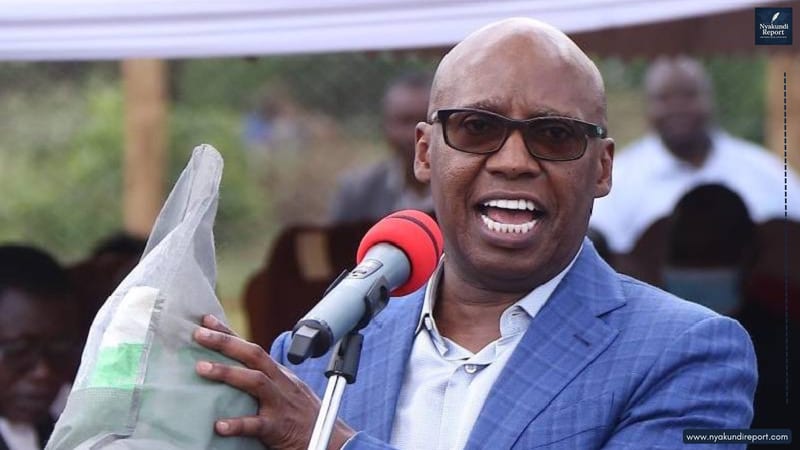
Jimi Wanjigi, a businessman who wants to contest the presidency in Kenya’s 2027 General Election, is now involved in a legal dispute concerning the administration of his father’s estate alongside his mother.
The case adds to a broader pattern of succession disputes involving wealthy Kenyan families, where disagreements over property, business interests, and the interpretation of wills can persist long after a patriarch or matriarch dies.
A $17.6 million transfer from a Congo-linked account to a Texas defence firm raises questions over its origin, purpose and political connections.
N
Nyakundi Report
Newsroom · 8h
A $17.6 million transfer from a bank account linked to the Democratic Republic of Congo government to a Texas-based security and defence company has triggered a White House investigation involving two associates of US President Donald Trump.
According to The New York Times, the payment was made in May 2025 to TX-AT, a company operating in the security and defence sector. The transaction has become central to a dispute involving Richard Grenell, a former president of the Kennedy Center, and Alina Habba Mildon, a former personal attorney to Trump.
At the centre of the investigation is a basic but potentially explosive question. Who was behind the $17.6 million transfer, what was it intended to purchase, and why was money linked to a Congolese government account sent to a private American defence company?
Trump and Tshisekedi face heightened scrutiny as investigators trace a $17.6 million payment linking Kinshasa, Washington and private defence interests.
$17.6 Million Transfer Raises Questions Over Congolese Government Funds 
The investigation has drawn scrutiny because the money was initially presented as originating from Turhan Mildon, a Turkish businessman with extensive connections in DR Congo.
Habba Mildon has accused Grenell of involvement in a financial arrangement under which $5.6 million was allegedly supposed to reach the Kennedy Center but was never paid to the institution. Grenell has rejected the allegations and denied receiving money from Turhan Mildon or requesting that funds intended for the Kennedy Center be redirected.
The emergence of the $17.6 million transaction has complicated the dispute because The New York Times reported that the payment originated from a bank account affiliated with the Congolese government.
Investigation Must Establish Where the Money Came From 
The origin of the funds is now one of the most important questions facing investigators.
A payment from an account affiliated with a foreign government does not automatically establish that the money came directly from the state's budget. It also does not, by itself, prove that the transaction was unlawful or connected to a government contract.
However, the government connection gives the payment greater significance, particularly because the recipient operates in the sensitive security and defence industry.
Investigators are expected to determine the ownership and control of the account, identify the source of the funds, and establish the contractual or commercial reason for the transfer.
The investigation will also need to establish whether the payment was connected to any Congolese government procurement, private business arrangement, or other financial commitment.
Turhan Mildon's DR Congo Role Adds Another Layer 
Turhan Mildon's relationship with Kinshasa has placed the transaction under additional scrutiny.
Mildon has acknowledged serving as an adviser to Congolese President Félix Tshisekedi and holding a Congolese diplomatic passport. He also heads Milvest, a company that has obtained public contracts in DR Congo, including work on the Kinshasa Financial Center.
Those connections do not prove that the $17.6 million originated from the Congolese state or that it was connected to Milvest's contracts.
They do, however, make the money trail particularly important.
Investigators will have to determine whether the account was being used for a government transaction, a private commercial arrangement, or a payment involving entities connected to Mildon's business interests.
The distinction matters because public funds, diplomatic relationships, and private defence companies raise very different legal and accountability questions.
The recipient of the money, TX-AT, specialises in security and defence services, adding another unanswered question to the investigation.
Grenell has acknowledged providing consulting services to the company in 2024 but said he had no connection to it when the May 2025 transfer occurred.
He has also denied involvement in the transaction.
The precise commercial arrangement behind the $17.6 million payment remains unclear. Neither the company nor Congolese officials had responded to The New York Times requests for comment at the time of its report.
That leaves investigators with a potentially significant financial trail but an incomplete explanation of the transaction.
The White House investigation therefore faces more than a dispute between Trump associates. It must establish whether the payment was a legitimate commercial transaction, determine whether the funds were public or private, and identify the parties who authorized and benefited from the transfer.
Until those questions are answered, the $17.6 million payment remains an unexplained financial link between Kinshasa, a US defense company, and individuals operating within Trump's political orbit.
The most important issue is not simply who received the money. It is who controlled it, why it moved, and what was expected in return.
Dan Mackenzie says he was forced to fast for a week at 12 and beaten for resisting church rules as his father faces sentencing for the deaths of 190 children and one adult.
N
Nyakundi Report
Newsroom · 14h
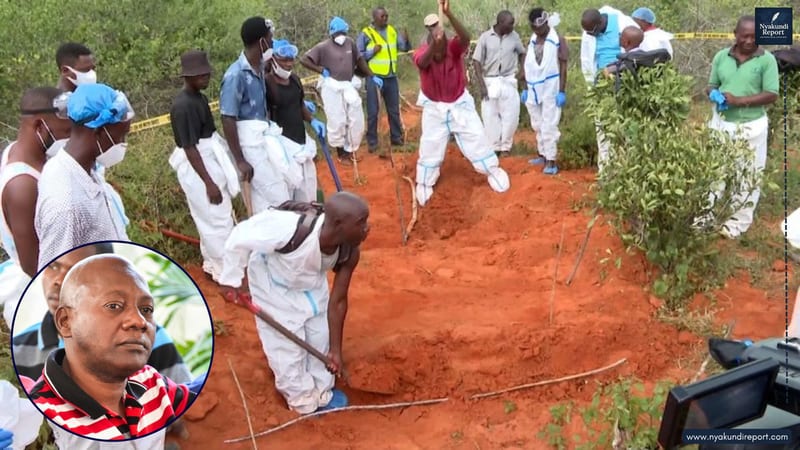
The Shakahola tragedy has exposed not only the devastating consequences of Paul Mackenzie’s religious teachings but also disturbing accounts of what life was like inside the movement for children who grew up under its influence.
Dan Mackenzie, the 24-year-old son of the self-proclaimed preacher, has described a childhood marked by forced fasting, physical abuse, and strict religious control, offering a deeply personal account of the environment that preceded one of Kenya’s worst mass-death cases.
Dan spoke after the High Court on Monday, October 19, convicted his father, and 28 co-accused of 191 counts of murder linked to the deaths of 190 children and one adult.
The judgment by Justice Diana Kavedza-Mochache at the Mombasa Law Courts brought a major legal milestone in the Shakahola case, but Dan’s testimony also raises questions about the treatment of children within Mackenzie’s religious movement.
Dan Mackenzie’s account shows that the Shakahola tragedy was not only about those who died, but also about survivors struggling to rebuild lives shaped by religious control.
According to Dan, religious practices imposed on children went beyond ordinary discipline and became a source of physical suffering.
He recalled being forced to fast for an entire week when he was only 12 years old.
“I was forced when I was young, when I was 12, to fast for a whole week,” Dan said while recounting his experiences to the media.
He also described an incident in which he was allegedly beaten for nearly three hours after resisting instructions to attend a church service.
Dan said he was stripped naked during the incident and beaten by church members.
His account did not establish that his father personally participated in the alleged beating. That distinction is important, particularly following the court’s murder convictions against Mackenzie and his co-accused.
Nevertheless, Dan’s allegations provide a disturbing glimpse into the experiences of children raised within the movement and the level of control he says church members exercised over them.
Dan said his relationship with his father eventually deteriorated, with Mackenzie telling him that he was on his own.
He subsequently left school in Class Seven and began working as a motorcycle taxi rider in Malindi.
His account paints a picture of a young man forced to navigate adulthood after breaking away from the religious environment in which he had been raised.
The rupture between father and son became even more pronounced after Dan rejected the movement’s teachings. He said he later spoke to Mackenzie, who accused him of betrayal.
Dan said he did not understand why his father regarded him as a betrayer and had nothing further to say to him.
The relationship illustrates the personal cost of ideological control within families, where disagreement with a religious leader can become a rejection of the family itself.
Dan also revealed that five of his younger siblings, including three sisters and two brothers, had been rescued from the movement and were staying at a rescue centre.
He expressed hope that they would eventually rebuild their lives.
The revelation is significant because it demonstrates that the consequences of the Shakahola tragedy extend beyond the victims whose deaths formed the basis of the criminal case.
Children who survived the movement may still face the psychological and social consequences of growing up under an environment that Dan describes as abusive and deeply troubling.
For Dan, however, the High Court ruling provided a measure of relief.
He said he believed justice had been served for the victims and their families following the conviction of his father and the other accused persons.
The case now moves to the sentencing stage. Mackenzie and his 28 co-accused are scheduled to appear before the court on November 6, 2026.
The convictions may have answered the question of criminal responsibility for the deaths before the court, but Dan’s account highlights another unresolved dimension of Shakahola: what happened to the children who lived inside the movement, survived its teachings, and emerged carrying memories of fear, punishment, and broken families.
Betting platform Pakakumi, whose operations, ownership and promotional activities are already under investigation by the Gambling Regulatory Authority (GRA) and the Kenya Betting Control and Licensing Board (BCLB), has now embarked on a coordinated campaign of sponsored coverage across local tabloids dressed up as editorial content.
This follows an earlier exposé by this news outlet, which laid bare a series of grave issues surrounding the platform, among them questions over its ownership, with sources privy to the matter naming Morris Musyoka as the man who controls the betting operation from behind the scenes.
Pakakumi presents itself to the public as Kenya's leading online casino and multiplier crash game platform, operated by Reys and Meys Limited and described on its own promotional materials as fully licensed by the Betting Control and Licensing Board (BCLB) under licence numbers BK 0001230 and PG 0001229, credentials that appear across its marketing and which it continues to display across its marketing channels.
The platform runs a portfolio built around fast-paced multiplayer crash games, among them the Pakakumi Crash Game and Pakakumi Aviator, in which a multiplier climbs from 1x towards a ceiling of 3000x and players must cash out before the round busts.
It operates directly through mobile browsers without any application download, integrating with M-Pesa for instant deposits and withdrawals.
Its incentives to players are structured to keep money flowing into the platform, offering daily bonuses on first deposits, stake-back offers that return a portion of losses, weekly competitions with prize pools that range from cash sums to physical goods, and an affiliate programme paying commissions of up to 30% for every new punter brought in through a referral link.
The most conspicuous of these inducements is the weekly cash race, whose rewards have extended beyond money to include high-value consumer goods such as a motorbike, a prize that carries obvious appeal in a market where the platform's core users are drawn from ordinary Kenyan households.
Despite the enormous pipeline of cash running through its accounts, with deposits reported to exceed KSh 350 million every month, the platform finds itself struggling to settle its obligations to staff, keep its licence in good standing, and resist the temptation to take its promotions into places where children are gathered.
Its roadshows are the most visible of those promotions, taken into open-air settings and community gatherings where minors are routinely present, and on some of those occasions, merchandise such as reflective items handed out to children whom the betting firm has no business courting.
That conduct has left other players in Kenya's gaming industry stunned, because the rules governing how betting operators may promote themselves are well known within the trade, and the prohibition on roadshows is among the clearest of them.
"Betting roadshows are not even allowed in this country under the 2026 advertising regulations. If this were any other operator, we would have been shut down and prosecuted. Nobody understands why this one is being allowed to run," said an insider within the industry, who spoke to this publication on condition of anonymity.
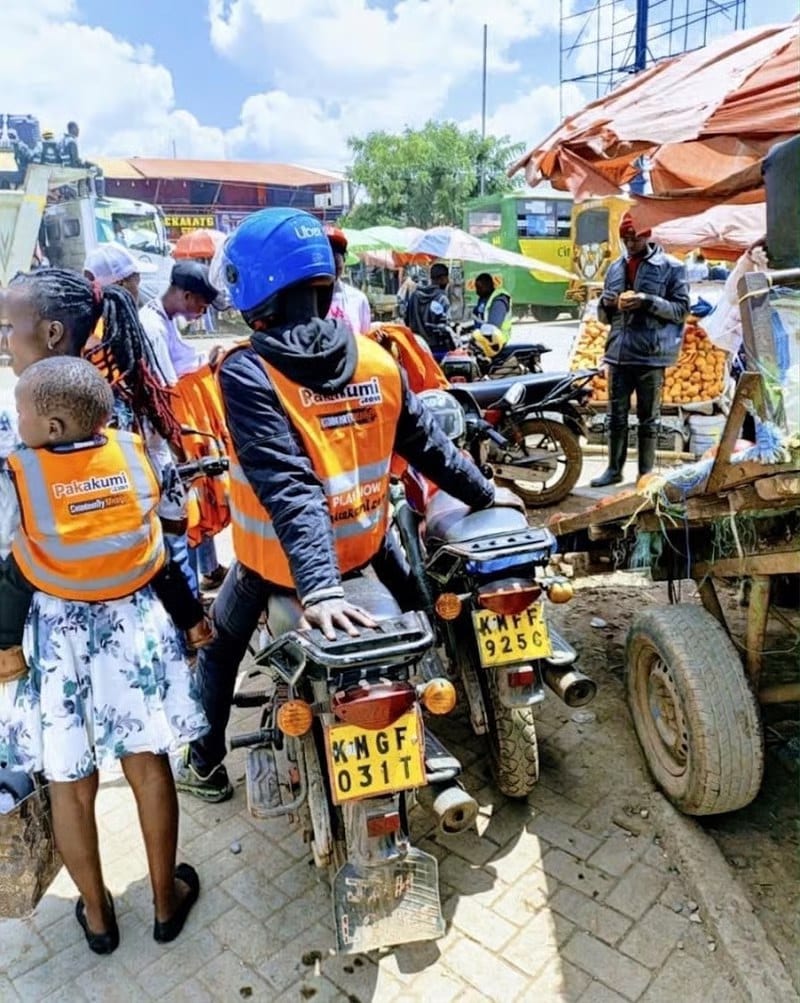
A child carried on her mother's back with a branded reflector vest handed out at a Pakakumi roadshow.
Sources privy to the matter say the platform is battling persistent licensing difficulties, and that its operators have resorted to questionable methods to remain in the market while its application under the new regulatory framework hangs in the balance.
Insiders have revealed that Morris Musyoka is furious over the prospect of losing access to the business and the revenue it generates, and that the intensity of his reaction has less to do with any concern for the punters who deposit that money than with the lifestyle it funds and the standing it confers.
There are also reports concerning the treatment of staff, whose terms of engagement are described as punishing, with targets revised without consultation and dues withheld once they are shown the door.
We are reliably informed that this is a pattern rather than an isolated case, since the same complaints often surface across successive batches of employees who are hired, pushed to work hard and then unfairly dismissed without payments owed to them.
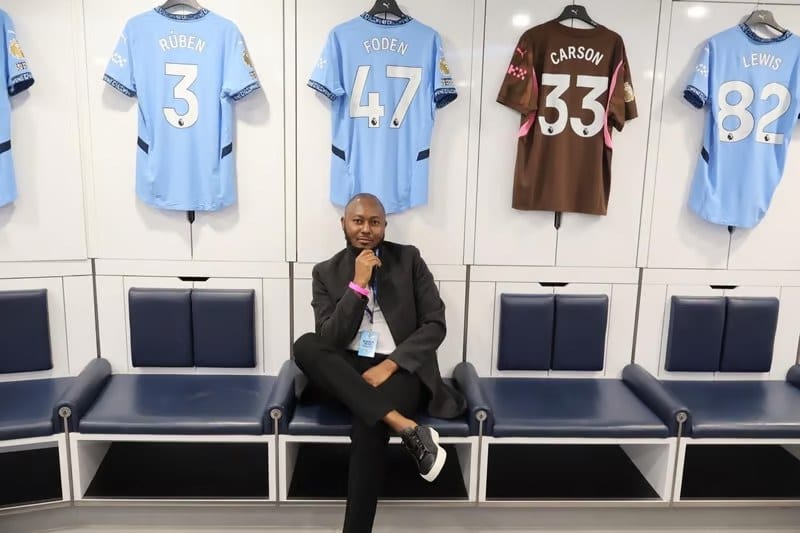
Pakakumi owner Morris Musyoka pictured in the Manchester City dressing room during a trip to the UK, a glimpse of the lifestyle he is fighting to protect.
As the investigation into the platform's licensing position and its conduct continues, the attention of Kenyans and stakeholders in the wider betting industry now turns to the GRA and BCLB.
Questions that remain unanswered include how a platform whose renewal has been blocked continues to take deposits from the public, why the complaints raised by former staff have not been addressed, and what action the regulator intends to take against an operator that has been accused of breaching the rules governing betting promotions in this market.
Other players in the industry continue to watch with disbelief, because the rules are clear, the regulator holds the power to enforce them, and the platform at the centre of these complaints continues to operate as though none of it applies to it.
We will continue to follow this story closely as it develops and bring our readers updates on every turn it takes.
Are you a current or former Pakakumi employee with information about the company's treatment of its staff?
Do you have inside information about the platform's operations, its dealings with players and promotional activities?
Feel free to reach out to us and share information that could help shed more light on the matter as we seek to establish the full picture of how this platform runs, who controls it, and why it keeps operating outside the law of licensing while toothless regulators turn a blind eye.
To the tabloids that have abandoned the very craft they claim to uphold in favour of paid coverage for Pakakumi, the record speaks for itself.
By dressing promotional material as news, these outlets have blurred the line between journalism and advertising at a time when the betting platform is facing tough questions.
Journalism exists to interrogate power, expose misconduct and inform the public, not to serve as a public relations arm for those willing to pay to disguise commercial propaganda as independent reporting.
These outlets have a duty to inform the public independently, but chose instead to put a price on their pages and mortgage their credibility for a cheque, trading the trust of their readers for the commercial interests of a betting platform whose conduct demands answers.
Readers now know which outlets chose a cheque over their duty to tell the truth, and which were willing to sacrifice their credibility to serve the commercial interests of a betting platform. No amount of paid coverage can disguise that betrayal or restore the public trust they have so readily squandered.
The disgraced former Mandera East Police Station officer, Abdihakim Abdi Saman, is now serving his sentence at Kamiti Maximum Security Prison in Nairobi, where he was transferred following his conviction and sentencing in February 2026.
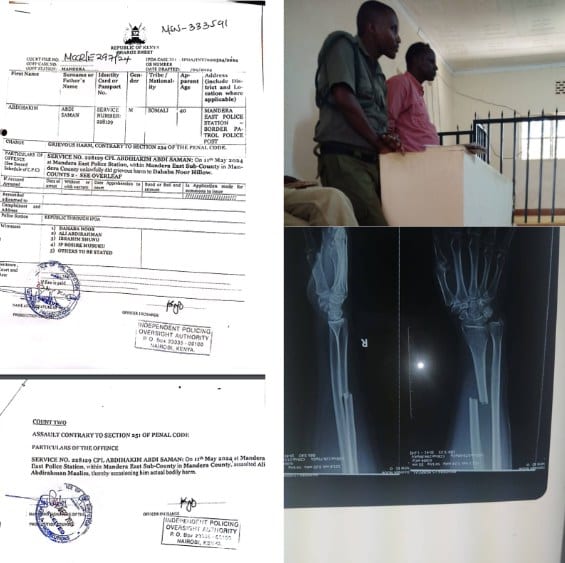
The Court convicted Saman on two criminal counts arising from a violent confrontation on 11th May 2024, finding him guilty of grievous harm contrary to Section 234 of the Penal Code for fracturing the arm of 52-year-old Dahaba Noor Hillow, and assault contrary to Section 251 of the Penal Code for causing bodily injury to Al Abdirahman Maalim during the same incident, in a judgment delivered by Mandera Senior Resident Magistrate Omondi Cornel Ochieng' on 24th February 2026.
Evidence tendered during the trial included medical reports and X-ray films confirming the severe arm fracture sustained by Hillow, alongside testimony detailing the injuries inflicted on Maalim, with the prosecution calling witnesses whose sworn evidence pieced together the sequence of events and placed Saman at the centre of both assaults.
The court was satisfied that the prosecution had proved its case beyond reasonable doubt, dismissing the accused's alibi defence as unsubstantiated, and the conviction followed proceedings in which the defence called six witnesses in a failed attempt to dislodge the prosecution's evidence.
Saman was first arraigned on 27th September 2024, remanded over the weekend, and subsequently released on a bond of Ksh 280,000 with surety on 1st October 2024, with conditions barring him from interfering with witnesses or contacting complainants linked to the case.
The victims later reported receiving threatening messages after his release, a development that intensified public interest in the matter within Mandera County and laid bare the intimidation faced by those who pursue justice against uniformed officers.
The officer had already been placed on interdiction and removed from the duty roster pending the outcome of the criminal proceedings, and the case was investigated by the Independent Policing Oversight Authority (IPOA), which deployed officers to Mandera to conduct an independent probe before forwarding the evidentiary file to the Director of Public Prosecutions (DPP), triggering formal prosecution.
X postEmbedded X post
Third-party content is kept off until you load it.
In sentencing, the court described the convict as a service police officer who exhibited excess force contrary to the National Police Service (NPS) motto that requires service to all, and noted that the first complainant was a 52-year-old lady who suffered grave harm.
The magistrate cited the Judiciary Sentencing Policy Guidelines 2023, observing that targeting elderly persons is a factor warranting a stiffer sentence, and ruled that the gravity of the offence together with the aggravating circumstances called for a custodial sentence to act as a deterrence.
Saman was consequently sentenced to 15 years imprisonment on Count One and 1 year imprisonment on Count Two, with the sentences ordered to run concurrently from 20th February 2026, and granted 14 days right of appeal.
The conviction stands as a rare instance in which an officer attached to a local station has been found criminally liable in open court after a full trial anchored on medical evidence, witness testimony and an IPOA-led investigation.
His appeal is now set for 25th November 2026, and this publication will continue to follow the proceedings and report on the outcome as the case moves through the appellate stage.
The victims, Dahaba Noor Hillow and Al Abdirahman Maalim, now at least have the assurance that the man who attacked them has been removed from the service and imprisoned.
No sentence, however, can undo what was done.
Dahaba Noor Hillow was 52 years old when her arm was fractured outside a police station, and the court itself recognized that targeting an elderly person was an aggravating factor warranting a stiffer sentence.
She will carry the memory of that day for the rest of her life.
This publication will continue to monitor the appeal proceedings and will provide updates on the outcome as the case progresses.
Frustrated shoppers at Lavington Mall, Nairobi were forced to leave through the entrance on Friday after a visibly intoxicated man positioned himself in the path of an exit and refused to move, blocking the passage for patrons attempting to leave the premises.
When police officers on the scene asked him to stop filming them and delete the footage, he responded with insults rather than compliance, according to sources privy to the incident.
The standoff began at around 9 am and dragged on for several hours as officers attempted to talk him down, before they finally moved in and arrested him in the afternoon, to the evident relief of patrons he had inconvenienced.It was only after the footage began circulating on social media that the identity of the individual at the centre of the episode became clear.
That person was not an anonymous troublemaker, but rather Morris Karume, the grandson of a former Cabinet Secretary (CS) who served in the Defence docket during the Kibaki era and a name that carries considerable weight in Kenya's political history.
He was also a prominent businessman before his death.
Morris Karume
The incident unfolded shortly after the family had laid a senior relative to rest in a ceremony attended by business associates and political figures who gathered to honour a man who had carried the family name with quiet dignity through his later years.
Beyond the drama at Lavington Mall, social media users have identified Morris Karume as the proprietor of Terminal 2 Cocktail Bar, a nightlife venue in Diani.
This revelation is reinforced by the circulating footage, which shows a badge bearing the "T2" insignia of the establishment displayed behind his vehicle.
"Behind the car you can see a badge written T2, Terminal 2, that's his club in Diani," one social media user observed.
The confrontation reportedly escalated when Morris responded to the officers’ instructions with insults before positioning himself in the path of an exit, obstructing shoppers attempting to leave the mall.
"He was the one filming the police officers, and when they asked him nicely to stop and delete the video, he turned around and started insulting them before blocking the entrance," noted another social media user.
The conduct has drawn widespread condemnation, with Kenyans questioning the sense of impunity that allows a man in his position to treat law enforcement officers and mall patrons with such contempt.
"We must stop rewarding bad behaviour. What he did was shameful, reckless and utterly beneath the name he carries," reads another comment online.
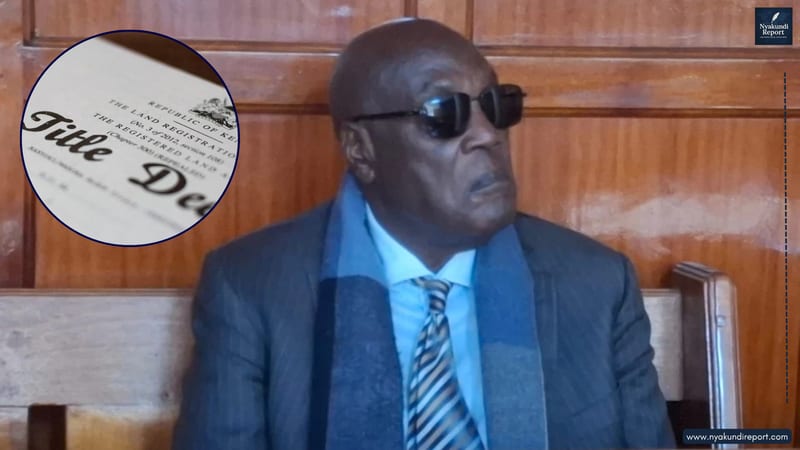
Former Nairobi Provincial Commissioner Davis Nathan Chelogoi has been convicted on five counts in a KSh1.35 billion Lower Kabete land fraud case.
N
Nyakundi Report
Newsroom · 4d
Former Nairobi Provincial Commissioner Davis Nathan Chelogoi has been convicted on five counts in a KSh1.35 billion land fraud case involving a disputed 7.39-hectare property in Lower Kabete.
Chief Magistrate Dolphina Alego delivered the verdict on Friday, October 16, finding Chelogoi guilty after a trial in which the prosecution presented evidence from 19 witnesses challenging his claim to ownership of LR No. 18485.
The case exposed a disputed land trial involving historical ownership records, a 2021 title deed, and allegations that government processes were used to facilitate an unlawful transfer of the valuable property.
Chelogoi's conviction puts a KSh1.35 billion land dispute under intense scrutiny, exposing questions over ownership records, official documentation and the administration of valuable property.
Court Rejects Chelogoi's Claim to KSh1.35 Billion Property 
The prosecution alleged that Chelogoi and former Assistant Deputy Director in the Lands Administration Office Andrew Aseri Kirungu conspired to deprive two businessmen of the property.
According to the court, the complainants established an ownership trail through Liney Company Limited dating back to 2007. Their claim was further supported by verification from the Ministry of Lands and a judgment issued by the Environment and Land Court.
Chelogoi, however, relied on a title deed issued in June 2021 to support his claim to the property.
Chief Magistrate Alego found that the former commissioner failed to demonstrate a lawful basis for acquiring the land or authenticate documents relied upon to support his ownership claim.
The court placed significant weight on the testimony of 19 prosecution witnesses, saying their evidence dismantled Chelogoi's defence and established the fraudulent nature of the ownership claims presented before the court.
“Davis Nathan Chelogoi is found guilty and convicted on counts 1, 2, 3, 4 and 5,” Alego ruled.
The conviction marks a major development in a case centred on how a multimillion-shilling property moved through official land records and ultimately became the subject of competing ownership claims.
Judgment Delayed Amid Legal Challenges and Court Attendance Disputes 
The conviction came nearly a year after the judgment was initially expected, with the court attributing the delay to repeated applications by Chelogoi challenging the proceedings and issues surrounding his attendance in court.
The magistrate also raised concerns over what she described as intimidation and cyberbullying linked to the former commissioner.
Alego said she had received letters from Chelogoi, including two delivered during the week of the judgment and copied to her employer.
The developments added another layer to a case that had already faced repeated procedural challenges.
The High Court had previously suspended proceedings and postponed the judgment scheduled for October 7 pending determination of an application filed by the accused.
High Court Judge Alexander Muteti subsequently dismissed the application seeking to stop the proceedings, clearing the way for the magistrate's court to deliver its determination.
The sequence of applications and court interventions significantly prolonged the case, keeping the disputed Lower Kabete property at the centre of a lengthy legal battle.
Second Official Acquitted as Court Separates Cases 
While Chelogoi was convicted on all five counts facing him, the other official implicated in the case, Andrew Aseri Kirungu, was acquitted during Friday's proceedings.
Kirungu had faced separate allegations, including abuse of office, but the court did not convict him.
The contrasting outcomes underscore the importance of separating individual criminal liability in a case involving multiple officials and allegations surrounding the same property.
For Chelogoi, the conviction now places the former senior administrator at the centre of a criminal finding concerning one of the most valuable disputed land transactions to reach the courts.
The case also raises broader questions about the integrity of land records, the use of government offices in property transactions, and the vulnerability of high-value land to competing claims backed by official documentation.
The court's findings, however, remain specific to the evidence presented in this case: Chelogoi was convicted on five counts, while Kirungu was acquitted.
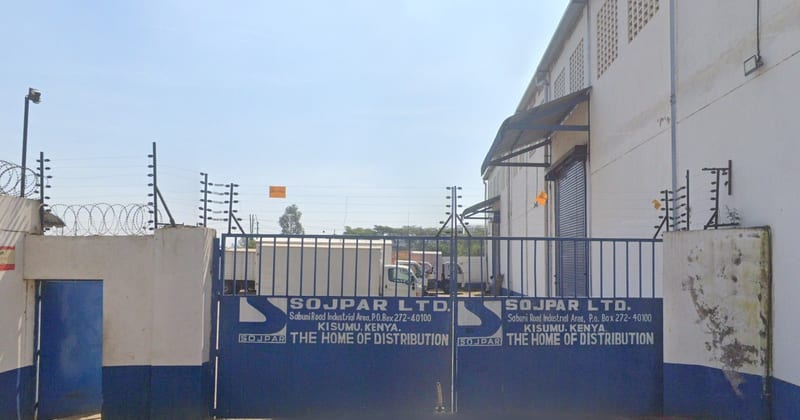
Complaints have emerged against Sojpar Limited, a company based in Kisumu whose treatment of its workforce has drawn the attention of this publication.
Sojpar is a distributor of fast-moving consumer goods, operating from Sabuni Road in the Industrial Area of the lakeside city, and its business in Western Kenya stretches back more than 70 years.
Sojpar Limited, a major player in Western Kenya’s consumer goods distribution industry, with operations spanning 15 counties.
Workers who have passed through its ranks describe an environment in which the ordinary protections an employee might expect have been steadily eroded, and the reports they have provided point not to isolated incidents but to practices that appear to have become routine.
Those accounts centre on the manner in which staff are disciplined, the manner in which their earnings are handled, and the manner in which their performance is judged.
What the documentation now in the possession of this publication discloses is a workplace culture in which demotions are executed without warning letters or hearings, performance targets are enforced against staff who were on approved leave for half of the month under review, salaries and incentives are withheld or diverted on verbal instructions that leave no paper trail, and disciplinary correspondence is published in a general staff WhatsApp group in full view of an employee's entire colleagueship.
The information was provided by a former employee who served the firm for 6 years and has requested anonymity for fear of potential reprisal.
The significance of her disclosures lies in the pattern they reveal: a company that withholds an employee's salary before publicly circulating her disciplinary letter among colleagues is not merely demonstrating managerial incompetence, but wielding its authority without accountability or restraint.
Sojpar Limited is one of the larger general trade distributors in Western Kenya, engaged in the warehousing and wholesale distribution of both food and non-food fast-moving consumer goods, a portfolio that includes beverages, stationery and household items, and its footprint extends across 15 counties where it serves a customer base numbering in the thousands.
It distributes on behalf of approximately 30 principal companies, among them international and regional names such as Beiersdorf, Colgate-Palmolive and Kim-Fay, and its field operation is built around designated routes, monthly revenue targets, allocated company vehicles and a hierarchy of supervisors, general managers and directors who monitor performance through a sales application that tracks the physical location of every representative in real time.
The company's ownership changed in April 2025, when Kimo Kali Holdings Limited, an entity linked to the Kenyan business-to-business e-commerce firm Twiga Foods, acquired a majority stake as part of a strategic expansion into general trade distribution, and the conduct complained of in the disclosures that follow falls squarely within the period since that acquisition, which means the new owners inherited the practices described and have not, on the evidence available, moved to correct them.
That architecture of surveillance, combined with the informality of the WhatsApp communications through which discipline is delivered, has produced the grievances now under examination, because workers are expected to close orders, collect cheques, visit scheduled outlets and account for movement, and the company's own correspondence shows those expectations being enforced through a performance regime that staff describe as arbitrary in application and punitive in effect.
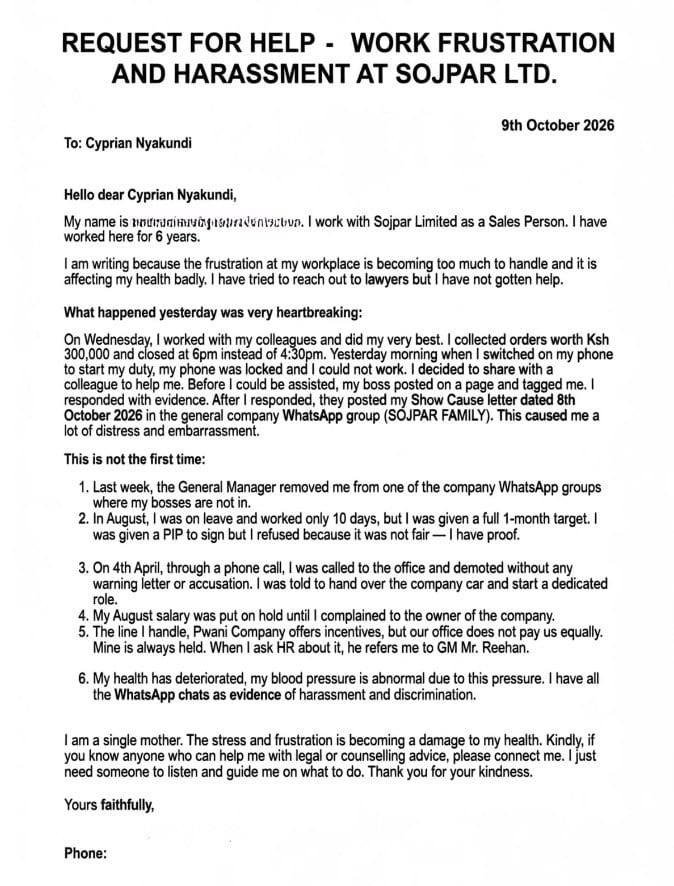
A source who worked within the company's field operation for 6 years, and who bears sole financial responsibility for a household that depends entirely upon her earnings, approached this publication after failing to secure legal representation.
She spoke at length under a condition of strict anonymity, disclosing correspondence, payslips, WhatsApp threads and internal letters that she says establish a sustained campaign of harassment and discrimination directed at her by her immediate superiors.
She has not sought compensation or publicity, nor has she sought the dissolution of the enterprise, but she has asked that the record be placed in the public domain because she says she has exhausted every internal avenue available to her and has watched her health deteriorate as a consequence.
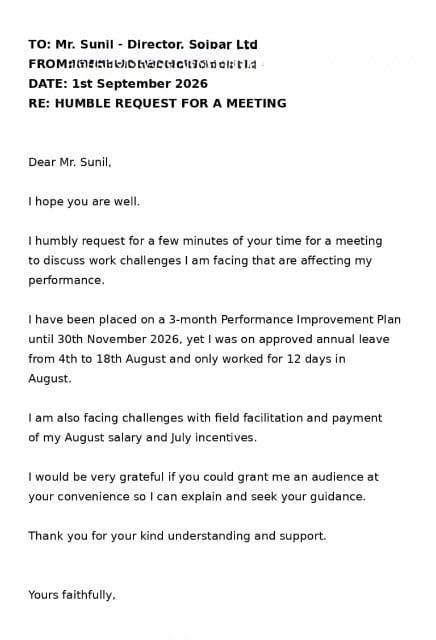
On 4th April 2026, according to her account, she was summoned by telephone to the office and informed that she was being moved from a general trade role into a dedicated account role, a change she characterises as a demotion.
No warning letter was issued, no written accusation was provided, no opportunity to respond was granted, and she was instructed to hand over the company vehicle and begin work in the new role with immediate effect.
The company has to this day never disclosed the substance of the complaint that triggered the move, and that absence of process is central to her case, because an employer that removes a long-serving employee on the strength of an undisclosed allegation has effectively placed itself beyond the reach of its own disciplinary rules.
"I was simply told that customers had complained, and no one ever told me which customer, or what exactly I was accused of doing."
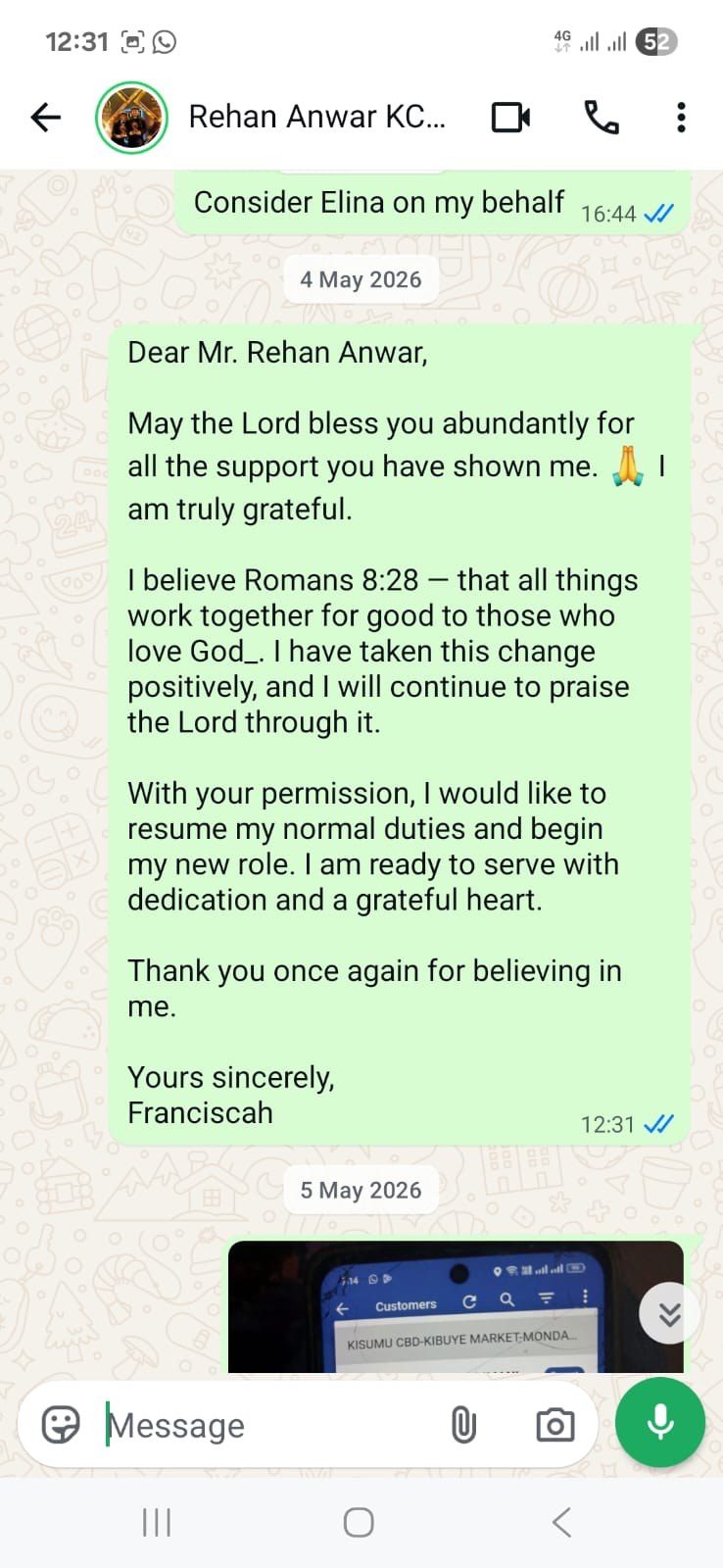
She did not resist at that stage, and the correspondence shows that on 4th May 2026, she wrote to the General Manager expressing gratitude for the support she had been shown, invoking scripture, and stating that she had taken the change positively and wished to resume her normal duties within the new role.
Four months after the demotion, on 31st August 2026, the company issued her with a 3-month Performance Improvement Plan running until 30th November 2026, and it did so on the strength of a 3-month assessment covering June, July and August, in which she was scored at 70%, 47% and 32% respectively.
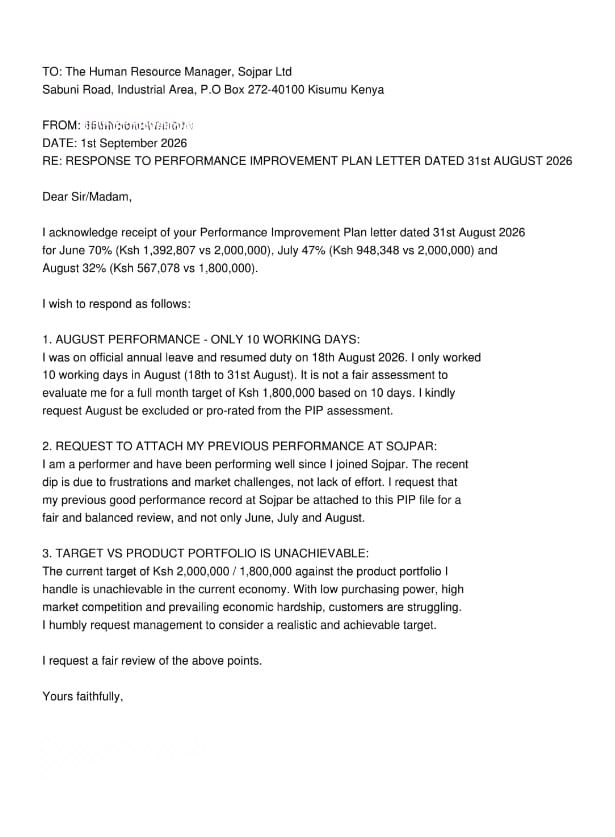
What the company's own letter does not dispute is that she was on approved annual leave from 4th to 18th August 2026, that she resumed duty only on 18th August, and that she therefore worked barely 10 working days within a month for which she was nevertheless assessed against a full monthly target.
Her written response of 1st September 2026 formally requested that the August assessment be excluded or pro-rated, that her previous performance record be attached to the file, and that the target be reconsidered on the grounds that diminished purchasing power, heightened market competition and prevailing economic hardship had rendered it unattainable.
"I raised every one of those points in writing, and the reply came back dismissing all of them, so it became clear the plan was not meant to help me improve but to build a file against me."
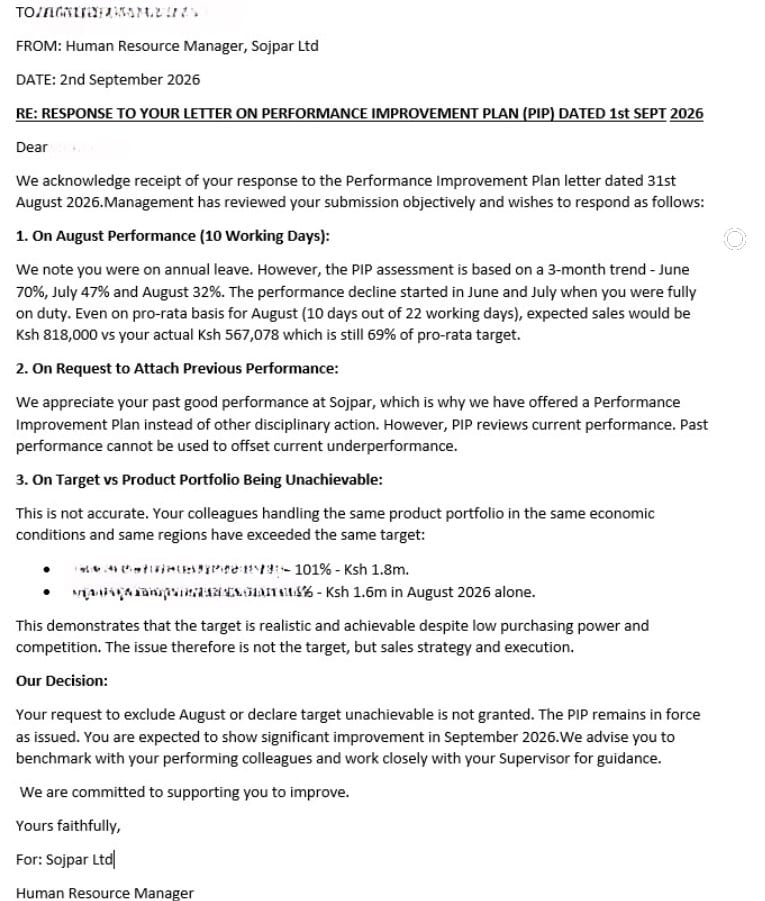
The company's reply of 2nd September 2026, signed on behalf of the Human Resource Manager, acknowledged that she had been on leave but argued that the decline had begun in June and July when she was fully on duty, and that even on a pro-rata basis for August she would still have fallen short of what was expected of her.
It went on to state that the target was demonstrably realistic because 2 colleagues handling the same portfolio in the same regions had exceeded it by comfortable margins during August alone, before concluding that the issue lay not with the target but with sales strategy and execution.
Running alongside the performance dispute is a remuneration dispute, and it is the remuneration dispute that has produced the most troubling correspondence, because she says her August 2026 salary was placed on hold until she escalated the matter to the proprietor of the company, and that her July incentive under the Pwani line was withheld while every one of her colleagues was paid.
The company's own payslip for August 2026 paints a grim picture, showing that after PAYE, NSSF, SHIF, NHDF, SACCO deductions and a staff loan instalment had been deducted, the residual sum that constituted her net remuneration was a paltry KSh 7,252 upon which no household could reasonably be sustained.
"I had to go over the heads of everyone in that office and write to the owner before a salary that had already been earned was released."
The WhatsApp record sharpens the picture further, because in one exchange she is informed that her salary was given to another employee on the instruction of the General Manager, and in another she is told to direct her questions about the incentive to the same manager against whom she was already lodging complaints.
She says the incentive was held while colleagues on the same product line were paid, that the human resource officer referred her back to the manager, and that the circle continued until she abandoned any expectation of receiving what was owed to her.
"We watched colleagues on the same line receive their incentives while ours was held back, and nobody could explain why."
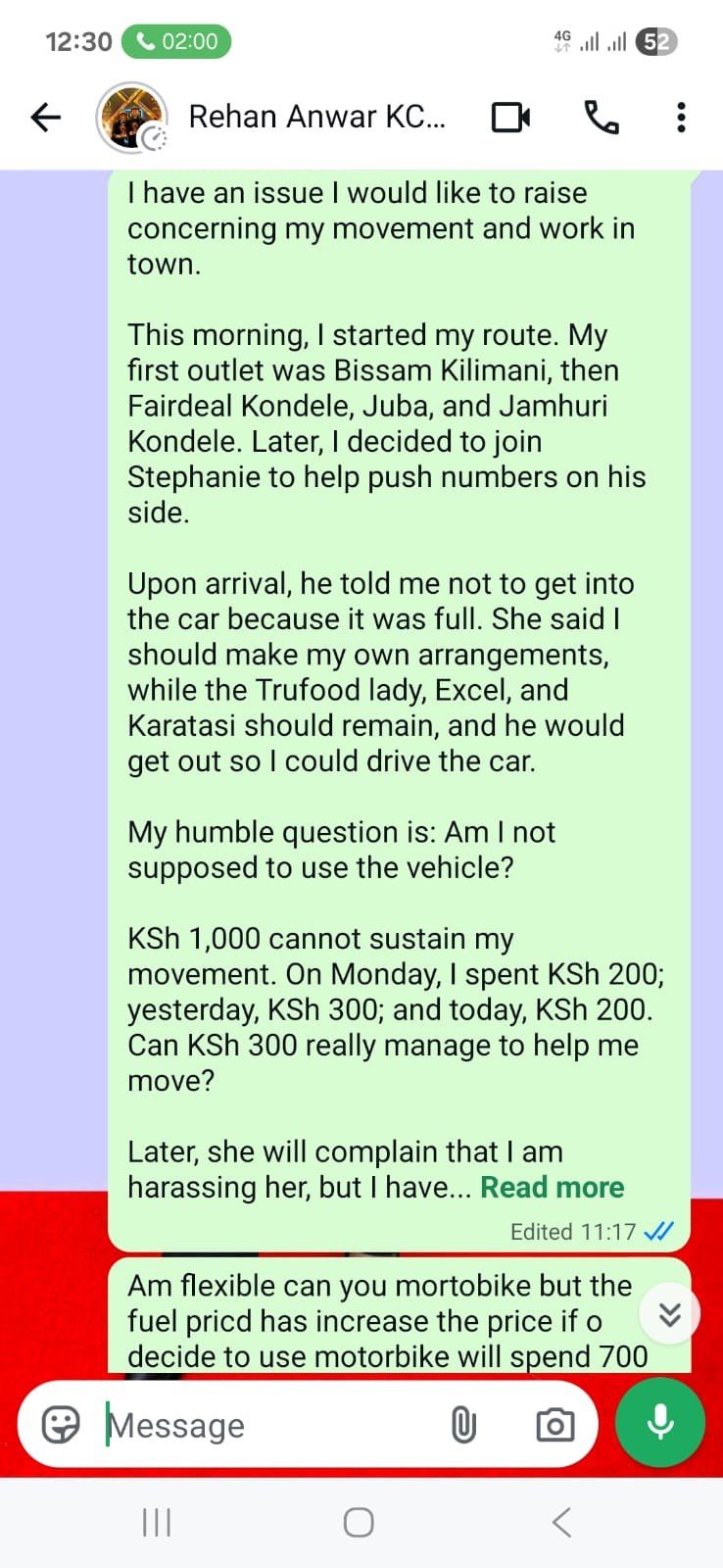
Her submission also extends to the practical conditions under which she was expected to operate, and she has documented a dispute over movement facilitation in which she was allocated KSh 1,000 per day, a sum that she says could not possibly have covered her route, obliging her to defray costs from her own resources on certain days and leaving her short on others.
She was told in a WhatsApp exchange that she was flexible enough to utilise a motorbike notwithstanding the escalation in fuel prices, and that a motorbike would consume KSh 700 of the allocation, the better part of what had been given to her for the entire day.
In a further exchange she described arriving to join a colleague in order to assist in pushing numbers on his side of the business, only to be instructed not to enter the company vehicle because it was occupied to capacity and that she should make her own arrangements, while other members of staff were permitted to remain within it.
"I was told the vehicle was full and that we should make our own arrangements, while other people remained inside it."
She was also accused of remaining in one location when the tracking application showed her off route, an allegation she rebutted with evidence that she had been in motion, and she offered to account for her route step by step because she knew precisely where she had been and what she had accomplished.
"I offered to account for the route outlet by outlet, because I knew I had not been hiding from anyone."
The gravest allegation concerns 8th and 9th October 2026, when, according to her account, she had worked with colleagues the previous day, closed orders worth KSh 300,000 and concluded her duties at 6pm instead of the scheduled 4:30pm, only to switch on her telephone the following morning and find it locked so that she could not work at all.
She says her supervisor then posted a message tagging her, she responded with evidence, and her Show Cause letter dated 8th October 2026 was published by management in the general company WhatsApp group, SOJPAR FAMILY, in full view of her colleagues.
"A Show Cause letter is supposed to be between an employee and her employer, and mine was placed in front of the entire staff."
She further states that in the preceding week the General Manager removed her from one of the company WhatsApp groups in which her superiors were not present, that she was on leave during August 2026 and worked only a fraction of the month but was nevertheless assigned a full one-month target, and that she declined to append her signature to the plan because she considered it inequitable and retains proof of that refusal.
Her correspondence states plainly that her health has deteriorated, that her blood pressure has become abnormal, and that the stress of the past months has begun to inflict physical damage, and she has described approaching legal practitioners without success before resolving to place the record before the public.
"I tried to find a lawyer and could not find one who would take it up, and I reached a point where I did not know which direction to turn."
She says she is raising her children unaided, that every decision must be weighed against the consequences for them should she lose her employment, and that this is why she remained as long as she did and did not walk out of the door on the day her letter was posted for everybody to read.
The questions Sojpar Limited must now answer go to the heart of its treatment of an employee who served the firm for 6 years.
The company must explain the basis for removing her from her position following an undisclosed complaint, and why it assessed her against a full monthly target for a month in which it had approved her leave.
It must also account for withholding her salary until she escalated the matter to the proprietor, withholding her incentive without explanation while her colleagues were paid, and circulating her Show Cause letter in a group chat visible to her colleagues.
Most critically, the correspondence places the General Manager under direct scrutiny over whether he instructed that her salary be handed to another employee, and Sojpar Limited must now account for that instruction, the handling of her remuneration, and the decision to expose a disciplinary matter to the entire staff group.
The company's new majority owners at Kimo Kali Holdings, and by extension the principals at Twiga Foods who now hold the controlling interest, must also explain what due diligence was conducted before the acquisition, what has been done since to address the complaints that have been raised internally, and whether the practices described in these disclosures are consistent with the standards they publicly profess.
Until those questions are answered on the record, the account provided to this publication stands uncontradicted, and this publication will continue to follow the matter and to report every development.
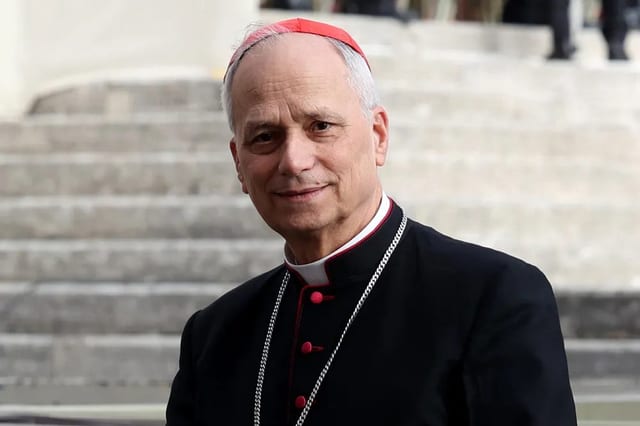
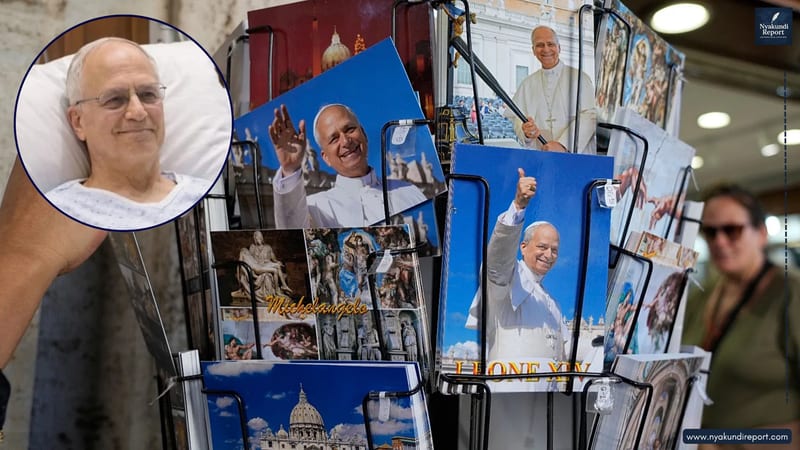
Pope Leo XIV’s Lung Cancer Diagnosis Raises Concerns Over Further Treatment, Recovery and Planned November Visit to South America
N
Nyakundi Report
Newsroom · 6d
The Vatican has confirmed that Pope Leo XIV has been diagnosed with lung cancer following surgery to remove the lower lobe of his right lung, raising fresh concerns about the 71-year-old pontiff’s health and upcoming public engagements.
The operation was performed at Rome’s Gemelli Hospital after doctors detected a suspicious lung nodule during recent medical examinations. Although the procedure was reported to have been successful, the diagnosis has left critical questions unanswered, including whether the cancer has spread and whether the Pope will require additional treatment.
His recovery could also determine whether a planned November visit to South America proceeds.
Pope Leo XIV’s recovery will determine his next steps, with further treatment and his planned South America visit remaining uncertain pending medical assessments.
Pope Leo XIV’s Cancer Diagnosis Raises Questions About His Recovery 
The Vatican announced the diagnosis on Tuesday, October 13, following an operation at Rome’s Gemelli Hospital, where the Pope had been admitted earlier that day.
According to a medical bulletin, the procedure lasted approximately 90 minutes and was completed without reported complications. Pope Leo XIV regained consciousness after the operation and was resting in his hospital room.
Doctors removed the lower lobe of his right lung after identifying a growth during recent medical examinations. Tissue testing conducted during the operation confirmed earlier suspicions that the growth was cancerous.
The diagnosis was identified as adenocarcinoma, a common form of lung cancer that develops in glandular cells, including those responsible for producing mucus in the lungs.
The Vatican has not disclosed the size of the tumour or confirmed whether cancer cells were detected in nearby lymph nodes. It has also not announced whether the Pope will require chemotherapy, radiotherapy or other treatment following surgery.
These unanswered questions will be central to understanding the severity of the diagnosis and the likely duration of his recovery.
Lung Nodule Discovered During Recent Medical Examinations 
The cancer diagnosis followed an announcement by Pope Leo XIV on Sunday, October 11, when he revealed that doctors had detected a small nodule in his lung.
At the time, the Pope indicated that the growth had been discovered early and was well-localised. However, the Vatican had not confirmed whether it was cancerous.
Doctors subsequently recommended surgery to remove the nodule, leading to the procedure that resulted in the adenocarcinoma diagnosis.
Lung adenocarcinoma is a subtype of non-small cell lung cancer that begins in cells lining the airways or other parts of the lung. Its outlook varies depending on factors such as the tumour’s size, the stage at diagnosis, whether it has spread and the patient’s overall health.
The removal of the affected lung lobe may be part of treatment intended to eliminate the cancer, but the available information does not establish whether surgery alone will be sufficient in the Pope’s case.
Without further details about the tumour and lymph nodes, it remains too early to determine the long-term implications of his diagnosis.
The Vatican is expected to provide further information as doctors assess his recovery and determine whether additional treatment is necessary.
The diagnosis has also raised questions about Pope Leo XIV’s planned visit to South America in November.
The Vatican has not confirmed whether the trip will proceed, leaving the schedule dependent on his recovery and medical advice.
The Pope’s health is particularly significant because his responsibilities extend beyond religious ceremonies to diplomatic engagements, meetings with world leaders and the administration of the Roman Catholic Church.
The Church has approximately 1.4 billion members worldwide, making the pontiff’s health a matter of international concern.
Before the announcement, Pope Leo XIV was not widely known to have experienced major health problems. His cancer diagnosis therefore marks a significant development during his papacy.
For now, the immediate priority is his recovery from surgery. Any decision regarding his upcoming engagements will depend on his condition and the medical team’s assessment of whether he can safely resume his duties.
Catholic Leaders Call For Prayers As Pope Recovers 
The announcement has prompted calls for prayers from Catholic leaders and communities, with Bishop Michael W. Fisher, the 15th Bishop of Buffalo in New York, urging Catholics and people of goodwill to support the pontiff.
In a statement, Fisher invited Catholics across Western New York and others to pray for Pope Leo XIV as he confronts the illness.
He expressed confidence that the Pope was receiving the best possible care while acknowledging that many people worldwide face similar medical challenges without access to quality healthcare.
The bishop also commended the Pope and others dealing with disease and sickness to God, asking for healing in mind, body and spirit.
His message broadened the focus beyond the pontiff’s personal health to the millions of people who confront cancer and other serious illnesses, often under difficult circumstances.
As Pope Leo XIV remains under medical care, attention will centre on his recovery, the possibility of further treatment, and the future of his planned public engagements.
The successful completion of surgery offers an important starting point, but the extent of the cancer and the treatment required remain unclear. Those details will ultimately determine what comes next for the pontiff and the Vatican.
Court Orders Expose Deepening Opposition Rift Over Ukombozi Name Ahead Of 2027
N
Nyakundi Report
Newsroom · 6d
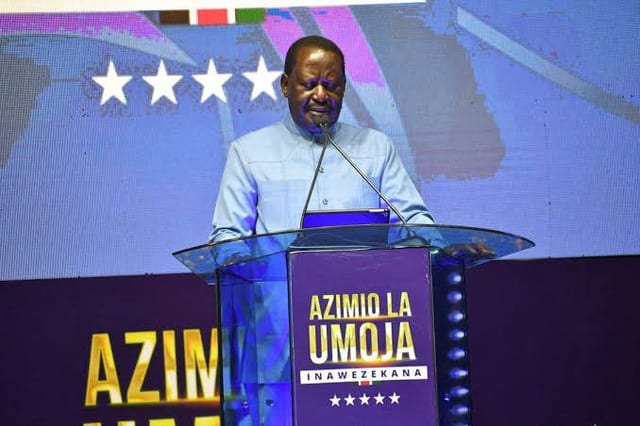
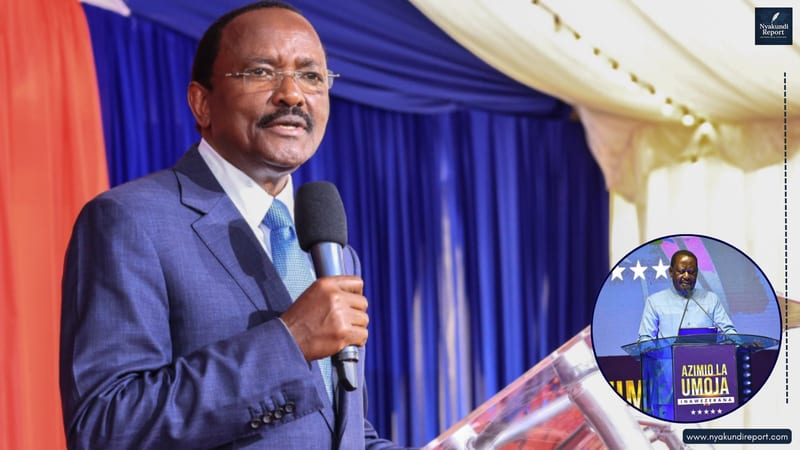
The opposition’s push to unite under a new political identity has suffered a major setback after the Political Parties Dispute Tribunal blocked the Azimio La Umoja Coalition from adopting the name The Ukombozi Alliance.
The interim orders have frozen plans to formally register the new name, exposing deeper disagreements over who controls the Ukombozi brand ahead of the 2027 General Election.
The dispute pits Azimio and Wiper against competing political interests that claim they had already moved to secure similar names. It also threatens to complicate efforts by opposition leaders to present a united front against President William Ruto.
The court battle over Ukombozi exposes an opposition struggling to resolve competing ambitions, raising doubts about its ability to unite against Ruto in 2027.
Court Freezes Azimio’s Ukombozi Plan As Opposition Name Fight Escalates 
The Political Parties Dispute Tribunal issued the orders on Tuesday, October 13, restraining the Office of the Registrar of Political Parties from approving, gazetting, registering, or taking further administrative steps towards registering The Ukombozi Alliance.
The restrictions will remain in place pending the inter partes hearing and determination of the application challenging the proposed name.
The Tribunal also certified the matter as urgent and directed that it be mentioned on October 29 to establish whether the Registrar has complied with its orders and issue further directions.
The Office of the Registrar of Political Parties and the Wiper Patriotic Front have been directed to file their responses within seven days.
The legal intervention comes barely days after Wiper leader Kalonzo Musyoka announced that Azimio would abandon its existing political identity and operate under The Ukombozi Alliance (TUA).
That announcement was presented as part of a broader effort to bring more parties and political formations into one opposition vehicle ahead of the 2027 presidential contest.
Instead, the rebranding has immediately run into a legal obstacle.
Petitioner Claims Ukombozi Name Was Already Reserved 
At the centre of the dispute is a petitioner who claims he had already reserved the name Ukombozi Peoples Party.
His argument is that the Registrar could not subsequently facilitate the use of the Ukombozi identity by Azimio when another applicant had already taken steps to secure a related political name.
The Tribunal therefore moved to preserve the position pending a full hearing rather than allow the registration process to continue while the competing claims remain unresolved.
The order specifically prevents the Registrar, its officers, servants or agents from taking administrative action towards registering Azimio under the name The Ukombozi Alliance.
This means the opposition coalition cannot simply proceed with its rebranding plans as though the dispute does not exist.
The case also raises a broader political question over how carefully opposition leaders prepared the new alliance before publicly unveiling it.
A rebranding exercise intended to demonstrate opposition unity has instead exposed competing claims over political ownership, party registration and the identity that could ultimately be used to challenge Ruto.
The dispute is further complicated by the involvement of the Linda Mwananchi Movement and its leader Edwin Sifuna.
Ukombozi had already become associated with political plans linked to Sifuna, who was reportedly considering the Ukombozi People's Party as the vehicle through which he would pursue the presidency.
The Registrar previously rejected a proposal to change the name of the United Democratic Party to Ukombozi People's Party, citing similarities with The Ukombozi Alliance.
In a letter dated September 8, the Registrar stated that the proposed name had not been approved or authorised and noted that another applicant had reserved The Ukombozi Alliance on July 20, 2026.
That position has itself become contested.
People close to Sifuna have disputed the Registrar’s account, arguing that plans to transform the United Democratic Party into a Ukombozi-branded party began as early as March 2025, well before Azimio publicly embraced the name.
The competing timelines could become significant as the political actors attempt to establish who first pursued the identity and whether the relevant procedures were properly followed.
The dispute therefore goes beyond semantics. Political names are valuable assets in an election cycle because they provide the branding through which candidates, parties and coalitions build recognition among voters.
For an opposition coalition attempting to consolidate several parties, losing control of its preferred name could create confusion at precisely the time it needs a clear national identity.
The ruling also exposes the fragile nature of the opposition’s unity.
Kalonzo and other opposition leaders have repeatedly projected the idea that rival parties can put aside individual ambitions and unite behind one presidential candidate in 2027.
But the Ukombozi dispute shows that disagreements over political vehicles, party identities and strategic positioning remain unresolved.
The immediate legal battle may eventually be settled in favour of Azimio, Wiper or the competing applicants. But politically, the damage is already visible.
The opposition wanted Ukombozi to represent liberation and unity. Its first major test has instead become a fight over who gets to own the name.
Floriculture Asks Inspector General To Investigate Alleged Trespass And Enforce Vacant Possession Orders Amid Fresh Claims Of Interference
N
Nyakundi Report
Newsroom · Oct 12
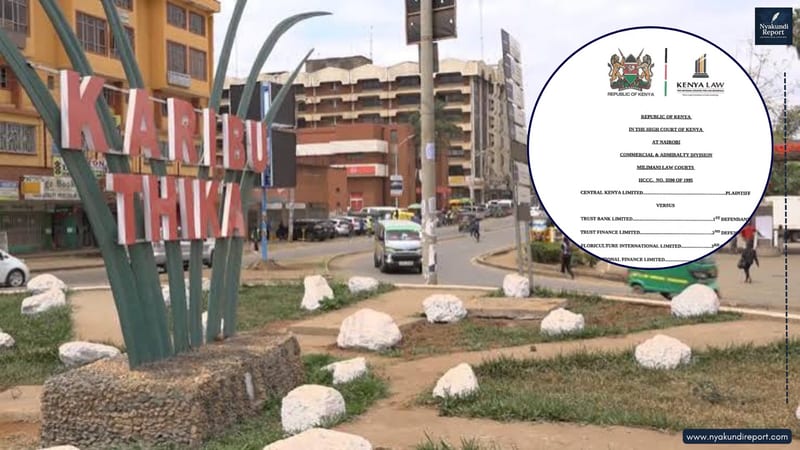
A long-running land dispute in Thika has escalated into a fresh confrontation after Floriculture International Limited asked the Inspector General of Police to intervene, alleging that its property remains occupied despite court decisions rejecting challenges to its ownership.
In a letter dated October 9, 2026, the company accused Central Kenya Limited of refusing to surrender the disputed land and alleged that a Kiambu security official was frustrating enforcement efforts.
The accusations place renewed scrutiny on the enforcement of court orders, the conduct of public officials, and the protection of property rights in a dispute stretching back more than three decades.
The dispute now tests whether court orders can be enforced impartially, property rights protected and allegations against public officials investigated without fear or favour.
Floriculture Seeks Police Intervention As Thika Land Dispute Raises Questions Over Court Enforcement 
Floriculture International Limited has asked the National Police Service to investigate alleged trespass and forcible detainer on Land Reference Number 7705/2 in Thika Municipality and facilitate recovery of vacant possession in accordance with the law.
In its October 9 letter, the company urged police commanders in Kiambu County and Thika to record statements from the parties, investigate the alleged occupation and recommend criminal charges to the Office of the Director of Public Prosecutions (ODPP) where evidence warrants prosecution.
The company also requested security during the lawful recovery of the property and measures to prevent further entry, construction, cultivation or removal of assets from the disputed land.
At the centre of the dispute is Floriculture's claim that a judgment delivered by Justice Francis Tuiyott on February 14, 2020, dismissed Central Kenya Limited's challenge to the charges, sale and subsequent transfer of the property.
According to Floriculture, the ruling affirmed the validity of the lenders' exercise of their statutory power of sale and rejected the case brought against the transaction. The company argues that the decision supports its claim to ownership and its entitlement to possession.
However, the dispute has continued through subsequent court proceedings, including a constitutional petition and an appeal. The existence of those proceedings makes it important to distinguish between judgments already delivered, orders currently in force and issues that may remain before appellate courts.
Floriculture Names Kiambu Security Official In Allegations Of Interference 
In its letter to the Inspector General, Floriculture alleged that it had served four orders on the Kiambu County security team but that enforcement efforts had been frustrated by an individual within the team whom it claimed had an interest in the matter.
The company named Deputy County Commissioner James Muiruri as an interested party and accused him of frustrating the process.
No immediate response from Muiruri was provided in the information available, and the allegation has not been independently established. His position on the accusations therefore remains unclear.
The claim nevertheless raises questions that warrant clarification from the relevant authorities. These include whether the orders were formally received, what action was taken in response, and whether any official decision prevented their enforcement.
Floriculture wants the police to provide written confirmation of the steps taken within 14 days.
The request places responsibility on the National Police Service to establish the facts surrounding the alleged trespass and determine what action, if any, falls within its mandate.
The company has also cited Articles 40 and 244 of the Constitution in warning that it may pursue further legal remedies if it considers its property rights and requests for police assistance inadequately addressed.
Floriculture International Limited, Central Kenya Limited, DCC James Muiruri and the courts are central to a dispute over ownership, vacant possession and enforcement of rulings.
Three Decades Of Litigation Trace Back To Sh45 Million In Loans 
The dispute dates to June 1993, when charges were registered over the property in favour of Trust Bank Limited and Trust Finance Limited to secure facilities of Sh15 million and Sh30 million, respectively, advanced to Katka Islands Limited.
After the borrower defaulted, the lenders exercised their statutory power of sale. The property was subsequently transferred to Floriculture International Limited in May 1995.
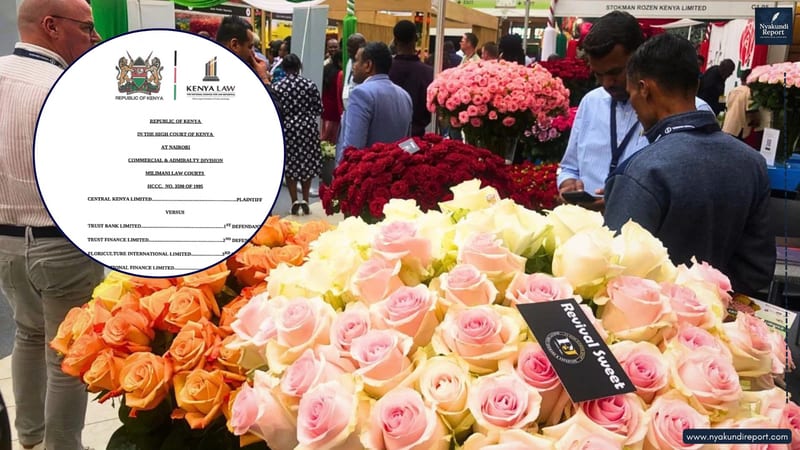
Central Kenya Limited challenged the transaction in Nairobi High Court Civil Suit Number 3590 of 1995, alleging irregularities in the charges, sale, and transfer.
In a judgment delivered on February 14, 2020, Justice Tuiyott dismissed the suit after finding that Central Kenya had failed to prove its case. The court also held that the lenders were entitled to exercise their statutory powers of sale following the default.
Floriculture now argues that continued occupation despite that judgment undermines the practical value of a court decision in its favour.
The legal history, however, must be assessed alongside subsequent proceedings and the status of any outstanding appeal. The existence of an earlier judgment does not, by itself, establish that every later dispute has been resolved or that every enforcement measure requested by a party can proceed without observing applicable court orders and legal safeguards.
Fresh Tribunal Orders And A Struck-Out Petition Intensify The Dispute 
The latest developments include a ruling delivered on October 5, 2026, by a tribunal presided over by Joyce Osodo.
In Business Premises Rent Tribunal Case Number BPRT/E1109/2026, the tribunal ordered Peter Mwangi and Charity Wanjiku Muiruri to surrender vacant possession of premises identified as Block 8/264, previously known as Land Reference Number 7705, Thika Municipality, to Floriculture International Limited.
The tribunal also directed the Officer Commanding Station at Ngojiwa Police Station to enforce the vacant-possession orders and awarded costs of Sh25,000 against the two respondents.
Earlier, on March 23, 2026, the Environment and Land Court in Thika struck out a constitutional petition seeking to revisit ownership of the property.
The court found that the petition was res judicata, meaning the issues had already been determined, and constituted an abuse of the court process. It also discharged conservatory orders issued on October 30, 2025, and awarded costs to the third respondent/applicant.
The court further held that it could not sit on appeal or review a decision by a court of equal status, particularly while the dispute was the subject of a pending appeal before the Court of Appeal.
These rulings form part of the documented legal history, but their precise scope and interaction with any pending proceedings remain important when determining the next lawful steps.
Floriculture says it has exhausted available legal avenues and wants the police to help secure possession while the outstanding appeal proceeds.
The central question is whether the relevant authorities will act on the orders currently in force, investigate the allegations impartially, and ensure that any recovery of the property follows the law. The outcome will test not only the parties' competing claims but also the practical enforcement of judicial decisions in a land dispute that has persisted for more than 30 years.
Ruto Orders Camel and Buffalo Imports as Kenya Battles Milk Shortage and Rising Prices
N
Nyakundi Report
Newsroom · Oct 9
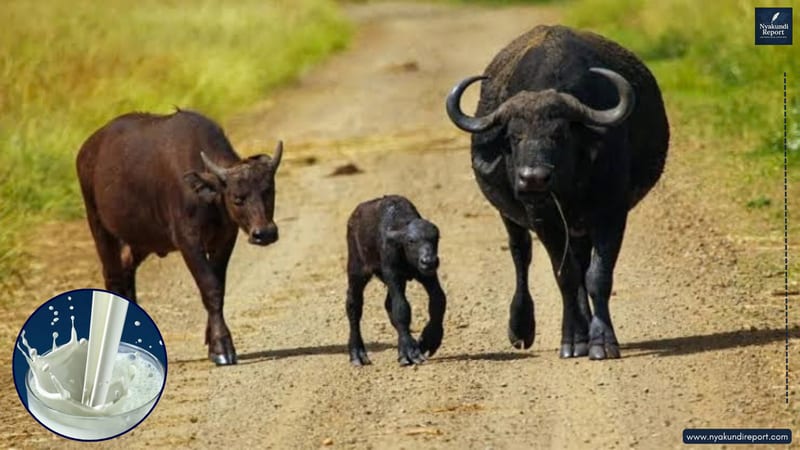
President William Ruto has announced plans to import improved camel breeds and buffaloes to address Kenya’s milk shortage, raising questions about the government’s strategy as consumers face rising prices and dairy farmers struggle with drought-related supply disruptions.
Speaking at the Agriculture and Food Security Summit at Jamhuri Park in Nairobi on Friday, October 9, Ruto directed Agriculture Principal Secretary Jonathan Mueke to facilitate the importation of the animals, arguing that Kenya must diversify its milk production beyond conventional dairy cattle.
The proposal comes as milk deliveries to processors decline and prices rise in major towns, placing additional pressure on households already struggling with the cost of living.
Kenya needs a resilient dairy strategy that delivers affordable milk, supports farmers and tackles drought. New livestock breeds must translate into measurable results for consumers.
Ruto Orders Importation of Camels and Buffaloes to Boost Milk Supply 
Ruto said the government would explore alternative livestock breeds as part of efforts to increase domestic milk production and reduce the effects of supply shortages.
The President directed Mueke to facilitate the importation of improved camel breeds and buffaloes, arguing that the animals could provide additional milk and help diversify Kenya’s dairy industry.
“I had directed the Agriculture PS to help us bring in a better breed of camel and bring another buffalo breed. Buffaloes also produce a lot of milk. In India there are buffaloes,” Ruto said.
He added that the government should move ahead with the plan, insisting that Kenya needed to expand its sources of milk rather than depend almost entirely on conventional dairy cattle.
“There is no problem in that. So PS Mueke, do as we had agreed. Bring in buffalo and also bring in a better breed of camel because we need to diversify our milk sources,” he stated.
The proposal signals a possible shift in the government's approach to milk production, particularly as drought exposes the vulnerability of livestock farming to changing weather conditions.
However, importing new breeds is only one part of the challenge. The government will also need to consider the cost of acquiring the animals, their adaptation to local conditions, veterinary requirements, breeding programmes, and the infrastructure needed to support commercial production.
The announcement did not specify the number of animals to be imported, the projected cost of the programme or when the first consignments would arrive.
Ruto Cites Expensive Camel Milk as Consumers Face Higher Prices 
Ruto defended the proposal by pointing to the high retail price of camel milk in Nairobi, arguing that the commodity could provide farmers with another source of income while expanding consumer choice.
“Here in Nairobi, the camel's milk is about Ksh190 and is selling at almost Ksh200, beating cow's milk three times. We need to start thinking,” the President said.
His remarks came as households grapple with rising milk prices, with a 500ml packet of fresh milk reportedly selling for between KSh75 and KSh80 in major urban centres, including Nairobi, Mombasa and Kisumu.
The prices represent an increase from the reported range of KSh60 to KSh70, adding to the financial pressure facing households that depend on milk as a regular part of their diets.
However, camel milk and conventional packaged cow's milk are not necessarily direct substitutes in every market. Their prices, processing requirements, distribution networks and consumer demand differ, meaning that expanding camel production alone may not automatically make ordinary milk more affordable.
Ruto maintained that the government needed to think beyond traditional dairy farming to protect supply during periods of drought.
“Currently, we have a slight shortage of milk due to drought. Camels have more milk than cows. We will ensure we bring in a better breed,” he said.
The proposal nevertheless leaves an important question unanswered: how quickly can imported livestock increase the volume of milk reaching consumers, and will the additional supply translate into lower retail prices?
Declining Milk Deliveries Expose Pressure on Kenya’s Dairy Industry 
The announcement comes amid declining milk deliveries to processors, highlighting the pressure facing Kenya's formal dairy supply chain.
Formal deliveries fell from 84.4 million litres in June to 81.3 million litres in July 2026, followed by further reported declines into August and September.
The reduction has coincided with higher retail prices and concerns about the availability of milk in some markets.
Some farmers have also reportedly been selling raw milk directly to neighbourhood consumers and brokers rather than supplying formal cooperatives, reflecting changes in how milk moves through the market.
While direct sales can offer farmers alternative routes to consumers, they can also complicate the collection and processing systems used by formal dairy businesses.
The government now faces the task of addressing immediate supply constraints while developing a more resilient livestock sector capable of withstanding drought.
Camels are already important to pastoral communities in Kenya's arid and semi-arid regions, where they are valued for their ability to survive conditions that challenge conventional dairy cattle. Buffaloes, meanwhile, are commercially milked in countries such as India, although their successful introduction would require appropriate breeding, husbandry and market arrangements.
The success of Ruto's proposal will ultimately depend on implementation, production costs and the ability to deliver additional milk at prices consumers can afford.
Importing improved breeds may widen Kenya's production options, but it will not provide an immediate solution to a shortage affecting households today. The government must also address drought resilience, animal feed, water availability, farmer productivity and weaknesses in the dairy supply chain.
For consumers paying more for milk, the decisive question is whether the announced plan will produce a measurable increase in supply and meaningful relief at the checkout.
Navi Pillay Honoured for Decades of Human Rights Advocacy and International Justice
N
Nyakundi Report
Newsroom · Oct 9
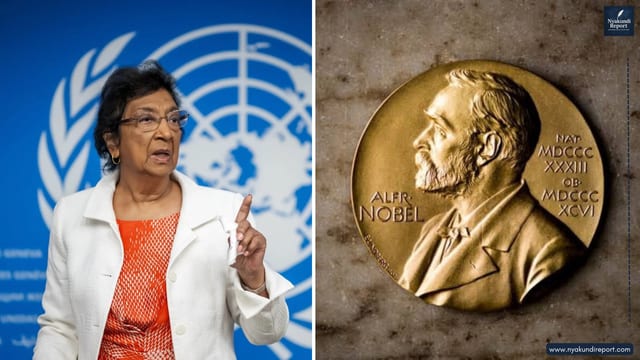
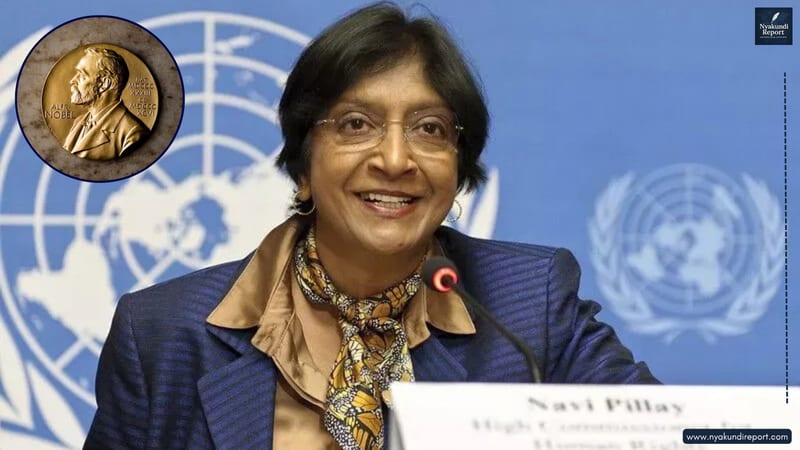
South African jurist Navi Pillay has won the 2026 Nobel Peace Prize in recognition of her decades-long efforts to advance human rights, strengthen international law and ensure accountability for war crimes, crimes against humanity and genocide.
The Norwegian Nobel Committee announced the award on Friday, October 9, praising Pillay’s contribution to international justice through her work as a lawyer, judge, and former United Nations human rights chief.
The 85-year-old, who began her career challenging apartheid in South Africa, dedicated the prize to survivors of international crimes, while her work on the Israeli-Palestinian conflict has drawn criticism from Israel.
Pillay’s award recognises decades of legal advocacy while renewing debate over international justice, accountability and the responsibility of powerful states under international law.
Who Is Navi Pillay and Why Has She Won the Nobel Peace Prize? 
Pillay was born in Durban, South Africa, into a family of Indian Tamil origin during the apartheid era, when racial segregation and discrimination shaped the country's legal and political systems.
She established her own law practice in 1967, becoming the first non-white woman in South Africa to do so. Her early legal career involved defending anti-apartheid activists and challenging discriminatory practices under the apartheid government.
Her commitment to justice later took her into the international legal system, where she helped prosecute some of the most serious crimes committed during armed conflicts.
In 1995, Pillay was appointed to South Africa's High Court. Four years later, she became a judge at the International Criminal Tribunal for Rwanda, eventually serving as its president.
During her work at the tribunal, she contributed to important legal developments concerning sexual violence and genocide. The tribunal established that rape and sexual violence could constitute crimes against humanity and, under the appropriate circumstances, acts of genocide.
Pillay later served as a judge at the International Criminal Court and became the United Nations High Commissioner for Human Rights, a position she held from 2008 to 2014.
The Nobel Committee said her work demonstrated how international legal mechanisms could help prevent violence, prosecute perpetrators and strengthen accountability for serious human rights violations.
Pillay's Work on Gaza Draws Criticism From Israel 
In addition to her work on apartheid and the Rwandan genocide, Pillay has played a prominent role in international scrutiny of the Israeli-Palestinian conflict.
Between 2021 and 2025, she chaired the United Nations Independent International Commission of Inquiry on the Occupied Palestinian Territory, including East Jerusalem, and Israel.
The commission concluded that Israel had committed genocide in Gaza, a finding that Israel strongly rejected.
Israel criticised the decision to award Pillay the Nobel Peace Prize, arguing that the recognition legitimised what it described as anti-Israel hatred and prejudice.
The controversy highlights the divisions surrounding international accountability efforts and the interpretation of human rights law in the conflict.
Pillay's supporters, meanwhile, have emphasised her broader record in advancing international justice, including her work on apartheid-era discrimination, the Rwandan genocide and the prosecution of serious international crimes.
Her Nobel Peace Prize recognises her wider contribution to international law rather than a single investigation or conflict.
Pillay Dedicates Award to Survivors of International Crimes 
Pillay said she was still reeling with surprise after learning that she had won the Nobel Peace Prize.
She was attending a meeting in Nuremberg, Germany, when she was informed of the award. Initially, she joked that the announcement must have been a prank before addressing colleagues who congratulated her.
She later dedicated the prize to survivors of international crimes, highlighting the victims whose experiences have shaped her decades of legal work.
Pillay also joked that she might share the award with United States President Donald Trump if those around her applauded a little more.
The remark came after the 2025 Nobel Peace Prize laureate, Venezuelan opposition leader María Corina Machado, gave her medal to Trump, drawing international attention to the relationship between Nobel recognition and political influence.
Pillay's award attracted praise from South African President Cyril Ramaphosa, who described her as a pioneering defence attorney for anti-apartheid activists.
United Nations High Commissioner for Human Rights Volker Türk also welcomed the recognition, describing it as a collective victory for human rights and justice advocates.
Pillay continues to serve as an ad hoc judge at the International Court of Justice in proceedings concerning allegations of genocide against Myanmar.
Her recognition comes amid growing international debate over the effectiveness of global legal institutions and their ability to hold powerful states and individuals accountable.
Musk Challenges Ambani’s Influence as Starlink Awaits India Approval
N
Nyakundi Report
Newsroom · Oct 9
Elon Musk has questioned whether Indian billionaire Mukesh Ambani wields enough influence to determine the fate of Starlink’s entry into India, escalating a dispute over regulatory approvals and competition in one of the world’s largest internet markets.
The SpaceX founder’s remarks followed allegations that powerful business interests were attempting to block his satellite internet company from entering India. Musk subsequently singled out Ambani, whose Reliance Industries controls Jio, the country’s largest mobile network operator.
Indian authorities have rejected claims of unfair treatment, insisting that all satellite internet operators must satisfy the same regulatory requirements before launching commercial services.
India’s satellite internet battle will test regulatory transparency, national security and competition, with the outcome shaping connectivity opportunities for millions of consumers.
Musk Raises Questions Over Ambani’s Influence in India 
Musk intensified his criticism on Thursday, October 8, questioning why Starlink had yet to receive final approval despite being licensed to operate in more than 165 countries.
“Is Ambani the real boss of India?” Musk asked in a post on X, arguing that his company had spent five years complying with Indian government requirements.
His remarks followed an earlier accusation that unnamed powerful business interests were maintaining a “monopolistic chokehold” on Indian consumers.
Musk argued that blocking Starlink’s entry would deny millions of people access to affordable, high-speed internet, particularly in remote areas where conventional broadband infrastructure remains expensive to establish.
The allegations place Reliance Jio and its chairman, Mukesh Ambani, under renewed scrutiny as competition intensifies in India's emerging satellite communications market.
However, neither Ambani nor Reliance Industries had publicly responded to Musk’s latest remarks at the time of reporting.
India’s Ministry of Communications rejected suggestions that its regulatory framework favoured particular companies, maintaining that satellite operators were subject to comparable approval requirements.
The ministry said Starlink, Eutelsat OneWeb, and Jio Satellite Communications were at broadly similar stages of the approval process, with security clearances and spectrum allocation still outstanding.
It described claims that the framework was unfair or discriminatory as baseless and misconceived.
Reliance Jio and Airtel Complicate Starlink’s Entry 
The dispute comes as Reliance Jio and Bharti Airtel prepare to expand into satellite internet services, potentially placing them in direct competition with Starlink.
In March 2025, Jio and Airtel signed agreements with SpaceX to distribute Starlink equipment and services in India, subject to government approval. The companies also indicated that they could explore opportunities to share network infrastructure.
These partnerships complicate Musk’s accusations because two major Indian telecommunications operators seeking to compete in the satellite market are also potential distribution partners for his company.
Reliance Jio has been developing its own satellite communications capabilities, while Airtel is pursuing services through its satellite business.
Speaking at the India Mobile Congress in New Delhi, Reliance Jio chairman Akash Ambani said the company was developing satellite communications technology and working towards regulatory approvals.
Asked about Musk’s allegations, Akash declined to comment directly, saying the company wanted to concentrate on delivering value to Indian consumers.
Airtel chairman Sunil Bharti Mittal similarly indicated that his company’s satellite venture was awaiting government approval.
SpaceX executive Lauren Dreyer, who oversees Starlink’s business operations, said the company had worked with Indian regulators for years and incorporated security controls into its network to satisfy national requirements.
Security Concerns and Affordability Remain Major Hurdles 
Starlink has been attempting to enter India since 2021 and has secured key licences. However, final security clearances and spectrum allocation remain necessary before it can launch commercial services.
Security has been a particularly sensitive issue. In 2024, Indian authorities reported recovering Starlink equipment during a drug-smuggling investigation in the Andaman and Nicobar Islands and an army operation in Manipur.
Musk responded at the time that Starlink had never been operational in India, arguing that the equipment recovered by authorities could not have been accessing its satellite network.
Beyond regulatory hurdles, the affordability of satellite internet remains a significant question for a country where millions of consumers have limited household budgets.
Starlink uses satellites in low Earth orbit to deliver internet connectivity, making it potentially useful in remote communities where mobile networks and fibre-optic infrastructure are difficult or expensive to establish.
Musk has argued that the service could connect people who lack reliable internet access or cannot afford existing options.
However, Starlink has yet to announce Indian subscription prices. Its US residential plans start at $55 per month, although prices and equipment costs vary by location and package.
The eventual cost of the service in India could determine how widely it is adopted, particularly among rural households.
The dispute ultimately centres on more than Musk’s public confrontation with Ambani. It raises questions about how India will regulate a growing satellite internet industry, balance national security requirements with commercial competition, and expand connectivity without placing advanced services beyond the reach of ordinary consumers.
Kenyan lawmakers are questioning proposed legal protections for the Ford Foundation and the Africa Finance Corporation (AFC), demanding clarity on whether the arrangements could limit the enforcement of local laws.
The National Assembly’s Committee on Delegated Legislation raised concerns over the proposed privileges and immunities, including whether anti-corruption agencies would retain their authority over the organizations.
The debate comes as Kenya prepares to host a Nairobi office for the Ford Foundation and AFC expands its regional investment ambitions. While AFC says its presence could unlock billions of shillings in investment, MPs want safeguards for national sovereignty, accountability, and equal application of the law.
Parliament must clarify the proposed protections, preserve oversight powers and establish whether the investment benefits justify the legal arrangements under consideration.
Parliament Examines Proposed Privileges and Immunities for Foreign Organizations 
The Committee on Delegated Legislation examined the proposed Privileges and Immunities orders on Thursday, October 8, during a meeting attended by Prime Cabinet Secretary Musalia Mudavadi and representatives of the organizations.
Lawmakers questioned the scope of the protections and whether they could interfere with Kenya’s legal and accountability systems.
The concerns centred on ensuring that privileges granted to foreign organizations would have clear limits and would not undermine the country’s sovereignty or the work of public oversight institutions.
Ainabkoi MP Samuel Chepkonga questioned why AFC should receive special treatment when other foreign financial institutions, including Nigerian banks, already operate in Kenya.
His concerns raised the question of what legal or operational circumstances justified granting AFC privileges beyond those available to other financial institutions operating under Kenyan law.
Gichugu MP Robert Gichimu also sought clarification on whether the proposed arrangements were comparable to privileges granted to AFC in other countries.
Likuyani MP Innocent Mugabe specifically questioned whether the Ethics and Anti-Corruption Commission (EACC) would retain the power to intervene in corruption cases involving the corporation.
The question of anti-corruption enforcement is central to the debate because legal privileges can vary in scope, depending on the terms of the governing agreement and the applicable legislation.
Parliament must therefore establish precisely which protections are being proposed, how they would operate, and whether they could restrict investigations, legal proceedings, or other regulatory functions.
The committee’s scrutiny provides an opportunity to clarify these issues before the proposed orders proceed through the remaining parliamentary process.
AFC Defends Nairobi Office and Investment Potential 
AFC officials told the committee that the corporation would operate under Kenyan law through a framework similar to that governing diplomatic missions.
AFC Director Fola Fagbule urged lawmakers to support the proposal, arguing that the corporation’s Nairobi presence could create economic opportunities through infrastructure financing and investment.
The proposed privileges follow a Host Country Agreement signed between Kenya and AFC in April, paving the way for the corporation to establish its first regional office outside Lagos in Nairobi.
AFC has committed more than Ksh168.92 billion ($1.3 billion) to Kenyan energy, transport, and industrial projects since 2017.
The corporation also plans to mobilize more than Ksh259.68 billion ($2 billion) across the region over the next three to five years.
Its existing projects include the Dongo Kundu Integrated Industrial Park and Naivasha Special Economic Zone II.
The planned Nairobi operations are also expected to support additional investment, with the corporation targeting approximately Ksh260 billion in further financing.
These investment ambitions form a major part of the argument for establishing a regional presence in Kenya. However, MPs are seeking assurances that the expected economic benefits will not come at the expense of accountability or equal application of the law.
Ford Foundation Proposal Raises Questions Over Legal Protections 
The proposed legal protections for the Ford Foundation are also under scrutiny following Cabinet-approved plans for the organization to establish a Nairobi office in February.
The proposed order would define the privileges and immunities available to the foundation under the arrangements being considered by Parliament.
Lawmakers have insisted that any protections must be clearly defined and should not undermine Kenya’s ability to enforce its laws.
The debate reflects a broader question about how governments can facilitate the operations of international organizations while preserving the authority of domestic institutions.
Privileges and immunities can provide specific legal protections to qualifying organizations, but their practical implications depend on the wording of the relevant instruments.
Parliament’s review is therefore important in determining the precise scope of the proposed arrangements and the extent to which Kenyan authorities would retain their regulatory and enforcement powers.
The concerns raised by MPs also highlight the need to distinguish between protections intended to facilitate an organization's operations and any provisions that might affect accountability for unlawful conduct.
The committee is expected to complete its review of the draft orders before they proceed through the relevant parliamentary process.
Until that process is concluded, the proposed privileges and immunities should not be treated as finally granted.
For Kenya, the central issues remain the legal terms of the agreements, the powers retained by oversight agencies, and the protections available to public accountability systems.
The final parliamentary consideration will determine whether the proposals proceed and under what conditions the organizations may receive the requested privileges.
Kenyan authorities rescued eight children from the home of Anastasia Mumwele Mackenzie, mother of preacher Paul Nthenge Mackenzie, after allegations they were withdrawn from school and subjected to fasting, according to a Directorate of Criminal Investigations (DCI) operation.
Detectives from the Directorate of Criminal Investigations (DCI) arrested Anastasia Mumwele Mackenzie, mother of controversial preacher Paul Nthenge Mackenzie, on Wednesday afternoon and rescued eight children she is accused of withdrawing from school and subjecting to fasting, officials confirmed. The operation targeted Mackenzie’s residence in Malindi town, near the closed Good News International Church, where officers escorted the children and their grandmother to the Malindi Police Station. Preliminary reports suggest the children, aged six to fourteen, were forced to fast three days weekly, though medical evaluations are pending to verify the claims. The raid was led by Homicide Director Martin Nyuguto and Malindi Sub-County Children’s Officer Sebastian Muteti, who cited a report from Mackenzie’s son Dan, alleging the children were not attending school but instead remaining at their grandmother’s home."
The children, five of whom are Mackenzie’s biological offspring and three belonging to relatives, were found at the residence despite mandatory school attendance requirements. Dan Mackenzie, the preacher’s firstborn son, told journalists he reported the matter to police because he believed the children should be in education rather than engaged in what he described as “controversial religious practices” involving fasting. The operation follows mounting legal challenges against Paul Nthenge Mackenzie, who leads the defunct Good News International Church. He is central to the Shakahola massacre case, where hundreds of bodies were exhumed from Kilifi County, with prosecutors accusing him of orchestrating mass starvation and radicalizing followers to abandon education and healthcare. Mackenzie faces terrorism, murder, and manslaughter charges in Malindi and Mombasa courts."
The case has reignited scrutiny over religious groups’ influence on child welfare and education. Local authorities emphasized the need to balance religious freedom with legal obligations, while community leaders called for stricter oversight of faith-based institutions. The children’s condition remains under investigation, with officials stating the medical examination will determine if further legal action is warranted. Meanwhile, the arrest underscores the ongoing tension between religious practices and state intervention in cases involving minors."
The incident also highlights broader concerns about the legacy of the Shakahola tragedy, which has left families devastated and authorities grappling with the aftermath of alleged systemic abuse. As the investigation progresses, stakeholders are urging transparency to ensure accountability and prevent similar incidents. The Malindi Police Station has not yet released details on the children’s immediate welfare plans, but officials confirmed they are under protective custody pending further review.
The Ethics and Anti-Corruption Commission (EACC) has successfully recovered a public land parcel valued at Ksh51 million in Mombasa, marking the conclusion of a 17-year legal dispute. The property, designated MN/I/2411 and measuring 0.514 acres, was previously illegally allocated to a former MP and later transferred to a private individual, according to investigations.
The Ethics and Anti-Corruption Commission (EACC) has recovered a public land parcel valued at Ksh51 million in Mombasa, following an Alternative Dispute Resolution (ADR) settlement on September 21, 2026. The property, known as MN/I/2411, spans 0.514 acres in Nyali and belongs to the Kenya Civil Aviation Authority (KCAA). The recovery concludes 17 years of legal proceedings initiated by the EACC in 2009, which traced the land’s irregular allocation to former Kuresoi Constituency MP Zakayo Kipkemboi Cheruiyot. The EACC confirmed the settlement resolved civil litigation under ELC Case No. 177 of 2009, involving Cheruiyot, Omar Tahir, and Sammy Mwaita.
Investigations by the EACC revealed that the land was illegally allocated in 2000 by then Commissioner of Lands Sammy Mwaita to Cheruiyot, who later transferred it to Omar Tahir. The commission stated that Tahir, the registered owner, agreed to surrender the property under the ADR framework. This resolution ends a protracted legal battle that began with the EACC’s 2009 case, which alleged misuse of public assets. The EACC emphasized that the land now reverts to public use as originally intended, underscoring its commitment to recovering misappropriated resources.
The EACC praised the ADR settlement as a swift alternative to prolonged litigation, which could have incurred significant costs for taxpayers. Commission spokespersons highlighted the case as a precedent for individuals holding illegally acquired public property to voluntarily return assets. “We urge all stakeholders to cooperate in restoring public trust and ensuring transparency,” a statement read. The recovery of the land, valued at Ksh51 million, underscores the commission’s ongoing efforts to combat corruption and safeguard public resources.
The case has drawn attention to historical land allocation practices and the role of oversight bodies in holding officials accountable. By resolving the dispute through ADR, the EACC avoided further judicial delays while reinforcing its mandate to protect public assets. The successful recovery also serves as a reminder of the long-term consequences of corruption, with the land now poised to serve its intended public purpose after nearly two decades of legal contention.
Kenya's tourism sector is leveraging its partnership with Emirates to convert Gulf air traffic into sustained visitor numbers, aiming to boost Middle East arrivals by 150% and unlock economic growth through improved connectivity and targeted marketing.
Kenya’s tourism industry is pursuing a strategic partnership with the United Arab Emirates to transform Gulf air traffic into a reliable source of visitors, addressing long-standing challenges in converting connectivity into economic returns. The Kenya Tourism Board (KTB) and Emirates have signed a memorandum of understanding (MoU) to enhance collaboration, with the goal of increasing Middle East arrivals to 50,000 by 2026—a 150% jump from the 20,480 recorded in the 2025/26 financial year. This target could generate approximately Sh15 billion in visitor spending, according to government estimates.
The UAE’s role as both a tourism market and a global aviation hub makes it a critical partner for Kenya. Dubai, which welcomed 897,000 African visitors in 2025, serves as a gateway for travelers from Asia, Europe, and the Americas to reach East Africa. Emirates’ network connects nearly 140 destinations through its Dubai hub, while its 2023 interline agreement with Kenya Airways allows seamless itineraries to Zanzibar, Kigali, and Victoria Falls. KTB CEO June Chepkemei emphasized the shift from “visibility to conversion,” stating the focus is now on turning awareness into bookings.
Despite the potential, the UAE remains underperforming as a tourist source for Kenya. In 2025/26, the region accounted for 10% of Middle East arrivals, but UAE visitors numbered just 2,000 annually—a fraction of the 48% contributed by Israel, Yemen, and Iran combined. KTB attributes this to limited awareness and fragmented travel pathways, which the MoU aims to address through joint marketing campaigns, travel trade familiarization trips, and media programs to showcase Kenya’s offerings.
The partnership also seeks to capitalize on the UAE’s economic and diplomatic ties with Kenya. The Gulf nation has shown sustained interest in Kenya’s development, from infrastructure projects to renewable energy investments. Tourism Minister Ndiritu Muriithi highlighted that the UAE’s role as a “gateway” could unlock access to millions of travelers who might otherwise bypass East Africa. However, challenges persist, including Kenya’s eTA visa system, which requires Gulf travelers to apply online with a three-day processing window—a timeline that could deter last-minute bookings.
Kenya’s tourism sector generated Ksh500 billion in 2025/26 from 2.7 million international arrivals, with the government targeting KSh1 trillion in annual earnings. Achieving this goal hinges on attracting higher-value travelers and improving conversion rates from existing connectivity. The UAE’s dual role as a market and a hub positions it to address both needs, according to KTB. Chepkemei noted that the MoU’s success will depend on “details no memorandum can guarantee,” including streamlined visa processes and targeted outreach.
The initiative aligns with broader efforts to diversify Kenya’s tourism markets amid global volatility. After decades of growth driven by wildlife and beaches, the sector has faced disruptions from terrorism, economic downturns, and the pandemic. The UAE partnership reflects a recalibration toward leveraging aviation networks and diplomatic ties to sustain momentum. Tourism stakeholders stress that success will ripple beyond airports, benefiting hotels, lodges, and communities while strengthening Kenya-UAE economic ties.
The KTB’s collaboration with Emirates underscores a broader shift in Kenya’s tourism strategy, prioritizing strategic partnerships over traditional marketing. As the sector navigates a competitive global landscape, the UAE’s unique position as a bridge between Africa and the world offers a critical opportunity to transform air traffic into lasting tourism revenue. The coming months will test whether this partnership can turn potential into tangible results for Kenya’s economy.
The Kenya Coast Guard Service (KCGS) has intensified efforts to mitigate flood risks and other weather-related emergencies along Kenya’s coastline, lakes, and waterways ahead of the upcoming El Niño-driven rainfall season, according to a Ministry of Interior statement.
The Kenya Coast Guard Service (KCGS) has intensified efforts to mitigate flood risks and other weather-related emergencies along Kenya’s coastline, lakes, and waterways ahead of the upcoming El Niño-driven rainfall season, according to a Ministry of Interior statement. The Service is conducting pre-deployment checks on patrol boats, inflatable rescue crafts, and life-saving equipment, while strategically positioning rescue vessels and response teams in high-risk zones. Fuel reserves, emergency rations, medical kits, and communication gear have been stockpiled to sustain operations during prolonged emergencies. A Maritime Disaster Response Joint Operations Centre has been established at KCGS headquarters in Mombasa to provide 24-hour monitoring and coordinate with the National Disaster Operations Centre (NDOC) and Kenya Meteorological Department for real-time information sharing.
KCGS has prioritized regions vulnerable to flooding, including the Tana River Delta and Garsen, where upstream runoff could disrupt transport networks; the Lamu Archipelago, where island communities rely on water transport; and Vanga and Shimoni in Kwale County, prone to tidal surges. In Mombasa, Tudor and Port Reitz creeks remain critical due to nearby settlements at risk of flooding, while Kilifi Creek and the Sabaki River mouth face threats from increased river discharge. Inland waterways like Lake Victoria’s Kisumu, Homa Bay, and Budalang’i are under watch for rising water levels, and Lake Baringo, Lake Bogoria, and Lake Naivasha are targeted due to infrastructure and community risks. The Turkwel River and Lake Turkana also require heightened vigilance amid flash flood dangers to pastoralist populations.
The KCGS is conducting joint flood-rescue simulations with the Kenya Navy, Kenya Wildlife Service, and local divers at Diani Beach to test coordination and response protocols. Since 2023, the Service has addressed over 1,500 maritime emergencies, including 424 rescue operations this year alone. During March and April’s floods in Ahero and Nyakach, KCGS evacuated 86 households, relocated 200 livestock, and rescued 300 people. The Service continues to adjust deployments based on weather forecasts and emerging risks, emphasizing the importance of public adherence to safety advisories.
A Maritime Security Alert has been issued to vessel operators, urging them to maintain communication equipment and safety gear amid intensified patrols. The government has called on coastal and lakeside communities to remain vigilant, avoid hazardous waterways during severe weather, and follow official guidance. KCGS officials stressed that preparedness measures aim to reduce avoidable risks and ensure rapid response capabilities as El Niño conditions threaten to exacerbate flooding across Kenya’s water systems.
Migori's successful transition from tobacco farming to alternative crops is being replicated in Embu County, offering a model to combat Kenya's tobacco-related public health crisis, which claims over 6,000 lives annually and affects 2.5 million adults.
Tobacco cultivation in Kenya remains a critical public health challenge, contributing to over 6,000 annual deaths from non-communicable diseases such as liver cirrhosis, cardiovascular conditions, and lung cancer. National health data reveals an adult tobacco prevalence rate of 11.6% (approximately 2.5 million people), with male usage exceeding 15-19% in key regions. Despite legislative measures like the 2007 Tobacco Control Act, which bans public smoking and advertising, and fiscal interventions including excise taxes, tobacco remains widely available. The crisis has expanded to include youth, with adolescents as young as 12-16 targeted by aggressive marketing of products like Shisha and Kuber, according to the National Authority for the Campaign Against Alcohol and Drug Abuse (NACADA).
To address the root cause of tobacco supply, the Kenyan government, in collaboration with the World Health Organization (WHO), launched the Tobacco-Free Farms initiative. This program, operational in Migori since 2021, supports farmers in transitioning to sustainable crops like beans, sunflower, and groundnuts. Embu County, which began cultivating tobacco 18 months ago, recently sent a delegation to observe Migori’s progress. The initiative aims to mitigate health risks, including Green Tobacco Sickness, and reduce environmental degradation linked to traditional tobacco curing methods.
During a recent visit, Embu farmers met with Migori growers who shared their experiences. Julius Opiyo, a former tobacco farmer from Uriri Sub County, highlighted the shift of 8,000 local growers to nutritious crops. He emphasized the role of community hubs, established with WHO and Migori County support, in providing seeds and agricultural guidance. Mwita Nyabuge, who transitioned after three years of tobacco farming, described the financial and health toll of the crop, noting that his family’s stability was compromised. Switching to Nyota beans, he now funds his children’s education without hardship.
Steven Mbogi, a medical officer and Embu farmer, stressed the urgency of the transition. He noted that 300 Embu farmers have already adopted tobacco, facing respiratory illnesses and Green Tobacco Sickness. “Migori’s success offers a roadmap for Embu to replicate,” Mbogi said. The program’s expansion to Embu this year follows a 2021 launch in Migori, with the goal of achieving a 100% transition of tobacco farmers to alternative crops.
Calvins Otieno, a WHO field coordinator, underscored the environmental benefits of the shift, citing deforestation linked to tobacco curing. Lucas Mosenda, Migori County’s Agriculture CEC member, confirmed the provision of alternative seeds and extension services to farmers. He highlighted partnerships with organizations like WHO to improve market access for crops such as beans. “We are committed to collaborating with international bodies to ensure a full transition,” Mosenda stated.
The initiative addresses economic exploitation and child labor, with farmers reporting improved incomes and reduced health risks. Migori’s model demonstrates that sustainable alternatives can replace tobacco, aligning with the WHO Framework Convention on Tobacco Control (FCTC) and Kenya’s Tobacco Control Act. As Embu embarks on its transition, the program’s success in Migori serves as a critical benchmark for nationwide efforts to curb tobacco’s public health and environmental impact.
The collaboration between local governments, the WHO, and farmers underscores a multi-faceted approach to tackling Kenya’s tobacco crisis. By prioritizing health, economic resilience, and environmental sustainability, the Tobacco-Free Farms initiative offers a replicable framework for other regions facing similar challenges. With continued support, the shift from tobacco to alternative crops could significantly reduce the nation’s disease burden and foster long-term agricultural viability.
The journey from tobacco to sustainable farming in Migori and Embu reflects a broader movement to align agricultural practices with public health goals. As farmers adapt to new crops, the focus remains on ensuring equitable access to resources, technical training, and market opportunities. The success of this transition hinges on sustained partnerships and policy enforcement to eliminate tobacco’s grip on Kenyan agriculture.
While challenges persist, the progress in Migori and Embu highlights the potential for systemic change. By addressing both supply and demand, Kenya’s tobacco control efforts aim to create a healthier, more resilient future for its population. The lessons learned from these counties could shape national strategies to combat tobacco-related harm and promote sustainable development.
The Tobacco-Free Farms initiative exemplifies how targeted interventions can transform agricultural landscapes. As Embu follows Migori’s lead, the emphasis on community-driven solutions and international collaboration offers a blueprint for addressing complex public health issues. With each farmer’s transition, the vision of a tobacco-free Kenya moves closer to reality.
The commitment of stakeholders, from local farmers to international organizations, underscores the importance of collective action in overcoming entrenched agricultural and health challenges. By prioritizing alternative crops, Kenya is not only safeguarding its citizens’ health but also fostering economic and environmental sustainability for future generations.
Residents of Kigumo and surrounding areas in Embu County have long grappled with unpaved roads that hindered mobility and economic growth. The ongoing upgrade of the Rukuriri-Kathageri-Kanyuambora Road, however, is transforming this landscape, with locals expressing hope that the tarmac surface will enhance connectivity and spur economic activity. Geofrey Njeru, a resident of Kigumo Sub-location in Runyenjes Sub-County, highlighted the significance of the project, stating, "For a long time, I have been waiting to see a tarmac road in this area and in many parts of Embu County." The road, part of a broader infrastructure initiative, is expected to ease transportation of agricultural goods and improve access to markets and services.
The Rukuriri-Kathageri-Kanyuambora corridor, identified in government documents as a priority for bitumen upgrading, is a critical link for Embu's agricultural economy. The Kenya Rural Roads Authority (KeRRA) has included the 17-kilometre Kathageri-Kanyuambora segment in its projects, emphasizing its role in connecting tea, coffee, and dairy farming regions to processing facilities and markets. Njeru noted that the improved road would benefit transport operators, traders, and farmers by enabling faster, more reliable movement. "The residents of this area of Kigumo and Kanyuambora are very happy," he said, underscoring the community's optimism about the project's impact.
KeRRA's project documentation outlines the broader Kararitiri-Rukuriri/Kathageri-Kanyuambora corridor as approximately 23 kilometres, with the Kathageri-Kanyuambora link forming a key segment. While Njeru acknowledged that government projects often face scrutiny over taxation and housing, he emphasized the infrastructure improvements as vital for rural development. "Roads and public infrastructure are creating opportunities for our communities," he said. The upgrade is also anticipated to strengthen connections between tea-growing areas, factories, and markets in Runyenjes and Mbeere North, easing the transport of agricultural produce and fostering economic growth.
As construction progresses, residents like Njeru are focusing on the long-term benefits of the project. The all-weather road is expected to reduce travel times, enhance trade, and attract business investments in the region. With the completion of the tarmac upgrade, Embu County's agricultural heartland may see a significant shift in economic dynamics, according to local stakeholders. The project underscores the government's commitment to rural connectivity, positioning the Kathageri-Kanyuambora Road as a catalyst for sustainable development in the area.
Dora Akunyili, a Nigerian pharmacist, became a formidable adversary to the counterfeit drug trade after her sister's death from fake medication, leading to her appointment as head of Nafdac in 2001. Her efforts significantly reduced counterfeit drugs but drew violent retaliation from the mafia.
Dora Akunyili, a Nigerian pharmacist and former head of the National Agency for Food, Drug Administration and Control (Nafdac), became a symbol of resilience in the fight against Nigeria’s deadly counterfeit drug trade. Her journey began after her younger sister, Nwogo, died in her arms in the 1980s from counterfeit diabetes medication mistaken for insulin. This tragedy ignited her mission to eradicate substandard pharmaceuticals, a cause that would define her career and cost her life’s safety.
In 2001, then-Nigerian President Olusegun Obasanjo appointed Akunyili as Nafdac director general after being briefed by Finance Minister Mallam Adamu Ciroma on her work. Akunyili, a former Petroleum Trust Fund official, had returned £12,000 after a canceled medical procedure in London, showcasing her integrity. Her leadership marked a turning point in Nigeria’s regulatory landscape, as she prioritized public health over political or financial interests.
Akunyili’s strategies included nationwide awareness campaigns, hotlines for reporting counterfeiters, and stringent registration protocols for drug manufacturers. She collaborated with banks, airlines, and customs to block illicit imports, leading to the destruction of over $59.6 million worth of unregulated products between 2001 and 2004. A 2002 baseline survey revealed a 67% drop in counterfeit drugs, rising to 80% by 2003, underscoring her impact.
Despite her successes, counterfeiters targeted her relentlessly. In 2003, she survived an assassination attempt in Enugu when a sniper’s bullet grazed her head during a convoy trip. Earlier that year, her Nafdac labs in Lagos were raided by 30 armed men, causing $3.65 million in damage. She also faced occult threats, including blood-dripping feathers and a dead tortoise left on her desk, signaling the mafia’s desperation.
Akunyili’s defiance of bribes—rejecting luxury cars and cash from counterfeiters—intensified the danger. In December 2003, intelligence warned of a bounty on her head. She defied security protocols to attend a chieftaincy ceremony, a decision that nearly cost her life. During the return journey, a sniper fired at her convoy, narrowly missing her skull. The attack was widely reported, highlighting the risks of her crusade.
Her legacy endures through Nafdac’s strengthened regulations and the 2016 publication of her memoir, I Am Because We Are: An African Mother’s Fight for the Soul of a Nation. The book details her struggles and the systemic challenges of combating organized crime in Nigeria. Despite her death in 2016, her work remains a benchmark for public health advocacy in Africa.
Akunyili’s story underscores the critical role of regulatory agencies in safeguarding public health. Her efforts not only saved lives but also exposed the vulnerabilities of Nigeria’s pharmaceutical sector. However, the persistence of counterfeit drugs in regions like Kenya, where similar issues plague households, highlights the ongoing need for vigilance and international cooperation. Her life serves as a testament to the power of individual courage in the face of systemic corruption.
The National Agency for Food, Drug Administration and Control (Nafdac) continues to enforce standards established during Akunyili’s tenure, though challenges remain. Her story remains a cautionary tale about the dangers faced by whistleblowers and the importance of institutional support for public health initiatives. As Nigeria and other African nations grapple with counterfeit drug networks, Akunyili’s legacy offers both a blueprint for action and a reminder of the personal sacrifices required to protect vulnerable populations.
The fight against counterfeit drugs is far from over. While Akunyili’s strategies reduced the epidemic in Nigeria, the global nature of the trade demands sustained international collaboration. Her life’s work, however, remains a beacon for those advocating for transparency and accountability in healthcare systems across the continent.
Dora Akunyili’s journey from a pharmacist to a national icon exemplifies the intersection of personal tragedy and public service. Her relentless pursuit of justice for her sister and millions of Nigerians transformed Nafdac into a formidable regulatory body. Though her life was cut short, her impact continues to inspire efforts to combat substandard medicines and protect public health.
The National Agency for Food, Drug Administration and Control (Nafdac) remains a cornerstone of Nigeria’s public health infrastructure, with Akunyili’s reforms serving as a foundation for ongoing efforts. Her story, however, also highlights the risks faced by those who challenge powerful criminal networks. As new threats emerge, the lessons of her life remain vital for future generations of health advocates.
Meru County has launched a seed distribution initiative aimed at boosting agricultural output and ensuring food security, according to local officials.
Meru County has launched a seed distribution initiative aimed at boosting agricultural output and ensuring food security, according to local officials. The program, unveiled during a county assembly session on Tuesday, focuses on providing high-yield and climate-resilient seeds to smallholder farmers across the region. County Agricultural Officer John Mwangi confirmed the initiative, stating it aligns with the county's broader strategy to combat food insecurity exacerbated by recent droughts and fluctuating weather patterns. 'This program is a critical step toward empowering farmers with the tools they need to increase productivity,' Mwangi said in a statement. 'We are prioritizing seeds that are both drought-tolerant and suitable for local soil conditions.'
The rollout involves partnerships with national agricultural agencies and local cooperatives, with the first batch of seeds distributed to 5,000 households in the first phase. County Governor Wycliffe Mwai emphasized the initiative's role in supporting the government's national food security agenda, noting that Meru's agricultural sector contributes significantly to Kenya's overall food production. 'We are committed to ensuring that our farmers are not only self-sufficient but also competitive in regional markets,' Mwai stated. The program also includes training sessions on modern farming techniques, with plans to expand coverage to all 14 sub-counties by the end of the year.
Public health and agricultural experts have welcomed the initiative, highlighting its potential to address both food insecurity and economic challenges in the region. However, some stakeholders have raised concerns about the sustainability of the program, citing the need for long-term investment in irrigation infrastructure and market access. 'While the seed distribution is a positive start, we must ensure that farmers have the resources to maintain productivity beyond the initial phase,' said Dr. Njoki Wambua, an agricultural economist at the University of Nairobi. The county has also faced scrutiny over its previous agricultural projects, with critics urging transparency in the allocation of resources.
The initiative comes amid broader efforts by Kenyan counties to enhance food production in response to climate change and economic pressures. Meru's program is part of a regional collaboration involving neighboring counties in the Eastern region, aimed at creating a unified agricultural strategy. As the first phase of seed distribution begins, the county has pledged to monitor progress through quarterly reports and community feedback mechanisms. Officials have also invited civil society organizations to participate in oversight to ensure accountability and effectiveness in the program.
Kenya's dairy sector has seen a significant surge in production, reaching 5.2 billion litres, driven by rising milk prices, according to Deputy President Rigathi Gachagua.
Deputy President Rigathi Gachagua has attributed Kenya’s record dairy production of 5.2 billion litres to the recent surge in milk prices, which has incentivized farmers to increase output. The figure, reported by the National Dairy Board, marks a 12% year-on-year growth, reflecting improved productivity and market dynamics. Gachagua emphasized that the price hikes, which averaged 15% in 2023, have provided farmers with greater financial stability, enabling investments in better livestock management and infrastructure. 'This is a testament to the resilience of our agricultural sector,' he stated in a press briefing on Tuesday. 'We are seeing a direct correlation between market prices and production levels.'
The increase in milk prices has been driven by a combination of factors, including drought-induced feed shortages and rising transportation costs. According to the Kenya Agricultural and Livestock Research Organization (KALRO), the average price of a liter of milk rose to Sh28 in 2023, up from Sh24 in 2022. This has led to a 10% rise in the number of smallholder dairy farmers, many of whom have adopted improved breeding techniques and access to credit programs. However, the National Cattle Keepers Association has warned that the price volatility could undermine long-term sustainability, urging the government to implement price stabilization measures. 'While higher prices are beneficial in the short term, we need a structured approach to ensure farmers are not left vulnerable to market fluctuations,' said association chairman Joseph Njoroge.
The government has launched a multi-pronged strategy to sustain the growth, including the expansion of milk collection centers and the introduction of a digital tracking system to reduce post-harvest losses. These initiatives, part of the 2023-2027 National Dairy Development Plan, aim to boost exports and reduce reliance on informal markets. However, critics argue that the focus on production may overshadow challenges such as access to veterinary services and land tenure issues. 'We need to address the entire value chain, not just the output,' said Dr. Wambua Mwangi, an agricultural economist at the University of Nairobi. 'Without holistic support, the gains could be short-lived.'
The surge in dairy production has also sparked discussions about food security and economic impact. With milk contributing over 3% to Kenya’s GDP, the sector’s growth is seen as a key driver for rural employment and poverty reduction. However, environmental concerns have emerged, as increased livestock numbers raise questions about water usage and methane emissions. The Ministry of Environment has pledged to collaborate with stakeholders to develop sustainable practices, but the timeline for implementation remains unclear. As the sector continues to expand, the balance between economic growth and ecological responsibility will remain a critical challenge for policymakers and farmers alike.
Bomet County has established sub-county Ebola preparedness centers to enhance disease surveillance, aiming to bolster early detection and response to potential outbreaks.
Bomet County has established sub-county Ebola preparedness centers to enhance disease surveillance, aiming to bolster early detection and response to potential outbreaks. The initiative, announced by the county government, is part of broader efforts to strengthen public health infrastructure in the face of regional health threats. The centers are designed to serve as localized hubs for monitoring, reporting, and coordinating responses to infectious diseases, with a focus on Ebola, which has previously posed risks in neighboring regions.
The move comes amid heightened vigilance across Kenya following recent Ebola cases in neighboring countries. Health officials emphasized that the centers will facilitate rapid information sharing between local health facilities and national authorities. 'These centers are critical in ensuring that any suspected cases are identified and contained swiftly,' said a county health official, though their name was not disclosed. The initiative aligns with national guidelines for disease preparedness, which stress the importance of decentralized health systems.
While the exact number of centers and their operational timelines were not specified, the county government stated that the project is part of a phased approach to improve health service delivery. Local stakeholders have welcomed the development, noting that it addresses gaps in previous response mechanisms. However, some experts caution that sustained funding and training will be essential to ensure the centers' effectiveness. 'Without adequate resources, these centers may not fulfill their intended purpose,' a public health analyst noted, highlighting the need for long-term investment.
The establishment of the centers underscores Bomet County's commitment to proactive health management. As part of Kenya's broader strategy to prevent the spread of infectious diseases, the initiative reflects a growing emphasis on community-based health interventions. Officials have not commented on potential challenges, but the focus remains on building resilience against future health crises. The centers are expected to play a pivotal role in safeguarding public health in the region.
Kenyan girls face systemic barriers that disproportionately impact their health, education, and safety, according to a comprehensive analysis of gender-based challenges. From rising costs of essential supplies to entrenched harmful practices, the financial and social burdens of girlhood in Kenya remain deeply entrenched.
A baby’s first cry in Kenya carries an unspoken promise of opportunity, but for girls, this promise is often overshadowed by systemic inequities. From period poverty to female genital mutilation (FGM), teenage pregnancy, and unsafe public transport, Kenyan girls bear a disproportionate share of societal costs, with far-reaching implications for their health, education, and future prospects.
The financial strain begins with basic necessities. Between April and May 2026, the cost of sanitary towels rose by 0.6%, hairdressing services by 0.2%, and toilet paper by 1.4%, according to the Kenya National Bureau of Statistics. For families already struggling, these increases force difficult choices: a four-piece pack of pads at Sh40 or an eight-piece pack at Sh75. For many girls, affordability dictates dignity, with some resorting to unsafe alternatives that risk health and school attendance.
Sanitation infrastructure further compounds the challenge. Only 41% of Kenyans have access to basic sanitation services, and 66% benefit from proper waste management. In Kilifi South, a 2026 study of 300 girls revealed that fear of staining uniforms and peer ridicule led to absenteeism, highlighting how inadequate facilities perpetuate stigma and educational disparities.
FGM remains a persistent threat, with 15% of women aged 15–49 nationally having undergone the practice. In high-prevalence counties like Wajir (97%), Mandera (96%), and Marsabit (83%), 70% of cases involve cutting with flesh removal, while 12% involve sewing closed. Complications during childbirth and fistula risks are common, with treatment costing Sh30,000 at Kenyatta National Hospital and up to five times more in private facilities—yet only 7.5% of women can access care.
Adolescent health risks are equally alarming. Fifteen percent of girls aged 15–19 have experienced pregnancy or childbirth, with complications such as anaemia and hypertensive disorders contributing to high maternal mortality rates. Globally, pregnancy is a leading cause of death among adolescent girls, and Kenya is no exception, underscoring the urgent need for improved reproductive health services.
Public transport adds another layer of vulnerability. A 2026 UN Women study found that 45.7% of women commuters feel unsafe using public transport between 10 pm and 7 am. For schoolgirls departing at 5 am, these hours pose unavoidable risks, with harassment and violence further deterring educational participation.
Despite these challenges, some progress is evident. Mobile phone ownership among adolescent girls rose from 34% in 2019 to 56% in 2021, with 40% accessing the internet and 38% using social media. During the pandemic, phones became critical tools for maintaining social connections, learning, and income generation, offering a glimpse of digital empowerment.
Solutions exist but require systemic action. Affordable menstrual products, improved sanitation, community education, and stricter enforcement of anti-FGM laws could mitigate many barriers. Expanding reproductive health services, subsidizing fistula treatment, and enhancing transport safety are also critical. Bridging the digital divide through equitable access to phones and internet literacy could further empower girls.
The cost of girlhood in Kenya is not just financial—it is a matter of justice. Every statistic represents a girl whose potential is constrained by societal neglect. Addressing these issues is not charity; it is a moral imperative to ensure that the cry of a newborn girl echoes into a future defined by dignity, safety, and opportunity.
The systemic challenges facing Kenyan girls demand urgent, coordinated action. From policy reforms to community engagement, the path to equity requires dismantling the structures that perpetuate gender-based inequities. Only then can the promise of a fairer future be realized for all girls.
High Court Cancels Auction Of 14 Riverside Property In Long Running KSh577 Million Dispute
N
Nyakundi Report
Newsroom · Oct 8
The High Court has stopped the planned auction of a property at Nairobi's 14 Riverside Drive complex after finding that the process used to facilitate the sale was defective and invalid.
Justice Moses Ado ruled in favour of Cape Holdings, setting aside the warrants and auction notices that had paved the way for the property's sale following a long-running commercial dispute with Synergy Industrial Credit Limited.
The court also rejected an objection by Synergy challenging its jurisdiction and ordered allegations made by the company against the court to be expunged from the record.
The ruling halts the planned auction but does not bring the wider commercial dispute between the two companies to an end.
The High Court has halted the auction, but the decade-long dispute over the KSh577 million property transaction remains unresolved between the two companies.
Justice Ado found that the procedures followed in preparation for the intended auction did not meet the required legal standards.
As a result, the court set aside the warrants and auction notices that had authorized the process, effectively stopping the planned sale of the property at the 14 Riverside Drive complex.
The decision gives Cape Holdings relief against the immediate threat of an auction while leaving the parties to pursue the underlying dispute through the appropriate legal channels.
The court further directed that any fresh attempt to auction the property must comply with its directions.
One of the key requirements is that the reserve price for the property must be determined by the court. This means that the previous auction process cannot simply be revived using the existing warrants or notices.
Any party seeking to proceed with a sale will have to begin the process afresh and comply with the requirements set out by the High Court.
The ruling also addressed an objection raised by Synergy regarding the court's jurisdiction to hear the matter.
Justice Ado dismissed the objection, allowing the court to determine the challenge brought by Cape Holdings against the auction process. The judge additionally ordered that allegations made by Synergy against the court be removed from the court record.
The commercial dispute between Cape Holdings and Synergy Industrial Credit dates back to 2010 and arose from a property transaction involving an office block within the Riverside development.
Synergy had paid approximately KSh577 million as a deposit towards the purchase of the office property.
The transaction subsequently collapsed, leading to a disagreement over the fate of the money paid and responsibility for the failure to complete the deal. Synergy sought a refund of the amount, arguing that delays in completing the development had frustrated the agreement.
Cape Holdings disputed the claim and maintained that the delays were partly caused by design changes requested by Synergy. The competing positions eventually turned the failed property transaction into a prolonged commercial dispute.
As the disagreement continued, efforts were made to recover the disputed funds through the sale of the property.
The proposed auction became another major stage in the dispute, with Cape Holdings challenging the legality of the procedures used to facilitate the intended sale.
The company argued that the process had failed to comply with applicable legal requirements and asked the court to intervene before the property could be auctioned.
The High Court has now agreed with the challenge on the validity of the auction process.
The ruling means the immediate auction of the property cannot proceed on the basis of the warrants and notices that Justice Ado has set aside. However, the decision does not determine the ultimate financial dispute between Cape Holdings and Synergy Industrial Credit.
The underlying disagreement over the property transaction, the KSh577 million deposit, and the circumstances surrounding the failed deal remains separate from the court's finding on the defective auction process.
This distinction is important because the High Court's decision deals with the validity of the steps taken to facilitate the intended auction rather than finally determining which company is entitled to the disputed funds.
A fresh auction, if pursued, will therefore have to comply with the legal requirements and the specific directions issued by the court.
The requirement that the reserve price be determined by the court will also shape any future attempt to sell the property.
The decision could prolong the commercial dispute between the two companies, which has already lasted more than a decade.
The case demonstrates the legal and financial complications that can arise when major property transactions collapse and parties disagree over responsibility for delays, deposits and contractual obligations.
For Cape Holdings, the ruling prevents the property from being sold through the auction process that was challenged before the High Court.
For Synergy, the decision does not end its underlying claim or resolve the broader dispute over the failed transaction. Instead, the ruling resets the auction process and requires any future attempt to dispose of the property to follow a fresh procedure under the court's supervision.
The High Court's decision therefore brings the planned sale to a halt while leaving the wider commercial battle between Cape Holdings and Synergy Industrial Credit unresolved.
Any subsequent auction will have to begin afresh and comply with the court's directions, including the requirement for the reserve price to be fixed by the court.
Collins Sambu, known as Mista C, has been declared the inaugural winner of Red Bull Turn It Up’s Kenyan edition, marking a milestone in the country’s DJ culture. The competition, held in Nairobi, featured four top DJs—Mista C, Sir M, DJ Abby Muthoka, and DJ Itendera—who faced unscripted challenges requiring real-time creativity and crowd engagement.
Collins Sambu, known as Mista C, has been declared the inaugural winner of Red Bull Turn It Up’s Kenyan edition, marking a milestone in the country’s DJ culture. The competition, held in Nairobi, featured four top DJs—Mista C, Sir M, DJ Abby Muthoka, and DJ Itendera—who faced unscripted challenges requiring real-time creativity and crowd engagement. Each round presented surprise themes, forcing participants to rely on their musical expertise, adaptability, and ability to read live audiences without prior preparation. The event’s format emphasized spontaneity, with audience energy directly influencing which DJs advanced through the rounds.
The competition’s structure highlighted the evolving role of DJs in Kenya’s entertainment landscape. Hosted by Claudia Naisabwa, the event drew a packed crowd that actively shaped the outcome through their reactions. DJ Lyta oversaw the musical direction, ensuring the technical execution met the high standards of Red Bull Turn It Up, a global platform known for testing DJs beyond traditional performances. Mista C’s victory underscored the growing recognition of local talent, with the winner describing the experience as a ‘real test of everything that makes a DJ.’
Mista C, who has been a prominent figure in Kenya’s electronic music scene, expressed pride in securing the first Kenyan title. ‘Winning the first Red Bull Turn It Up in Kenya means a lot because it was a real test of everything that makes a DJ,’ he said. ‘You don’t know what theme is coming, you can’t prepare a set, and you have to trust your music knowledge, creativity, and ability to connect with the crowd.’ His win is seen as a catalyst for greater opportunities for DJs in the country, with organizers emphasizing the event’s role in elevating the craft beyond club settings.
The Kenyan edition of Red Bull Turn It Up, organized in partnership with local music stakeholders, reflects the rising influence of DJ culture in Kenya. By placing audience interaction at the core of the competition, the event not only celebrated technical skill but also reinforced the importance of live performance dynamics. As Mista C prepares to represent Kenya on the global stage, the competition has set a precedent for future events, positioning the nation as a hub for innovative DJ talent. The success of the inaugural edition has already sparked discussions about expanding the format to other African markets.
Mista C Triumphs in Historic Kenyan DJ Competition, Claims First Red Bull Turn It Up Title
Deputy Inspector General of Police Eliud Lagat has issued a stark warning to motorists, urging adherence to traffic regulations to prevent avoidable road accidents as the country approaches the holiday season.
Deputy Inspector General of Police Eliud Lagat has issued a stark warning to motorists, urging adherence to traffic regulations to prevent avoidable road accidents as the country approaches the holiday season. Speaking during the burial of Benjamin Kiptoo Sawe in Kamurguywa, Chesumei, Nandi County, Lagat emphasized that many road crashes could be averted through greater driver responsibility. Sawe died after a lorry struck the vehicle he was traveling in near Kinungi while en route to his son’s graduation ceremony at the General Service Unit. "There are so many accidents happening which can be avoided," Lagat stated, citing recent fatalities along the Mombasa-Nairobi highway due to human error. "We lost 17 people recently, and the number of vehicles and people on the roads is expected to rise during Christmas, increasing crash risks."
Lagat reiterated his call for compliance with traffic rules, stating, "We are asking all motorists to follow traffic rules so that we can bring these numbers down and avert wanton loss of lives." He also addressed the broader safety concerns, urging drivers to prioritize the well-being of other road users. The DIG’s remarks followed a series of high-profile accidents and come as police intensify efforts to combat road safety violations. His comments underscored the critical need for collective action to reduce preventable tragedies.
In addition to road safety, Lagat warned against the proliferation of illicit brews and narcotics, vowing to escalate crackdowns in Nandi County. He specifically mentioned operations in Baraton, Chepterit, Kapsabet, and Mosoriot, where authorities have already observed some improvements following prior warnings. "We want to ensure that we have a healthy society devoid of drugs," Lagat asserted, framing the initiative as a measure to protect communities. The police campaign aligns with broader efforts to address public health and safety challenges, particularly in regions prone to substance abuse and related crimes.
The DIG’s statements reflect a dual focus on road safety and crime prevention, both of which are critical during periods of heightened activity. As Christmas approaches, his appeal to motorists and residents highlights the importance of vigilance and adherence to regulations. With the potential for increased traffic and social gatherings, Lagat’s warnings serve as a timely reminder of the consequences of negligence and the role of individual responsibility in safeguarding public welfare.
Machakos County's dairy farmers have received a significant boost as the County Government of Machakos provided milk pasteurisation and packaging machines to Masii Dairy Cooperative, alongside financial support for Wamunyu Cooperative Society. The initiatives aim to enhance value addition, reduce milk wastage, and improve market access for farmers amid a national milk supply shortage.
Machakos County's dairy farmers have received a significant boost as the County Government of Machakos provided milk pasteurisation and packaging machines to Masii Dairy Cooperative, alongside financial support for Wamunyu Cooperative Society. Governor Wavinya Ndeti announced the allocation of Sh10 million to acquire the equipment, complemented by a Sh370,000 cheque to automate operations. The governor emphasized that the machines would enable the cooperative to bulk, store, package, and transport milk to distant markets like Nairobi, reducing wastage and increasing farmer earnings. 'My vision for the cooperative movement in Machakos is to make them grow and become independent,' Ndeti stated during the commissioning ceremony in Masii. 'When people come together, they form a strong company. We are doing this with many other cooperatives, including coffee factories.'
In Wamunyu Ward, the governor disbursed a Sh819,000 cheque to Wamunyu Cooperative Society to strengthen its operations, pledging further support through chicks and fish fingerlings to expand poultry and fish farming. This intervention aligns with efforts to address a nationwide milk supply shortage, which has strained farmers and consumers alike. Ndeti highlighted the broader developmental goals of the county, including infrastructure and education, during a tour of Wamunyu. 'Development is most meaningful when it reaches every household,' she said, underscoring investments in education, cooperatives, and roads to improve livelihoods.
During the tour, the governor launched a new ECDE classroom at Yathui Primary School, part of a county initiative to expand early childhood education. Enrolment in ECDE programs has risen from 32,000 to over 42,000 learners, attributed to daily feeding, the Maziwa ya Mama programme, and child-friendly learning environments. She also inaugurated the grading of the Kaitha-Kambiti Road, connecting Kaitha Sublocation to neighboring areas and enhancing access to schools, markets, and health facilities. Deputy Governor Francis Mwangangi reiterated the administration's commitment to projects that directly address community needs, stating, 'We are laying a strong foundation for better livelihoods.'
The county's development agenda also includes the commissioning of a model dairy farm and recognition of academic excellence, as Karumo TTI produced the best student in East Africa in KASNEB exams. These initiatives reflect Machakos' multifaceted approach to economic growth, education, and agricultural innovation, aiming to uplift rural communities through targeted investments and sustainable practices.
Kenyan banking executive Dr. James Mwangi has been named to the South-North Commission on Development, an independent body established by the German government to re-examine global economic collaboration between the Global South and North.
Kenyan banking executive Dr. James Mwangi has been named to the South-North Commission on Development, an independent body established by the German government to re-examine global economic collaboration between the Global South and North. The Equity Group Chief Executive Officer becomes one of 20 commissioners, the sole African business representative, and one of only two corporate leaders on the panel. The commission, co-chaired by former German Chancellor Olaf Scholz and former Costa Rican President Laura Chinchilla, will convene in Bangkok from October 16-17 alongside the IMF and World Bank Annual Meetings. Dr. Mwangi emphasized his intent to leverage Equity Group’s experience in financial inclusion and capital mobilization to advance development through entrepreneurship and economic equity. The 35-year banking veteran brings expertise in scaling financial services, with Equity Group serving 23.3 million customers across six East and Central African nations. The institution processes 98% of transactions digitally, reflecting its focus on branchless banking. Commission members include World Bank President Ajay Banga, WTO Director-General Dr. Ngozi Okonjo-Iweala, and Nobel Peace Prize laureate Dr. Denis Mukwege. The group will issue interim findings in 2027 and a final report by late 2028, shaping post-2030 global development priorities beyond the UN’s Sustainable Development Goals. Dr. Mwangi stated his participation aims to
Kenyan Banker Dr. James Mwangi Appointed to Global Development Commission
The 35-year banking veteran brings expertise in scaling financial services, with Equity Group serving 23.3 million customers across six East and Central African nations. The institution processes 98% of transactions digitally, reflecting its focus on branchless banking. Commission members include World Bank President Ajay Banga, WTO Director-General Dr. Ngozi Okonjo-Iweala, and Nobel Peace Prize laureate Dr. Denis Mukwege. The group will issue interim findings in 2027 and a final report by late 2028, shaping post-2030 global development priorities beyond the UN’s Sustainable Development Goals. Dr. Mwangi stated his participation aims to 'bring what Equity has learned about mobilising domestic and global capital, backing entrepreneurs and small businesses, and making financial and economic inclusion a platform for jobs and shared prosperity.'
The commission’s work seeks to redefine development cooperation frameworks, with Dr. Mwangi highlighting the potential of private capital to drive inclusive growth. His appointment underscores Africa’s growing influence in global economic policy discussions. The panel’s recommendations will inform international development strategies following the 2030 SDGs, emphasizing systemic reforms to address persistent inequalities between developed and developing nations. The first commission meeting coincides with the 2024 IMF and World Bank Annual Meetings, positioning the group to influence immediate and long-term global economic agendas.
Equity Group’s digital banking model, which handles 98% of transactions without physical branches, exemplifies the innovative approaches Dr. Mwangi plans to advocate for globally. The commission’s diverse membership includes representatives from multilateral institutions, civil society, and the private sector, reflecting its mandate to produce comprehensive development solutions. Dr. Mwangi’s involvement marks a significant milestone for African leadership in shaping international economic dialogue, with his insights expected to contribute to more equitable global development frameworks.
Kenyan music acts Nameless, Mejja, and Breeder LW will headline the 2026 Safari Sevens entertainment lineup, set for October 9-11 at Nyayo National Stadium.
Kenyan music heavyweights Nameless, Mejja, Breeder LW, and Ssaru will anchor the 2026 Safari Sevens entertainment program, which runs alongside the rugby tournament from October 9 to 11 at Nyayo National Stadium. The event, now in its 28th edition, features teams from Kenya and international participants, with the entertainment lineup designed to amplify fan engagement. The schedule includes DJ Confy and DJ Grill on Friday, Mejja and Breeder LW on Saturday, and Nameless and Ssaru on Sunday, alongside supporting DJs and MCs such as Claudia Naisabwa and BM Shaxxy.
Tusker’s Ksh.14 million sponsorship of the entertainment segment aims to elevate the fan experience while supporting rugby and entertainment delivery, according to Keza Mpyisi, Tusker Sports Brand Manager. Mpyisi emphasized the partnership’s goal of combining “top rugby action and a strong entertainment line-up” through the Tusker Na Rugby platform. This aligns with Tusker’s broader rugby investments, including support for the National Sevens Circuit and the HSBC SVNS 2 event in Nairobi, reinforcing the brand’s commitment to the sport across multiple platforms.
The entertainment lineup spans three days, with Saturday’s program featuring DJ Most Wanted, DJ Joe Mfalme, DJ Incredible, and DJ Protégé alongside Mejja and Breeder LW. Sunday’s festivities will include DJ Tophaz, Kriss Darlin, and DJ Deweez, with Shema, Hype Ballo, and MC BV Accurate managing the event’s flow. The tournament’s organizers highlighted the synergy between rugby and music, positioning the Safari Sevens as a cultural and sporting landmark.
Public interest in the event is heightened by its dual focus on competitive rugby and high-profile entertainment, drawing fans seeking both athletic spectacle and musical performance. The collaboration between sports organizers and sponsors like Tusker underscores a growing trend of integrating commercial partnerships with community-driven events. With the 2026 edition poised to attract a wide audience, the Safari Sevens continues to solidify its role as a premier Kenyan sports and entertainment destination.
UNICEF launches initiative to screen 50,000 children in Vihiga and Isiolo counties for four non-communicable diseases, aiming to address gaps in pediatric healthcare through early detection and community education.
UNICEF has launched a three-year initiative to screen 50,000 children aged zero to 19 in Vihiga and Isiolo counties for four non-communicable diseases (NCDs), including type 1 diabetes, sickle cell disease, asthma, and heart conditions, under a $600,000 program. Vihiga County Non-Communicable Diseases Coordinator Mike Olonyo Endovo emphasized that the project addresses a critical gap in pediatric NCD care, noting that children have historically been overlooked in such interventions. The program aims to screen 30,000 children in Vihiga and 20,000 in Isiolo, with the goal of early disease identification and linking affected children to treatment. 'The numbers for these diseases are very high, and we want to start screening children to identify the diseases at an early stage,' Endovo stated during a media sensitization event at Vihiga Teaching and Referral Hospital (VTRH).
The initiative includes developing caregiver materials, establishing support groups, and training teachers, parents, and media on the four conditions. Clinical Officer Sophie Omutere of VTRH highlighted the lifelong nature of type 1 diabetes, which requires insulin therapy, and the financial burden it places on families. She also stressed the importance of proper asthma management through inhalers and caregiver education. 'Increased awareness among parents, teachers, and caregivers will help promote early identification and better quality of life for children living with NCDs,' Omutere said. The program seeks to strengthen healthcare access by addressing preventable complications through early intervention.
Health officials underscored the rising prevalence of NCDs among children, citing the need for systemic changes to ensure equitable care. Endovo noted that the project's focus on Vihiga and Isiolo reflects the regions' higher disease burdens, though broader implementation could expand to other areas. The initiative aligns with global efforts to combat NCDs, which account for 71% of global deaths annually, according to the World Health Organization. By prioritizing pediatric screening, UNICEF aims to reduce long-term healthcare costs and improve outcomes for affected children. 'This is a critical step toward ensuring no child is left behind in NCD management,' Endovo said.
The program's success hinges on collaboration between health authorities, community stakeholders, and international partners. UNICEF's investment in training and education reflects a shift toward preventive care, which experts say is essential for managing chronic conditions. With 50,000 children targeted over three years, the project could serve as a model for scaling similar initiatives across Kenya. However, challenges such as resource allocation and rural healthcare access remain. Local leaders emphasized the importance of sustained funding and public engagement to ensure the program's impact is felt nationwide. 'This is not just about screening—it's about building a resilient healthcare system for future generations,' said Endovo.
Samsung Electronics reported a nine-fold increase in quarterly profits, driven by surging demand for AI memory chips, with operating profit reaching 107.4tn won ($80bn) for the three months ending September, marking its fourth consecutive record earnings.
Samsung Electronics has reported a nine-fold surge in quarterly profits, driven by soaring demand for memory chips used in artificial intelligence (AI) data centres, with operating profit for the three months to September reaching 107.4tn won (£61bn; $80bn), its fourth consecutive quarter of record earnings. The South Korean tech giant, one of the world’s largest memory chip manufacturers alongside SK Hynix and Micron, attributed the growth to increased demand from AI firms like Nvidia, as well as a boost from its latest folding smartphones launched in August. The company’s full third-quarter results are set for release at the end of October, following a trend among South Korean corporations to provide earnings previews to investors using internal data, which carries more credibility than external analyst estimates.
Global demand for semiconductors powering AI development has intensified, contributing to a semiconductor shortage that has elevated sales for manufacturers like Samsung, whose market valuation surpassed $1tn earlier this year. South Korea’s government unveiled plans in June to allocate at least $880bn in projects led by Samsung and SK Hynix to expand chip manufacturing capabilities, as rival Asian nations including Japan, China, and Taiwan also increase investments in chip production. Meanwhile, U.S. tech giants such as Google, Amazon, and Meta have pledged over $650bn toward AI projects this year, further fueling the industry’s growth. The surge in demand has also prompted firms like Samsung to raise prices, leading to higher costs for consumer electronics such as smartphones and computers.
The AI chip boom has positioned Samsung as a key player in the global semiconductor market, with its profitability underscored by both its hardware innovations and strategic positioning in AI infrastructure. Industry analysts note that the company’s ability to capitalize on the AI-driven demand highlights its resilience amid a competitive landscape dominated by U.S. and Asian rivals. However, the rising costs of semiconductors have sparked concerns about affordability for consumers and businesses reliant on AI technologies. As the sector continues to evolve, Samsung’s performance reflects broader economic shifts tied to the rapid adoption of artificial intelligence across industries.
The record profits underscore the transformative impact of AI on global technology markets, with Samsung’s success serving as a barometer for the sector’s health. The company’s earnings trajectory, coupled with government and corporate investments, signals a sustained focus on semiconductor innovation. However, the interplay between supply chain pressures, pricing strategies, and technological advancements will likely shape the industry’s trajectory in the coming years, with implications for both global markets and end-users.
Kenya's National Assembly committee on Regional Development has announced public consultations on a draft bill aiming to dissolve six regional development authorities, sparking debates over governance and resource allocation.
The National Assembly's committee on Regional Development has initiated public participation on the proposed Regional Development Authorities Laws (Repeal) Bill, 2026, which seeks to dissolve all six regional development authorities (RDAs). The move, part of broader governance reforms, aims to streamline administrative structures but has raised concerns about the potential impact on regional development initiatives. The committee, led by Members of Parliament, is inviting public input ahead of legislative deliberations, with the process set to commence in the coming weeks. Established under Kenya's devolution framework in 2013, the RDAs were tasked with coordinating development projects across counties. However, critics argue that the agencies have faced challenges in accountability and efficiency, with some accusing them of duplicating functions of county governments. The draft bill, if passed, would repeal the 2013 laws governing the RDAs, transferring their responsibilities to the national government or local authorities. The National Assembly's committee emphasized that the public consultation is a statutory requirement to ensure transparency in the legislative process. The proposed repeal comes amid ongoing debates about the role of regional bodies in Kenya's devolved system. While proponents argue that dissolving the RDAs could reduce bureaucratic overlap and enhance fiscal discipline, opponents warn that it may undermine localized development efforts. The committee has not yet specified how responsibilities will be redistributed, leaving questions about the future of regional coordination. Public feedback is expected to shape the final version of the bill, with submissions due by a date yet to be announced. The initiative aligns with the National Assembly's current focus on legislative reforms, including education restructuring and fiscal accountability measures. However, the RDAs' dissolution remains a contentious issue, reflecting broader tensions between centralized control and decentralized governance. As Kenya navigates these reforms, the outcome of the public consultation will be critical in determining the balance between efficiency and regional autonomy.
Kenya's Interior Cabinet Secretary Kipchumba Murkomen has stated that victims of banditry will not receive compensation, citing systemic marginalization and underdevelopment as root causes. The government's stance has sparked debate among lawmakers, with some arguing that socio-economic neglect fuels the crisis, while others insist criminal acts cannot be excused by regional underdevelopment.
Interior Cabinet Secretary Kipchumba Murkomen has ruled out compensation for victims of cattle rustling and banditry, asserting that the government’s focus must remain on addressing systemic marginalization and underdevelopment in affected regions. Speaking before a parliamentary committee on Wednesday, Murkomen emphasized that the lack of infrastructure, education, and basic services in areas like Samburu and Baringo has created conditions conducive to banditry. 'Whereas other factors might contribute, in my personal opinion, the greatest thing that contributes to banditry is marginalization,' he stated, highlighting the absence of roads, schools, and communication networks in these regions.
The committee, chaired by Narok West MP Gabriel Tongoyo, included lawmakers from three banditry-prone areas, who clashed over whether marginalization or criminal behavior was primarily responsible for the violence. Murkomen reiterated that the government’s responsibility is to protect life and property, investigate incidents, and prosecute perpetrators, rather than provide financial compensation. 'From a criminal justice standpoint, if we were to compensate, the affected families then other people in town who had their phones stolen or houses broken into would demand compensation,' he said, arguing that a legal framework for such payments does not exist.
Murkomen acknowledged that between June and September 2026, 14 people were killed and 17 injured in the affected regions, with the September 16 attack—where five individuals, including two police officers, a National Police Reservist, and two civilians, were killed—highlighting the risks faced by security personnel and residents. He stressed that deploying more police without addressing underlying socio-economic issues would yield only temporary solutions. 'Unless proper roads, communication networks, schools, and water infrastructure are developed, police and security will continue doing this over and over,' he said.
Lawmakers from banditry-prone areas expressed mixed reactions. Buuri MP Mugambi Rindikiri criticized the government for using marginalization as an excuse for ongoing violence, stating, 'Marginalization is not a justification for stating that cows are sacred to some regions. There is no sacredness for one community.' Tigania West MP John Mutunga accused the security system of failing to arrest leaders supporting banditry, while Samburu West MP Naisula Lesuda emphasized that 'if people can kill, then there can never be development.'
Samburu Women’s Representative Pauline Lenguris defended the cultural significance of livestock, stating, 'Livestock are sacred, have no voice, and that is why Samburu leaders have become their voices.' Meanwhile, Igembe North MP Julius Taitum called for unity, asserting, 'Any life is sacred, and the community supports the operation targeting the bandits.' The debate underscored the complex interplay between socio-economic neglect, cultural practices, and security challenges in the region.
The government’s position has drawn criticism from communities who argue that compensation is necessary to address the human toll of banditry. 'People have suffered, people have been killed and others have been left homeless. The sacred cows do not matter to me and the people of Meru. What we want is to hear about compensation,' Rindikiri said. Murkomen’s remarks have reignited discussions about the need for long-term development strategies to tackle the root causes of violence, rather than relying solely on security measures.
Kenya is also grappling with a separate public health crisis, as the first imported case of the Bundibugyo Ebola virus was confirmed on October 6. The World Health Organization has outlined a response plan, emphasizing the need for preparedness and strategy to curb the spread of the virus. Contact tracing has identified 57 individuals who came into contact with the patient, though the government has not yet announced specific measures to address the outbreak. The dual challenges of banditry and Ebola highlight the multifaceted pressures facing the nation’s security and health systems.
The government’s stance on banditry compensation and its approach to underdevelopment remain contentious. While Murkomen argues that addressing infrastructure and governance is critical, critics contend that immediate support for victims is essential. As the committee continues its deliberations, the debate over how to balance security, development, and justice in conflict-affected regions is likely to persist, with no clear resolution in sight.
The situation in Samburu and other border areas underscores the urgent need for a comprehensive strategy to reconcile cultural practices, economic disparities, and security imperatives. With the government prioritizing long-term development over immediate compensation, the path forward remains uncertain, leaving affected communities to navigate the ongoing crisis with limited recourse.
The interplay between marginalization, banditry, and public policy continues to shape Kenya’s national discourse. As lawmakers and officials grapple with these challenges, the human cost of inaction remains a pressing concern for those living in the most vulnerable regions of the country.
Nigerian media mogul Mo Abudu has opened a cultural center in London dedicated to African film and black culture, marking a significant step in global representation of African narratives.
Nigerian producer and media mogul Mo Abudu has brought to life a 'mad dream' with the opening of EbonyLife Place London, a cultural hub near the Houses of Parliament featuring a cinema showcasing African film and black art. The venue, which opened to the public this weekend, is the first of its kind in Britain and Europe, housing a cinema named 'Amani'—meaning peace and harmony in Swahili. Abudu, 62, founder of EbonyLife, a leading Nollywood production company, emphasized the need for African stories to be told on their own terms, stating, 'It’s time to tell our own stories.' The two-storey complex includes a bar, restaurant, boutique, and a lounge called 'Fẹhinti,' a Yoruba term for 'to lean back and rest,' alongside artworks from African artists. The project, funded by her media group, mirrors her 2019 Lagos lifestyle complex and reflects her vision to create 'safe spaces' for African creativity. Abudu, ranked among Forbes' 100 most influential women in 2025, highlighted the lack of representation she experienced growing up in London, where she could not access black films. 'I’m not waiting anymore for anyone to take a six-hour trip from London to understand what it is to watch a Nigerian film,' she said. The center’s cinema will screen films from across Africa, including works by Senegalese director Ousmane Sembene and Algerian filmmaker Mohammed Lakhdar-Hamina, the only African Palme d’Or winner. Abudu also confirmed plans to feature her own productions and films starring black actors, such as the next 'Black Panther' installment. The venue will operate via a membership scheme, open to all, with no ethnic or nationality restrictions, though details remain undisclosed. The cultural center aims to challenge global underrepresentation of African narratives while fostering cross-cultural dialogue. Abudu stressed that African creatives must 'take responsibility for creating our own spaces,' rather than seeking permission from others. The opening week will spotlight Nigerian filmmakers Nwani Orire and Ifeyinwa Arinze, with plans to expand to Paris through partnerships. 'We will have films from all parts of Africa. Everything should be on the table,' she said, underscoring the center’s mission to celebrate 'black actors, black storytelling.' The initiative aligns with broader efforts to elevate African cinema, which has gained international acclaim but remains underrepresented in Western markets. Abudu’s venture underscores the growing influence of African media and the demand for platforms that prioritize diverse storytelling. By situating the center in London, a global cultural capital, she seeks to bridge gaps in access and perception. The project’s emphasis on inclusivity and representation resonates with audiences seeking authentic narratives. As the cinema’s programming finalizes, the center stands as a testament to Abudu’s legacy in shaping Nollywood’s global footprint and her commitment to amplifying African voices on the world stage.
Mo Abudu, 62, founder of EbonyLife, a leading Nollywood production company, has opened EbonyLife Place London, a cultural hub near the Houses of Parliament featuring a cinema dedicated to African film and black culture. The venue, the first of its kind in Britain and Europe, includes a cinema named 'Amani'—meaning peace and harmony in Swahili—and spaces for art, fashion, and music. Abudu, ranked among Forbes' 100 most influential women in 2025, emphasized the need for African stories to be told on their own terms, stating, 'It’s time to tell our own stories.' The center, funded by her media group, mirrors her 2019 Lagos lifestyle complex and reflects her vision to create 'safe spaces' for African creativity. The cinema will screen films from across Africa, including works by Senegalese director Ousmane Sembene and Algerian filmmaker Mohammed Lakhdar-Hamina, the only African Palme d’Or winner. Abudu also confirmed plans to feature her own productions and films starring black actors, such as the next 'Black Panther' installment. The venue will operate via a membership scheme, open to all, with no ethnic or nationality restrictions, though details remain undisclosed.
Mo Abudu, 62, founder of EbonyLife, a leading Nollywood production company, has opened EbonyLife Place London, a cultural hub near the Houses of Parliament featuring a cinema dedicated to African film and black culture. The venue, the first of its kind in Britain and Europe, includes a cinema named 'Amani'—meaning peace and harmony in Swahili—and spaces for art, fashion, and music. Abudu, ranked among Forbes' 100 most influential women in 2025, emphasized the need for African stories to be told on their own terms, stating, 'It’s time to tell our own stories.' The center, funded by her media group, mirrors her 2019 Lagos lifestyle complex and reflects her vision to create 'safe spaces' for African creativity. The cinema will screen films from across Africa, including works by Senegalese director Ousmane Sembene and Algerian filmmaker Mohammed Lakhdar-Hamina, the only African Palme d’Or winner. Abudu also confirmed plans to feature her own productions and films starring black actors, such as the next 'Black Panther' installment. The venue will operate via a membership scheme, open to all, with no ethnic or nationality restrictions, though details remain undisclosed.
Mo Abudu, 62, founder of EbonyLife, a leading Nollywood production company, has opened EbonyLife Place London, a cultural hub near the Houses of Parliament featuring a cinema dedicated to African film and black culture. The venue, the first of its kind in Britain and Europe, includes a cinema named 'Amani'—meaning peace and harmony in Swahili—and spaces for art, fashion, and music. Abudu, ranked among Forbes' 100 most influential women in 2025, emphasized the need for African stories to be told on their own terms, stating, 'It’s time to tell our own stories.' The center, funded by her media group, mirrors her 2019 Lagos lifestyle complex and reflects her vision to create 'safe spaces' for African creativity. The cinema will screen films from across Africa, including works by Senegalese director Ousmane Sembene and Algerian filmmaker Mohammed Lakhdar-Hamina, the only African Palme d’Or winner. Abudu also confirmed plans to feature her own productions and films starring black actors, such as the next 'Black Panther' installment. The venue will operate via a membership scheme, open to all, with no ethnic or nationality restrictions, though details remain undisclosed.
Mo Abudu, 62, founder of EbonyLife, a leading Nollywood production company, has opened EbonyLife Place London, a cultural hub near the Houses of Parliament featuring a cinema dedicated to African film and black culture. The venue, the first of its kind in Britain and Europe, includes a cinema named 'Amani'—meaning peace and harmony in Swahili—and spaces for art, fashion, and music. Abudu, ranked among Forbes' 100 most influential women in 2025, emphasized the need for African stories to be told on their own terms, stating, 'It’s time to tell our own stories.' The center, funded by her media group, mirrors her 2019 Lagos lifestyle complex and reflects her vision to create 'safe spaces' for African creativity. The cinema will screen films from across Africa, including works by Senegalese director Ousmane Sembene and Algerian filmmaker Mohammed Lakhdar-Hamina, the only African Palme d’Or winner. Abudu also confirmed plans to feature her own productions and films starring black actors, such as the next 'Black Panther' installment. The venue will operate via a membership scheme, open to all, with no ethnic or nationality restrictions, though details remain undisclosed.
NEMA conducted a raid in Nairobi, seizing over 90,000 banned plastic bags and arresting five individuals, including a facility owner, as part of ongoing enforcement against illegal plastic production.
The National Environment Management Authority (NEMA) conducted a targeted operation in Njiru, Nairobi, where enforcement officers raided a facility producing banned single-use plastic bags, seizing 90,695 units in the process. Five suspects, including the facility’s owner, were arrested and later released on cash bail after being booked at South B Police Station. The raid underscores NEMA’s intensified efforts to enforce Kenya’s ban on plastic carrier and flat bags, which remains in effect under Section 144 of the Environmental Management and Coordination Act (EMCA).
NEMA emphasized that violations of the plastic ban carry severe penalties, including fines ranging from Ksh. 2 million to Ksh. 4 million, imprisonment terms of 1 to 4 years, or both, alongside the destruction of seized materials and equipment. The authority reiterated its commitment to environmental protection, stating that the crackdown is critical to mitigating plastic pollution. The operation aligns with broader national goals to reduce plastic waste, which has long posed threats to ecosystems and public health.
The raid highlights the persistent challenge of illegal plastic production despite existing regulations. NEMA’s enforcement actions have previously led to seizures and prosecutions, but the scale of this operation—over 90,000 bags—reflects ongoing defiance of the ban. Environmental advocates have praised the agency’s efforts but urged stricter monitoring to ensure compliance. The case also raises questions about the effectiveness of current enforcement mechanisms in curbing illicit manufacturing networks that continue to operate in urban areas.
NEMA’s latest action follows a series of raids across Kenya, demonstrating a coordinated approach to combat illegal plastic activities. The agency’s statement emphasized that the ban is not merely a regulatory measure but a necessary step to safeguard the environment. With plastic waste contributing to soil degradation, water contamination, and wildlife harm, the enforcement of such policies remains a priority for both government and environmental stakeholders.
26 publishers have been awarded tenders to supply Grade 11 textbooks for public schools, with the government facing a Sh7 billion debt for previously supplied materials. The transition to competency-based education (CBE) in 2027 drives the procurement, led by the Kenya Institute of Curriculum Development (KICD).
Education Cabinet Secretary Julius Ogamba announced the distribution of Grade 10 textbooks at English Press Ltd on January 22, 2026, as the government prepares for the 2027 transition to competency-based education (CBE) in senior schools. Twenty-six publishers have secured tenders to supply Grade 11 textbooks, with state-owned Kenya Literature Bureau (KLB) awarded contracts for 12 subjects and one literature title. The move follows a Sh7 billion backlog of unpaid bills for textbooks supplied to public schools, according to official records.
The Kenya Institute of Curriculum Development (KICD) finalized the evaluation and procurement of Grade 11 textbooks, confirming readiness to distribute them to senior schools by January 2027. With approximately one million Grade 10 students currently enrolled, securing a tender for core subjects offers publishers guaranteed bulk sales. The government’s shift to CBE, which replaces the traditional academic track with skill-focused learning, necessitates this large-scale textbook procurement to support the first cohort of learners entering senior secondary education under the new system.
Public-interest concerns arise from the Sh7 billion outstanding payments to publishers, raising questions about the Ministry of Education’s financial management. While the tender process aims to ensure textbook availability, critics highlight the risks of delayed payments disrupting supply chains and affecting educational quality. KLB’s role as a state-owned entity in supplying 12 subjects underscores the government’s reliance on public institutions for critical educational materials during the CBE rollout.
The KICD’s announcement marks a pivotal step in Kenya’s education reform, with Grade 11 textbooks set to be distributed ahead of the 2027 academic year. The selection of 26 publishers reflects a strategy to diversify textbook production, though the financial liabilities and implementation challenges remain under scrutiny. As the nation transitions to CBE, the success of this procurement effort will hinge on timely payments, quality control, and alignment with the new curriculum’s objectives.
The Independent Electoral and Boundaries Commission (IEBC) has shifted its voter registration strategy for the 2027 General Election, relying on data from the National Registration Bureau (NRB) and immigration services instead of traditional census-based models. The commission aims to register 6.3 million new voters, a target it claims will ensure a more accurate and sustainable voter roll.
The Independent Electoral and Boundaries Commission (IEBC) has shifted its voter registration strategy for the 2027 General Election, relying on data from the National Registration Bureau (NRB) and immigration services instead of traditional census-based models. The commission aims to register 6.3 million new voters, a target it claims will ensure a more accurate and sustainable voter roll. This marks a departure from its previous reliance on census data, which IEBC Commissioner Anne Nderitu described as 'inaccurate, unsustainable, and not veritable.'
IEBC Commissioner Anne Nderitu emphasized that the new approach leverages 'scientific data' from the NRB and immigration services to align voter registration targets with contemporary population dynamics. The shift comes amid growing concerns over the reliability of census figures, which have historically undercounted or overcounted certain demographics. The commission’s updated methodology is expected to address gaps in voter roll accuracy, though critics warn of potential challenges in verifying data from multiple administrative sources.
A proposed bill accompanying the voter registration strategy seeks to grant the IEBC full control over election servers and mandate free access to election technology, including software and infrastructure. This provision aims to reduce costs for political parties and enhance transparency in electoral processes. However, the bill’s implementation remains pending parliamentary approval, with stakeholders debating its implications for data security and operational efficiency.
The IEBC’s pivot to data-driven voter registration underscores broader efforts to modernize Kenya’s electoral framework ahead of the 2027 polls. While the commission highlights the benefits of precision and scalability, civil society groups caution that administrative data may exclude marginalized communities or young voters without formal identification. The public-interest implications of this shift will likely shape ongoing debates about electoral integrity and inclusivity in the lead-up to the next general election.