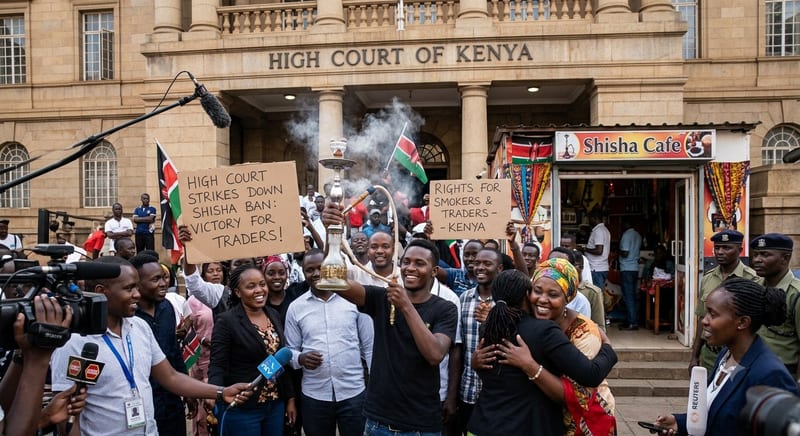
The High Court has dealt the government a major legal blow by declaring Kenya's shisha ban unconstitutional, effectively ending nearly a decade of enforcement under the 2017 regulations.
The ruling prevents authorities from arresting traders or shutting down businesses using the invalidated rules, handing shisha traders and users a significant court victory.
The judgment also faults the government for failing to correct legal defects identified years earlier, rendering the ban legally unenforceable.
High Court Shisha Ban Ruling Declares 2017 Regulations Unconstitutional 
Justice Bahati Mwamuye ruled that the Public Health (Control of Shisha Smoking) Rules, 2017 are no longer legally enforceable.
The court found that the government failed to amend the regulations within the timeline previously set by the High Court.
As a result, the judge held that the regulations automatically lost legal effect, meaning authorities can no longer rely on them to enforce the ban.
The ruling immediately bars government agencies from arresting traders or closing businesses based on the invalidated regulations.
Government Faulted for Ignoring Earlier Court Orders 
The case was filed by the Novel Tobacco Products Association, which argued that the government continued enforcing the ban despite an earlier court decision questioning its legality.
The court agreed, noting that Justice Roselyne Aburili had given the Ministry of Health nine months in 2018 to correct legal flaws in the regulations.
However, the government failed to implement the required amendments before the deadline expired.
Justice Mwamuye ruled that this failure rendered the regulations legally ineffective.
Court Also Nullifies 2025 Government Crackdown Notices 
The High Court further declared unlawful two government notices issued in 2025 that insisted the shisha ban remained in force and directed enforcement operations against traders.
The judgment stops the Ministry of Health and other state agencies from enforcing those notices against members of the association.
Justice Mwamuye also ruled that tobacco products cannot be banned through regulations that fail to comply with the Statutory Instruments Act, 2013.
He added that treating shisha differently from other tobacco products under the current legal framework violates the constitutional right to equality before the law.
The decision marks a major legal victory for shisha traders and users while placing pressure on the government to pursue any future restrictions through constitutionally compliant legislation.