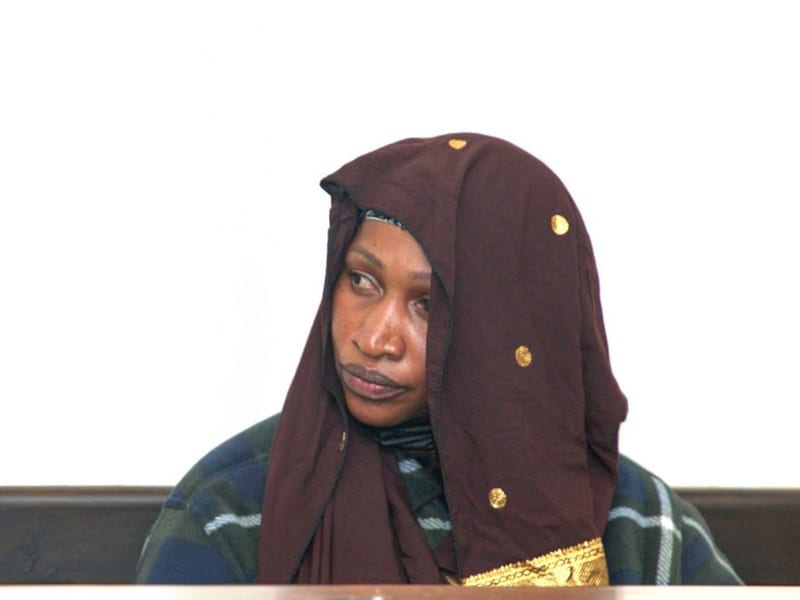
A former Deputy Director of Audit at the Office of the Auditor General has been charged with allegedly using a forged university degree to secure employment and rise through the ranks of one of Kenya’s key public oversight institutions.
Hannah Wambui Mwaura, also known as Anna Wambui Mwaura, is accused of presenting a Bachelor of Commerce degree purportedly issued by Mount Kenya University to qualify for an audit management position, despite investigations indicating that she had not graduated from the institution when she submitted the certificate.
The Ethics and Anti-Corruption Commission (EACC) arrested Mwaura on August 4, 2026, as investigators closed in on allegations that a questionable academic qualification helped open the door to a public-sector career that eventually saw her appointed to the senior position of Deputy Director-Audit.
The case has now placed renewed scrutiny on how government agencies verify academic credentials before hiring and promoting officials.
Degree Certificate at Centre of Investigation 
According to the EACC investigation, the controversy dates back to recruitment conducted by the Office of the Auditor General in 2013.
In July that year, the office advertised the position of Assistant Manager–Audit, setting out a range of academic and professional requirements for prospective applicants.
Among the requirements was a Bachelor's degree from a recognised university, a Master's degree in Business Administration or a related field, at least eight years' experience in auditing and relevant professional accounting qualifications.
Investigators allege that Mwaura submitted a Bachelor of Commerce degree certificate in Accounting, bearing a Second Class Honours (Upper Division), which purportedly showed that she had graduated from Mount Kenya University on August 20, 2010.
The certificate allegedly became a key document supporting her application. However, the EACC says subsequent investigations established a major discrepancy in the timeline.
Investigators found that Mwaura was still a student at Mount Kenya University pursuing the same Bachelor of Commerce programme at the time she allegedly presented the certificate during the recruitment process.
In other words, the commission's case is that the qualification presented as proof of a completed university degree was allegedly obtained before she had actually graduated.
That finding forms the centrepiece of the prosecution's case.
From Recruitment to Deputy Director 
The alleged academic irregularity did not end with employment. According to the EACC, Mwaura's qualification subsequently contributed to her career progression within the Office of the Auditor General, eventually leading to her promotion to Deputy Director-Audit.
The commission estimates that she received KSh28,468,754.14 in salaries between February 3, 2013, and May 23, 2024.
The figure represents more than a decade of public-sector remuneration that investigators now allege was obtained through fraudulent academic credentials.
The EACC is seeking to recover the money and associated benefits through civil proceedings. The case therefore goes beyond the question of whether an academic certificate was forged.
It raises a broader issue about the financial consequences of allegedly securing public employment or promotion through qualifications that did not meet the stated recruitment requirements.
If the allegations are ultimately proved in court, the case could expose weaknesses in the verification systems used by public institutions when recruiting senior officials.
EACC Investigation Uncovers Alleged Discrepancy 
The EACC began investigating the matter after concerns emerged over the authenticity of the academic qualification.
Investigators examined the circumstances surrounding Mwaura's recruitment and the academic documents allegedly used to support her application.
The commission subsequently concluded that there was sufficient evidence to forward the investigation file to the Director of Public Prosecutions (DPP).
The DPP approved four charges against Mwaura: forgery, uttering a false document, deceiving a principal and fraudulent acquisition of public property.
The charges reflect different aspects of the alleged scheme, including the production and use of the disputed document and the alleged financial benefit derived from it.
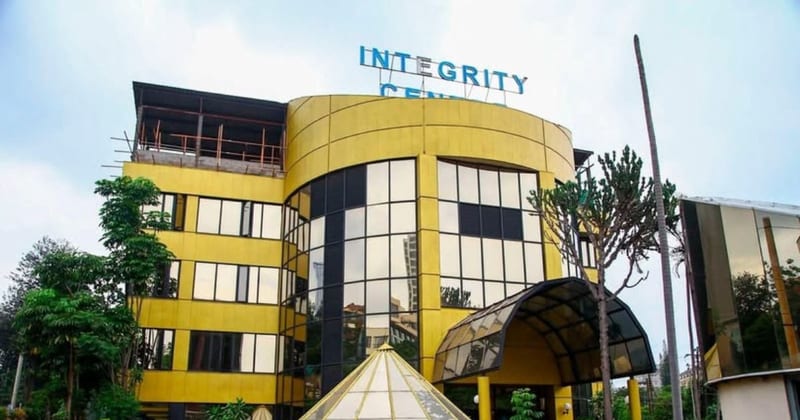
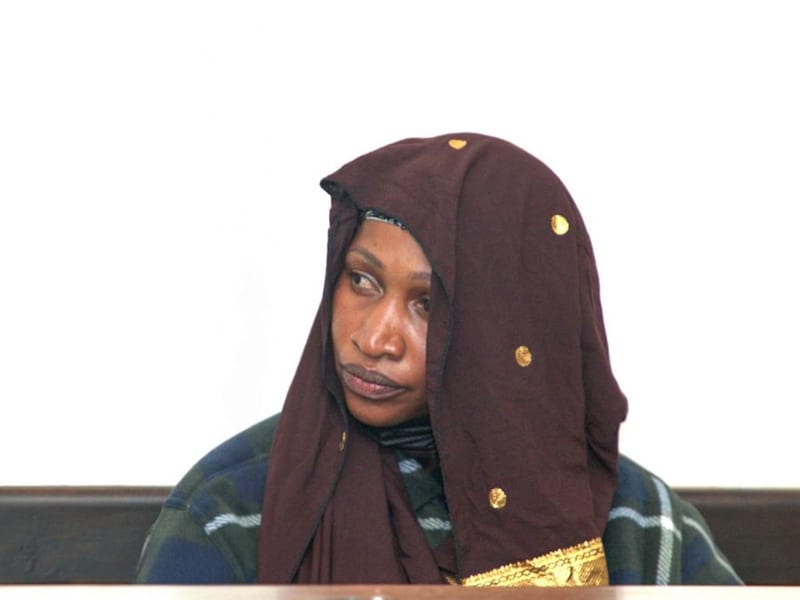
Mwaura was initially booked at the Integrity Centre Police Station after her arrest and released on KSh100,000 police cash bail pending her court appearance. She was later arraigned before the Milimani Anti-Corruption Court, where she denied all the charges.
The court released her on KSh450,000 cash bail or a KSh1 million bond accompanied by a surety of a similar amount.
The case will now proceed through the criminal justice system, where prosecutors will be required to prove the allegations against her.
Public Funds at the Heart of Case 
At the centre of the prosecution is the alleged loss to the public purse. The EACC maintains that Mwaura unlawfully earned KSh28.47 million in salaries over a period stretching from 2013 to 2024.
That period covers approximately 11 years of employment and progression within the public sector.
The commission has announced plans to institute separate civil proceedings seeking recovery of the salaries and benefits it considers to have been obtained through the alleged fraudulent academic qualification.
Such recovery proceedings could become a significant component of the case because they seek to determine whether public funds paid during the period can be reclaimed.
The allegations also raise questions about whether other officials were involved in approving, verifying or relying on the disputed qualification during recruitment and subsequent promotions.
The EACC's investigation, however, has so far focused on the former Deputy Director-Audit.
EACC Issues Warning to Government Agencies 
The commission has used the case to issue a wider warning to government institutions over the verification of academic and professional credentials.
EACC is urging Ministries, Departments and Agencies, as well as county governments, to strengthen checks on certificates presented by applicants and serving officials.
The warning is particularly significant in recruitment and promotion processes involving positions funded by taxpayers.
A failure to verify qualifications, investigators warn, can create a chain of consequences: an unqualified person may secure employment, rise through an institution and receive substantial public remuneration before questions over their credentials are finally raised.
The case also places pressure on public institutions to demonstrate that credential verification is not merely a procedural requirement but a substantive safeguard against fraud.
For an institution tasked with auditing government expenditure, the allegations involving a former senior audit official carry an added institutional significance.
The Office of the Auditor General plays a central role in scrutinising the use of public resources. The prosecution therefore places the spotlight not only on the accused but also on the systems that allowed the alleged qualification to pass through recruitment and promotion processes.
As Mwaura faces the four corruption-related charges, the criminal case will determine whether the allegations are proven beyond the required legal threshold.
For now, she remains presumed innocent unless and until a court determines otherwise.
But the KSh28.47 million salary claim has already transformed what might otherwise have been an academic credential dispute into a major public accountability case—one that could expose serious gaps in how Kenya verifies the qualifications of people entrusted with public office.