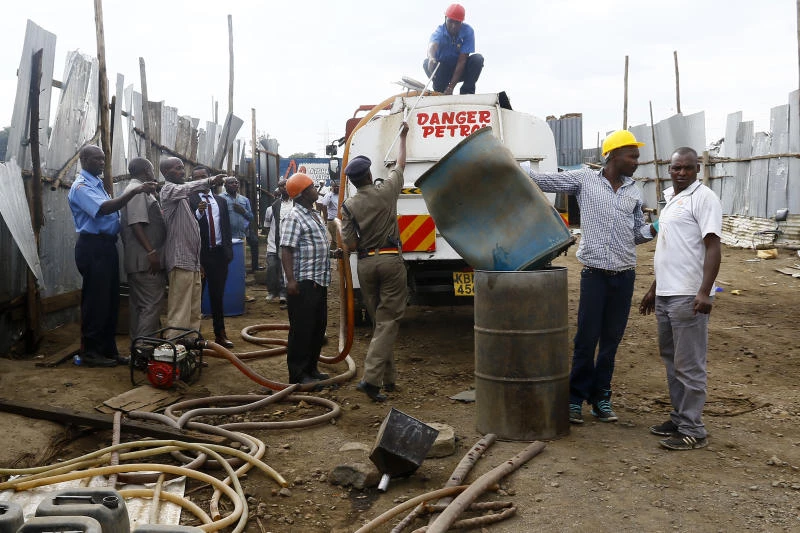


























Independent laboratory tests have confirmed the presence of cancer-causing chemicals in Kenya’s fuel supply, and the results point directly at a Swiss firm that the government pays to keep fuel safe.
The Consumers Federation of Kenya (COFEK) commissioned an internationally accredited American laboratory to test fuel samples drawn from the country’s supply chain. What the tests found should alarm every Kenyan who drives a car, boards a matatu, or lives near a busy road.
The contamination in Kenyan fuel spans both the local market and the broader East African region.
The Full Picture on Contaminants in Kenyan Fuel and Who Is Responsible
The test results do not just confirm contamination — they tell a story about where the problem begins and who allowed it to continue. COFEK commissioned Conti Testing Laboratories in Bethel Park, Pennsylvania, to conduct independent analysis of fuel samples from Kenya’s supply chain. The facility holds international accreditation, making its findings difficult to dismiss.
What the Tests Found in the Fuel Supply Chain
The laboratory detected a significant presence of carcinogenic halogenated bromides in two fuel streams—transit fuel moving through Kenya toward regional East African markets and fuel already diverted into the local Kenyan market. This is not a localized or contained problem. The contamination runs through fuel that millions of people across the region use every single day.
Brominated organic compounds are dangerous by any scientific measure. Research links them to liver, skin, thyroid, and testicular cancers, and laboratory studies have confirmed several of these substances as multisite carcinogens—meaning they can trigger cancer in more than one organ. The harm does not stop at cancer.
These compounds also disrupt the endocrine system, damage the liver, cause neurotoxicity, and contribute to metabolic disorders such as obesity and diabetes. They further suppress immune function by attacking natural killer cells and T-cells, which the body depends on to fight infection and disease.
Most Kenyans never handle raw fuel directly, but that does not protect them. When contaminated fuel burns inside an engine, it releases these compounds into the air as exhaust. Every motorist sitting in Nairobi traffic, every petrol station attendant filling tanks all day, and every resident living along a busy road breathes in trace amounts of these substances on a daily basis. The exposure builds over time.
The Clean Fuel Finding That Changes Everything
The most significant detail in COFEK’s findings is not what the contaminated samples contained; it is what the clean ones revealed. Unmarked domestic fuel samples tested clean, showing none of the dangerous compounds found in the marked fuel.
This single finding shifts the entire conversation. It means the contamination is not entering the supply chain through poor refining, bad storage, or third-party adulteration. The evidence points at the fuel marking process itself—specifically at SICPA SA, the Swiss-based company the Kenyan government contracted to add chemical markers to fuel.
The government hired SICPA SA to help detect adulteration, crack down on fuel smuggling, and track petroleum products across the supply chain. The markers were supposed to protect consumers. According to COFEK’s tests, they may be doing the opposite.
SICPA SA did not win this contract through a competitive process. The government awarded it in June 2022 through a single-bidder arrangement — a procurement method that bypasses open competition — and later extended the contract in June 2025 despite ongoing scrutiny from regulators and industry players.
What COFEK Is Doing and What Must Happen Next
COFEK is not waiting for government action. The federation is pursuing simultaneous regulatory and legal pressure to force immediate change.
On the regulatory front, COFEK is demanding that the Energy and Petroleum Regulatory Authority (EPRA) act without delay. The federation wants EPRA to suspend the SICPA SA fuel marking programme immediately, recall all contaminated fuel currently in circulation, conduct independent contamination tests, and publicly release the full chemical composition of every marking substance used in Kenya’s fuel system.
In the courts, COFEK is filing civil action to permanently ban SICPA SA and Société Générale de Surveillance (SGS) from Kenya’s fuel sector, citing unfair trade practices, anti-competitive conduct, and direct harm to consumers. Separately, COFEK is preparing a private criminal prosecution targeting five named persons of interest on charges of abuse of office and recklessly endangering public health.
These revelations arrive as Kenya already battles a separate fuel scandal involving Cabinet Secretary for Energy Opiyo Wandayi, accused of approving the importation of Ksh4.8 billion worth of substandard fuel reportedly loaded with dangerously high sulfur levels—a compound the Kenya Bureau of Standards says damages vehicle engines.
Kenya’s fuel crisis has crossed a line. It is no longer just an economic problem. It is now a public health emergency, and the government must treat it as one.