IMF Demands Ruto Government Account for Ksh335 Billion Securitised Funds as Public Debt
Copy of Copy of for blogging front page (24)
The International Monetary Fund has fired a direct shot at President William Ruto's government, demanding that Kenya count Ksh335 billion raised through future tax pledges as official public debt. This IMF directive strikes at the heart of Ruto's infrastructure financing strategy and complicates Kenya's push to secure a new IMF lending programme. The government has quietly used future tax revenues to fund roads, railways, airports, and stadiums—without adding those obligations to the national debt register. Now, the IMF wants full accountability, and Treasury Cabinet Secretary John Mbadi has little room to manoeuvre. The IMF's reclassification demand exposes how Kenya has quietly accumulated hidden debt, and Ruto's government must now choose between transparency and the infrastructure legacy it desperately wants.
How Ruto's Government Has Been Hiding Ksh335 Billion in Securitised Funds Off Its Debt Books
The Kenyan government has raised at least Ksh335 billion—roughly USD 2.6 billion—by securitizing specific future tax flows. In plain terms, the government pledged tax money it had not yet collected as collateral to borrow cash today, then used that cash to build major infrastructure projects across the country.
This approach allowed the Treasury to fund construction without officially recording the obligation as a loan. The money funded roads, railways, stadiums, and airports, but it never appeared on Kenya's national debt register. It was, in effect, hidden borrowing.
The IMF has now called this out in a published report, stating plainly that such revenue "should be recognized as a debt liability under the international statistical standards."
The Four Infrastructure Projects Sitting at the Centre of the Controversy
The IMF did not speak in vague terms. It named specific projects and traced exactly how the government pledged different tax streams to finance them.
The sports levy is funding Talanta Stadium, Kenya's planned new national stadium. A fuel tax is bankrolling the Mau-Rironi Summit Dual Carriageway. An import duty is financing the Standard Gauge Railway extension from Naivasha to Malaba, a critical cargo route. And a passenger tax has been earmarked to fund a major upgrade at Jomo Kenyatta International Airport.
These are not small projects. They sit at the centre of Ruto's big-ticket infrastructure agenda. Reclassifying their funding as debt means the entire financing model the government has used to push these projects forward now faces a formal challenge from one of Kenya's most powerful external partners.
The IMF Gives Kenya Two Options—and Neither Is Comfortable
The IMF did not just flag the problem. It told Kenya exactly how to fix the reporting. The fund laid out two options for how the government must record securitization proceeds going forward.
"Securitization of future revenue should either be treated as a loan to the securitization unit or as direct borrowing of the government," the IMF stated. Both options land in the same place: the money counts as debt. There is no third route that allows the government to keep these funds off-balance-sheet.
Financial experts warn that forcing this reclassification will increase Kenya's official borrowing levels, tighten existing debt thresholds, strip away the government's off-budget financing flexibility, and subject all similar deals to far stricter IMF and market scrutiny going forward.
Kenya has repeatedly borrowed from the IMF to stabilize its economy, but each loan comes with strict conditions that squeeze public spending and slow growth.
CS Mbadi Has Resisted This Reclassification Before—But His Position Is Weakening
Treasury CS John Mbadi has not been silent on this issue. He has previously pushed back against the IMF's position, arguing that securitized financing sits off the government's balance sheet and should not be classified as debt. His argument rests on the technical structure of the deals—the tax revenues go through securitization units, creating enough distance to argue the government is not the direct borrower.
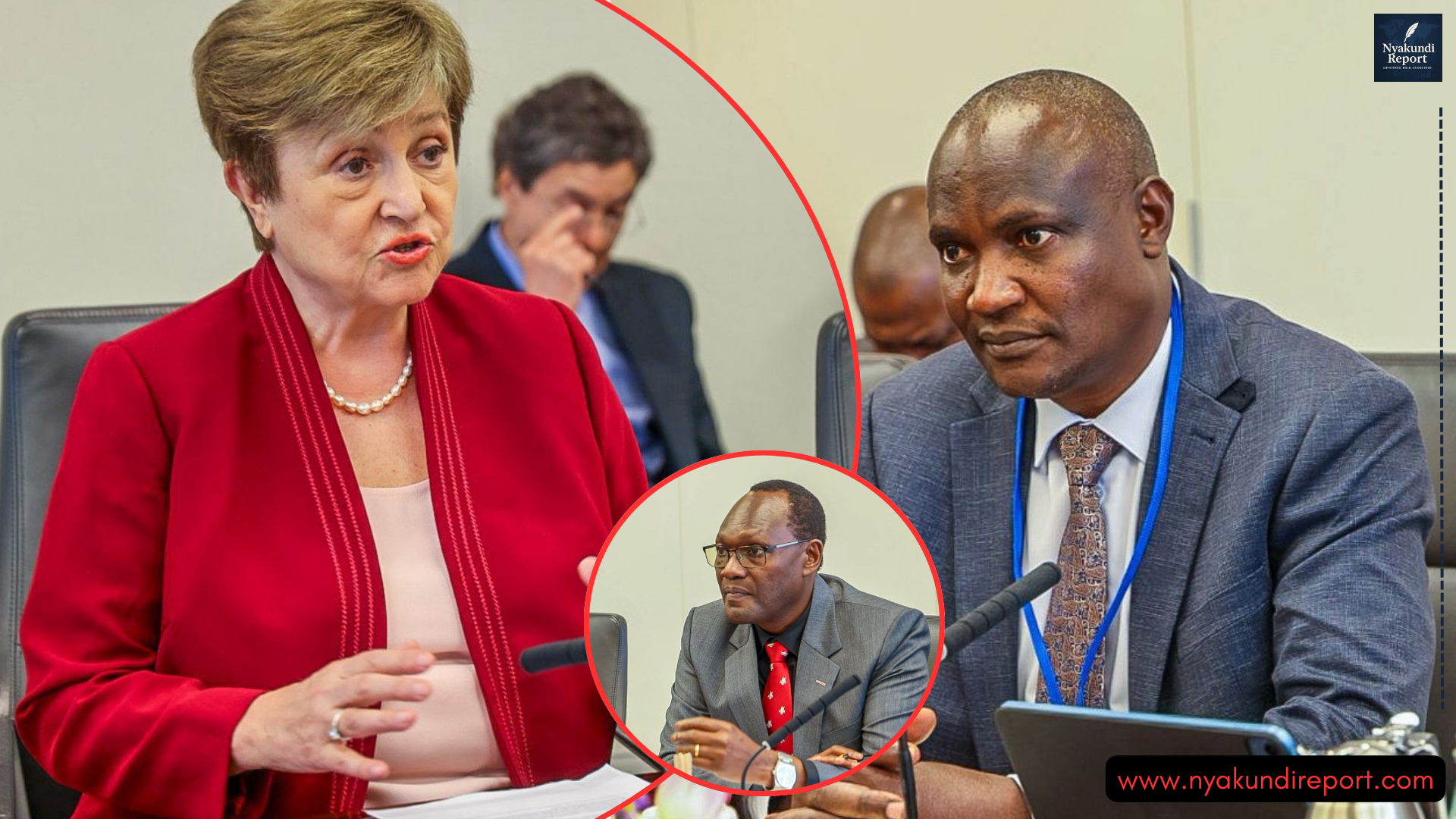
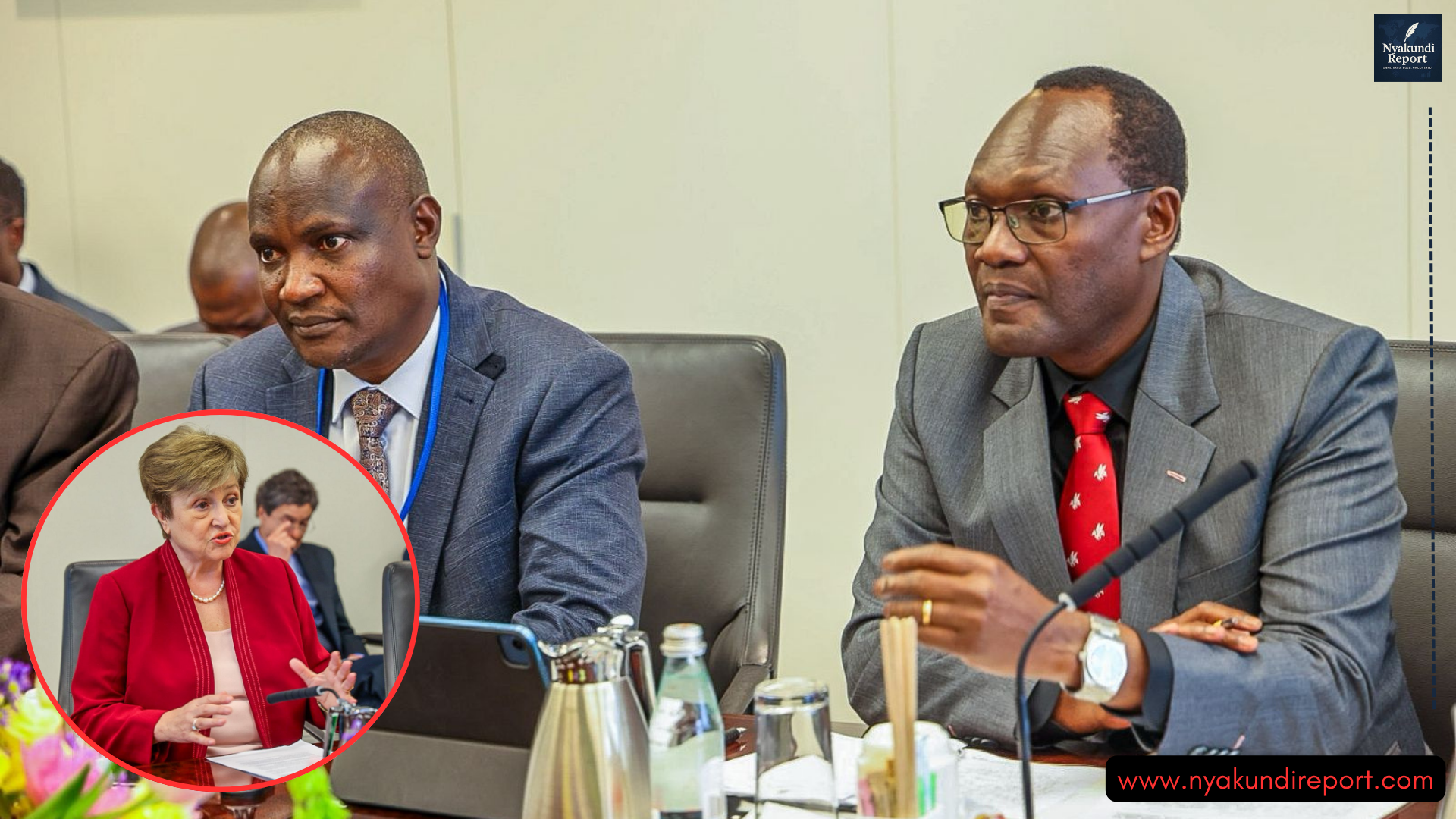
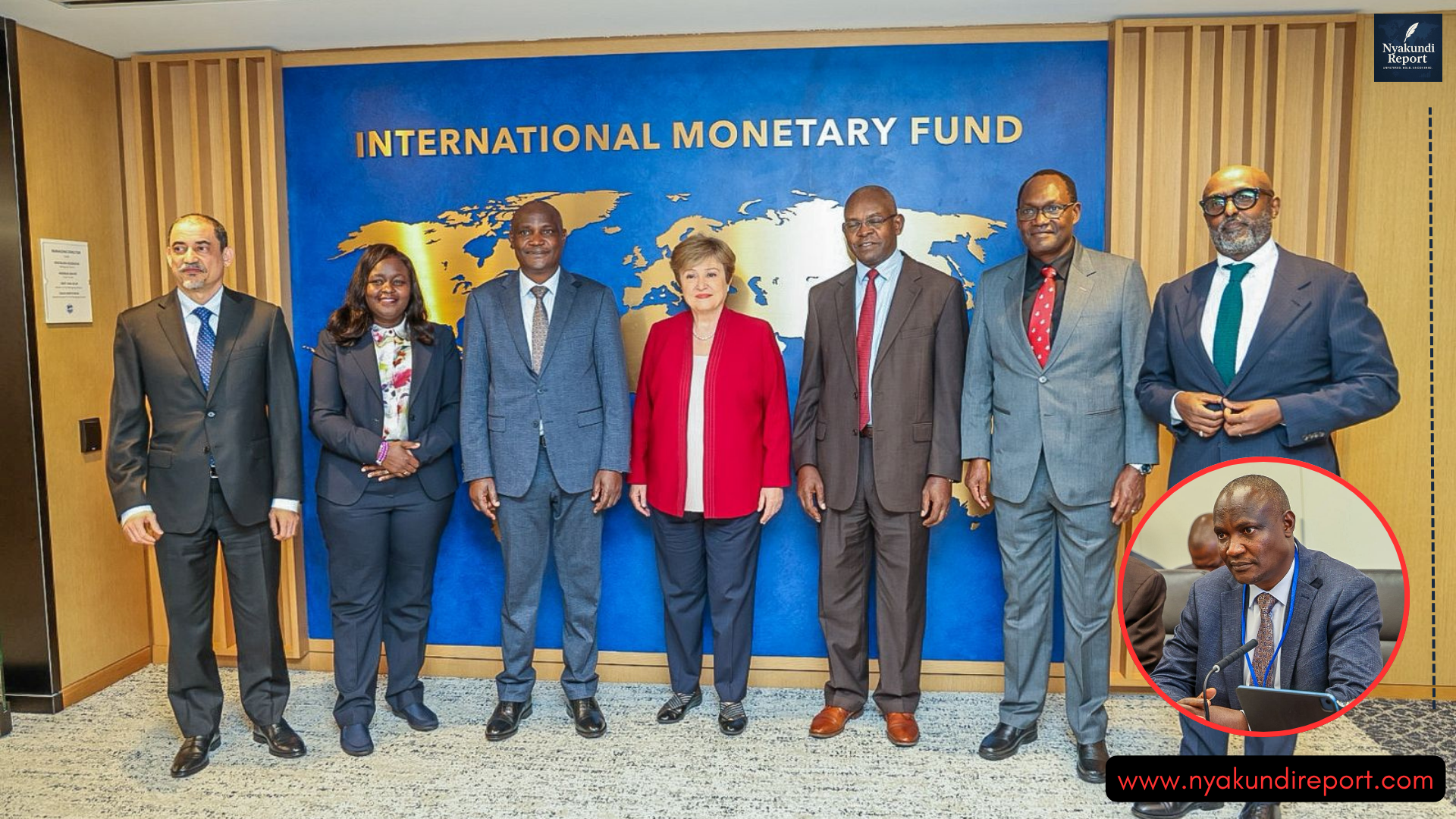
The IMF has now shut that argument down in writing. This pressure landed at a particularly sensitive moment. On Monday, April 13, 2026, Kenya's top economic officials — CS Mbadi, Principal Secretary Chris Kiptoo, and Central Bank of Kenya Governor Kamau Thugge — met IMF Managing Director Kristalina Georgieva at IMF headquarters in Washington, D.C., during the 2026 Spring Meetings.
The talks covered Kenya's macroeconomic performance, inflation, reform priorities, and the economic fallout from the Middle East conflict. The IMF signaled its willingness to support Kenya through policy advice and financial assistance—but that support comes with conditions, and accountability for the Ksh335 billion securitized funds appears to be firmly on the table.
For a government already navigating fiscal pressure, a strained relationship with lenders, and public anger over taxes, the IMF's reclassification demand adds another serious weight to an already heavy load. Ruto's infrastructure legacy projects may now carry a price tag the Treasury can no longer hide.
 The IMF's reclassification demand exposes how Kenya has quietly accumulated hidden debt, and Ruto's government must now choose between transparency and the infrastructure legacy it desperately wants.
 Kenya has repeatedly borrowed from the IMF to stabilize its economy, but each loan comes with strict conditions that squeeze public spending and slow growth.
Reading is free. Sign in to comment.