Workers Expose Dark Side of JAZA Supermarket's Rapid Expansion: Missing Contracts, Unclear Pay Structures, Long Working Hours and Sudden Transfers

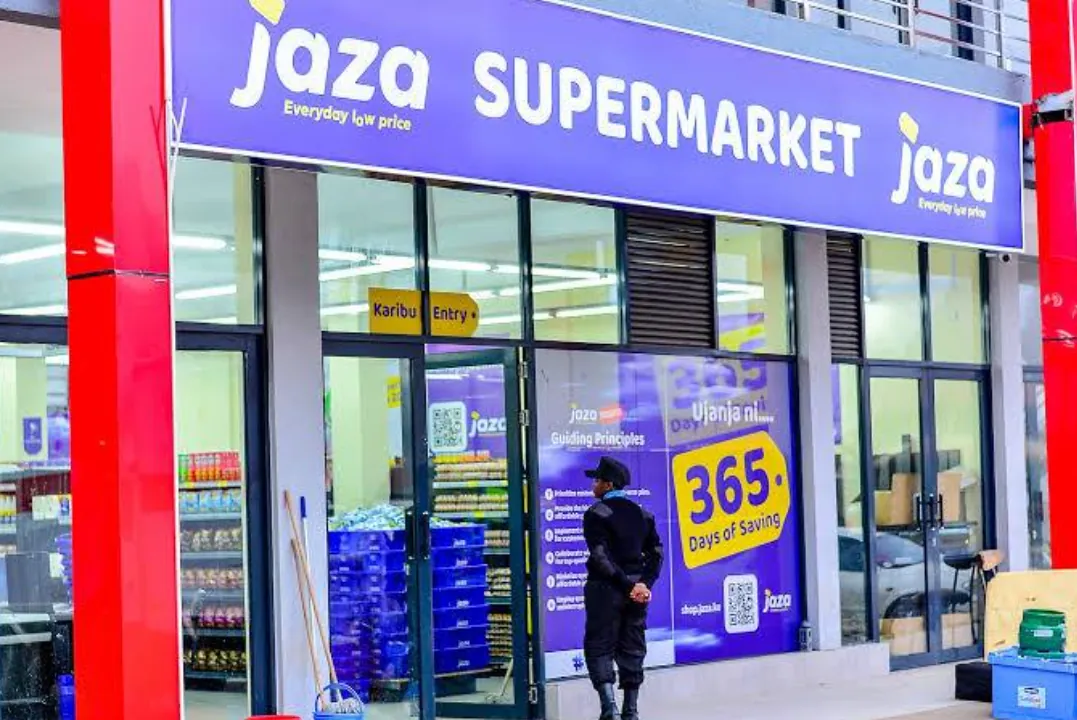
Aggressive market entrant JAZA Supermarkets has forced its way into Kenya’s retail conversation with an expansion strategy that is not only difficult to ignore but is also beginning to redefine the speed and intensity at which new players can establish a presence in an already crowded and highly competitive space.
The opening of six outlets across Nairobi in a single day does not merely mark growth; it sets a pace that few operators in the country’s supermarket landscape have attempted, let alone executed within such a compressed timeframe.
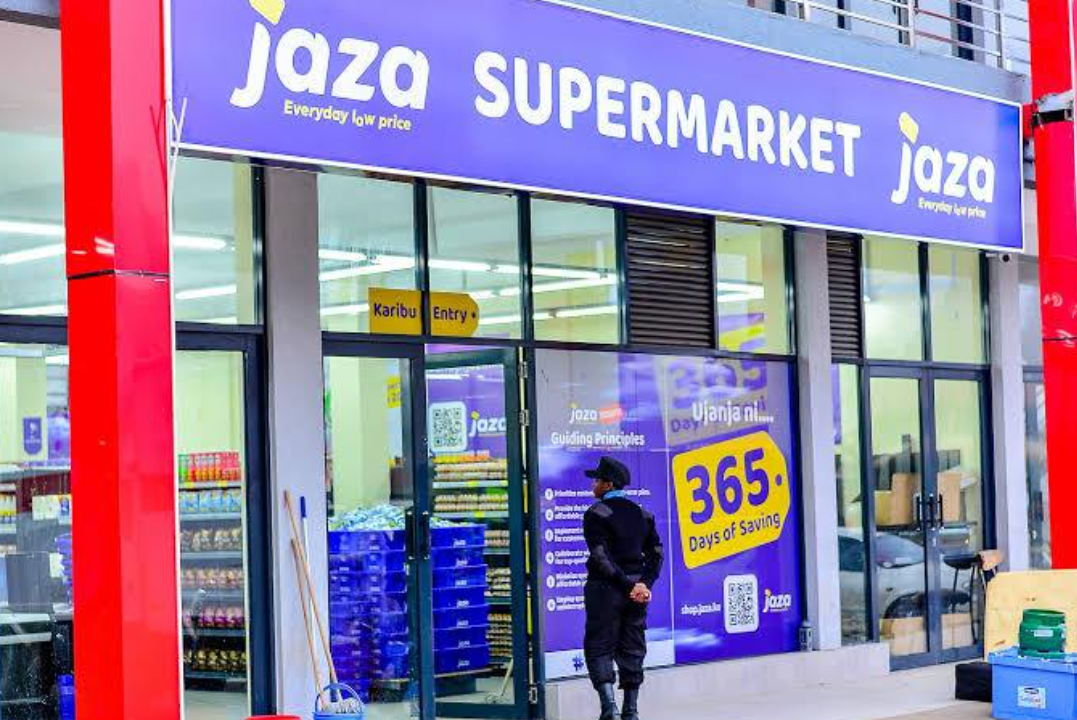
The new branches, spread across Kiambu Road, Thindigua, Madaraka, Utawala, Bahati, and Manyanja Road, position the chain squarely within densely populated estates, deliberately placing it at the centre of everyday consumer movement, where proximity, price sensitivity, and convenience increasingly dictate purchasing decisions in ways that are reshaping how urban households approach basic shopping.
Since its launch in 2023, the chain has expanded at a pace that outstrips many traditional players during their formative years, compressing what would ordinarily take several years of gradual scaling into a much shorter window defined by rapid site acquisition, quick store setup, and immediate operational rollout. Its model remains straightforward on the surface.
Smaller outlets, essential goods, lower price points, and a heavy concentration within residential areas.
But beneath that simplicity lies a system that depends heavily on speed, coordination, and sustained operational pressure.
This approach places JAZA in direct competition not only with established supermarket chains that have long dominated the formal retail space but also with informal neighborhood shops that have historically thrived on proximity and flexibility, effectively forcing the company to operate within two competitive fronts at once while targeting the same price-sensitive customer base.
But even as storefronts multiply and foot traffic builds across these newly opened locations, accounts emerging from people who say they have interacted with the company, either as employees navigating its internal systems or as applicants attempting to enter them, begin to point toward mounting internal strain that contrasts sharply with the outward image of controlled and confident expansion.
Growth Strategy Built on Speed and Volume
JAZA’s expansion reflects a calculated response to shifting consumer behavior, where the realities of urban living are steadily reshaping how, where, and how often people shop for everyday essentials.
Urban households are moving away from large, infrequent shopping trips to malls and centralized outlets, replacing them with smaller, more frequent purchases made closer to home, a shift driven by the combined pressures of transport costs, time constraints, and tighter household budgets that leave little room for inefficiency.
The company’s decision to embed outlets within residential estates taps directly into this demand, allowing it to position itself not as a destination store, but as an integrated part of the daily routines of the communities it serves.
Its operating model leans on a combination of high product turnover, tightly controlled pricing on essential goods, in-house branding for items such as sugar, detergents, and tissue paper, and local sourcing structures designed to keep supply chains responsive and cost-efficient.
Taken together, these elements form a system built for rapid scaling, where new outlets can be activated quickly in locations where demand is already present and waiting.
Opening six branches at once, though, extends beyond a simple commercial milestone and moves into the realm of operational stress-testing, where staffing, logistics, procurement, and coordination must align simultaneously across multiple sites without breakdown.
It is within this exact pressure point—where expansion speed meets operational reality—that worker accounts begin to reveal a different side of the story.
Recruitment Pipeline Under Strain
Before employees even enter the system, the hiring process itself is being questioned by those who went through it, with several applicants describing an experience marked by limited clarity, uneven communication, and growing personal cost.
One applicant from Eldoret detailed the financial burden tied to pursuing an opportunity that never materialised in a clear or structured way:
“I was invited for an interview and travelled with the expectation that this was a serious opportunity. I had to borrow Ksh 4,000 for transport. During the process, the recruitment team was not transparent. They avoided giving clear answers, and everything felt uncertain. At some point, I realised I could not continue because I was already in debt and still had no clear understanding of what I was committing to.”
The account reflects a process where candidates commit both time and financial resources without being given full visibility into the role they are pursuing, creating a situation where risk is transferred almost entirely onto the applicant.
Others described similar experiences, progressing through different stages of recruitment without receiving clear information about roles, compensation structures, or expectations, leaving them to navigate the process without a firm understanding of what awaited them at the end.
In a fast-expanding chain, recruitment serves as the foundation upon which the entire workforce is built, and any lack of clarity at this stage does not remain isolated—it tends to carry forward into employment itself, shaping how new staff enter and experience the organisation.
Inside the Workplace: No Contracts, No Clear Terms
Once inside, some employees say the lack of structure continues in ways that directly affect their ability to understand and navigate their roles.
A current worker described an employment setup where formal documentation is absent:
“Since I started working, I have not received a formal offer letter or a written contract. There has been no clear communication about salary, payment schedule, or benefits. I have tried to seek clarification, but there has been no definitive response. You are expected to continue working without having those details in writing, which makes it difficult to know where you stand.”
The absence of written agreements introduces a level of uncertainty that extends beyond administrative oversight, affecting how employees interpret their responsibilities, their compensation, and their long-term position within the company.
Another source expanded on this lack of clarity:
“Critical details are either withheld or addressed vaguely. You are left to figure things out as you go. That affects how you plan your life because you don’t have certainty about income or conditions.”
Taken together, these accounts point toward internal systems that may not be evolving at the same pace as the company’s outward expansion.
Long Hours and Sudden Transfers
As new branches come online and operations expand across multiple locations within a compressed period, staff describe a growing intensity in daily workloads that appears to mirror the speed at which the company itself is scaling, creating conditions where the demand placed on employees rises sharply without a corresponding sense of structure or predictability.
One employee outlined the strain embedded in routine schedules:
“You can work straight shifts of 12 to 14 hours. There is no proper structure for overtime, and you are expected to keep going because the stores must remain operational.”
Such extended working hours, particularly when repeated over consecutive days, begin to shift from being occasional operational demands to forming part of a sustained pattern, raising questions about how workload is distributed and managed across newly opened outlets that require immediate staffing stability.
The same source went further, describing abrupt staff movements between branches that appear to be driven by immediate operational gaps rather than forward planning:
“You might be informed late at night that you are being moved to another location, and you are expected to report there the next morning. There is no time to prepare or adjust.”
These sudden transfers, especially when communicated with little notice, introduce an additional layer of instability into the work environment, where employees are required to constantly adapt to new locations, teams, and routines without sufficient transition time.
Taken together, the combination of long working hours and rapid redeployment points toward an operational model that is heavily reactive, where immediate needs at store level take precedence over structured workforce planning.
Fear of Speaking Out
Beyond the physical demands of the job and the administrative gaps described by staff, another issue begins to emerge—one that touches on workplace culture and the internal dynamics between employees and management.
One source described an environment where raising concerns is approached with caution:
“When you raise concerns about working hours or transfers, you are not supported. Instead, you start being treated differently. There is a feeling that speaking up can put your position at risk.”
This perception, whether formally acknowledged or not, has a direct impact on how information flows within an organisation, as employees may choose to remain silent rather than risk negative consequences, effectively limiting the ability of internal systems to identify and resolve issues early.
In such an environment, problems that might otherwise be addressed through routine feedback channels can persist and compound over time, particularly in a fast-growing organisation where new staff are continuously entering the system.
Expansion Outpacing Internal Systems?
The pattern that emerges across these accounts points toward a central tension that often defines high-growth organisations: the gap between external expansion and internal capacity.
Opening multiple outlets within a single day increases demand simultaneously across several operational layers, each of which must function with precision to maintain stability.
Recruitment pipelines must supply staff quickly enough to fill new positions, training processes must equip those staff with the skills required to operate effectively, supply chains must remain consistent to avoid stock disruptions, and store-level management must coordinate all of these moving parts in real time.
When any one of these elements begins to lag, the effects are rarely isolated.
Instead, they ripple across the system, showing up in ways that are often first experienced by employees on the ground.
The worker testimonies presented here suggest that some of these pressure points are beginning to surface, not as isolated incidents, but as recurring experiences that cut across different stages of engagement with the company—from recruitment to day-to-day operations.
The Stakes for Kenya’s Retail Sector
JAZA’s rise is unfolding within a retail environment that is already undergoing rapid change, where competition is no longer defined solely by store size or brand recognition, but increasingly by pricing strategy, location efficiency, and the ability to align closely with shifting consumer habits.
Across Nairobi and its surrounding areas, the battle for market share is intensifying along several key fronts: affordability of goods, proximity to residential populations, convenience of access, and the ability to retain customer loyalty in a market where switching between outlets carries little cost for the consumer.
New entrants are capitalising on these dynamics by moving quickly and positioning themselves closer to where people live, effectively redrawing the map of everyday shopping and challenging longer-established players to adapt or risk losing ground.
Within this environment, rapid expansion can serve as both an advantage and a risk.
While it allows a company to secure market presence quickly, it also places sustained pressure on internal systems that must scale at the same rate in order to support that growth.
Workforce management, in particular, becomes a critical factor, as the ability to recruit, onboard, support, and retain staff directly influences whether expansion translates into long-term stability or operational strain.
Key Issues Emerging from Worker Accounts
Across the testimonies reviewed, several themes appear repeatedly, forming a pattern that provides insight into the internal experience of those interacting with the company:
- Lack of transparency during recruitment processes, leaving applicants without clear expectations
- Financial strain on candidates who commit personal resources in pursuit of opportunities that remain undefined
- Absence of formal employment contracts outlining terms, responsibilities, and compensation
- Unclear salary structures and payment timelines that create uncertainty for workers
- Extended working hours that go beyond standard shifts without clear frameworks for compensation
- Abrupt and disruptive staff transfers that limit stability and planning
- Reluctance among employees to raise concerns due to perceived risks associated with speaking out
Taken together, these issues do not exist in isolation but instead form an interconnected set of challenges that reflect the strain placed on internal systems during periods of rapid expansion.
A Defining Test
JAZA’s expansion has already altered the pace at which new entrants can establish themselves within Kenya’s supermarket sector, demonstrating that rapid scaling is possible within a relatively short timeframe when supported by a clear market strategy and strong demand for affordable goods.
The company has shown an ability to secure locations, activate stores quickly, and position itself within high-density areas where customer traffic is consistent and predictable.
The question that now emerges is not whether the company can continue expanding at this pace, but whether the internal structures that support its workforce can evolve quickly enough to sustain that growth without generating further strain.
The reports emerging from employees and applicants bring this question into sharper focus, shifting attention from storefront visibility to the internal experiences that underpin daily operations.
As the chain continues to grow, the relationship between expansion speed and internal stability is likely to become an increasingly important measure of its long-term trajectory, one that will shape not only how the company is perceived but also how effectively it can maintain its position within an increasingly competitive and fast-moving market.