











Kenya Pipeline Company sits at the centre of one of the most explosive financial scandals in the country’s infrastructure history.
A Lebanese contractor, a Nigerian bank, a Sh63 billion pipeline contract, and a jaw-dropping USD 29 million demand letter bearing the name of Kenya’s most prominent lawyer have collided in a legal storm that threatens public resources and exposes deep failures in how Kenya manages strategic infrastructure.
KPC billions under siege is no longer a headline—it is a crisis demanding immediate answers from those responsible.
KPC Billions Under Siege Trace Back to a 2006 Nigerian Debenture That Nobody in Kenya Was Watching
The roots of this scandal do not begin in Nairobi. They began in Lagos in February 2006, when Zakhem Construction Nigeria Limited signed a debenture agreement with Ecobank Nigeria PLC—a financial document that pledged virtually every asset Zakhem owned, including future receivables from projects anywhere in the world, as collateral for a commercial loan.
That single document, registered with Nigeria’s Corporate Affairs Commission in June 2006, sat largely dormant for years. Nobody in Kenya’s government was paying attention to it. Yet it would eventually become the financial tripwire that pulled Kenya Pipeline Company into a decade-long legal battle over billions of shillings it never borrowed.
In July 2014, KPC awarded Zakhem International Construction Limited a flagship infrastructure contract—the construction, testing, and commissioning of the Line 5 pipeline connecting Mombasa to Nairobi across 450 kilometres. The contract value stood at USD 484,502,886.40, equivalent to roughly Sh63 billion. The project was designed to modernize Kenya’s petroleum transport network, reduce tanker traffic on highways, and strengthen national energy security.
Two months after securing the contract, Zakhem’s board met in Lagos and approved a new USD 300 million credit facility from Ecobank Nigeria. The securities were extensive—an all-asset debenture covering present and future assets, corporate guarantees from Zakhem Group affiliates, and a personal guarantee from Albert Zakhem backed by a sworn declaration of wealth.
How Zakhem’s Unconditional Domiciliation Letters Quietly Handed Control of Sh63 Billion in KPC Payments to a Nigerian Bank
On October 11, 2014, Zakhem issued domiciliation letters instructing Kenya Pipeline Company to route seventy percent of the entire pipeline contract value into Zakhem accounts held at Ecobank Nigeria, with the remaining thirty percent directed to Ecobank Kenya. The instructions were described as unconditional and irrevocable. KPC acknowledged receipt, and payments reportedly began flowing exactly as instructed.
The majority of the revenue generated by a Kenyan state infrastructure project was now flowing directly through a Nigerian commercial bank financing a Lebanese contractor.
How a Foreign Bank Turned KPC Into a Target for a USD 52 Million Lawsuit It Never Saw Coming
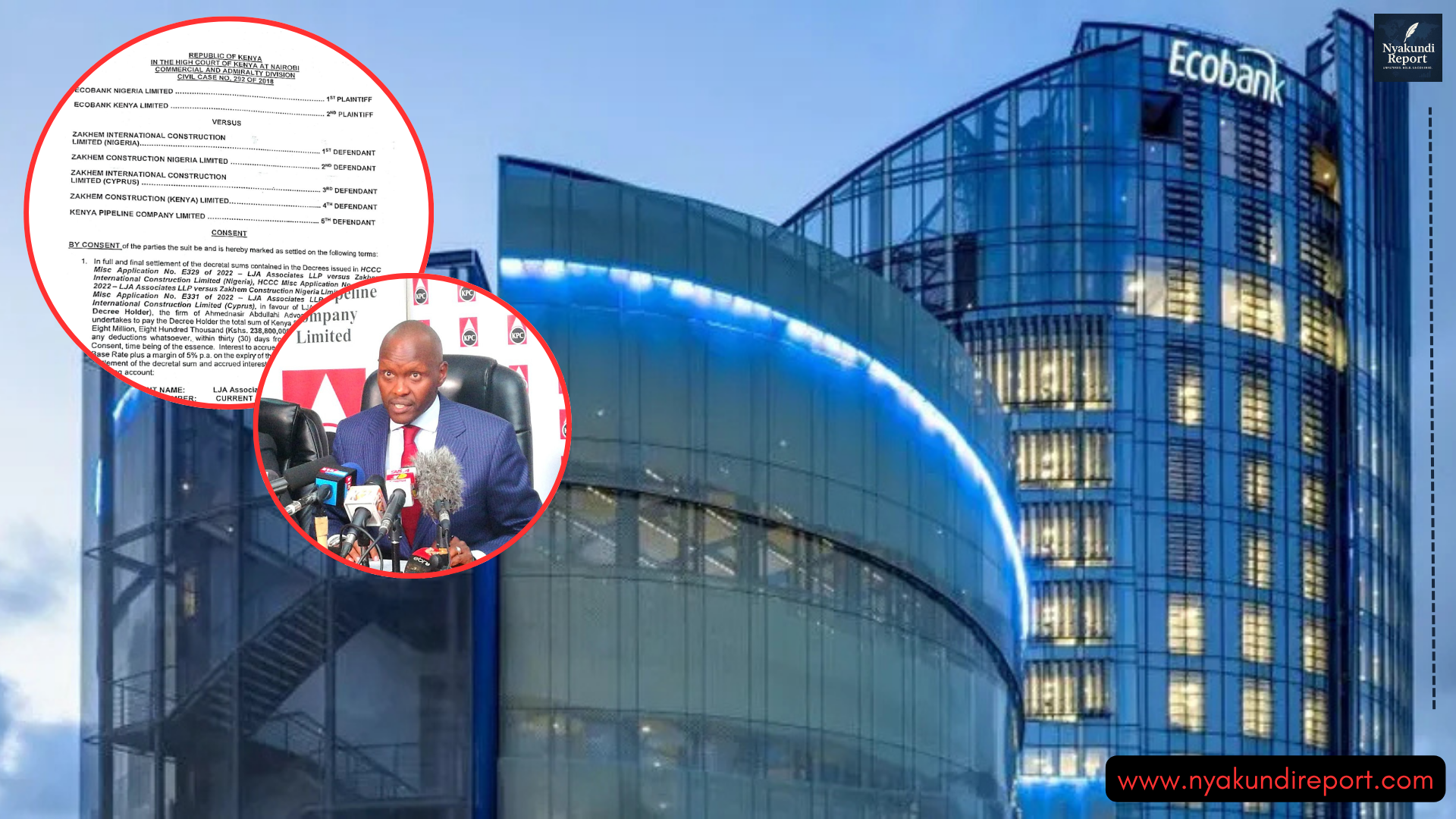
When Zakhem began defaulting on its Ecobank loan obligations, the bank did not simply pursue the contractor it had lent money to. In 2018, Ecobank Nigeria and Ecobank Kenya filed a lawsuit in Kenya’s High Court demanding payment of more than USD 52 million—from both Zakhem and Kenya Pipeline Company jointly.
That move stunned observers and redefined the nature of the dispute.
KPC had not borrowed a single dollar from Ecobank. The corporation’s role was straightforward—it contracted a construction company to build a pipeline and paid for the work as contractually required. Yet suddenly, Kenya’s strategic petroleum transport corporation found itself named as a joint defendant in a massive debt recovery suit driven entirely by a private commercial lending arrangement it had no direct part in creating.
Critics immediately argued that the legal strategy effectively weaponized Kenya’s court system against a public entity managing critical national infrastructure. Garnishee orders targeting funds owed by KPC to Zakhem were filed. Multiple suits and applications spread across different courts.
Subcontractors who had worked on the pipeline and remained unpaid filed their own claims. Azicon Kenya Limited, for example, sought approximately Sh460 million for electrical and telecommunications work completed on the project, only to discover that Zakhem’s Kenyan bank accounts held balances of just a few hundred thousand shillings.
The financial trap had fully closed around KPC, and the legal battles showed no sign of ending.
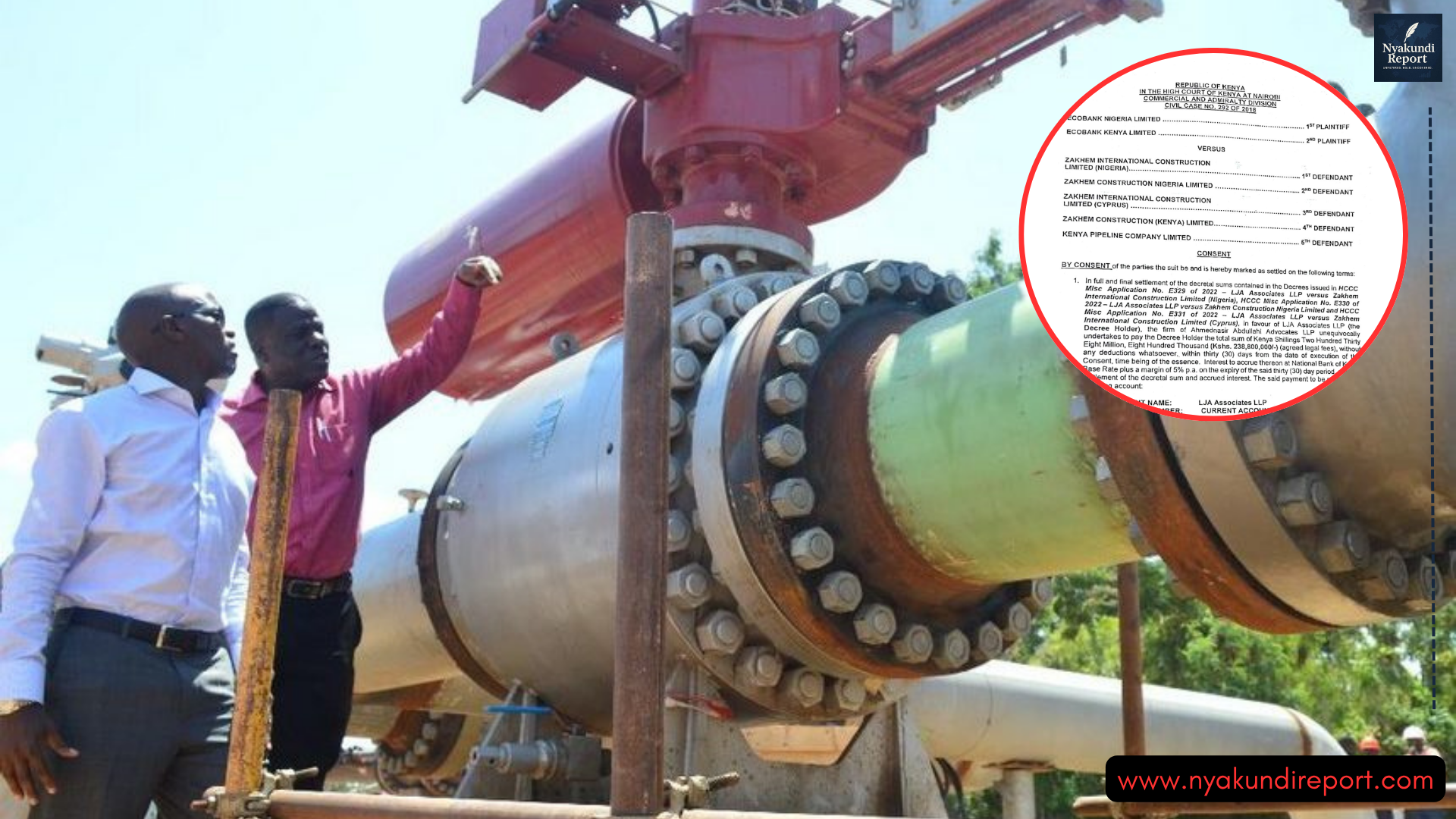
The Ahmednasir Demand Letter That Turned KPC Billions Into a National Scandal
It is at this stage that the controversy takes its most explosive turn. Documents now circulating publicly, amplified through a detailed thread by Nairobi politician Robert Alai, include reference to a demand letter dated July 4, 2023, reportedly issued by Ahmednasir Abdullahi Advocates LLP—the firm of one of Kenya’s most high-profile and politically connected lawyers—seeking payment of USD 29,308,349.80 from Kenya Pipeline Company.
Converted to Kenyan shillings, that figure represents approximately Sh3.8 billion directed at a state corporation whose primary responsibility is transporting fuel safely across the country.
The appearance of that demand letter has electrified the public debate for two reasons. First, the sheer scale of the sum being demanded from a public institution is staggering. Second, it raises immediate questions about the legal basis for such a claim and what agreement or arrangement underpins a demand of that magnitude connected to a pipeline dispute.
Critics argue that the litigation surrounding the project has evolved into a sophisticated financial struggle where banks, contractors, and law firms all pursue different portions of the same payment stream—with KPC and ultimately Kenyan taxpayers trapped in the middle.
The documents further reveal a troubling discrepancy. KPC’s own 2022 annual report lists the banks that officially financed the Line 5 pipeline project. Ecobank Nigeria does not appear among them.
Ecobank Nigeria does not appear in KPC’s officially disclosed financing structure, yet the bank aggressively pursued claims directly connected to the pipeline project worth billions of shillings.
Someone must now stand before Kenyans and explain exactly how that happened, who authorized it, and why the public financing records tell a completely different story from what unfolded inside Kenya’s courts.
Why the KPC Billions Under Siege Scandal Demands a Full Government Investigation Right Now
The financial footprint surrounding the Zakhem pipeline contract is staggering in its scale. The original contract exceeded USD 484 million. The Ecobank claim surpassed USD 52 million. The Ahmednasir demand letter adds another USD 29 million.
Legal costs, settlement negotiations, subcontractor claims, and tax obligations pile billions more onto the total exposure. When combined, the financial consequences connected to this single infrastructure project run into tens of billions of shillings drawn from public resources.
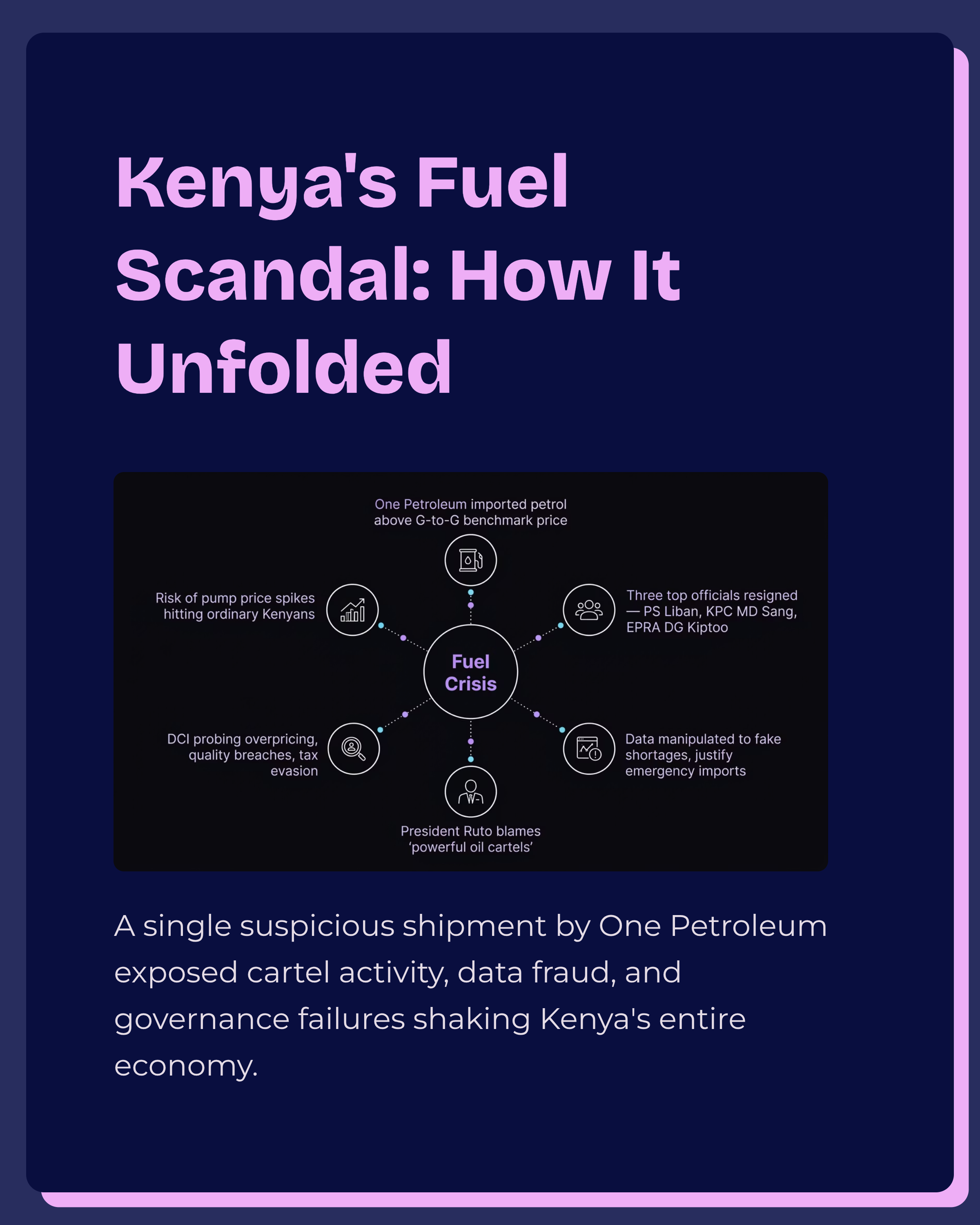
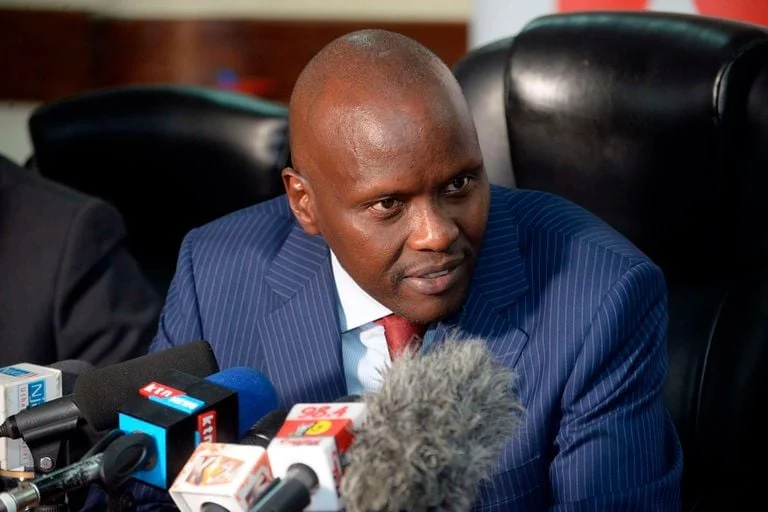
The timing makes the scandal even more urgent. In April 2026, authorities arrested Kenya Pipeline Company Managing Director Joe Sang alongside other senior energy sector officials over fuel data manipulation allegations.
Sang’s tenure at KPC covers the exact period when the Zakhem contract was being executed and disputed, placing him at the centre of two overlapping scandals simultaneously. Investigators probing the current fuel crisis are now facing growing pressure to extend their scrutiny beyond the immediate fuel data allegations and dig deep into the full financial documentation surrounding the pipeline deal.
Kenya Pipeline Company is not a peripheral institution. It operates the arteries through which petroleum products flow from Mombasa to inland depots, supporting fuel supply across Kenya and several neighbouring countries. Financial instability within such a strategic institution carries direct consequences for energy security, transport costs, and the daily lives of millions of Kenyans.
The KPC billions under siege scandal is not a corporate dispute between private companies. It is a governance failure involving public infrastructure, public money, and public trust. Every document, every demand letter, every domiciliation instruction, and every court ruling connected to this project belongs in the public domain.