


















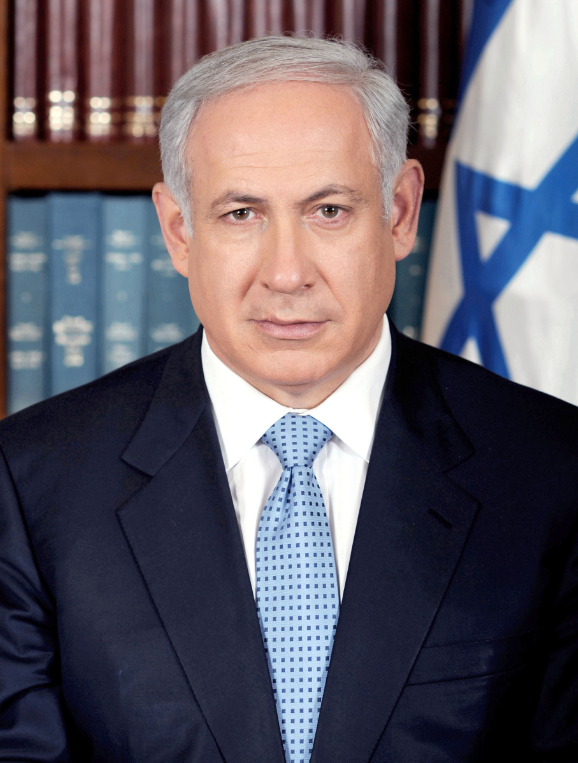
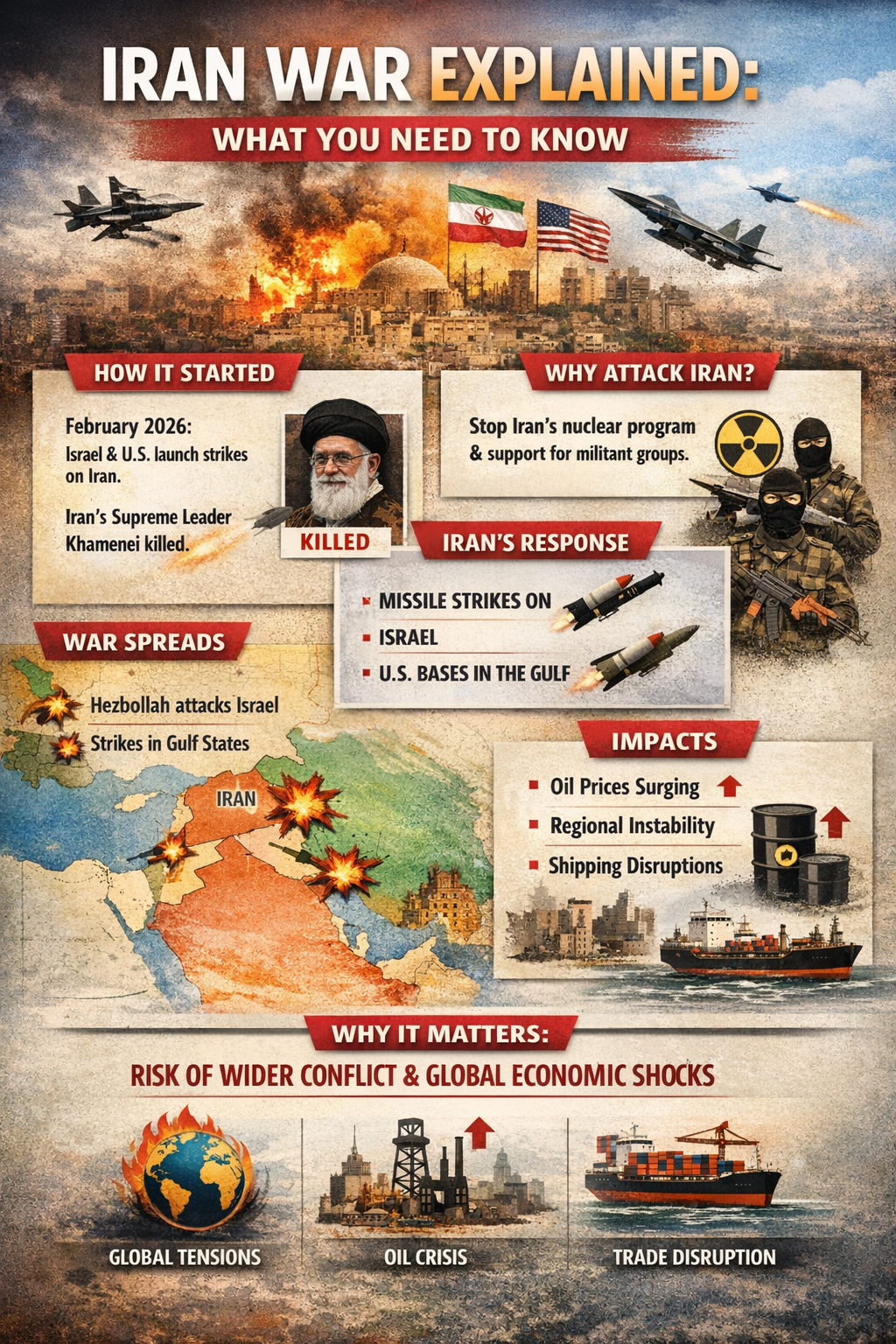
The “Iran war” is not a single, declared world war, but a fast‑moving mix of direct US‑Israel strikes on Iran, Iranian retaliation, and proxy fighting across the Middle East.
To understand it, you have to see how years of tension over Iran’s nuclear program, its regional network of allies, and domestic unrest turned into open confrontation in 2024–2026.
How did this war start?
The current phase grew out of two tracks: a long Iran–Israel shadow war and escalating US–Iran hostility.
Israel and Iran had clashed indirectly for years through cyberattacks, assassinations, and strikes on Iranian‑backed forces in Syria, Iraq, and Lebanon.
In 2024, that changed when Iran fired more than 300 drones and missiles directly at Israel after an Israeli strike on Iranian targets, marking the first open, state‑to‑state attack of its kind.
Through 2024–2025, Israel responded with deeper airstrikes on Iran’s partners and infrastructure.
While Iran’s partners, Hezbollah in Lebanon, armed groups in Iraq and Syria, and Yemen’s Houthis, hit Israeli and sometimes US‑linked targets.
The US initially tried to contain the escalation but remained closely aligned with Israel and kept tightening sanctions on Iran.
At home, Iran was shaken by large protests and harsh crackdowns, which further poisoned relations with Washington and European capitals.
By early 2026, tensions tipped.
Washington moved major air and naval assets into the region, and Iranian officials said they were “ready for war.”
On 28 February 2026, the US and Israel launched a coordinated strike campaign described in some analyses as aimed at destabilizing or even toppling the Islamic Republic, hitting nuclear facilities, missile sites, naval assets, and senior command figures.
US President Donald Trump framed it as a move to stop Iran’s nuclear ambitions, dismantle its missile and regional military capabilities, and “defend US interests and allies.”
What are the main goals and fears?
For Washington and Tel Aviv, the stated goals are to stop Iran from becoming a nuclear weapons power and weaken its missile and drone forces.
And break its ability to arm and direct proxies like Hezbollah and the Houthis.
Also, they calculate that heavy pressure might shake the regime’s grip at a time when protests and repression already damage domestic legitimacy.
For Tehran, the war is framed as resistance to foreign aggression and defense of its sovereignty.
Iran sees its missile program and regional allies as vital to deterring Israel and the US, especially given memories of the Iran–Iraq War and decades of sanctions.
Analysts warn that if Iran’s leaders come to believe the regime itself is at risk, they could choose extreme options.
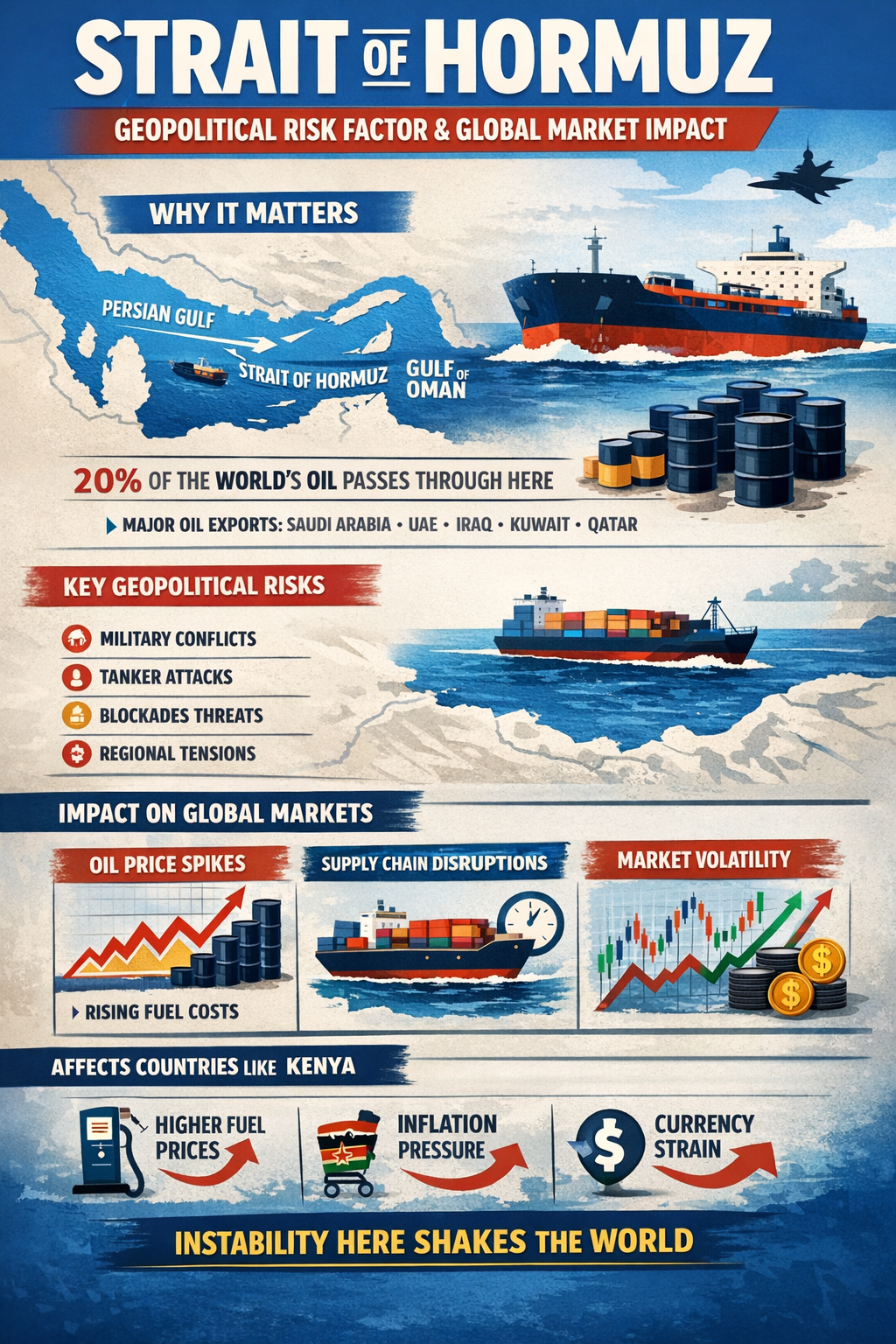
From massive missile barrages across the region to attempts to disrupt oil traffic through the Strait of Hormuz, a move that would hurt Iran but also cause a global economic shock.
Neighboring states fear being dragged in.
Gulf countries worry about missile and drone attacks on their cities and energy infrastructure.
Turkey fears higher energy prices and refugee flows if Iran destabilizes or collapses.
Lebanon, Iraq, Syria, and Yemen are already deeply entangled because Iran‑linked armed groups there are part of the battlefield.
How is the war being fought?
The conflict is playing out on several layers at once.
There are direct US–Israel strikes inside Iran: air and missile attacks on nuclear facilities, bases, air defenses, and Revolutionary Guards leadership.
Iran has responded with its own missiles and drones against Israeli targets and US bases and by unleashing or encouraging attacks by allied groups in Lebanon, Iraq, Syria, and Yemen.
There is also a cyber and economic front.
Both sides use cyber‑operations against infrastructure and financial systems, while US‑led sanctions seek to squeeze Iran’s oil revenues and banking channels even further.
In parallel, diplomacy continues in the UN, regional organizations, and through countries such as Qatar, Oman, Turkey, and European states, trying to broker pauses or de‑escalation.
On the ground, civilians are paying the highest price.
Missile and drone strikes risk hitting cities; disruption at the Strait of Hormuz or in Gulf shipping lanes threatens global oil supplies and could drive up food and fuel costs far beyond the region.
Analysts also warn of a potential refugee crisis if Iran’s internal situation deteriorates into wider unrest or even civil conflict.
Why does this war matter beyond the Middle East?
The Iran war affects three big global issues at once: energy markets, nuclear non‑proliferation, and great‑power rivalry.
A wider or longer conflict could keep oil prices high and volatile, hurting importers from Europe to Africa and Asia and feeding inflation.
If Iran’s nuclear infrastructure is damaged but not fully dismantled, the risk is that it doubles down on a weapons path once the dust settles, making future diplomacy harder.
For big powers like China and Russia, the war is another arena where US power is tested; they may give Iran political or limited material backing while trying to avoid direct clashes with Washington.
For countries in Africa, Latin America, and South Asia, the conflict is mostly felt through higher energy and food prices, shifting alliances, and pressure to take sides in a dispute far from their borders.
Where could this go?
Experts outline three broad paths.
One is escalation: more strikes, wider proxy attacks, and possible disruption of shipping, with real risk of miscalculation dragging in more states.
Another is a grim stabilization, where both sides keep hitting each other at a lower intensity while avoiding total collapse or regime change, turning the war into a long, grinding standoff.
The third and hardest is some form of political off‑ramp: a ceasefire linked to negotiations on nuclear limits, regional security guarantees, and internal reforms in Iran.
For now, the situation remains fluid and dangerous.
The Iran war is best understood not as a distant, isolated clash, but as a conflict whose shockwaves run through energy prices, refugee flows and security debates far beyond the Gulf.
Therefore, making it a crisis, the whole world has a stake in seeing it de‑escalated.
ALSO READ: What Is Hydroseeding? Benefits, Cost, and How It Works