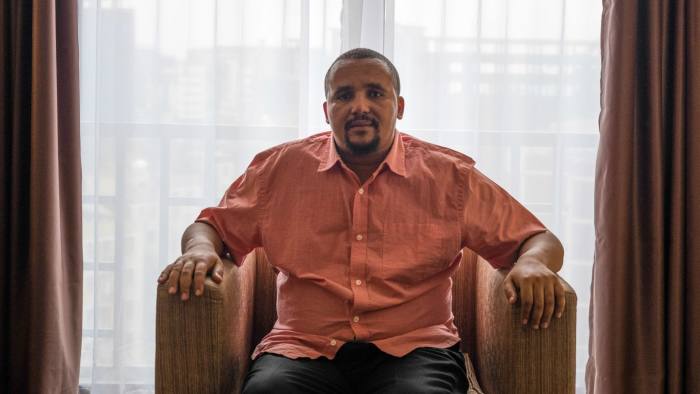
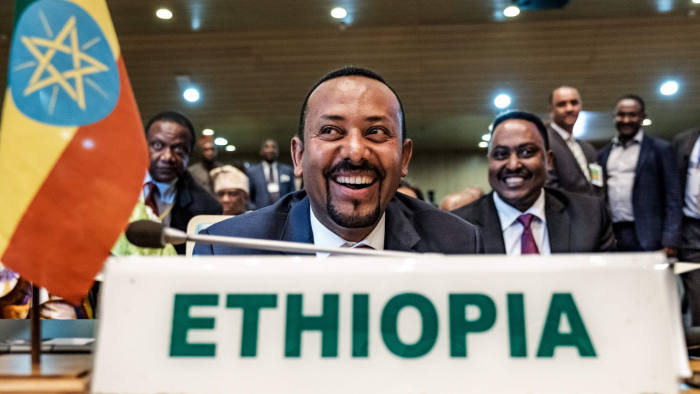
[ad_1] Ethiopia’s most prominent activist and media owner has accused prime minister Abiy Ahmed of increasing “authoritarianism” just weeks after the leader was awarded a Noble Peace Prize for his efforts to build stability in the Horn of Africa.
Elected in 2018, Mr Abiy has been celebrated for a peace deal with neig
Ethiopia’s most prominent activist and media owner has accused prime minister Abiy Ahmed of increasing “authoritarianism” just weeks after the leader was awarded a Noble Peace Prize for his efforts to build stability in the Horn of Africa.
Elected in 2018, Mr Abiy has been celebrated for a peace deal with neighbouring Eritrea and sweeping domestic reforms enacted during his first months in office. But a year later, those reforms have been followed by an increase in intercommunity violence across the country, provoking strong criticisms of his leadership.
“Abiy did liberalise the political sphere in the first six months but I think he has become increasingly authoritarian,” Jawar Mohammed, the 33-year-old founder of the Oromo Media Network, said in an interview. “Ethiopia needs to move towards a concessional democracy and that happens by facilitating dialogue, negotiation and bargaining among the elites of the country — he hasn’t done it all.”
Mr Jawar’s public criticism of the prime minister followed an incident last month at his house in the capital, Addis Ababa, when a government security detail guarding the property was told to stand-down and a second police force surrounded the building.
Mr Abiy’s Ethiopian People’s Revolutionary Democratic Front and its allies control all 547 seats in the national parliament. Designed as a coalition of four parties from Ethiopia’s most powerful regions, the EPRDF is supposed to allow power-sharing between different ethnic groups but has became a mechanism for some regions to dominate others.
Mr Abiy ascended to party leader in 2018 after two years of anti-government protests, promising to reform the coalition and usher in multi-party democracy. He released political prisoners and unbanned opposition groups but failed, Mr Jawar said, to engage in a national dialogue, relying instead on his own judgment.
“When you permit all these politicians and political parties, it is like allowing ten, twenty soccer clubs into a single field without clear referees, without clear rules, and any clash between these players manifests itself in violence among the spectators in the stadium,” he said.
Since 2018, hundreds of Ethiopians have been killed in politically-charged clashes between different communities and millions displaced.