
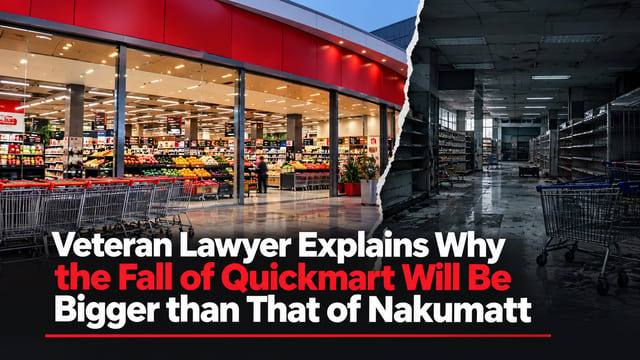
Lawyer Donald B. Kipkorir has raised concerns about Quickmart’s business model, arguing that the supermarket chain resembles Nakumatt, the once-dominant retailer that eventually collapsed under financial pressure.
In a post on X, Kipkorir said he had previously warned that Quickmart had “all the signature of Nakumatt written all over it,” pointing to its expansion strategy, reliance on leased premises and delays in paying suppliers.
Kipkorir’s argument centres on how supermarket chains finance their growth and manage cash flow. He questioned the practice of opening as many outlets as possible on properties the business does not own, arguing that rapid expansion can create significant financial obligations through rent, staffing, utilities and other operating costs.
In his view, a retailer can build a large physical presence while remaining vulnerable if the cost of running its stores grows faster than the money coming into the business.
He also raised concerns about the relationship between supermarkets and their suppliers, claiming that goods displayed on shelves may belong to suppliers until payment is made.
Kipkorir says that Quickmart sells products to customers for cash but delays paying suppliers for more than 90 days. Such delays could pressure suppliers, particularly smaller businesses that need regular cash flow to pay workers, transport goods, and maintain operations.
Another issue he highlighted was the use of outside capital to finance expansion. Kipkorir argued that relying on money from investors and equity subscribers rather than the founders’ own funds can expose a business to pressure to keep growing, even when its underlying financial position may require greater caution.
He also questioned the value of strong public relations and the involvement of respected institutional investors, suggesting that these factors can create confidence in a company without necessarily proving that its operations are financially sustainable.
His comparison draws on the experience of Nakumatt, which grew into one of Kenya’s most recognisable supermarket brands before collapsing amid serious financial difficulties and unpaid obligations. For Kipkorir, the lesson is that a large store network and a prominent brand do not automatically translate into a healthy business. A retailer must also manage its debts, pay suppliers on time, control operating costs and ensure that its expansion is supported by sustainable cash flow.
“History repeats itself, first as a tragedy, second as a farce!” Kipkorir wrote, using the line to reinforce his warning that Quickmart could follow a path resembling Nakumatt’s if the business practices he describes continue.
QUICKMART IS NEW NAKUMATT
I tweeted before that QUICKMART has all the signature of NAKUMATT written all over it: open as many stores as is possible on properties they don’t own, all stocks in the stores belong to suppliers, you sell your goods for cash but delay payments to suppliers by over 90 days, use money of investors & equity subscribers & not founders to grow, leverage in public relations, look for respected institutional investors.
History repeats itself, first as a tragedy, second as a farce!
His post raises broader questions about the sustainability of rapid expansion in Kenya’s supermarket sector.
Kipkorir’s central point is that the appearance of growth can conceal weaknesses beneath the surface.
MORE Article about COMPLAINTS FROM QUICKMART STAFF
Workers Speak Out Against QuickMart and Specific Talent Agency Over Discrimination, Tribalism...
Quickmart Staff Raise Alarm Over Harassment at Nakuru Branch
Dairy Merchandisers Cry Foul Over Intimidation by Quickmart Kisumu Milk Section Attendant