
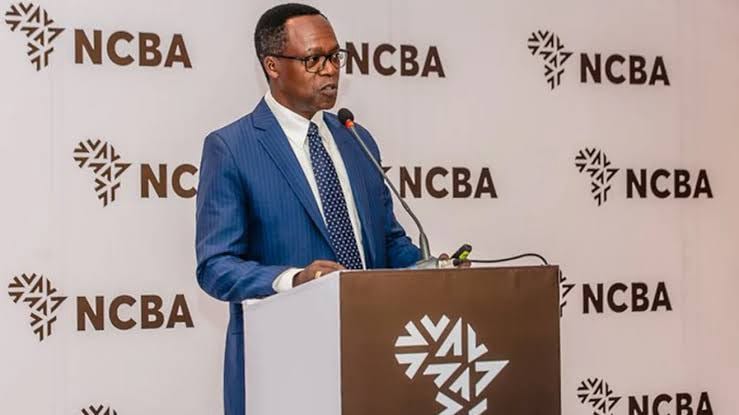
For years, Kenyatta family owned NCBA presented itself as one of Kenya’s strongest banking success stories, built through the 2019 merger between Commercial Bank of Africa and NIC Group, backed by two powerful families, dominant in vehicle financing and digital lending, and large enough to compete with the country’s biggest banks.
The story being told by its numbers, court cases, regulators, customers and controlling shareholders is now becoming harder to package through glossy advertising, carefully written statements and endless claims about digital loan volumes.
NCBA remains profitable and continues to handle billions of shillings through conventional banking, asset financing, Fuliza and M Shwari, but the bank has been losing ground to rivals, facing complaints from vehicle borrowers, dealing with insider fraud cases, answering questions about customer data and preparing to surrender control to South Africa’s Nedbank.
The decline is not about one bad financial year or one unhappy customer, since the wider story brings together a shrinking competitive advantage, falling deposits during parts of 2025, slower profit growth than some rivals, repeated internal fraud cases and the decision by the founding families to accept an offer that will place the bank under foreign control.
In March 2026, I&M Group reported total assets of Sh742.5 billion against NCBA Group’s Sh741.1 billion, removing NCBA from a position it had held above I&M and showing how quickly a rival that once trailed it by a wide distance had caught up and passed it.
NCBA’s loan book stood at Sh324.4 billion against I&M’s Sh322.9 billion, leaving a difference of only Sh1.5 billion after NCBA had enjoyed a Sh40.33 billion advantage over I&M at the end of 2022.
That means NCBA surrendered almost its entire loan book lead over one rival in less than four years, during a period when management kept reporting strong profits, high digital lending volumes and continued market leadership.
The bank’s total assets fell by 5.6 percent during the first quarter of 2025 compared with the same period in 2024, with customer deposits dropping by 9.6 percent during the same reporting period.
Customer deposits remained lower through the third quarter of 2025, despite management saying that part of the decline came from a decision to reduce expensive deposits after lowering the rates paid to customers.
NCBA still reported a Sh23.4 billion profit after tax for 2025, representing growth of seven percent from Sh21.9 billion in 2024, but I&M’s profit grew by 24.4 percent during the same year.
The profit difference between the two banks, which stood at about Sh8.1 billion in 2023, had fallen to Sh3.55 billion by 2025, leaving NCBA facing a rival that had already overtaken it in assets and was growing profits much faster.
A Merger Built Around Two Powerful Families 
NCBA was created after NIC Group and Commercial Bank of Africa completed their merger in September 2019, bringing together NIC’s corporate and asset financing business with CBA’s retail and digital lending operations.
Commercial Bank of Africa was closely linked to the Kenyatta family, with members of the family holding shares through different companies, as NIC carried the influence of the Ndegwa family.
The merger immediately created a major bank serving millions of customers across several countries, with NCBA becoming one of the largest lenders in Kenya and a major force in vehicle financing.
The merger was sold as the creation of a stronger Kenyan bank, but it was followed by branch closures, job losses, system changes and complaints from customers who had built relationships with either NIC or CBA before the two lenders came together.
Within months, NCBA closed 14 branches, including eight former NIC branches and six former CBA branches, after management said that some of the locations were serving the same areas.
The bank presented the closures as a way of removing duplication, cutting costs and creating a more efficient operation, but customers lost branches and staff members they had dealt with for years.
The combination of two banks created a larger institution, yet it left NCBA managing different banking systems, customer records, workplace cultures, loan books and internal controls inside one organisation.
That integration has since been followed by fraud cases in which employees and contractors were accused of abusing access to customer accounts and banking systems.
Internal Fraud Cases Raise Questions About Controls 
One of the biggest internal fraud cases linked to NCBA involved an assistant operations manager at the bank’s Kisii branch who was accused of taking more than Sh52 million from customer accounts.
Philip Kiprono Rotich, who had reportedly worked for the bank for about ten years, faced 134 charges covering theft by servant, forgery, possession of proceeds of crime and the use of false documents.
Investigators accused him of moving money from customers into personal accounts at NCBA and KCB, with some transactions said to have passed through mobile banking platforms.
The case became more troubling after prosecutors told the court that the employee continued moving customer money after he had been suspended from the bank.
That raised questions about how a suspended employee could continue accessing systems, accounts or processes that should have been blocked immediately after his suspension.
The case was accused of running from November 2023 to October 2024, giving the employee enough time to carry out dozens of transactions before the full scale of the losses was detected.
A separate case involved dormant customer accounts that were reportedly reactivated before unauthorised withdrawals totalling more than Sh3.2 million were made.
Eight people were charged in another case involving the theft of Sh449.6 million through the Fuliza platform, which NCBA operates with Safaricom.
In Rwanda, a software engineer working as a contractor on NCBA’s mobile banking systems was accused of using authorised access to support fraudulent transactions.
These cases involved different people, different systems and different amounts, but they shared one major issue, which was the ability of trusted employees or contractors to abuse access before the bank stopped them.
NCBA has treated such cases as the actions of dishonest individuals rather than proof that the entire institution is unsafe, which remains a fair position until investigators or regulators establish wider responsibility.
Customers are still entitled to ask how employees managed to move money repeatedly, why suspicious transactions were not blocked earlier and whether staff access is cancelled immediately after suspension or dismissal.
Customer Data Sent to the Wrong People 
NCBA has separately faced action from the Office of the Data Protection Commissioner over the handling of customer information.
In November 2024, the Data Commissioner ordered NCBA to pay Sh250,000 to UK based solicitor Rose Wambui Muigai after her personal information was disclosed to third parties described as former employees of the bank.
The information included her name, phone number and vehicle details, with the complainant saying that people contacted her while presenting themselves as NCBA staff and discussing financial information connected to her account.
In another ruling issued in April 2025, NCBA was ordered to pay Sh250,000 after transaction information belonging to a business customer was repeatedly sent to the wrong email address.
The problem reportedly continued for years after the customer and the person receiving the emails informed the bank about the mistake.
The regulator found that NCBA had failed to stop the disclosure and had violated the customer’s data rights.
The two cases involved different customers and different types of information, but both centred on the bank sending private details to people who were not supposed to receive them.
Those findings become more serious when placed next to internal fraud cases, since banking safety does not only involve money disappearing from an account, but the people who can see customer balances, loans, vehicles, telephone numbers and transaction records.
Easy to Get, Painful to Lose 
NCBA’s strongest traditional business has remained asset financing, particularly loans used by individuals and companies to buy cars, trucks, buses, construction equipment and other movable assets.
The bank openly describes itself as number one in asset finance and advertises car loan approval within 12 hours, financing for new and used vehicles and access to repossessed cars through its CarDuka platform.
Customers are attracted by quick approvals, manageable deposits, long repayment periods and the chance to obtain a vehicle without paying the entire purchase price at once.
The trouble often begins when a borrower experiences financial pressure, misses several payments and discovers how quickly an easy financing arrangement can become a painful recovery process.
One NCBA borrower whose case was shared earlier said that he had serviced a vehicle loan for about four years before falling behind with around Sh530,000 remaining.
The vehicle was repossessed and taken to a yard, after which the borrower said that he cleared the arrears and expected the car to be released.
According to the complaint, NCBA refused to release the vehicle after the arrears were paid and later demanded payment of the entire outstanding loan balance.
The borrower said that he received conflicting explanations from staff members and was directed to offices at Bunyala Road Car Centre as the vehicle remained at the yard.
He complained that the bank’s position appeared to change from clearing arrears to demanding full settlement, with recovery fees, storage expenses and other charges continuing to grow.
That complaint reflected concerns raised by other borrowers who say that the real cost of default is not limited to the missed instalments shown on their loan statements.
Once a vehicle is repossessed, the borrower can face auctioneer charges, towing expenses, storage fees, valuation costs, legal expenses and penalties before the bank considers releasing the asset.
A person who initially fell behind by a manageable amount can therefore find that the figure required to recover the vehicle is much higher after the recovery process begins.
The borrower may clear the original arrears but remain unable to pay the extra expenses added after repossession, leaving the vehicle inside a yard where storage charges can continue increasing.
When the vehicle is sold, the money raised is used to clear the bank’s loan balance and associated costs, but a weak auction price can leave the former owner without the vehicle and still owing money.
NCBA acquired a yard for repossessed vehicles in 2020 when defaults were rising, giving the bank direct space to store and prepare recovered vehicles for resale.
The bank’s defenders argue that NCBA appears frequently in vehicle auctions because it finances more vehicles than many other lenders, meaning a large loan book will naturally produce more repossessions when borrowers default.
That explanation deals with the number of vehicles appearing at auctions, but it does not answer individual complaints involving communication, unclear release conditions, growing recovery charges and disagreements over how repossessed vehicles are valued and sold.
NCBA’s visibility in the motor vehicle market comes from scale, but scale gives the bank a greater duty to explain what borrowers face after missing payments and how each recovery cost is calculated.
Its website advertises car financing with fast approval and no hidden fees, which makes transparency during repossession just as important as speed during approval.
Borrowers need to know before signing whether clearing arrears after repossession will restore the loan, whether the bank can still demand full repayment, how storage charges are calculated and who chooses the auctioneer.
They similarly need clear information about who values the vehicle, whether they can obtain an independent valuation and what happens when the auction price fails to clear the remaining debt.
The Repossession Business Around the Loan 
The asset financing problem is bigger than one bank and involves an entire recovery business built around struggling borrowers.
Auctioneers earn money from repossession, towing and sales, yards collect storage charges and valuers are paid to assess vehicles before disposal.
Every day a vehicle remains inside a yard can add another expense to the borrower’s account, which means delays can benefit service providers as the customer’s ability to recover the asset becomes weaker.
Some borrowers say auctioneers arrive before meaningful talks with the bank have been completed, after which the customer is told to deal with different departments that may give different answers.
Others complain that cars are sold below the prices they expected, leaving them with outstanding balances after losing vehicles they had already paid for over several years.
NCBA says CarDuka provides an open platform where customers can view repossessed vehicles and place bids, with the bank presenting the system as a transparent way of selling recovered assets.
Transparency requires more than placing vehicles online, since former owners need access to valuation records, auction results, the winning bid, deductions made from the sale and the final amount credited to their loans.
A borrower who has paid for four or five years should be able to see exactly how the bank moved from the original loan balance to the final amount claimed after repossession.
The larger issue is whether asset finance remains a partnership that helps customers own vehicles or becomes a trap where the borrower carries every risk as the bank, auctioneer, yard and other service providers recover their money first.
Digital Loans and the Cost of Easy Money 
NCBA has similarly built a huge part of its public identity through Fuliza and M Shwari, two products that made borrowing available to millions of Kenyans through mobile phones.
The bank reported disbursing more than Sh1 trillion in digital loans during 2025, a number used to show the size and success of its digital business.
The volume does not explain how many borrowers repeatedly use the facilities for basic expenses, how much they pay in fees or how many fall into negative credit listings after failing to repay.
NCBA was required to write off Sh11.25 billion in bad Fuliza and M Shwari loans through a credit repair programme announced by the Central Bank of Kenya in 2022.
The programme involved more than four million Kenyans whose small digital loans had remained unpaid and whose names were being affected through credit reporting.
NCBA’s role as the largest participant reflected its dominance of digital lending, but it similarly showed the scale at which customers had failed to repay loans distributed through the platforms.
By the third quarter of 2025, provisions for credit losses had risen by 24.5 percent to Sh5.1 billion as the bank continued issuing enormous amounts of digital credit.
The bank earns from making credit easy to access, but the same customers can move between Fuliza, M Shwari and other loan applications to survive until their next income arrives.
That model produces impressive disbursement figures, yet it can leave low income borrowers paying repeated charges for money used on food, transport, rent and emergencies rather than investments that generate income.
The Tax Favour That Followed the Merger 
The NCBA merger has remained connected to public anger over tax treatment, after the government granted exemptions linked to the transfer of assets during the creation of the new bank.
The merger received exemptions involving stamp duty and capital gains tax, creating criticism that a bank linked to two of Kenya’s wealthiest families had received treatment ordinary businesses and property owners could never expect.
A court later quashed a stamp duty exemption worth about Sh384.5 million after finding that the process used to grant it was unlawful.
NCBA management previously confirmed that the group received a tax waiver estimated at about Sh350 million, as the wider capital gains tax dispute attracted demands for the bank to pay what critics said was owed.
The controversy was never only about the amount, since it came during Uhuru Kenyatta’s presidency and involved a bank closely connected to his family.
The public was being asked to accept that a major merger involving some of Kenya’s richest shareholders needed tax relief as ordinary people and small companies were being pursued by the Kenya Revenue Authority for much smaller amounts.
Those questions have followed NCBA because its ownership and political connections cannot be separated from how people view the bank’s access to government decisions.
Critics have accused Uhuru of using state power to protect Kenyatta family interests, twisting laws to secure tax advantages and placing NCBA within a wider system of family wealth that included land, agriculture, hospitality, insurance and property.
He has similarly been accused by critics of looting Eurobond money, using part of it to build Northlands and later using NCBA to launder Kenyatta family loot, claims that he and the bank have not accepted and which have not resulted in a court finding establishing that NCBA laundered Eurobond funds.
The accusations remain politically powerful because they connect the bank to a bigger argument about state capture, unexplained wealth, Northlands and the growth of Kenyatta family businesses during Uhuru’s ten years in office.
NCBA cannot control every political claim made about its shareholders, but its history of tax exemptions and concentrated family ownership has made it difficult for the bank to present itself as an ordinary institution with no connection to political privilege.
The Families Prepare to Cash Out 
The clearest sign that NCBA has reached the end of one chapter is the offer by South Africa’s Nedbank to acquire about 66 percent of the bank.
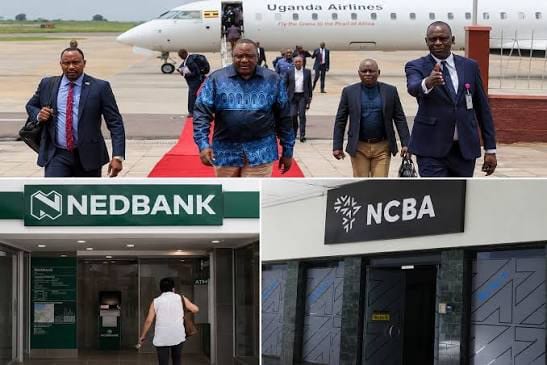
Nedbank offered Sh105 per share in a transaction valued at about Sh109.6 billion, with 20 percent of the payment offered in cash and 80 percent in newly issued Nedbank shares listed in Johannesburg.
The transaction values NCBA at about 1.4 times its book value and gives accepting shareholders a premium above the share price recorded before the offer became public.
Muhoho Kenyatta joined the NCBA board as a non executive director in December 2025, during the period when the Nedbank talks were underway.
Documents issued during the takeover process disclosed that Muhoho personally held 227,395,137 NCBA shares worth about Sh20 billion at market prices used during the transaction.
The Kenyatta and Ndegwa families, together with companies associated with them, committed enough shares to help Nedbank reach the support required for its 66 percent controlling position.
By February 2026, investors controlling 77.54 percent of NCBA shares had reportedly given commitments connected to the proposed deal.
The founding families had therefore placed enough shares behind the offer before many smaller investors had decided whether to sell or remain inside a bank controlled from Johannesburg.
The offer closed on July 10, 2026, with Nedbank expected to announce the level of shareholder acceptance no later than July 21, according to the official transaction timetable.
The transaction is presented by Nedbank as an entry into East Africa through a profitable regional bank with strong digital products and access to millions of customers.
For the Kenyatta and Ndegwa families, the deal offers cash and shares in a much larger South African banking group, allowing them to convert family holdings in NCBA into more liquid and internationally traded wealth.
The smaller shareholders who remain will own part of the 34 percent minority position left on the Nairobi Securities Exchange, but control over major decisions will rest with Nedbank.
NCBA may continue using the same name and operating through its current branches, yet it will no longer be controlled by the Kenyan families whose histories created CBA and NIC.
Is Nedbank Buying Strength or Taking Advantage of Weakness
The Nedbank offer can be read in two different ways, with the first being that a major foreign lender is willing to spend more than Sh100 billion because NCBA remains attractive, profitable and valuable.
NCBA has millions of customers, a major digital lending operation, regional businesses and one of the strongest asset financing franchises in East Africa, making it a useful platform for Nedbank’s expansion.
The second reading is that the founding families are selling at a time when NCBA’s competitive lead is narrowing, deposits have contracted during recent reporting periods and rivals are growing faster.
The families may believe that Sh105 per share and access to Nedbank shares offer a better return than continuing to hold NCBA as an independent Kenyan bank.
Selling does not automatically mean that the bank is failing, since shareholders regularly leave profitable companies after receiving attractive offers.
The timing still raises a fair question about why the families who built the institution are prepared to surrender control just as competitors are catching up and customer complaints are becoming harder to ignore.
A bank described for years as a Kenyan success story will become a subsidiary of a South African lender whose expansion plans reach beyond Kenya into other African markets.
Nedbank is not buying NCBA to protect Kenyan banking nationalism, since it is buying customers, technology, regional licences, digital loan products and a platform for growth outside South Africa.
Customers Have Started Voting With Their Feet 
Financial statements show that customer deposits fell during parts of 2025, which NCBA linked partly to its decision to reduce the amount paid for expensive deposits.
The bank lowered deposit pricing from 11.97 percent in September 2024 to 7.3 percent in September 2025, after which some customers moved their money.
Management can describe that movement as planned repricing, but customers moving deposits remain customers choosing another place for their money.
Individual complaints have similarly appeared online involving poor service, delayed communication, asset finance recovery, logbooks and the handling of long term accounts.
One customer announced that she was closing an NCBA account after ten years, saying that the experience had been better when the bank operated as CBA and accusing the current institution of poor service.
One viral complaint does not prove that millions of customers are unhappy, but such posts create space for others to share similar experiences involving branches, call centres, loan departments and vehicle financing.
The growth of these complaints matters because banking relies on confidence, and customers often remain silent for years before one incident pushes them to move their salaries, savings or business accounts.
The Bank Is Profitable but the Old Story Is Broken 
NCBA is not collapsing, has not been declared unsafe by the Central Bank and continues recording billions of shillings in profits.
Its car financing business remains large, its digital lending products dominate the market and Nedbank’s willingness to pay more than Sh100 billion confirms that the institution has real commercial value.
The problem is that the story told about NCBA no longer matches every part of the record now available to the public.
The story says the merger created an unstoppable banking giant, yet I&M has already overtaken NCBA in total assets and almost eliminated a loan book gap that once stood above Sh40 billion.
The story says digital lending proves financial inclusion, yet billions of shillings in Fuliza and M Shwari loans had to be written off after millions of borrowers became trapped in unpaid digital debt.
The story says NCBA offers easy vehicle ownership, yet borrowers describe cars being repossessed, held at yards and surrounded by auctioneer, towing and storage costs that can make recovery impossible.
The story says customer information is protected, yet the Data Commissioner ruled against NCBA in two separate cases involving information sent to unauthorised people.
The story says fraud cases involve isolated employees, yet different cases have involved branch staff, dormant accounts, Fuliza and contractors with access to mobile banking systems.
The story says NCBA is a proud Kenyan institution, yet its founding families are surrendering control to a South African bank and converting their holdings into cash and Johannesburg listed shares.
The story says the 2019 merger represented private sector strength, yet the transaction received tax exemptions that ordinary Kenyans viewed as another benefit reserved for politically connected wealth.
The Car Financing Complaints Cannot Be Separated From the Wider Decline
Vehicle financing remains central to understanding NCBA because it shows the difference between the bank’s advertising and the experience of customers whose income changes after taking loans.
The bank’s marketing focuses on the excitement of getting the car, quick approval, manageable deposits and flexible repayment periods.
Borrowers who default encounter a different side of the institution, involving recovery agents, yards, auctioneers, outstanding balances and departments that can appear less interested in saving the relationship than protecting the bank’s money.
A responsible bank must recover loans, since customer deposits cannot be used to finance vehicles without repayment rules and consequences for default.
The question is whether the recovery process gives borrowers a fair chance to clear arrears, whether every fee is explained and whether repossessed vehicles are sold at prices that protect both the bank and the customer.
NCBA’s position as the leading asset financier means that it cannot dismiss every complaint as noise from people who failed to pay.
A bank that finances thousands of vehicles should have the clearest recovery process in the market, written in language customers can understand before signing contracts.
Borrowers should not learn after repossession that clearing arrears is different from clearing the full loan, or that additional charges can make release impossible.
They should receive one statement showing the arrears, principal balance, interest, auctioneer charges, towing costs, storage fees and every other amount being demanded.
They should similarly receive written confirmation of what must be paid for the vehicle to be released, rather than moving between phone calls, branch staff and recovery offices that give conflicting answers.
Nedbank Is Inheriting Every Unanswered Question 
Nedbank is not merely buying NCBA’s profitable digital loans, asset financing market share and regional branches, since it is inheriting customer complaints, pending fraud cases, data protection failures and the public distrust attached to the bank’s ownership history.
The South African lender will need to decide whether to keep the same recovery culture, internal systems and management structure or make changes after taking control.
Vehicle borrowers will expect clearer communication, customers will expect stronger protection of personal information and shareholders will want to know whether Nedbank can restore the growth NCBA has lost to competitors.
The Central Bank of Kenya will similarly need to watch how decisions affecting a major Kenyan lender are made after control moves to Johannesburg.
NCBA’s remaining local shareholders will have limited influence over a bank where the controlling shareholder can appoint directors, set strategy and determine how capital is distributed across different countries.
The bank may become stronger through access to Nedbank’s capital, systems and risk controls, but foreign control does not automatically solve customer service, recovery disputes or internal fraud.
Those problems require management to admit where systems have failed and stop treating every complaint as an attack on the institution.
NCBA Has Reached Its Moment of Reckoning 
NCBA grew through political access, family wealth, a celebrated merger, digital credit and control of Kenya’s vehicle financing market, but that combination is no longer enough to hide the pressure building around the institution.
Its rivals are closing the gap, customers have moved deposits, fraud cases have reached court, regulators have punished data failures and borrowers are speaking publicly about the painful side of its car financing business.
The Kenyatta and Ndegwa families are now taking the premium offered by Nedbank and preparing to leave control of the institution to a foreign buyer.
Their exit will deliver billions of shillings to shareholders who built and controlled the bank, as customers who financed cars, borrowed through Fuliza and kept deposits inside NCBA remain behind under a new controlling owner.
NCBA is still valuable, profitable and important to the Kenyan economy, but the bank being sold to Nedbank is not the unstoppable giant promised after the 2019 merger.
It is a bank whose old advantage has narrowed, whose ownership story is ending and whose future will depend on whether new control can fix problems that the founding families are leaving behind.
The final question is not whether Nedbank sees value in NCBA, since its offer already answers that.
The real question is why the families that spent years presenting NCBA as one of Kenya’s greatest banking achievements have decided that this is the right time to take their money and surrender control.