
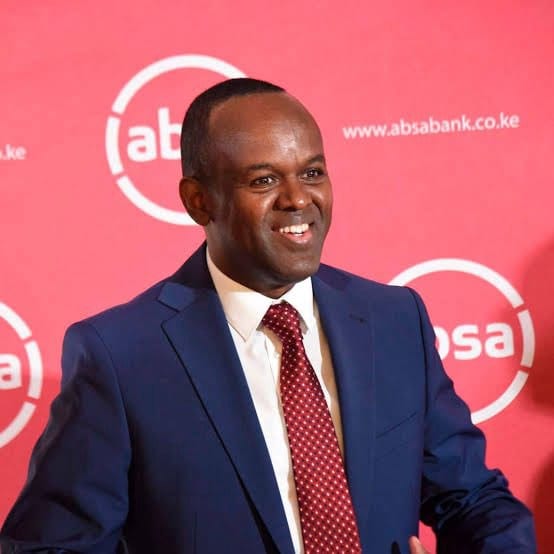
Absa Bank Kenya has announced the exit of Managing Director and Chief Executive Officer Abdi Mohamed after three years at the helm, with Chief Finance Officer Yusuf Omari taking over as interim CEO pending the appointment of a substantive replacement.
The leadership change comes as the lender faces mounting scrutiny over customer dissatisfaction, operational challenges and questions about its internal controls.
While Absa has maintained its position as one of Kenya's largest banks, its public image has increasingly been shaped by recurring customer complaints.
Across social media platforms, consumers have repeatedly accused the bank of poor customer service, delayed resolution of disputed transactions, frozen accounts, slow response times and prolonged system-related inconveniences.
Many customers have complained that resolving simple banking issues often requires repeated follow-ups, leaving them frustrated with the lender's service standards.
The bank has also found itself battling reputational damage arising from insider fraud cases that have exposed weaknesses in its internal control environment.
Over the years, employees have been implicated in alleged fraudulent schemes involving customer accounts and unauthorised transactions, raising concerns about how effectively the institution detects and prevents insider abuse.
Such incidents have fueled public concern that customers face risks not only from external cybercriminals but also from individuals entrusted with safeguarding their finances.
The leadership transition also follows a period of internal restructuring. Earlier this year, Absa spent approximately KSh717 million on a voluntary separation programme that saw dozens of employees leave the bank as it sought to reshape its workforce.
The exercise came amid an aggressive digital transformation strategy, but critics have questioned whether the focus on efficiency has come at the expense of customer experience.
Abdi Mohamed leaves office at a time when the bank's first-quarter 2026 profit declined by nearly 14 percent, reflecting pressure on both interest and non-interest income despite continued investment in new revenue streams.
For Yusuf Omari, who now serves as interim CEO, the immediate challenge extends beyond financial performance. He inherits an institution whose reputation has increasingly been tested by public complaints about service delivery, concerns about insider fraud, and growing customer demands for greater accountability.
Whether the leadership change signals a genuine turnaround or simply represents a change of faces at the top remains to be seen.
For many customers who say they have endured delayed service, unresolved complaints and repeated frustrations, confidence in the bank is likely to depend less on a new chief executive and more on whether the institution can demonstrate measurable improvements in how it serves and protects its customers.