





















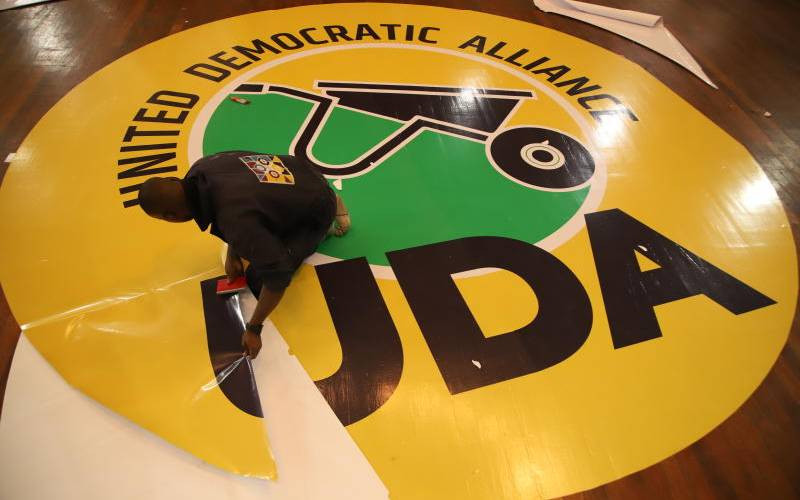
Western Kenya is witnessing an intense political tug-of-war as the United Democratic Alliance (UDA) allegedly moves to undermine the Orange Democratic Movement (ODM) from within.
ODM Deputy Party Leader Godfrey Osotsi claims UDA is orchestrating a calculated strategy to absorb key ODM leaders and grassroots structures in Vihiga and Kakamega counties.
According to Osotsi, legislators and party officials elected on the ODM ticket have attended UDA campaign strategy meetings, raising fears of a systematic takeover just as ODM seeks stability following the passing of its former leader, Raila Odinga.
Osotsi Details UDA Moves to Kill ODM
In a statement released on Thursday, January 8, 2026, Osotsi accused UDA of predatory political maneuvers targeting ODM’s strong grassroots network. The deputy leader revealed that several ODM legislators and officials in Vihiga and Kakamega counties recently participated in meetings organized by UDA officials.
One such meeting took place on January 6 at Golf Hotel in Kakamega town. Osotsi said legislators elected on the ODM ticket attended a forum convened by senior UDA officials. He described these engagements as attempts to co-opt ODM members under the false claim of a political cooperation agreement.
“Over the past few days, a section of the Orange Democratic Movement legislators and officials in Vihiga and Kakamega Counties have been incorporated into the United Democratic Alliance electoral and campaign strategy meetings,” read part of the ODM statement.
Osotsi further accused UDA of forming a regional presidential caucus composed of ODM members, a move he said violated both the Political Parties Act and the ODM constitution. He warned that these actions are illegal attempts to exploit ODM’s two-decade-long grassroots structures.
Co-option of ODM Members into UDA
According to Osotsi, UDA has been luring ODM Members of Parliament, Members of County Assembly, and county officials into its programmes. The deputy leader claimed that some of these efforts have already succeeded in weakening ODM’s influence in key areas.
The meetings, Osotsi said, are framed as part of a cooperation initiative, but he stressed that no legally binding agreement exists between ODM and UDA at either national or grassroots levels. He clarified that the only collaboration framework is the 10-point reform agenda born out of the 2024 Gen Z-led protests, which is temporary and expires in 2027.
“This so-called engagement does not constitute a formal pact. Incorporating our members into UDA programmes in this manner is a hostile attempt to illegally leverage ODM’s grassroots structures,” Osotsi explained.
ODM Reaffirms Independence and Calls for Loyalty
Osotsi urged ODM members to resist UDA’s overtures, calling participation in the activities illegal and misleading. He highlighted that several grassroots officials and members in Vihiga and Kakamega counties have already withdrawn from UDA engagements and reaffirmed loyalty to ODM.
He emphasized that ODM remains an independent party, not an appendage of UDA, and encouraged members to uphold party cohesion, especially as internal discussions on the party’s future intensify ahead of the 2027 General Election.
“ODM is an independent political force. We will not allow external parties to exploit our structures to sideline loyal officials or manipulate grassroots politics,” said Osotsi.
UDA Actions Raise Political Tensions
Political analysts say the allegations, if true, signal a new front in Kenya’s competitive political landscape. By targeting ODM’s grassroots leaders, UDA may be attempting to destabilize opposition structures without triggering public backlash. Western Kenya, historically an ODM stronghold, could see shifting loyalties that might alter the dynamics in the lead-up to the 2027 elections.
The co-option strategy, according to experts, reflects UDA’s broader ambition to weaken opposition parties from within. By engaging ODM officials in UDA programmes and forums, the ruling party can gain access to critical local networks and decision-making processes. This, they argue, could provide UDA an advantage in mobilizing voters while undermining ODM’s organizational capacity.
Osotsi’s revelations highlight the fragility of party loyalty and the risks posed by cross-party engagements, particularly in regions where political allegiance has long been entrenched. ODM’s leadership now faces the challenge of reinforcing internal discipline and safeguarding its grassroots structures against perceived hostile infiltration.
The accusations come at a time when ODM is still recovering from the death of Raila Odinga, which left a vacuum in leadership and strategy. With UDA allegedly pursuing aggressive infiltration, ODM’s cohesion and electoral strategy are under scrutiny as the party prepares for a decisive general election in 2027.
In the ongoing political contest, the stakes are high. ODM insists it will defend its structures and grassroots base, while UDA’s intentions, if confirmed, could reshape alliances and influence voter behavior in Western Kenya. As the two parties maneuver for advantage, the political future of the region hangs in the balance.