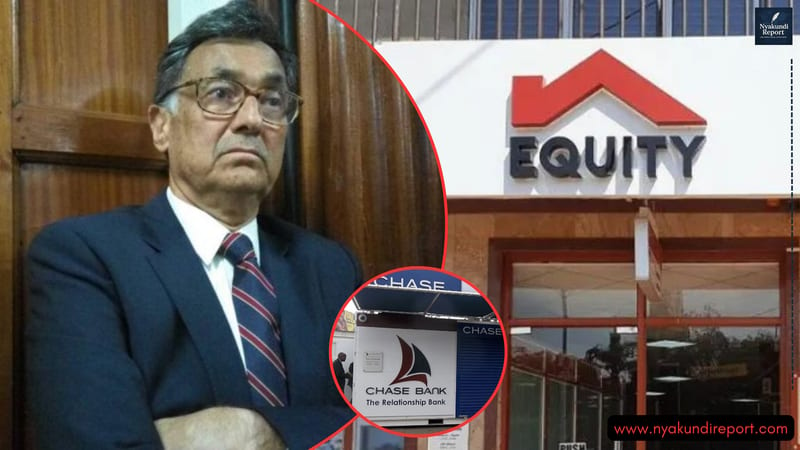
The man who presided over Kenya's most catastrophic banking collapse is back in the spotlight. This time, Zafrullah Khan — founder and former chairman of the defunct Chase Bank — is fighting to save a prime Nairobi office tower from Equity Bank's auctioneers. The High Court has temporarily halted the planned sale of the Riverside Drive property, but the legal battle now threatening to consume the Sh1 billion asset is unearthing uncomfortable questions about loan enforcement, currency manipulation, and whether Kenya's financial sector has truly reckoned with the wreckage Khan left behind. The Zafrullah Khan Riverside Tower battle exposes how Kenya's banking sector continues wrestling with Chase Bank's toxic legacy—where debt disputes, currency conversions, and collapsed institutions still collide dangerously. Battle Over Zafrullah Khan Riverside Tower: Inside the Sh1 Billion Showdown Shaking Nairobi's Banking World The building stands quietly along one of Nairobi's most prestigious addresses—Riverside Drive. Sleek, valuable, and currently serving as the headquarters of SBM Bank Kenya, the office block known as Riverside Mews appears to embody stability and commercial success.
But behind its polished facade lies one of the most explosive legal battles currently playing out in Kenya's courts.
The High Court recently issued emergency orders stopping Equity Bank from auctioning the property on April 2. The matter has been pushed to April 16, where a judge will determine whether the bank followed the law before attempting to sell the building.
At the center of the storm is Zafrullah Khan—a man whose name alone carries enormous weight in Kenya's financial history, and not for the right reasons. Who Is Zafrullah Khan — And Why Does His Past Matter? Khan is no ordinary businessman. He founded Chase Bank Kenya and served as its chairman, building what appeared to be a thriving mid-tier lender with a loyal customer base.
Then everything collapsed.
In April 2016, the Central Bank of Kenya placed Chase Bank under receivership, citing liquidity difficulties and deeply troubling concerns about internal loans. The collapse sent shockwaves through Kenya's banking sector, wiped out depositor confidence, and triggered one of the most significant financial crises the country had seen in years.
Authorities quickly moved in. Investigations followed. Between 2017 and 2018, Khan faced multiple court cases at Nairobi's Milimani Law Courts involving allegations of conspiracy to defraud Chase Bank of approximately Sh1.6 billion. The cases painted a damning picture of insider dealings at the highest level of the bank's leadership.
The Kenya Deposit Insurance Corporation stepped in to manage the fallout, working to recover assets and protect depositors who had lost access to their savings. That recovery effort, it turns out, extends directly to the Riverside Drive tower — the same building now at the center of the Equity Bank dispute.
Khan has never fully escaped the shadow of Chase Bank's collapse. And now, a decade later, that shadow is growing darker again. How a Dollar Loan Became a Sh1 Billion Nightmare The Riverside Drive property is owned by Riverside Mews Limited, a company associated with Khan. According to court filings, the company borrowed money from Equity Bank in two separate loans—$5.5 million in October 2012 and a further $4 million in June 2016. The office block was used as security.
What began as a conventional lending arrangement has since spiralled into a bitter courtroom confrontation.
Riverside Mews alleges that Equity Bank dramatically inflated the outstanding debt through a controversial currency conversion. The company claims the bank unilaterally converted a dollar balance of approximately $7.48 million into Kenyan shillings at an exchange rate of Sh145.50 per dollar.
That single conversion allegedly ballooned the total debt to Sh1.087 billion. Quarterly repayment instalments reportedly nearly doubled overnight.
Lawyers for Riverside Mews argue the conversion was done without proper agreement and without borrower consent. They say the bank effectively transformed a manageable dollar-denominated loan into a crushing shilling liability — and then moved to auction the property without following the mandatory legal steps required under Kenyan law. Did Equity Bank Skip the Legal Steps Before Seizing Khan's Tower? Under Kenyan law, lenders must issue specific statutory notices and redemption notices before selling secured property. Riverside Mews insists these notices were either never issued or were issued improperly.
If the court agrees, the entire auction process could be struck down as unlawful.
The stakes are enormous. Rental income from the building — paid by SBM Bank — has already been directed to Equity Bank as part of the recovery process. Multiple parties, including the Kenya Deposit Insurance Corporation, are reportedly pursuing separate claims on the same asset.
The Riverside Drive tower is no longer just a loan dispute. It is a collision between banking law, insolvency proceedings, property rights, and the unfinished business of Kenya's worst banking collapse.
The next court date is April 16. Whatever the judge decides, one thing is already clear — the Zafrullah Khan Riverside Tower battle is only getting started.