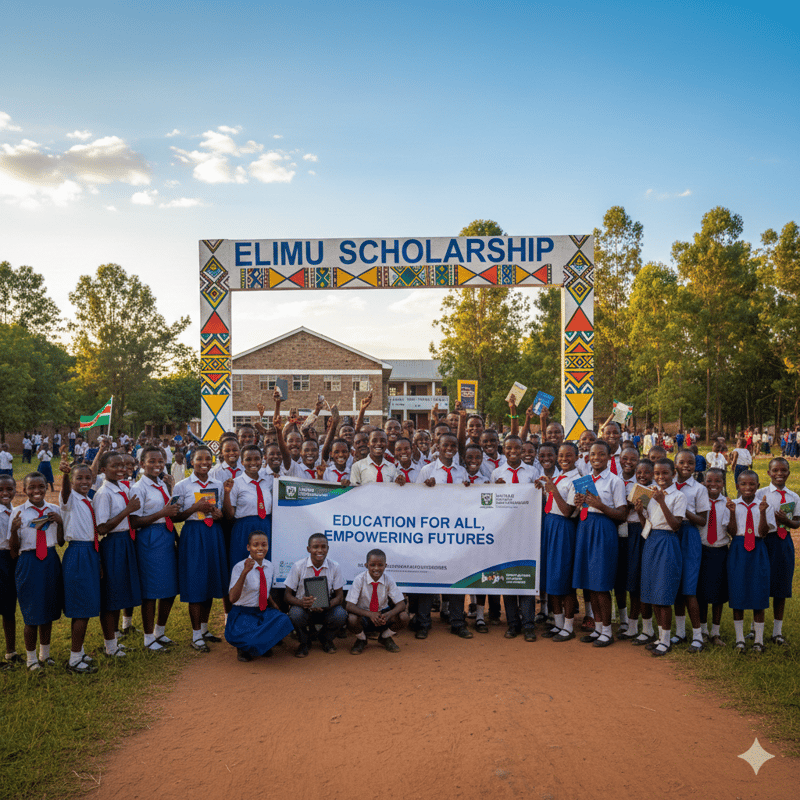
The Elimu Scholarship is one of Kenya’s strongest education safety nets. It rescues bright learners who sit on the edge of dropping out because poverty, displacement, illness, or disability blocks their path. The programme targets public junior school students who perform well in KJSEA but lack the money to join senior school. It prioritizes orphans, refugees, slum dwellers, and families crushed by chronic hardship. By paying fees and offering mentorship and support, the scholarship turns academic promise into real progress across Kenya today and keeps thousands firmly in school every year. The Elimu Scholarship changes lives with clear rules, strict verification, and real support. It keeps talented but vulnerable learners in school and pushes them toward a brighter future. For many families, it is the difference between a child dropping out and a child succeeding. For Kenya, it is an investment in talent that poverty would otherwise waste. [PHOTO//COURTESY] Who qualifies for the Elimu Scholarship? The Elimu Scholarship exists to reach students who combine ability with real hardship. The Ministry of Education and the Jomo Kenyatta Foundation design it to keep vulnerable but capable learners in school. If money stands between a student and senior school, this programme steps in.
First, the learner must come from a public junior school . Students in private schools do not qualify, even if they are poor. For refugees, eligibility narrows further. Only learners from the 42 camp-based primary schools or public junior schools near Kakuma, Kalobeyei, and Dadaab can apply.
Second, academics matter. Applicants must show strong results in the Kenya Junior Secondary Education Assessment. The programme accepts students who scored from Meeting Expectations to Exceeding Expectations , which corresponds to Levels 5 to 8. High marks do not guarantee selection, but weak marks make selection unlikely.
Third, vulnerability carries the greatest weight. The Elimu Scholarship prioritises learners who face severe financial or social barriers. Priority groups include orphans, children from single-parent families, and learners from households affected by HIV/AIDS or chronic illness. The programme also targets students living in urban informal settlements such as slums in Nairobi and Mombasa.
Learners whose parents live with disabilities that limit income also receive strong consideration. The same applies to children from households in extreme poverty where secondary education would otherwise be impossible.
The scholarship also applies affirmative action. Students with special needs, those from indigenous communities, or highly vulnerable backgrounds can still qualify even if their KJSEA score falls slightly below the standard levels.
In simple terms, the programme looks for two things at once. It wants bright students and it wants students in real need . Meeting only one of these conditions is usually not enough. Elimu Scholarship Requirements Qualifying is only the first step. Applicants must prove their situation with clear documents. The programme does not rely on stories alone. It relies on evidence.
Orphans must attach a copy of the death certificate of the deceased parent or parents. Families affected by disability or chronic illness must provide medical reports that explain the condition and its impact on earning ability.
For extreme poverty, applicants need proof such as bank statements, payslips if any, or written affidavits from local administrators like the chief or assistant chief. These letters must clearly state why the family cannot afford secondary school.
If a child has faced neglect or abuse, reports from child protection officers, religious leaders, or provincial administrators can support the application. Learners with special needs must attach medical or educational assessment documents.
The Elimu Scholarship does not require entrance exams for initial selection. Shortlisted candidates, however, may face verification interviews by Community Scholarship Advisory Committees. These teams visit homes, confirm details, and guard against fraud.
Any false statement, forged document, or misleading information leads to automatic disqualification. Honesty is non-negotiable.
The scholarship covers tuition fees, transport, school kits, pocket money, mentorship, and psychosocial support for the entire three years of senior school. It is not a small grant. It is a full package designed to keep students stable in school. How to Apply for the Elimu Scholarship Applications for the 2026 cycle opened after the release of the 2025 KJSEA results and closed on 23 December 2025 at 5 pm. Deadlines matter. Late forms receive no consideration.
Applicants can obtain forms for free from several places. They can download them from the Ministry of Education website or the Jomo Kenyatta Foundation portal. Hard copies are also available at County and Sub-County Education offices. Refugee learners can collect forms from UNHCR offices or camp managers in Kakuma, Kalobeyei, and Dadaab.
The form asks for personal details, academic results, and family background. Students must fill every section accurately. Incomplete forms often get rejected before review.
For online submission , applicants should visit the Jomo Kenyatta Foundation website, create an account, complete the form step by step, and upload scanned documents. They must submit before the deadline.
For physical submission , applicants should print the form or collect a copy from education offices, fill it in with black ink, attach copies of all required documents, and submit it to the nearest Sub-County Education Office.
A parent or guardian must sign the declaration section to confirm that the information is true. This signature is mandatory.
After submission, shortlisting begins. Successful candidates receive notifications through the contacts they provided. Some families may receive home visits for verification. Approved students get award letters, and support begins when they report to senior school. Key Notes Applying for the Elimu Scholarship costs nothing. No one should ask for money at any stage. The programme is funded by the Government of Kenya and administered through the Jomo Kenyatta Foundation under the Ministry of Education. Learners from private schools cannot apply, even if they are needy. The programme serves only public school students.