The United States has formally withdrawn from the World Health Organization (WHO). Therefore, ending a 78‑year membership during which it was the agency’s largest funder and one of its most influential voices on global health. The departure took legal effect on 22 January 2026, one year after President Donald Trump signed an executive order notifying the UN body that Washington was terminating its membership. The United States has completed its formal withdrawal from the World Health Organization, ending a 78‑year membership as the agency’s biggest funder, after the Trump administration accused WHO of pandemic failures and political bias. How the withdrawal happened The exit caps a withdrawal process Trump launched on his first day back in office in January 2025. When he ordered the State Department and Health and Human Services (HHS) to serve a formal notice to WHO. Under US law and the terms set by Congress when the country joined the organization in 1948, Washington had to give one year’s notice before leaving. Despite that requirement, WHO records, and US officials say the United States leaves with more than US$130 million in unpaid assessed contributions for 2024 and 2025. Also, raising questions about whether it has complied fully with its own withdrawal conditions. HHS also confirmed that all US government funding to WHO has been halted and American staff seconded to the agency have been recalled. Washington’s official reasons In a joint statement, Secretary of State Marco Rubio and Health and Human Services Secretary Robert F. Kennedy Jr. said the US was leaving because the WHO had “failed” during the COVID‑19 pandemic and other health emergencies. They accused the agency of being slow and overly deferential to China in the early stages of the COVID outbreak in Wuhan. Of pursuing a “politicized and bureaucratic agenda,” and of acting under the influence of countries “hostile” to US interests. Trump’s executive orders and subsequent fact sheets argued that repeated attempts to secure reforms had gone nowhere. And that the organization had strayed from its core mission of neutral, science‑based global health coordination. The administration has framed the withdrawal as “freeing” the US from an ineffective system and allowing Washington to redirect money into bilateral health partnerships and domestic preparedness. What the exit means for WHO and global health The United States typically provided between US$400 million and US$600 million per year in assessed dues and voluntary contributions, making it WHO’s single biggest source of funding. Its departure removes not only money but also a powerful voice from WHO’s governing bodies and technical committees. Where US officials have traditionally helped shape rules on everything from influenza surveillance to polio eradication. Global health experts warn that losing US resources and expertise could weaken WHO‑led programmes on disease surveillance, emergency response, and vaccination in poorer countries. Just as the world faces rising threats from new pathogens and climate‑linked health shocks. Some worry that the vacuum will give rival powers greater leverage in setting standards and priorities. Therefore, it potentially shifts the agency’s centre of gravity away from US and allied preferences. Consequences for the United States The split is not entirely clean. WHO officials and independent analysts note that the US will lose automatic access to some of the agency’s data streams and early‑warning systems that track disease outbreaks worldwide. HHS has acknowledged that Washington is still figuring out how to maintain access to critical information. For example, expert meetings that help determine the composition of seasonal flu vaccines, without being a member state. Legal experts also point out that by leaving with large arrears unpaid, the US may be in technical breach of a domestic law that required it to settle its financial obligations before withdrawal, though enforcement options are limited and mostly political. The administration says it will build alternative health partnerships and coalitions outside WHO, but critics argue that opting out of the main global health forum could undermine America’s ability to shape international responses in future pandemics. ALSO READ: High Court Declares Ruto’s 21 Presidential Advisors Unconstitutional
US Officially Withdraws from the World Health Organization After 78 Years
N
Newsroom Updated 4 min read
Primary source nyakundireportblog
Story · US Officially Withdraws from the World Health Organization After 78 Years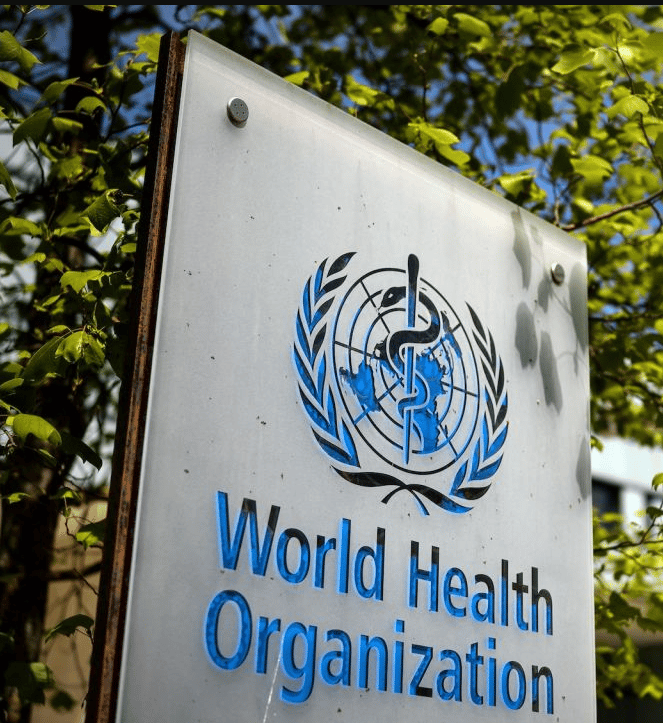
Next read
Elburgon Land Wars — How Armed Goons Are Driving Legal Landowners From Their Homes While Local Leaders Watch
25 April 2026 · 5 min read