{# Static assets are served by WhiteNoise CompressedManifestStaticFilesStorage,
which already content-hashes the filename — manual ?v= query strings are
redundant and risk being forgotten on new assets. #}
Skip to main content
Foods Rich In Iron In Kenya That Boost Energy and Fight Deficiency Fast
Gemini_Generated_Image_qf3ik4qf3ik4qf3i
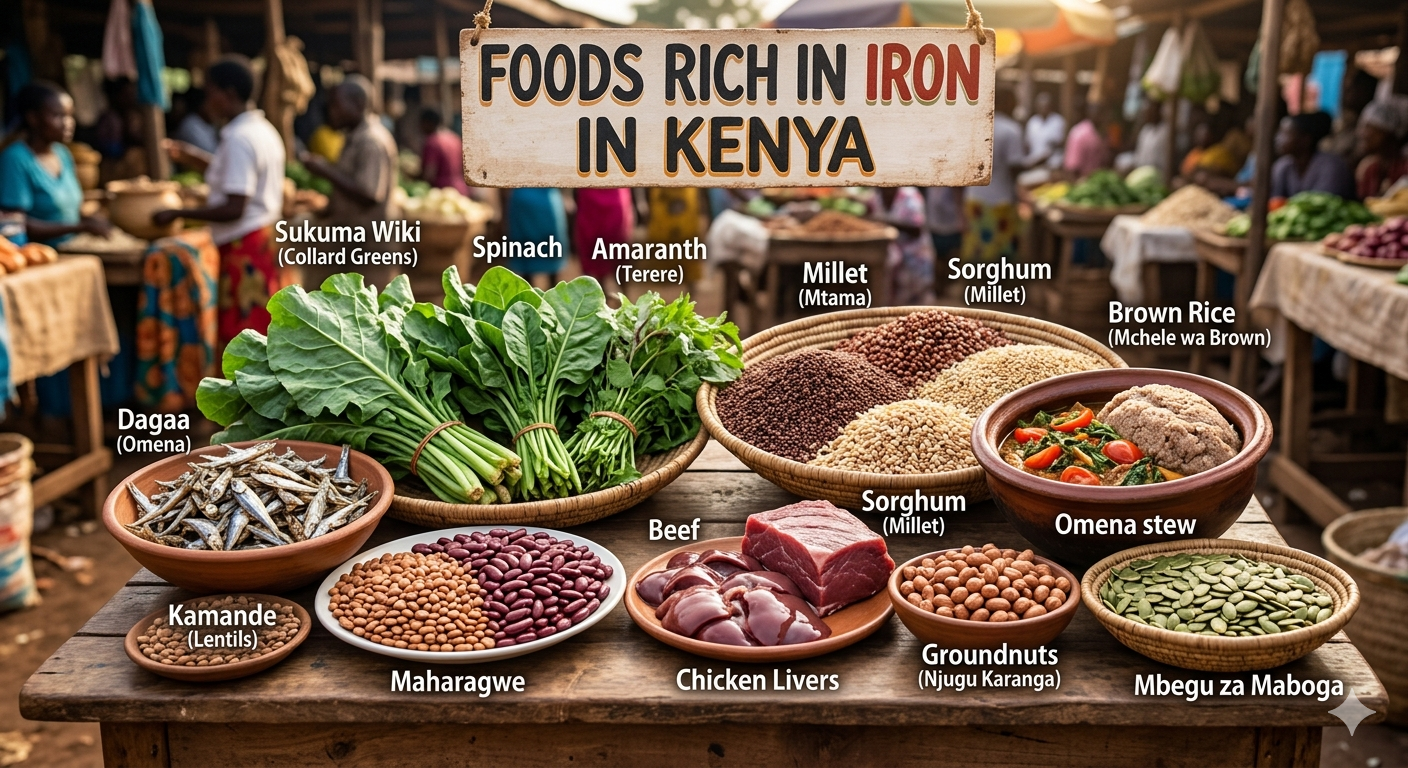
Iron plays a critical role in your body, and you cannot afford to ignore it. This nutrient helps your blood carry oxygen, supports strong cells, and keeps your skin, hair, and nails healthy. When your iron levels drop, your energy crashes, and your body struggles to function well. In Kenya, many affordable and accessible foods can help you meet your daily iron needs naturally. Whether you prefer plant-based meals or animal products, you have plenty of options. This guide breaks down the best foods rich in iron in Kenya and shows you how to include them in your daily diet. Eating iron-rich foods daily strengthens your body, boosts energy levels, supports healthy blood, and helps you stay active, focused, and resilient against fatigue and illness.
Best Foods Rich In Iron In Kenya You Should Eat Regularly
Your body needs about 18 mg of iron daily, and you can easily reach this target with the right food choices. There are two types of iron: heme iron from animal sources and non-heme iron from plant sources. Heme iron absorbs faster, but combining both types gives you the best results.
Here is a detailed breakdown of the most reliable sources:
Iron Content in Common Kenyan Foods
Food Category
Example
Iron Content
Type of Iron
Green vegetables
Spinach (100g cooked)
3.6 mg
Non-heme
Legumes
Beans (1 cup cooked)
8 mg
Non-heme
Legumes
Lentils (1 cup cooked)
6.6 mg
Non-heme
Seeds
Pumpkin seeds (28g)
4.2 mg
Non-heme
Organ meat
Beef liver (100g)
6.5 mg
Heme
Tubers
Irish potatoes (300g)
3.2 mg
Non-heme
Tubers
Sweet potatoes (300g)
2.5 mg
Non-heme
Mushrooms
Oyster mushrooms (1 cup)
5 mg
Non-heme
Red meat
Beef (100g)
2.7 mg
Heme
Nuts
Cashews (1 ounce)
1.6 mg
Non-heme
Whole grains
Oats (1 cup cooked)
3.4 mg
Non-heme
You should aim to mix these foods throughout your week instead of relying on one source.
Plant-Based Foods Rich In Iron In Kenya
Plant foods provide non-heme iron, and they are widely available and affordable across Kenya. If you eat a plant-based diet, you must be intentional to meet your needs.
Key options include:
Green vegetables like spinach and sukuma wiki
Legumes such as beans, peas, and lentils
Pumpkin seeds, which are nutrient-dense and easy to snack on
Mushrooms, especially oyster and white varieties
Fruits like dates, berries, prunes, olives, and watermelon
Nuts such as cashews and macadamia
Whole grains like oats and fortified cereals
These foods do more than provide iron. They also help lower blood pressure, control blood sugar, and improve heart health.
However, your body absorbs non-heme iron less efficiently. You can fix this by combining these foods with vitamin C-rich options like oranges, lemons, or tomatoes.
Animal-Based Foods Rich In Iron In Kenya
Animal products give you heme iron, which your body absorbs faster and more effectively. If you want to raise your iron levels quickly, you should include these foods regularly.
Top choices include:
Organ meats like liver, kidneys, and gizzards
Red meat such as beef
For example, a small serving of beef liver delivers a powerful iron boost that can cover over a third of your daily requirement. Red meat also provides protein and essential minerals like selenium, making it a strong addition to your meals.
Smart Ways to Maximize Iron Absorption
Eating iron-rich foods is not enough. You need to help your body absorb the iron properly.
Use these practical tips:
Combine iron-rich foods with vitamin C sources like citrus fruits
Avoid drinking tea or coffee immediately after meals because they reduce iron absorption
Cook using cast iron cookware to increase iron content in food
Include a mix of heme and non-heme iron sources in your meals
Small changes like these can make a big difference in your overall health.
Final Thoughts
You do not need expensive supplements to meet your iron needs. Kenya offers a wide range of affordable and nutritious options that can keep your iron levels healthy. Focus on consistency, balance plant and animal sources, and support absorption with the right habits. When you eat smart, your body responds with better energy, stronger immunity, and improved overall health.
 Eating iron-rich foods daily strengthens your body, boosts energy levels, supports healthy blood, and helps you stay active, focused, and resilient against fatigue and illness.
Reading is free. Sign in to comment.