









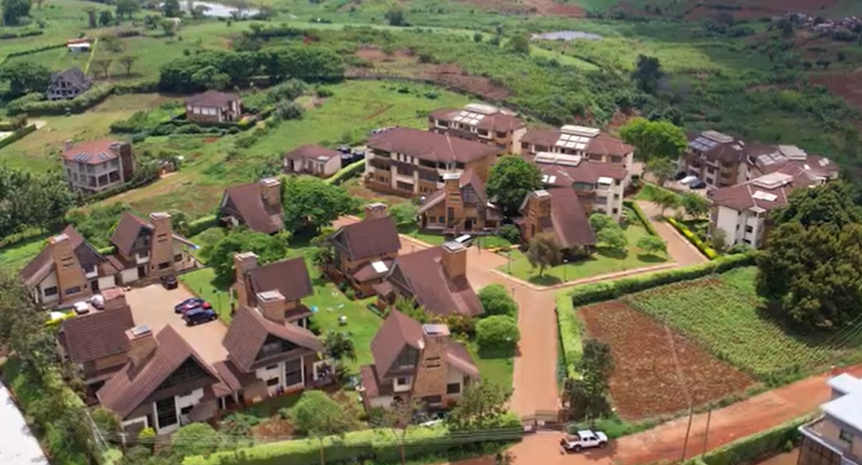





















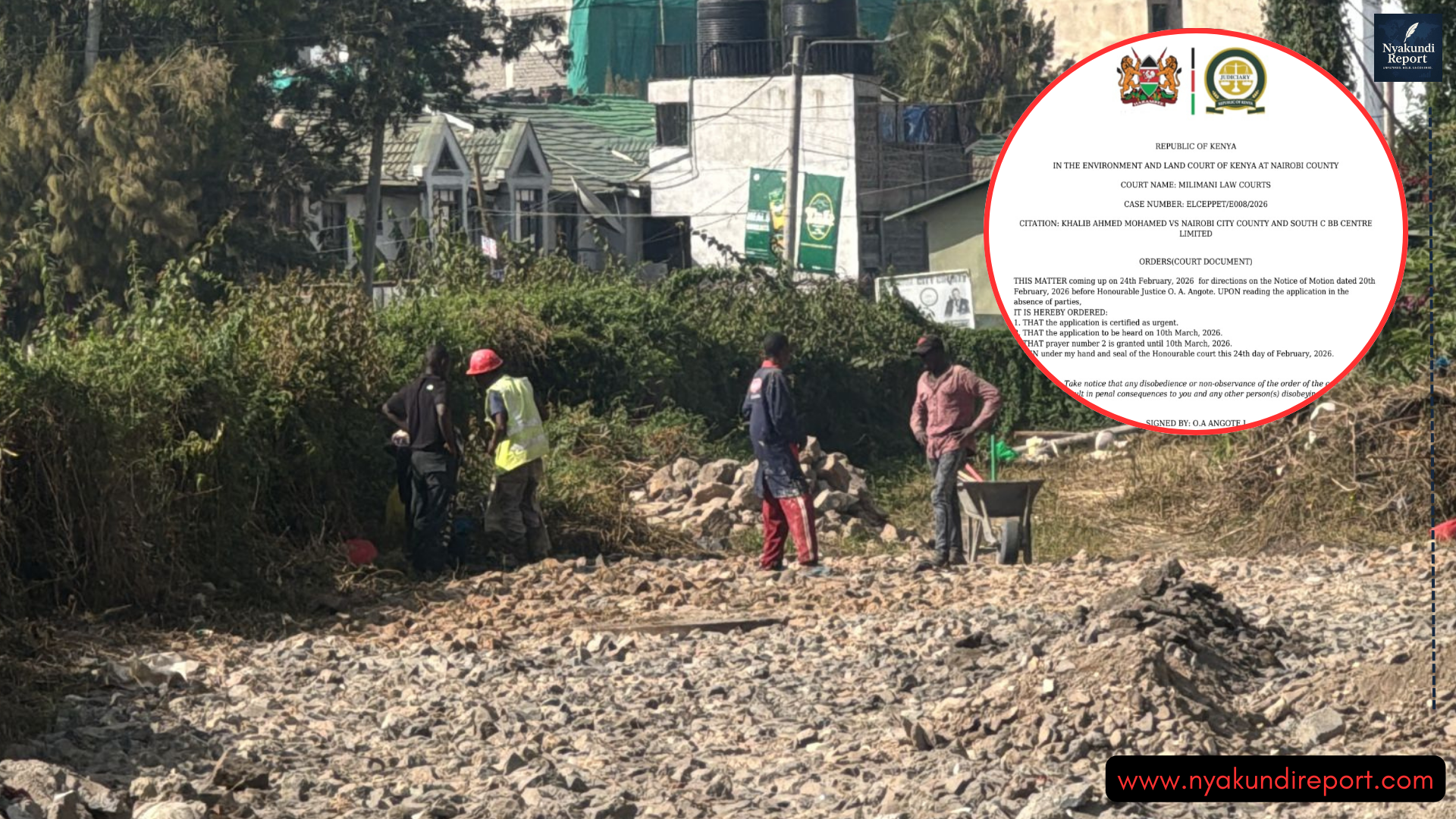
Residents of South C have mounted a fierce legal and civic battle to stop what they describe as blatant South property encroachment by rogue private developers of Somali origin who have allegedly grabbed and transformed contested land with open defiance of planning and environmental laws.
They have written to authorities, filed formal complaints, and secured court orders, yet construction continues next to Parkview Apartments on Muhoho Road as heavy machinery reshapes the site.
The dispute over L.R. No. 209/11646 has now exploded into a constitutional petition that challenges state agencies to enforce the law and protect property rights before irreversible damage occurs.
South Property Encroachment Exposes Regulatory Failure and Constitutional Breaches
Petitioners argue that South Property Encroachment on land adjacent to Parkview Apartments, South C, Muhoho Road, Nairobi, identified as L.R No. 209/11646, violates both statutory and constitutional safeguards. They anchor their case on Articles 10, 35, 40, 42, 47, and 69 of the Constitution of Kenya, 2010, asserting that authorities have failed to uphold national values, protect property rights, safeguard environmental rights, guarantee fair administrative action, and ensure sustainable land use.
They contend that the 2nd Respondent has relied on a Temporary Occupation Licence dated November 5, 2024, referenced as VAL. 752/SG/1/0/NNI/pww, but has stretched that licence far beyond its express terms. According to the petition, the developer has erected structures, intensified activity, and altered the character of the site without complying with the Environmental Management and Co-ordination Act, No. 8 of 1999, and without demonstrating proper environmental impact assessment approvals.
Residents insist that authorities have ignored their written objections and requests for information. They argue that regulators have allowed the development to proceed without transparent disclosure of approvals, licences, or public participation records. They maintain that this inaction has emboldened the developer and weakened confidence in land governance systems.
The petitioners therefore ask the court to declare that the respondents’ actions and omissions violate the Constitution and to affirm that no developer can override environmental and planning laws through administrative silence.
Alleged Abuse of Temporary Occupation Licence and Planning Approvals
Petitioners assert that the Temporary Occupation Licence did not authorize permanent structures, expanded commercial activity, or infrastructure interference. They claim that the developer has nevertheless constructed substantial installations on L.R. No. 209/11646 and has continued operations despite protests from neighbouring residents.
They argue that the developer has failed to demonstrate compliance with environmental impact assessment requirements and has not produced evidence of valid planning permission, change-of-use approvals, or meaningful public participation. Residents state that they have repeatedly requested disclosure of all approvals and licences relating to the site but have not received satisfactory responses.
The petition therefore seeks a declaration that the development contravenes the express terms of the Temporary Occupation Licence and violates environmental and planning laws. Petitioners also seek a permanent injunction restraining the 2nd Respondent, its servants, agents, employees, or anyone acting under its authority from continuing construction, commercial activity, or interference on the property unless and until full legal compliance is demonstrated.
They further request a mandatory order compelling the developer to demolish and remove all structures erected in breach of the licence and to restore the land, sewer infrastructure, landscaping, and vegetation to a lawful and environmentally compliant condition at its own cost.
Environmental Impact and Threat to Property Rights
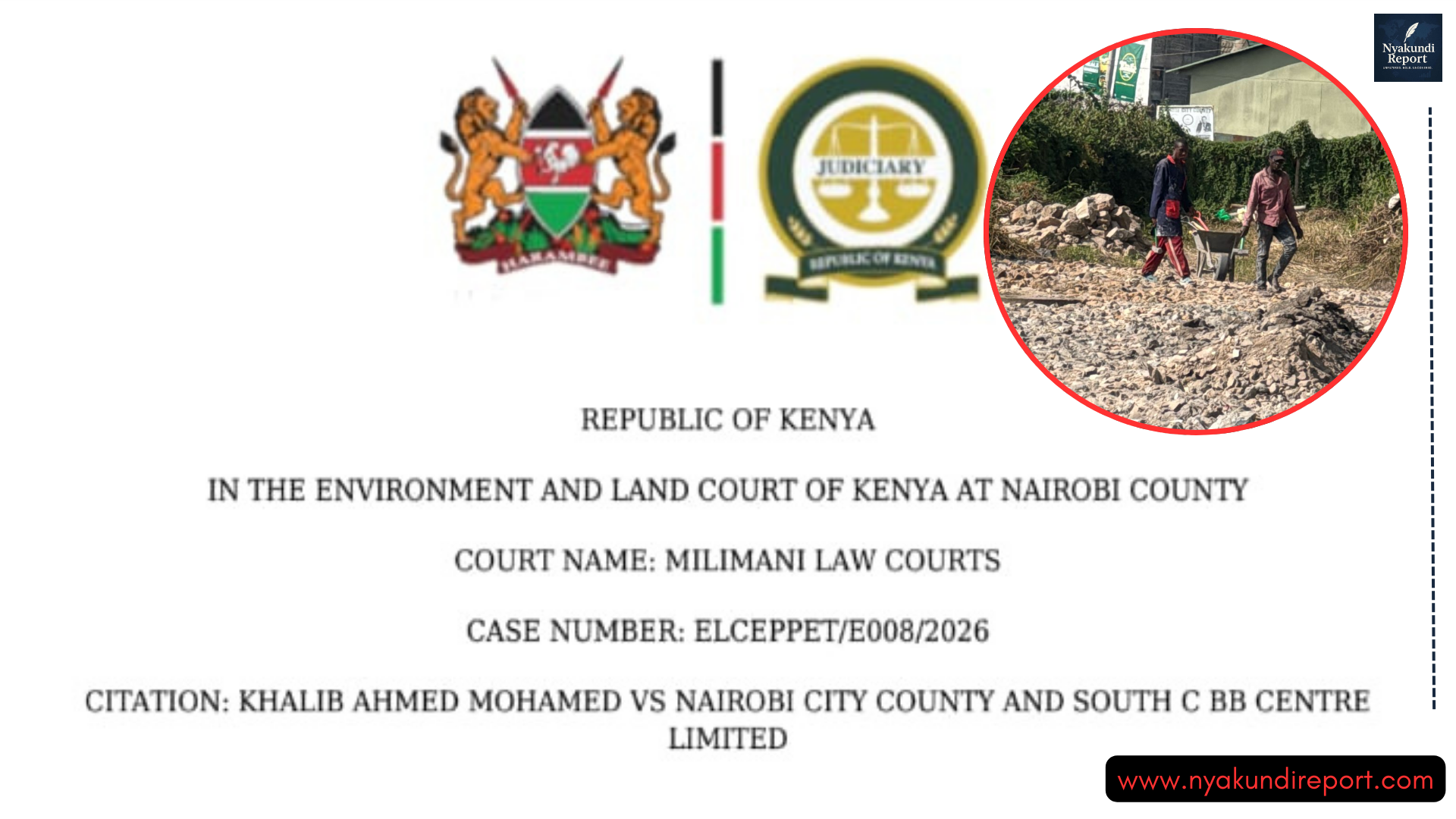
Residents argue that South Property Encroachment has already disrupted sewer lines, altered drainage systems, and degraded vegetation near Parkview Apartments. They contend that these changes threaten both environmental integrity and the structural safety of surrounding residential buildings.
They maintain that Article 42 guarantees every person the right to a clean and healthy environment and that authorities must enforce environmental standards without fear or favour. Petitioners argue that regulators have failed to exercise oversight and have thereby allowed environmental harm to escalate.
They also invoke Article 40, which protects the right to property, asserting that unchecked development next to their residences undermines the quiet enjoyment and value of their homes. They insist that state agencies must enforce compliance proactively rather than react only after irreversible damage occurs.
Through their petition, they seek general damages for violation of constitutional rights and ask the court to compel strict enforcement of environmental and planning laws to prevent further harm.
Reliefs Sought and Demand for Full Accountability
The petition outlines comprehensive remedies designed to halt South property encroachment and restore the rule of law. Petitioners seek a declaration that the actions and omissions of the respondents violate constitutional provisions on governance, access to information, environmental protection, property rights, and fair administrative action.
They ask the court to compel the 1st Respondent to enforce compliance with the Temporary Occupation Licence and all applicable environmental and planning laws concerning L.R. No. 209/11646. They further demand full disclosure of all approvals, Environmental Impact Assessment licences, planning permissions, change-of-use approvals, and records of public participation relating to the property.
In addition to injunctive and mandatory orders, they request costs of the petition, general damages, and any other relief the court may deem just, fair, and expedient. They argue that decisive judicial intervention will not only resolve the dispute in South C but also reaffirm that no private developer can override the Constitution through influence, delay, or regulatory inaction.
As the case unfolds, residents continue to press authorities and the judiciary to act swiftly, enforce compliance, and send a clear signal that South Property Encroachment will not succeed where the law still stands.