




















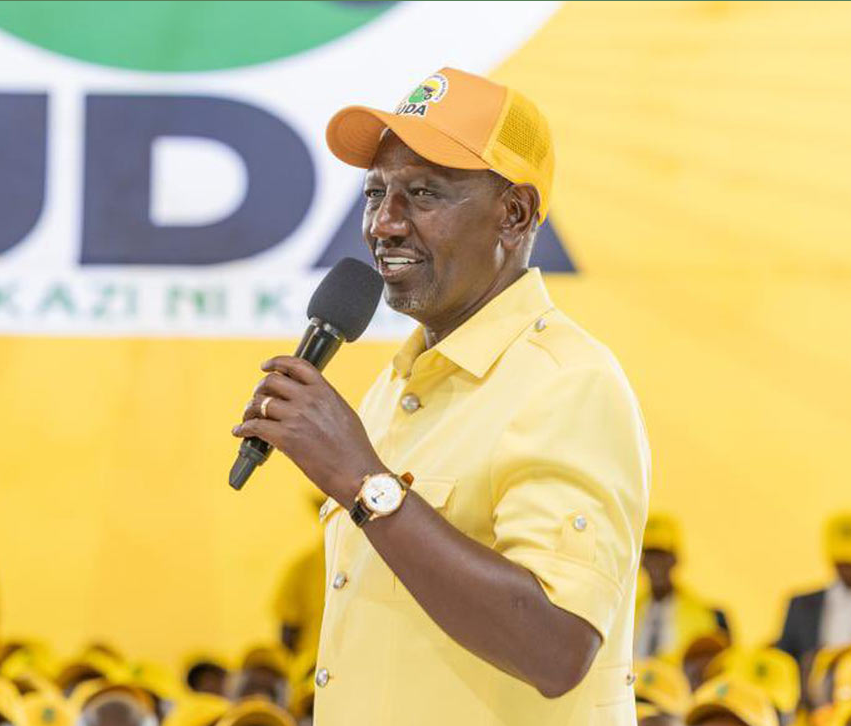
President William Ruto’s latest tax announcement has injected rare optimism into Kenya’s strained economic conversation.
In a bold move framed as cost-of-living relief, the government has exempted all earners below KSh 30,000 from income tax and reduced the top income tax rate from 35 percent to 30 percent.
For millions of Kenyans grappling with shrinking disposable incomes, the message is simple: take home more, survive better.
But beyond the applause lies a complex economic and political calculation, one that could either validate Ruto’s “hustler” promise or deepen Kenya’s long-term fiscal strain.
What the Tax Relief Package Entails
At the heart of the package is a recalibration of income taxation.
Low-income earners are the biggest immediate winners, with an estimated 1.5 million Kenyans now completely removed from the income tax bracket.
For middle- and high-income earners, the cap on the top tax rate offers modest but symbolically important relief after months of steep deductions.
The government’s stated aim is to put money back into households, stimulate consumption, and ease pressure caused by inflation, high fuel prices, and rising basic living costs.
The Promise of “Trickle-Up” Economics
This policy reflects a form of what may be called “trickle-up economics.”
The logic is straightforward: when low-income earners retain more of their income, they spend it quickly and locally.
That spending supports small businesses, boosts demand, and circulates money upward through the economy.
In theory, this bottom-up stimulus could support growth more effectively than tax relief for the wealthy.
In a consumption-driven economy like Kenya’s, the approach makes intuitive sense—especially at a time when many households are operating at the edge of survival.
The Fiscal Reality Behind the Relief
However, the relief comes against a troubling fiscal backdrop.
The government is projecting a KSh 923 billion budget deficit, raising legitimate questions about how the gap will be financed.
Reduced income tax collections do not eliminate expenditure needs.
Debt repayments, public-sector wages, infrastructure commitments, and social programs still require funding.
Without corresponding spending cuts or new revenue sources, the shortfall will likely be covered through borrowing—potentially worsening Kenya’s already heavy debt burden.
The risk is that today’s relief is quietly offset tomorrow by higher indirect taxes, increased levies, or reduced public service costs, which disproportionately affect the same low-income earners the policy seeks to protect.
Political Timing and the 2027 Question
The timing of the tax relief has not gone unnoticed.
With the 2027 general election slowly approaching, the package strengthens Ruto’s populist “hustler” narrative and softens public frustration after months of tax hikes and austerity measures.
In political terms, exempting low-income earners from tax is powerful.
It reframes the government from a collector to a reliever, even if only temporarily.
Critics argue that the move may be less about economic reform and more about restoring political goodwill at a crucial moment.
Relief Today, Reckoning Tomorrow?
There is no doubt that the tax relief will offer immediate breathing room for millions of Kenyans.
For households living paycheck to paycheck, even small gains matter. Yet sustainability remains the unresolved question.
If the government complements this policy with strong fiscal discipline, reduced wastage, and genuine economic expansion, the gamble could succeed.
If not, Kenya risks sliding deeper into debt while postponing difficult structural reforms.
A Bold Move with High Stakes
The “Ruto Tax Relief” package is both compassionate and calculated.
It delivers real, immediate benefits to low-income earners while placing a heavy bet on economic growth and political goodwill.
Whether it becomes a foundation for fairer taxation or a short-term political maneuver will depend on what follows.
For now, the hustler wins. The bill comes later.
ALSO READ: The Untold Story of Katy Perry’s Wild Rise