
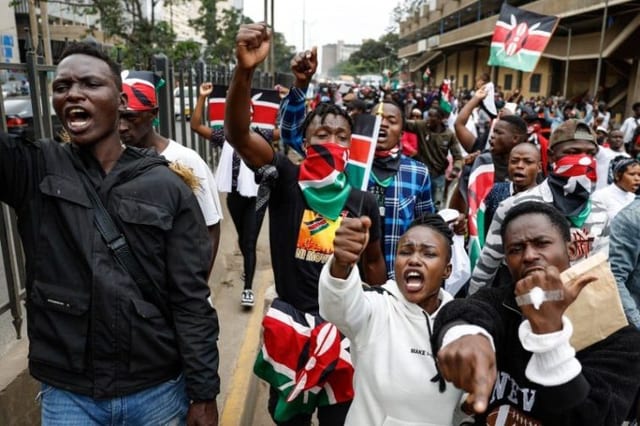
One thing young Kenyans need to confront is how quickly the goalposts have shifted since the 2024 protests. We went from “All Politicians Must Go” to watching the same old politicians dominate political conversations, with young people now fighting over personalities they once rejected.
At what point did the generation that rejected political godfathers become so emotionally attached to those same politicians that questioning them is now considered betrayal?
What happened to the demands for accountability, an end to corruption, reduced government spending and a complete change in how this country is governed? How did we move from rejecting the entire political establishment to defending individual politicians as though they were sent from heaven?
Some young people have become so politically naive that they genuinely believe a candidate surrounded by wealthy political families, powerful establishment figures and people associated with past public finance controversies must automatically have their interests at heart.
We spent years questioning the handling of Eurobond proceeds, the accumulation of unexplained wealth and the political families that have enjoyed enormous influence while ordinary Kenyans struggle to survive. Yet today, some young people barely question the same political networks when they appear behind their preferred candidates.
How does a politician become a symbol of change simply because they have joined the side you support? Does yesterday's political baggage disappear because someone has endorsed your favourite candidate?
The real question is who is setting the agenda today. Is it the young people who started the movement, or the legacy politicians who already control political parties, campaign financing, grassroots networks and the machinery of electoral politics?
Having thousands of people on X Spaces, trending hashtags and making noise online is not the same as controlling a political movement. You can dominate social media for an entire week while someone else makes all the important political decisions.
And any young person who confidently tells you that “We are in control” should explain exactly what decisions young people are making independently of the established political class. Otherwise, they are simply selling you Coke.
What makes this particularly interesting is how quickly the standards change depending on which politician is involved. The corruption that was unacceptable yesterday suddenly becomes a secondary issue when the accused politician joins the preferred political camp.
The 2024 protests were bigger than Ruto, bigger than the opposition and bigger than any political family. They raised fundamental questions about how Kenya is governed, how public money is spent and why ordinary citizens must keep paying for the failures of successive administrations.
Those questions should not disappear because the country is approaching another election.
The most uncomfortable question remains unanswered. Did the political establishment actually change, or did some of the young people who wanted to dismantle it simply find new politicians to defend?