
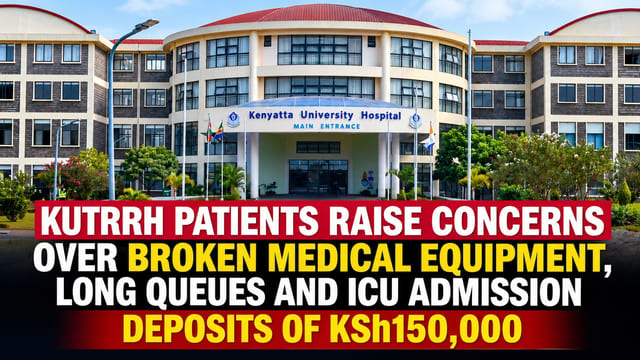
Patients seeking treatment at Kenyatta University Teaching, Referral and Research Hospital (KUTRRH) are raising concerns over the state of services at the institution, citing malfunctioning medical equipment, staff shortages, prolonged waiting times and admission deposits that could place critical treatment beyond the reach of financially struggling families.
The complaints paint a troubling picture of an important public referral hospital where patients expect timely medical attention but encounter delays and financial demands that complicate their access to care.
Of particular concern are reports that families seeking admission for critically ill patients may be required to raise approximately KSh150,000 for intensive care, while general ward admissions attract deposits of about KSh20,000.
One of the issues requiring immediate attention is the condition of essential medical equipment. Concerns have been raised that some machines break down and remain out of service without timely repairs or replacement, potentially interrupting procedures that patients have been referred to the hospital to receive.
At a teaching and referral institution expected to handle complex medical conditions, the availability of functioning diagnostic and treatment equipment is essential. When equipment is unavailable, patients may face postponed procedures, longer hospital stays or additional expenses if they are directed elsewhere for services.
The hospital's staffing and patient management systems have also come under scrutiny, particularly at cashier points where patients spend extended periods waiting to make payments before proceeding to other services. Such delays can create congestion throughout the hospital because patients may need to complete several administrative steps before receiving consultations, undergoing tests or obtaining prescribed treatment.
Similar complaints have emerged concerning the outpatient department, where some patients claim they wait for hours before seeing consultants. The concerns include reports of consultations being delayed during extended lunch breaks, leaving patients uncertain about when doctors will return or whether they will be attended to that day.
Specialist consultations often involve patients who have travelled considerable distances, sometimes after being referred from other facilities, and delays can become particularly distressing for those experiencing severe pain or requiring urgent medical assessment.
The most serious questions, however, concern the admission deposits demanded from patients and their families. Complaints referring to approximately KSh20,000 for general ward admission and KSh150,000 for ICU admission require a clear explanation from KUTRRH management, particularly regarding whether these amounts are standard deposits, estimates for anticipated treatment costs or charges applied only to particular categories of patients.
For many Kenyan households, raising such an amount at short notice would be extremely difficult. Families facing a medical emergency may already be struggling with transport expenses, diagnostic tests, medication and other treatment costs before admission is even considered.
A critically ill patient may require immediate intervention, leaving relatives little time to seek financial assistance or establish whether their insurance arrangements will cover the treatment.
Where a service is not covered, families should receive an explanation of the anticipated costs and available alternatives. The existence of a deposit requirement should not leave patients or relatives uncertain about whether urgent medical attention will be provided.
The Constitution of Kenya recognises the right to the highest attainable standard of health and expressly provides under Article 43(2) that a person shall not be denied emergency medical treatment.
The Health Act, 2017, also addresses the provision of emergency medical treatment. These protections make it important for public hospitals to distinguish emergency care from ordinary admission and billing arrangements. They do not mean every hospital service is automatically free, but they do require healthcare providers to observe the legal obligations that apply when a patient needs emergency treatment.
The concerns raised about KUTRRH also point to the relationship between hospital administration and patient experience. A patient may encounter functioning medical equipment and qualified specialists but still experience serious difficulties if payment counters are understaffed, appointments are poorly coordinated or information about treatment costs is unclear.
Similarly, a hospital may have established procedures for emergency admissions and financial assistance, but those arrangements are of little practical value if patients and their families do not understand them or cannot obtain timely guidance from the relevant offices.
The hospital's Board of Directors and the Ministry of Health should pay attention to these concerns and seek a clear account of the institution's operational challenges. As a major national referral and research hospital, KUTRRH is expected to provide specialised treatment while maintaining standards of patient safety, professionalism and accountability.
How Toxic Leadership at KUTRRH has Shielded Dr Elizabeth Mwikali's Lunatic Bullying, Favourit...
The issues have been brought to public attention through the following complaint:
CONCERNS OVER THE STATE OF SERVICES AT KUTRRHThere are growing concerns about the quality and efficiency of services at Kenyatta University Teaching, Referral and Research Hospital (KUTRRH), and the issues raised deserve urgent attention. First, there are concerns about essential medical equipment breaking down without timely replacement or repair, potentially affecting the delivery of critical medical procedures.Secondly, staff shortages appear to be contributing to long queues, particularly at cashier points, leaving patients waiting for extended periods before they can access services. The outpatient department also needs attention. Patients report lengthy waiting times to see consultants, with some alleging that consultations are delayed for hours, including during extended lunch breaks. Patients who are sick, in pain, or travelling long distances deserve timely attention and clear communication about delays.Perhaps most distressing are the concerns about admission deposits. Reports of deposits of approximately KSh 20,000 for general wards and KSh 150,000 for ICU admission raise serious questions about access to emergency and critical care for families who cannot afford such amounts upfront. When a loved one is critically ill, families should not be left feeling helpless because they cannot immediately raise a large sum of money. Healthcare should be about saving lives, treating patients with dignity, and providing timely care. No patient should have to endure unnecessary delays, and no family should be left confused about how to access urgent treatment because of financial constraints. We respectfully call upon the hospital management and relevant health authorities to investigate these concerns, address equipment shortages and staffing gaps, improve outpatient service delivery, and provide clear guidance on admission deposits, emergency care, and available financial assistance. KUTRRH is an important referral institution, and patients deserve services that reflect the hospital's responsibility to the public.The question is simple: Can the hospital management urgently address these concerns and restore patients' confidence in the services they receive?