
President Yoweri Museveni's July intervention at the Ministry of Works and Transport was supposed to mark the beginning of a serious clean-up of an institution associated with delayed roads, ballooning project costs, questionable design changes and allegations of corruption.
Six senior officials were ordered out of office. Three were from the Ministry: Eng. Ronald Olaki, project manager for the Masaka–Kyotera–Mutukula road; Eng. Steven Kitonsa, the Engineer-in-Chief; and Eng. Rogers Kisambira, who managed road projects linked to Uganda's preparations for AFCON 2027. Three others — Ronald Twesigye, Sooma Ayoub and Helen Wenene Mary — were from Uganda Civil Aviation Authority.
Permanent Secretary Waiswa Bageya was also interdicted to facilitate investigations.
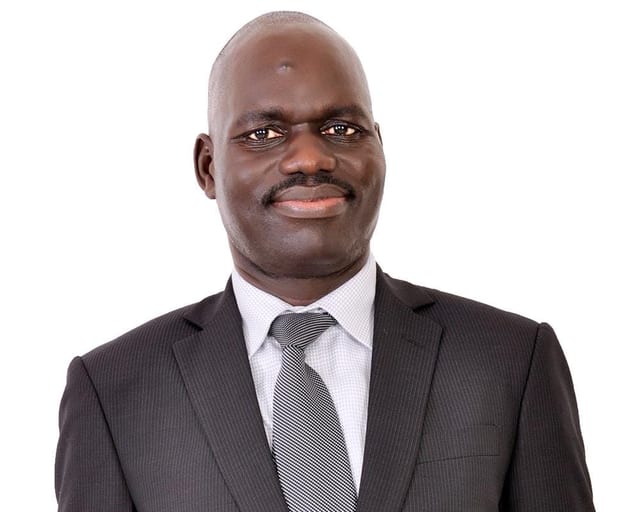
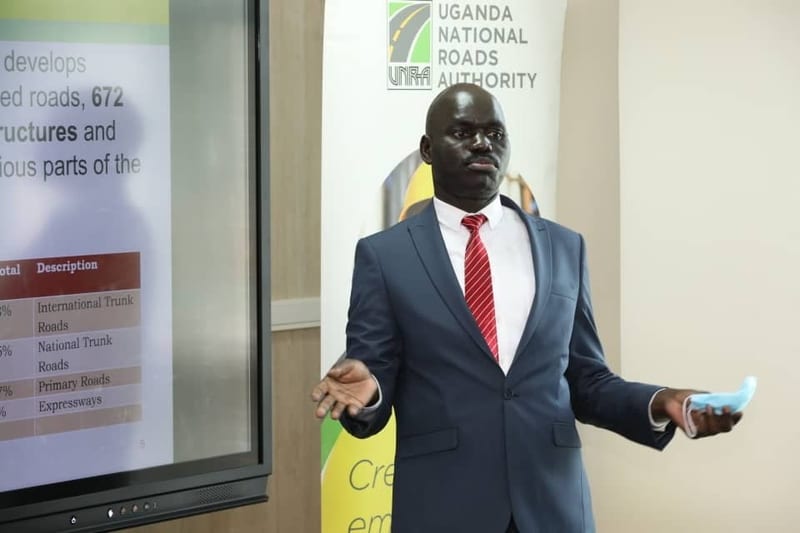
Yet one senior official at the centre of the national roads establishment remains in office: Eng. Isaac Wani, Commissioner for National Roads.
That raises a fundamental question: if the President's objective is to facilitate investigations and clean up the Ministry, why is the man at the top of the national roads technical structure still in charge while his juniors are being removed?
This is an argument about institutional accountability, conflict of interest and the credibility of an investigation.
The Ministry's own website places Wani at the head of the National Roads Department. That department is responsible for planning, developing, rehabilitating and maintaining national roads; implementing road and bridge works; managing the national road asset; and overseeing lawful acquisition and compensation of people affected by road construction.
The question is not whether every road problem can personally be attributed to Wani. It cannot. The question is whether it is reasonable for the principal technical official responsible for national roads to remain in charge while investigations examine systems, decisions and projects within that technical chain of command.
Museveni himself described the problem as “massive corruption” President Museveni did not describe the Works Ministry crisis as a minor administrative failure.
In his July letter, he wrote:
I have been getting reports that there is massive Corruption in the Ministry of Works. Proof of this Corruption has been the delays in road construction and maintenance.
He cited the Busega–Mpigi Expressway, the “shameful” Mubende–Fort Portal road, Masaka–Mutukula, Jinja Road, the unfinished Ssezibwa Bridge and malfunctioning airport scanners. Most significantly, he referred to attempts to increase the cost of AFCON roads from Shs4 billion per kilometre to Shs8.5 billion per kilometre.
Museveni said the clean-up would use both criminal and administrative mechanisms and ordered the six officials to vacate office immediately. The President was therefore responding to what he described as a systemic problem. That is precisely why Wani's continued presence deserves scrutiny.
Wani is not an outsider to the system under investigation. Before the rationalisation of UNRA, Wani was Director of Network Planning and Engineering at the Uganda National Roads Authority. He later became Commissioner for National Roads after UNRA's functions were absorbed into the Ministry.
Many projects now generating questions were not conceived yesterday. Their procurement, design, alignment, financing, supervision and contract-management histories stretch back years, including the period when UNRA was responsible for them.
The Busega–Mpigi Expressway is the clearest example.
Parliament has asked who changed the original alignment, why sections were moved into wetlands, who approved those changes and who owns land in the affected areas. Ministry officials were also pressed to produce historical records concerning design decisions and consultant payments.
Wani himself appeared before Parliament to explain the project's history.
That establishes that his institutional knowledge of the project is deep and that his involvement in the former UNRA structure is relevant to the historical record investigators are trying to reconstruct.
Investigations and reporting have examined decisions made during Wani's tenure as UNRA Director of Network Planning and Engineering and his role as chair of the UNRA Contracts Committee during procurement of the Busega–Mpigi project. One investigation reports that the committee chaired by Wani approved the evaluation report and recommendation for award in May 2018, while Wani had earlier signed a memorandum concerning a change to the project's design.
Someone whose past decisions may form part of an investigation should not necessarily remain in operational control of the institution whose records, officers and systems are being investigated.
Then came Nakawuka
During Minister Fred Byamukama's inspection of the 72.5-kilometre road network around Nakawuka, the Ministry reported serious irregularities in land acquisition and compensation. Allegations included inflated valuations, structures erected to attract compensation and questionable graves included in compensation claims. Two ministry officials involved in land acquisition were arrested as investigations continued.
Reports put the construction cost of the corridor at approximately Shs340.5 billion, while the compensation bill had risen above Shs400 billion. Byamukama was quoted as saying:
The money needed to compensate people is three times higher than the money needed to build the road.
The minister also stated that some ministry engineers had acquired property along planned road corridors and that officials involved in setting compensation values could have been connected to properties being compensated.
The Ministry subsequently reported an example in which an acre said to be worth about Shs65 million was valued at as much as Shs2 billion.
The National Roads Department is responsible for road development and, according to the Ministry's mandate, for timely assessment, lawful acquisition and fair compensation of people affected by road construction.
If that system is under investigation, why should its commissioner continue exercising full authority while the investigation proceeds?
Junior or middle-level officers are removed. The Permanent Secretary is interdicted. Other engineers are recording statements before investigators. Yet the Commissioner responsible for national roads continues to supervise the technical establishment under scrutiny.
Meanwhile, Wani remains publicly active in major government transactions. In July, he signed the new Karuma Bridge contract in Tokyo on behalf of the Ugandan government.
Removing someone from operational office pending investigation is not the same as declaring that person guilty. It is a precaution intended to preserve evidence, protect the investigation and maintain public confidence.
The argument for Wani's removal is therefore not that he is corrupt. It is that his position, history and responsibilities are sufficiently connected to the matters under investigation that he should step aside until the investigations are complete.
A credible clean-up cannot stop halfway up the hierarchy. The greatest danger now is selective accountability.
If the government removes project managers but leaves senior technical leadership untouched, Ugandans are entitled to ask whether the purge is genuinely about institutional reform or merely about finding convenient scapegoats.
Road projects do not become multi-billion-shilling programmes through the actions of one junior officer. Designs are approved through systems. Contracts pass through committees. Variations require approvals. Compensation follows technical and administrative processes. Consultants are appointed through procurement systems. Certificates are processed through chains of responsibility.
Accountability must therefore follow the decision chain, not simply the employee who signed the last document.
If the administration genuinely wants investigators to follow the evidence wherever it leads, the safest course is obvious: Eng. Isaac Wani should be removed from his operational position, at least pending completion of investigations into projects and decisions falling within his former and current responsibilities.
He should be given every opportunity to defend himself. He should not be condemned without evidence. But neither should his seniority become a shield against scrutiny.
Museveni's intervention created an expectation that nobody would be untouchable. That expectation should apply upward as well as downward.
Wani should step aside immediately. His duties can be assigned to another competent officer while investigators examine the Busega–Mpigi Expressway, historical UNRA decisions, road procurement and contract management, compensation systems and other projects linked to the crisis.
If investigators find that he has done nothing wrong, he will have lost nothing except a temporary administrative posting. But if he remains in office and investigators later establish that decisions within his chain of responsibility were compromised, the obvious question will be: why was he allowed to remain in charge?
Uganda has reached a moment when the credibility of the Works Ministry's clean-up matters almost as much as the clean-up itself.
The logical next step is to remove Eng. Isaac Wani from operational control of national roads and allow investigations to proceed without his continued presence at the centre of the system.
Not because he has been found guilty, but because no investigation into a compromised system should be conducted with one of its most senior and historically connected technical officials still sitting at its command post.
No one is above investigation. No office is too powerful to be temporarily vacated. And no clean-up is credible if it stops before reaching the top of the decision chain.