

A debate over press freedom in the United States has intensified after CNN, MS NOW and Politico were barred from the White House by President Donald Trump following criticism of their coverage.
Commenting on the issue, Cyprian Nyakundi questioned the inconsistency in how some major media organisations have approached censorship and free speech over the years.
He pointed to Twitter’s 2021 permanent suspension of Trump’s account and Elon Musk’s decision to reinstate Trump after taking over the platform in 2022. Musk also announced a general amnesty for suspended accounts that had not broken the law or engaged in serious spam.
Nyakundi argued that the principle of free speech should apply consistently, regardless of who is affected.
You cannot spend years cheering or normalising censorship when it is aimed at people you dislike, then suddenly rediscover the sacred value of access and free expression when the door closes on you.
Can journalists protect their independence individually, or does press freedom sometimes require media organisations to stand together when one outlet is targeted?
Nyakundi's argument is not that journalists should accept censorship. Rather, he is challenging what he considers selective outrage. His point is that free expression becomes a weak principle if people defend it only when their own side is affected.
Are principles such as free speech and press freedom universal, or do they change depending on who is being silenced?
CNN, MS NOW and Politico are now crying about being banned from the White House, and yes, shutting journalists out over disliked coverage raises serious press freedom questions, but the hypocrisy is hard to miss after years when major media voices treated deplatforming as perfectly acceptable whenever the target was Trump or people they considered dangerous. Trump was permanently banned from Twitter in 2021, and after Elon Musk took over, Trump was reinstated and a wider “general amnesty” was announced for many suspended accounts that had not broken the law or engaged in serious spam. You cannot spend years cheering or normalising censorship when it is aimed at people you dislike, then suddenly rediscover the sacred value of access and free expression when the door closes on you. Free speech and press freedom mean very little if they only become important when your own microphone is taken away- Nyakundi Said
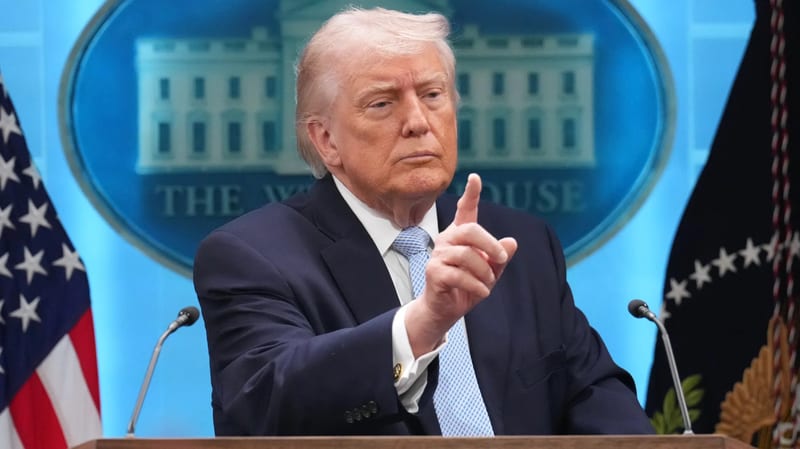
The current dispute began after Trump announced on September 18 that CNN, MS NOW and Politico would be banned from the White House, accusing them of producing what he called “fake news.”
Reporters from the three outlets were subsequently denied entry and had their press credentials deactivated or confiscated.
The White House has maintained that the First Amendment protects the outlets' right to publish but does not automatically guarantee access to the White House, while the news organisations argue that excluding them because of their reporting violates constitutional protections.
The dispute has also triggered a wider response from other US news organisations. Television networks including ABC, CBS, Fox News and NBC temporarily halted pool coverage of presidential events after CNN was removed from its scheduled pool assignment.
The legal battle will now determine whether the administration can restrict White House press access based on dissatisfaction with a news organisation's coverage.