
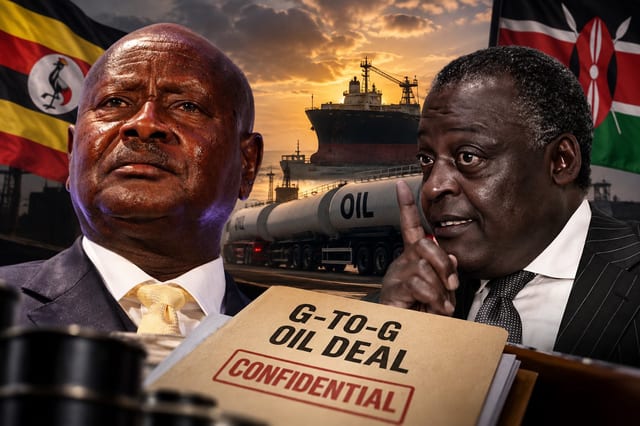
Ugandan President Yoweri Museveni has put to rest days of speculation over who tipped him off about a costly petroleum middlemen scheme.
Ssebo revealed that it was the late Kenyan politician Cyrus Jirongo who first alerted him, back in 2019, that Uganda was buying its petroleum products through intermediaries operating in Kenya rather than through a direct government-to-government arrangement.
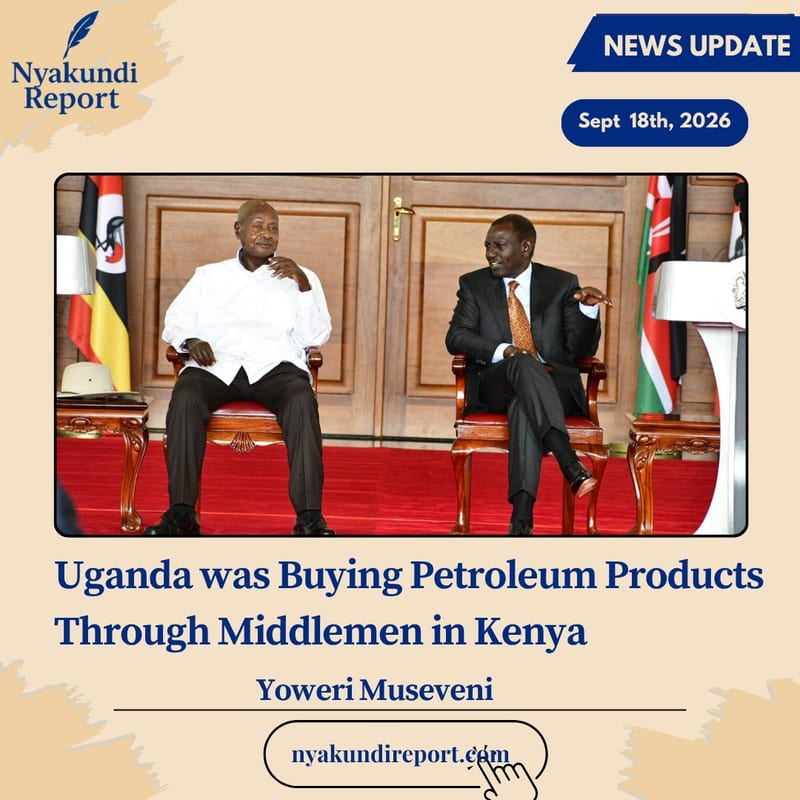
The disclosure, made in a statement marking Museveni's 82nd birthday, clarifies remarks he had made days earlier while breaking ground for a 320-million-litre fuel storage terminal in Mpigi District, where he spoke of a Kenyan "senator" who had "woken him up" to the middlemen problem without naming him.
That vague reference triggered a wave of speculation in Kenyan media, with some reports mistakenly linking the account to former President Uhuru Kenyatta. Museveni has now named Jirongo directly, timing his account to make clear that Jirongo raised the issue well before William Ruto became Kenya's president and years before Kenya introduced its own government-to-government fuel import arrangement in 2023.
"It was a Kenyan Senator called Jirongo who told me this around 2019. I immediately tasked the then Minister Irene Muloni to sort out that mess," Museveni said, referring to Jirongo by a title he did not actually hold in Kenya's legislature Jirongo was never a senator, though he had served as Minister for Rural Development under President Daniel arap Moi in 2002 and was a longtime, influential figure in Kenyan politics as the former Lugari MP and founder of the Kenya National Democratic Alliance. Jirongo died in a road accident in December 2025.
According to Museveni, despite tasking his then Energy Minister with addressing the arrangement, the problem went unresolved for years. "The Republic of Uganda was buying petroleum products through middlemen in Kenya. Can you imagine that? And the person who woke me up first was a senator from Kenya," Museveni said at the Mpigi groundbreaking, expressing continued exasperation at how such an arrangement had gone unnoticed by his own government officials for so long.
The matter was only resolved, Museveni said, when Uganda entered into a new supply arrangement with Vitol, a global energy trading company with refineries in multiple parts of the world and significant bulk supply capacity, in an agreement signed on August 18, 2023.
That shift coincided with a broader restructuring of Uganda's fuel import system: parliament had noted that around 90 percent of Uganda's petroleum imports passed through Kenya via the Mombasa supply corridor, prompting amendments to the Petroleum Supply Act that gave the Uganda National Oil Company (UNOC) the mandate to become the country's sole importer and supplier of petroleum products, with Vitol becoming a key bulk supplier under the new model. UNOC received its first direct fuel shipment under the new arrangement in July 2024.
Museveni credited the switch with delivering substantially lower procurement premiums. Citing figures from the new supply arrangement, he said the diesel premium fell from $118 to $83 per metric tonne, the petrol premium dropped from $97.50 to $61.50, and the aviation fuel premium declined from $114.25 to $79.25 savings he attributed directly to cutting out the Kenyan intermediaries who had previously handled the trade. It's worth noting these figures refer specifically to procurement premiums built into the supply price, not retail pump prices paid by ordinary consumers.
Museveni also used the occasion to push back at what he described as Kenyan media distorting his original remarks. "In the meantime, some Kenya Media People decided, recently, to put pilipili (red pepper) in what I said recently when I was laying the Foundation stone of the 320 million litres oil storage centre at Buyala," he said.
His comments prompted a response from Kenya's Ministry of Energy, which issued a statement dismissing allegations of irregularities in the importation and supply of refined petroleum products under the government-to-government arrangement between the two countries.
Despite Uganda's overhaul of its procurement model, the two countries remain closely tied in the regional energy supply chain: Ugandan fuel imports still transit through the Port of Mombasa and the Kenya-Uganda oil pipeline en route to their final destination, meaning geography continues to bind the two nations together in the petroleum trade even as the commercial arrangements behind it have changed.