
Magnum Credit CEO Joseph Lendrix Waswa is sending life threatining messages to a Kenyan journalist who refused to delete an Article published by another website he is not in control of.
The journalist says he repeatedly explained that he neither owns nor controls the publication at the centre of the dispute, but Joseph Lendrix Waswa continued sending threats via messages.
The dispute began over an article published by The Kenyan Daily Post concerning Waswa's private life and a confrontation involving his wife at offices associated with Magnum Credit.
The article bore the title, “Magnum Credit boss Joseph Waswa flies wife to a lavish vacation in Paris to cool things off after she stormed office and fought senior female staff member over their affair.”

Among the messages provided is a WhatsApp exchange in which Joseph Waswa writes in a mixture of Dholuo, Kiswahili and English: “Omera abomanyi ngane nimekaa sana bila kuona Damu ya mtu.” The most disturbing portion of the message is the reference to having stayed for a long time without seeing someone's blood.
The journalist then appears to make an effort to end the conversation, telling the other party, “Am out of this business. Thanks for your time.” Instead of accepting his decision to disentangle, the response comes back: “You can't be out.”
The journalist replies, “I dont want blood on my hands,” before the exchange continues around the demand that he speak to the person behind the publication. Taken on their own, such words could potentially be dismissed as angry remarks made during a heated disagreement, but the journalist says the combination of the references to blood, the refusal to allow him to walk away and the continuing pressure made him fear that the situation had gone beyond an ordinary dispute over a story.

A separate SMS exchange appears to show another warning. One message reads, “Bro nitakupeleka mbio na Hio storie. Hutapenda,” which can loosely be understood as a warning that the journalist would be dealt with over the story and would not like what followed. Another message simply states, “Wait you will see what I will do.”
The journalist says he kept these conversations precisely because of how serious the language was.
One of the most important parts of the dispute is that the journalist says he does not own or operate The Kenyan Daily Post, the publication that carried the article about Waswa.
The journalist explains in the conversations that, as someone working in the media industry, he communicates with bloggers, journalists and other media personalities, but says those professional relationships do not give him control over what another publisher writes or publishes. Knowing a blogger does not make someone the owner of that blogger's website, just as communicating with an editor does not give a person the power to delete an article from an independent publication.
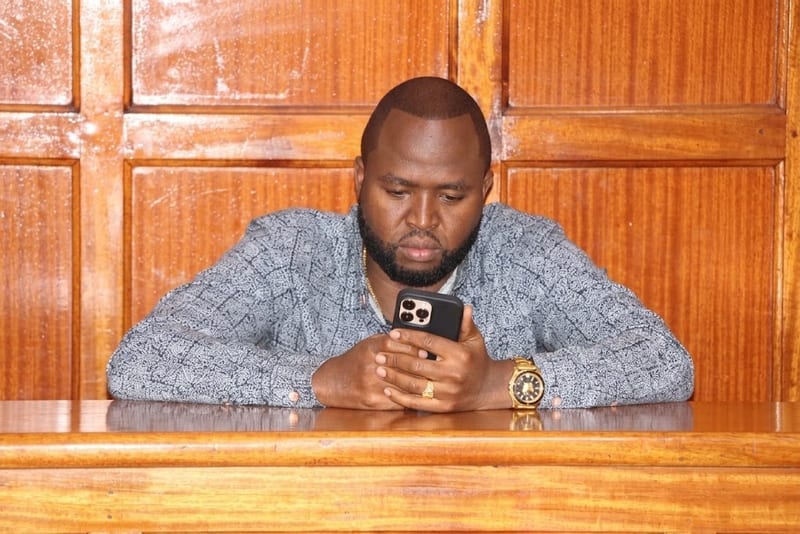
That distinction appears to be at the centre of the confrontation. If Waswa believed the article contained false, defamatory or otherwise unlawful claims, he had avenues available to challenge the publication directly, including seeking a correction, issuing a right of reply or pursuing legal action against the publisher responsible for the material.
The article at the centre of the dispute spoke about Waswa's marriage and a confrontation involving his wife and a female employee associated with Magnum Credit. Waswa’s wife is alleged to have confronted the company’s General Manager after discovering that they had been involved in a romantic affair. She reportedly stormed the company’s offices in Nairobi CBD, and caused a huge drama.
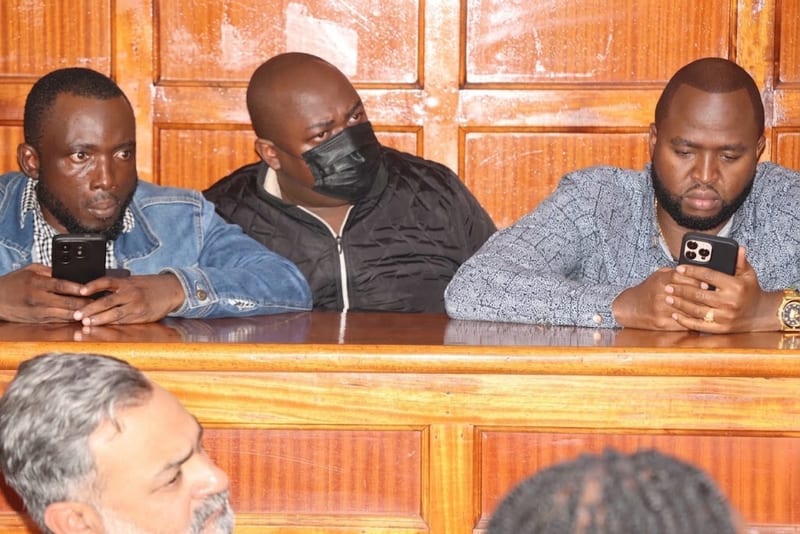
In September 2023, People Daily reported that Waswa had been ordered to appear before court in connection with investigations surrounding a KSh1 billion fake gold transaction, including a case of possession of forged United States currency valued at approximately KSh93.7 million.
The Star later reported that several suspects had been charged in relation to a fake gold deal involving a Tunisian businessman, while Waswa was expected to appear separately over the forged banknotes.
Waswa's name has also appeared in court records concerning the death of Mitch Barasa Kimiti, who was fatally shot in Kimilili in 2014. The case centred on events surrounding Club Etonia, an establishment that historical records connected to Waswa.
According to the High Court's record, prosecution witnesses gave serious accounts of what happened during a confrontation at the club, including testimony that Waswa threatened to shoot before a gunshot was heard.
Club Etonia became the subject of public anger following the shooting, the public attacked and set it on fire.
Waswa has in recent years also built a public profile in Webuye West, where he is positioning himself for a possible parliamentary bid in the 2027 General Election. His activities in the area have included community initiatives, philanthropy and sporting events, giving him an increasingly visible presence among residents.

That political ambition adds another layer of public interest to the current controversy. A person seeking elective office inevitably comes under greater public scrutiny, including scrutiny of his business history, court record, public conduct and reaction to criticism.
Public figures remain entitled to challenge inaccurate or defamatory claims through the law. But the manner in which an individual responds to unwanted media attention also becomes a legitimate subject of public discussion when that response allegedly involves threats directed at a journalist.
The question now being raised is therefore not simply about one article or one disagreement with a blogger. It is about what happens when a person who wants unfavourable coverage removed turns his attention to someone who says he has no power to remove it.
In July 2026, The Star reported that he and former Sports Cabinet Secretary Rashid Echesa were among defendants in a KSh250 million fraud and extortion case involving Kakamega Governor Fernandes Barasa 
His name had also featured prominently in the 2019 investigation in which police seized approximately KSh32.6 billion in suspected counterfeit foreign and local currencies together with suspected fake gold from a property in Ruiru. Business Daily reported that investigators linked the seizure to a wider investigation involving individuals suspected of impersonating then-President Uhuru Kenyatta in an attempt to obtain money from businessman Naushad Merali.
At the heart of the current dispute is a simple distinction. Waswa has every right to challenge reporting that he believes is false, unfair or defamatory. He can demand a correction, issue his own version of events, instruct lawyers to send a demand letter, seek appropriate relief from the courts or pursue other lawful remedies available to him.
But the situation becomes fundamentally different if a journalist is being threatened because he cannot make another publisher delete an article.
The journalist now raising the alarm says he was caught in the middle despite having no control over the publication. His attempts to distance himself from the dispute appear in the screenshots, including his statement that he wanted to be “out of this business,” followed by the response, “You can't be out.”
It is that exchange, together with the references to blood and the warning that he would “see” what would happen, that has turned an ordinary media dispute into a matter of personal safety.
What did the sender mean by saying he had stayed too long without seeing someone's blood?
Why was the journalist told “You can't be out” after attempting to withdraw from the dispute?
What was meant by “Bro nitakupeleka mbio na Hio storie. Hutapenda” and “Wait you will see what I will do”?
Kenya's media environment already places journalists in difficult situations when their reporting involves powerful businesspeople, politicians and other influential figures. Disagreements over reporting are inevitable, but they should be settled through facts, corrections, responses and the courts where necessary.
No journalist should have to fear for his safety because he cannot make another publisher delete a story.