
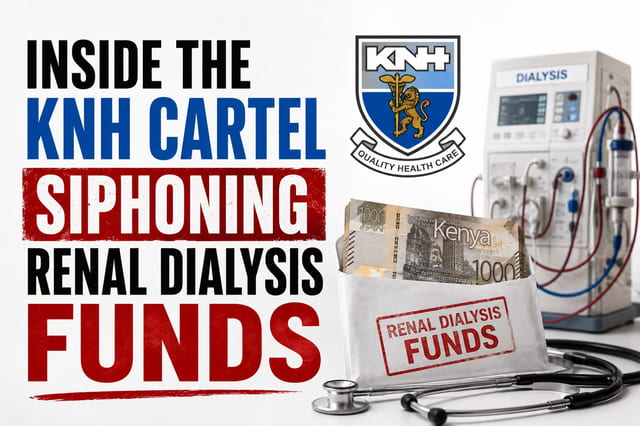
Questions are being raised over the way dialysis is being billed at Kenyatta National Hospital after patients and their families exposed that admission to the hospital can leave them with fewer dialysis sessions covered by the Social Health Authority than they would receive when attending the same facility as outpatients.
The complaint, raised publicly on September 4, 2026, centres on a situation that patients say is difficult to understand. Under the current SHA renal care package, haemodialysis and haemodiafiltration are covered at a tariff of KSh10,650 per session, with the published rules providing for two dialysis sessions per week. That translates to up to eight sessions in a four week month for a patient receiving the standard twice weekly treatment.
The cartels at KNH have made a way that once a renal patient is admitted as an inpatient, the hospital covers only one dialysis session, with the second and any additional sessions requiring the family to pay cash. The same patients are said to receive the two covered sessions when attending as outpatients.
One person responding to the complaint said the experience had happened to their own family. Enock said his cousin was admitted to KNH and that the family was told SHA would cover one dialysis session, while the husband had to pay for the remaining sessions. According to him, the family followed up with the hospital and asked questions but was told that any additional dialysis session had to be paid for.
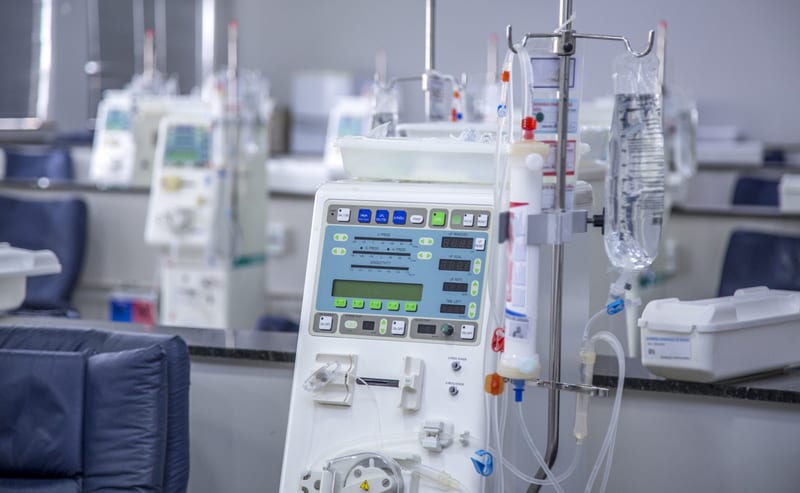
Something very skewed is happening at the Kenyatta National Hospital Renal Unit, and almost nobody is talking about it. 🧵 1/ SHA covers two dialysis sessions per week at KSh10,650 per session. But at KNH, once a patient is admitted as an inpatient, they reportedly get only one covered session, while the second and third sessions must be paid for in cash. 2/ The strange part is that the same patient, at the same hospital, can receive the two covered dialysis sessions when treated as an outpatient. 3/ This means some of the sickest patients, the very people who need dialysis most urgently, are the ones whose families are being asked to raise cash for additional sessions. 4/ Families are therefore being pushed into a brutal position where delays can mean worsening fluid overload and other serious complications simply because they cannot immediately raise another KSh10,000 or more. 5/ MOH_Kenya, SHA_Kenya, this is not what Universal Health Coverage was supposed to look like. Dialysis is not an elective procedure that patients can casually postpone. Separate dialysis from the inpatient per diem arrangement and allow admitted renal patients to access their full SHA dialysis entitlement, including the eight sessions available each month.
The complaints comes against the background of SHA's own published renal care rules, which do not describe dialysis as part of the general inpatient daily payment. The 2025 tariff regulations place renal care in a separate package covering the management of kidney failure at Level 3 to Level 6 facilities with the capacity to provide the service.
The package includes specialist review, nursing care, dialysis, routine laboratory investigations, medication and other dialysis related services, while the prescribed tariff for haemodialysis and haemodiafiltration is KSh10,650 per session, and the access rule provides for two sessions per week.
That distinction matters because SHA uses different payment methods for different services. Medical inpatient care at Level 4 to Level 6 facilities is paid through a daily per diem, while the renal care package is separately paid on a case based basis.
A 2026 SHA bulletin describing the payment structure also lists renal care at Levels 4 to 6 as a case based package, separate from medical inpatient services, which are reimbursed through a per diem arrangement.
This is at the heart of the complaint. If dialysis is separately recognised and reimbursed under the renal care package, then patients and their families are entitled to ask whether the full renal benefit should continue to apply when the patient is admitted for treatment, or whether an inpatient classification somehow changes the number of dialysis sessions that SHA will reimburse.
In fact, the Ministry of Health has previously described SHA's chronic illness benefit as covering admission, dialysis and other renal care, while the government has repeatedly presented the scheme as a way of reducing the financial burden on families dealing with serious illnesses such as kidney disease.
KNH itself announced when SHA was introduced that the hospital had operationalised both the Social Health Insurance Fund and the Emergency, Chronic and Critical Illness Fund across its inpatient and outpatient services, with renal dialysis among the services being provided under the new system.
KNH's own website also confirms the scale and importance of its renal services. The hospital operates a Renal Department that provides haemodialysis and other extracorporeal treatments, dialysis access procedures, kidney transplantation and both inpatient and outpatient renal services. Its published renal clinic schedule shows haemodialysis sessions taking place throughout the week.
For a patient who depends on regular dialysis, the distinction between one covered session and two is not a minor accounting issue. Dialysis is used to remove excess fluid and waste from the blood when the kidneys can no longer perform that function adequately, and patients whose treatment schedules require regular sessions cannot simply treat an additional session like an optional outpatient appointment. A family that is suddenly asked to produce another KSh10,650 can be forced to make a difficult choice between finding money they may not have and trying to cope with a treatment gap.
The complaint is consequently asking the Ministry of Health and SHA to look beyond the individual bills and examine how the renal package is being interpreted at KNH. The specific demand is that dialysis should be treated separately from the inpatient per diem arrangement so that an admitted renal patient does not lose access to the full dialysis entitlement simply because they have been admitted.
There is also a need for clarity from SHA because the official rules appear to provide a straightforward entitlement of two haemodialysis sessions every week, while the experience being described by the families suggests that another rule may be operating at facility level.
If there is a specific SHA directive, claims rule or clinical exception that limits admitted patients to one covered session, patients deserve to see it. If there is no such rule, then the hospital and SHA need to explain why families are being asked to pay for sessions that appear to fall within the published renal package.
The issue also goes beyond KNH. SHA's current digital claims system separately recognises Renal Care Package as an intervention category, while inpatient services are listed under a different category, showing that the two services are not simply the same billing item within the system. That makes it even more important for the authority to explain whether one session limit is a national policy, a claims processing rule or an interpretation being applied at KNH.
For families already dealing with the cost of transport, medicines, food and other expenses associated with long term kidney treatment, an unexpected dialysis bill of more than KSh10,000 can quickly become overwhelming. The bigger concern is what happens when a patient needs the treatment but the money is not available immediately.
Does admission at KNH reduce a renal patient's SHA dialysis entitlement from two sessions a week to one, and if so, where is that rule contained in the SHA benefit package?
If no such restriction exists, why are families being required to pay cash for the additional sessions at KNH?