
Current
Maraga Police Reforms Report Exposes Deep Rot in Kenya’s Security Services
Kenya’s police, prisons and youth service are facing problems far deeper than poor salaries and old equipment, with the report of the National Taskforce on Improvement of the Terms and Conditions of Service and Other Reforms laying out a disturbing picture of corruption, political interference, weak leadership, poor working conditions, stalled reforms and declining public trust across the three institutions.
The taskforce was established by President William Ruto on December 21, 2022, initially to examine the National Police Service and Kenya Prisons Service before its mandate was expanded in March 2023 to include the National Youth Service.
The team, chaired by former Chief Justice David Maraga, spent months collecting information from government institutions, security agencies, officers, civil society groups and members of the public. It held public hearings in all 47 counties, visited facilities operated by the three services and received written and electronic submissions before preparing the final report.
What came out of that process was not simply a list of requests for better pay. The taskforce found that the problems inside the security services were tied to leadership, corruption, recruitment, promotions, transfers, housing, medical care, equipment, procurement, accountability and the failure to implement recommendations made by previous reform bodies.
The report says the three institutions were suffering from underfunding, endemic corruption, leadership problems, poor human resource management and structural weaknesses. It went further and warned that many of the problems had been raised repeatedly for decades, creating public doubt about whether yet another reform report would actually change anything.
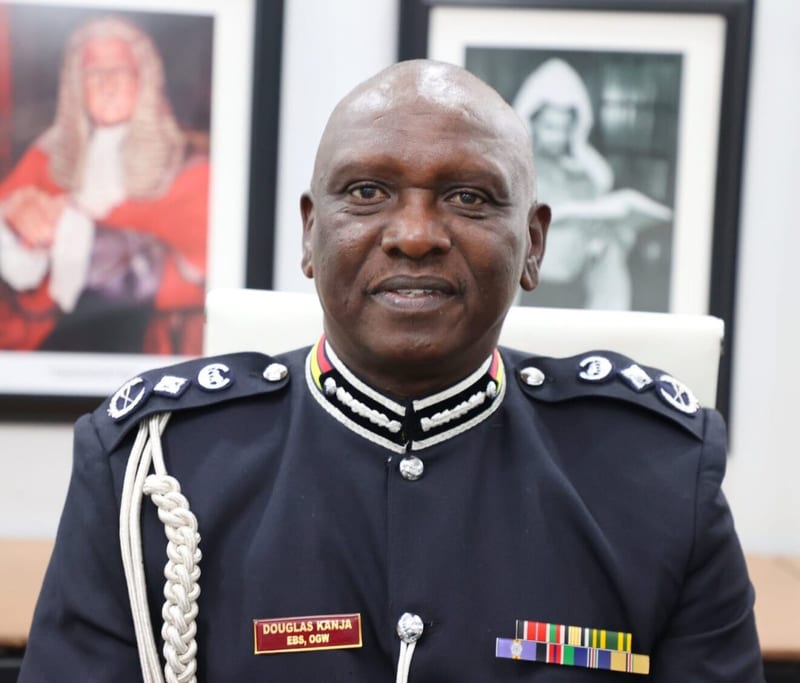
The National Police Service received some of the strongest criticism. The taskforce found that the police were the most affected by underfunding among the three services, even as officers faced banditry, terrorism, human trafficking, cybercrime, drug trafficking and other security threats.
The report found that many police vehicles were operating under a standard monthly fuel allocation of 450 litres regardless of the operational demands of a particular area, meaning officers working in vast counties such as Marsabit and Turkana could face the same allocation as those operating in much smaller areas.
Equipment and protective gear were described as inadequate, poorly maintained and frequently in poor condition. Police stations and training institutions were found to lack adequate facilities, with some stations having poor detention facilities and inadequate rooms for handling sexual violence cases.
The housing situation was just as worrying. The taskforce found that the National Police Service, with a full strength of 105,884 officers at the time of the review, could adequately house less than 22 per cent of its personnel. That left about 78 per cent facing housing problems. The report says the hybrid system, where some officers live within police lines and others rent privately, had made emergency mobilisation harder. It further found that many police houses were in dilapidated condition and lacked basic social amenities. The report places responsibility on the Inspector General to operationalise a directorate for monitoring and maintaining police houses, noting that this had not been done.
Then came the issue that has followed the police for years, corruption. The taskforce says it received complaints from all 47 counties about corruption, nepotism, favouritism, tribalism and political influence during police recruitment. Some submissions alleged that recruitment slots were being sold for as much as KSh600,000 or more, with jobs going to people who could afford to pay or relatives of powerful and politically connected individuals.
The report says corruption did not stop at recruitment. Transfers, deployments, promotions and procurement were all mentioned in complaints received by the taskforce. There were even reported conflicts of interest involving traffic officers allegedly owning matatus, vehicle breakdown businesses, alcohol outlets and gambling businesses.
Traffic policing received an especially harsh assessment. The taskforce says the Traffic Department was singled out in meetings held across the country, with roadblocks repeatedly described by members of the public as places where bribes were collected. One set of submissions described a network in which junior officers were given targets for collecting money from motorists before the proceeds were shared with senior officers.
The taskforce responded by proposing the creation of a new Traffic Management Unit, greater use of technology in detecting traffic offences, cashless payment of fines and the abolition of police roadblocks in favour of mobile patrol units.
The report then turned its attention to the people running the police. The taskforce found that the legal framework for professional policing was largely in place but was not being properly followed.
It linked failures in recruitment, training, promotions, transfers and deployment to weaknesses in leadership and the manner in which senior police positions were filled. It pointed out that amendments made in 2014 removed provisions requiring open, transparent and competitive recruitment of the Inspector General and Deputy Inspectors General. The taskforce recommended restoring competitive recruitment for the Inspector General, Deputy Inspectors General and Director of Criminal Investigations and called for fresh vetting of officers holding the rank of Senior Superintendent and above.
The National Police Service Commission itself did not escape criticism. The taskforce said the Commission had allowed its functions to be taken over by the police leadership and had failed to develop policies capable of addressing corruption, inefficiency and poor personnel management. It recommended that the Government consider a negotiated exit or another lawful arrangement for the commissioners then serving on the Commission.
The report further called for the Commission to regain control over promotions and human resource functions, with recruitment, promotion, transfers and other personnel processes being automated to reduce opportunities for manipulation.
The taskforce found that officers were not only complaining about recruitment and promotions. It received complaints of bribes and sexual favours allegedly being sought in exchange for deployment, transfers, training and promotions. Career stagnation was another major complaint, with officers remaining in the same rank for years and in some cases until retirement.
The report says existing career progression guidelines had largely been ignored, contributing to frustration and making it harder for the service to attract and retain specialists. The proposed solution included open and competitive promotions based on competence, integrity, qualifications, training and experience.

The welfare section exposes another side of life inside the police service. The taskforce found that poor salaries and living conditions were major contributors to low morale, depression and other mental health problems.
A 2022 survey by the National Police Service Commission indicated that between 12 and 13 per cent of police officers, roughly 12,000 people, were facing mental health challenges. The report says the nature of police work exposes officers to severe trauma and stress, yet the culture within the service often discourages officers from speaking openly about mental health.
The figures on officers killed or injured in the line of duty make the welfare question even harder to ignore. Between 2014 and 2022, the report records hundreds of officers injured each year, including 614 injuries in 2017 and 549 in 2022. Deaths ranged from 24 in 2015 to 99 in 2019.
The taskforce found that compensation claims were handled through a manual and centralised process in Nairobi, forcing officers stationed far from the capital to travel to follow up on their claims. Some officers reportedly abandoned legitimate claims after struggling with the process, while others did not know how to begin their applications and ended up with claims becoming time-barred.
Medical cover was another source of frustration. The taskforce described the existing medical insurance arrangements as a source of anguish and discontent, particularly among junior officers in the police and prisons services.
It found that the transition from the previous medical scheme had been poorly handled and raised concerns over illegal daily capitation payments. The report found that some counties had no accredited facilities under the scheme being reviewed, including Nyandarua, West Pokot, Samburu, Uasin Gishu and Elgeyo Marakwet. In several other counties, officers had access to only a handful of facilities, raising questions about whether the cover could meet the needs of officers stationed far from major towns.
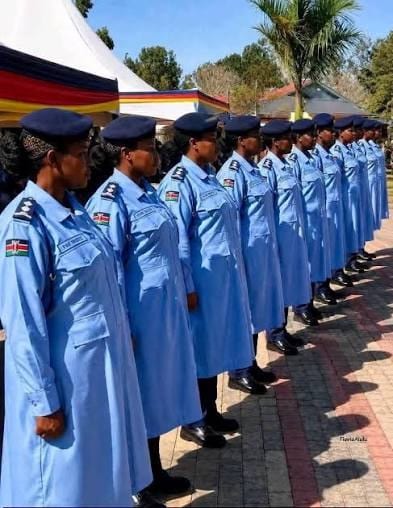
The report does not spare the National Police Service on gender and sexual harassment. Female officers interviewed at stations across the country reported sexual harassment and gender based violence involving both senior and junior officers. The taskforce found that the service lacked a clear mechanism for handling the complaints, with no officer encountered during the visits saying they were aware of a dedicated sexual harassment policy. Only 22 sexual harassment cases were recorded between 2018 and 2022, a figure the taskforce considered evidence of serious underreporting. Gender desks were found in many stations but some lacked trained personnel, proper space, basic supplies and privacy for victims.
The report then exposes a problem that could directly affect how investigations are handled in Kenya. The digital Occurrence Book project had been piloted in selected Nairobi stations but had largely stalled. Many police stations were still relying on old manual files, with the majority of stations visited lacking enough computers, printers, scanners and modern communication equipment.
The taskforce found that even where ICT equipment existed, there were not enough officers with the skills needed to operate it. It recommended stronger investment in digital systems, including digital occurrence books and modern surveillance tools, alongside the establishment of a properly funded national forensic laboratory under the Directorate of Criminal Investigations.
The report goes further into police land. Out of 2,325 parcels listed in its regional table, only 159 had title deeds, 468 had allotment letters and 1,726 were listed as undocumented. The taskforce received complaints about encroachment and grabbing of land belonging to the security services and called for a full inventory, titling of land, fencing of police property and action on disputed parcels. That means the problem facing the police is not limited to officers on patrol or conditions inside stations. It extends into the ownership and protection of public assets that are supposed to support the Service.
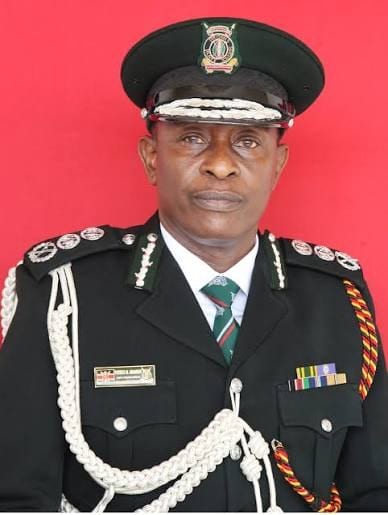
The Kenya Prisons Service was found to be facing many of the same problems. The taskforce says KPS had recorded an average funding deficit of about 40 per cent every year since 2008 and did not have a modernisation plan.
Prison facilities designed for about 29,000 inmates were often holding more than 60,000, with some facilities lacking adequate sanitation and ventilation. Prison officers and their families were found living in mud houses, dilapidated structures, tents and makeshift accommodation, with some families sharing dormitories separated only by bedsheet curtains.
The corruption complaints inside prisons were just as serious. The taskforce received reports of corruption in recruitment, promotions, transfers, deployment, procurement and the issuance of stores. It was told that some officers had family members employed within the service, with some relatives working at the same station. The report further records allegations of prison officers colluding with inmates in phone scams, fraud, petty trade and drug trafficking from prison facilities. The taskforce said these reports pointed to a service that had been seriously compromised and was struggling to perform its core correction and rehabilitation role.
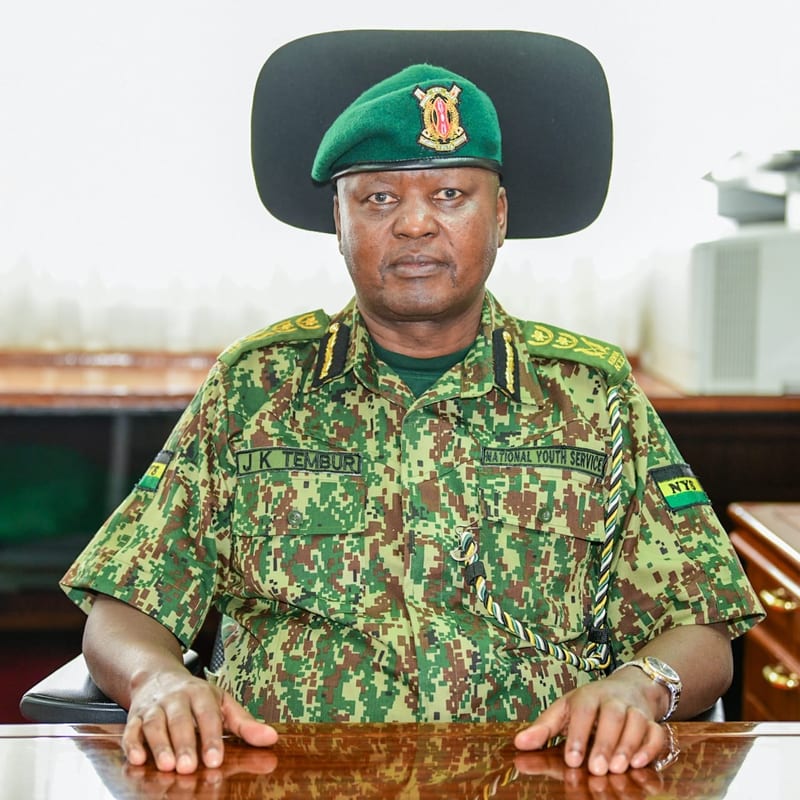
NYS was not spared either. The taskforce linked the service’s present problems to funding shortages, leadership problems and corruption, including the scandals that rocked the institution in 2015 and 2018. It received reports that corruption continued to affect the institution from recruitment to postings and that the poor state of NYS farms and equipment could not be blamed on inadequate funding alone. The taskforce proposed changes to the NYS Council, competitive recruitment of senior leadership, clearer legal recognition of servicemen and women, better medical cover and reforms to recruitment and human resource management.
The conditions facing NYS personnel were particularly striking in the housing records. The service had 1,087 houses against a requirement of 2,247 staff, according to the report, with most available houses described as dilapidated. Some units and stations in hardship areas relied on makeshift structures. The taskforce said there had been no deliberate expansion of housing despite growing numbers and found cases where officers were living in condemned houses and barracks while rent continued to be deducted from their pay.
Then comes the money question. The taskforce recommended a 40 per cent increase in basic salary at the lowest level for members of the three services, with the increase reducing progressively to 3 per cent at the highest rank. It proposed implementation in three phases beginning July 1, 2024. It further recommended that allowances be paid directly into officers’ bank accounts through automated systems and that cash payments be prohibited. The recommendation was based on the taskforce’s finding that the work performed by the security services involves unusual risks, disruption of family life and responsibilities that are different from ordinary public service jobs.
But perhaps the most troubling part of the report is that the taskforce itself knew Kenya had heard many of these complaints before. Its review of previous reform reports found that several recommendations had remained unimplemented for years. The report records public skepticism about whether its own recommendations would make any difference, since the same problems had repeatedly appeared before earlier committees and taskforces. The taskforce recommended the creation of a permanent Police Reform Unit under the Ministry of Interior to keep track of reforms and make sure recommendations do not simply disappear after the report is released.
This is where the responsibility moves beyond individual police officers. The report places duties on the President, Parliament, the Cabinet Secretary responsible for Interior, the Inspector General, the National Police Service Commission, the National Treasury, the Salaries and Remuneration Commission, IPOA, the Kenya National Commission on Human Rights, the Attorney General and other government agencies. Parliament is expected to amend laws in several areas, the Interior ministry is expected to provide policy direction and drive reforms, the Inspector General is expected to improve internal systems, the National Police Service Commission is expected to take charge of human resource functions, and oversight bodies are expected to keep watch over compliance and accountability.
The taskforce was blunt about what it believed was standing in the way of change. It said the National Police Service was suffering from endemic corruption, incompetence, lack of professionalism and a poor institutional image, then identified leadership as a root cause of the problems facing the Service. It warned that reforms would achieve little without dealing with the leadership failures that had allowed many of the old problems to survive.
For Kenyans, the report is bigger than a document about police salaries. It is a record of what officers, prisoners, servicemen, women, members of the public and state institutions told a government appointed taskforce after years of failed reform efforts. It describes a police service struggling with corruption and poor equipment, officers living in poor housing, victims facing weak systems for reporting sexual harassment, injured officers struggling to receive compensation, police stations relying on paper records, prison facilities holding more than twice their intended population and a youth service carrying the weight of old corruption scandals.
The question now is no longer what the Maraga taskforce found. The 583 page report answers that question in considerable detail. The bigger question is what will happen to its recommendations.
The taskforce itself warned that the country had spent years producing reform reports without fully dealing with the problems identified in them. It recommended clear timelines, responsible institutions and continuous follow up. Parliament, the Interior ministry, the National Police Service Commission, the Inspector General, the National Treasury, SRC, IPOA, EACC, KNCHR and the other institutions named in the report now have a record against which their actions can be measured.
Kenya has another police reform report. What the country does with it will determine whether it becomes another document sitting on a government shelf, or the point at which the long list of problems documented by David Maraga’s team finally starts receiving the attention they have demanded for years.
Here is the full report
Last updated Aug 31