
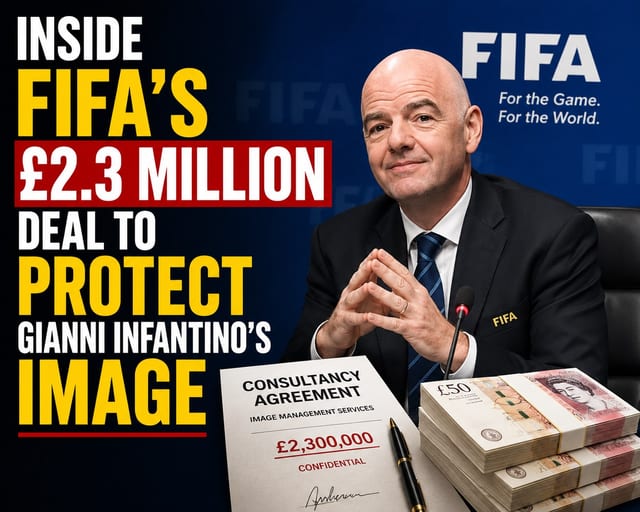
FIFA has spent about £2.3 million on a London based sports marketing agency under a contract that includes a striking objective, to safeguard the dirty image of FIFA and its president Gianni Infantino.
The PR deal which is roughly half a Billion Kenyans shillings to clean FIFA president comes at a time when Gianni Infantino's leadership is facing growing questions over governance, commercial decisions and his increasingly political relationship with some of the world's most powerful figures.
The contract, signed in March 2025 and running until December 2026, was awarded to Ten Toes Media, a London based sports marketing and digital media company founded by Ben Weisfeld. A copy of the agreement seen by Nyakundi Report puts the value at about £2.3 million, with the document giving a more specific figure of £2,365,694 including VAT.
The Times has also independently reported the agreement at approximately £2.3 million over 22 months.
What makes the agreement particularly interesting is not simply the amount of money involved, but what FIFA was buying.
The contract states that one of its objectives is to Safeguard (FIFA & the President's image, raise the profile of the organisation, while requiring storytelling to be carried out "in line with the President's Vision."
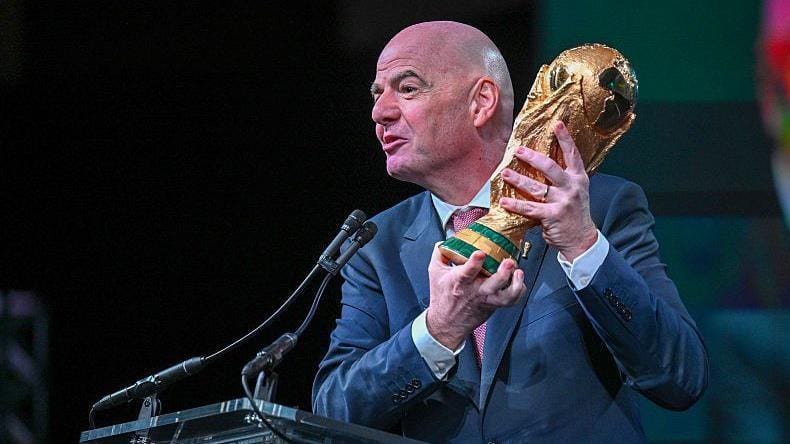
That wording gives the deal a much more significant dimension than an ordinary social media management contract because it places the reputation of FIFA and the personal image of its president within the same communications strategy.
Ten Toes was not hired simply to upload photographs of Infantino or maintain one executive's Instagram page. The contract covers FIFA's wider social media operation, including strategy and consultancy, management of FIFA's Instagram, Facebook, X and LinkedIn accounts, support for senior management channels, written content, photography, video, graphics, infographics, comment monitoring, moderation, influencer work, audience growth, analytics, reporting and social media amplification.
The agency was further expected to operate a social media newsroom, effectively placing an outsourced communications team at the centre of FIFA's digital operation.
The scale of that operation is one of the most revealing parts of the agreement. The contract required 24 hour availability, with at least two managers covering key Asian and European time zones, while the social media newsroom was expected to be equivalent to around seven full time employees with additional freelancers available when required. FIFA was therefore purchasing something much closer to a permanent digital communications operation than a conventional public relations package.
The financial breakdown shows just how much FIFA was prepared to spend on that operation. The reported figures include £283,560 a year for social media consultancy and account direction, another £283,560 a year for senior channel management, £635,172 a year for channel management and operations, £863,402 for social media newsroom operations and £300,000 for social media amplification strategy.
Because the published reproduction of the contract contains a numerical inconsistency between the individual components and the stated total, the safer figure to use is the independently reported headline value of about £2.3 million.
The question that naturally follows is why FIFA needed such an expensive external operation to manage its public image at this particular time. The answer becomes more complicated when the people who signed the agreement and the developments that followed are placed alongside each other.
The contract was signed on behalf of FIFA by Kevin Lamour, who was then the organisation's Chief Operating Officer, and David Farrelly, FIFA's Director of Communications. Lamour had joined FIFA in November 2024 after previously serving as deputy general secretary at UEFA, while Farrelly had been FIFA's communications director since 2019 after holding senior communications positions at UEFA.
There is now an unusual development involving one of those signatories. Lamour has since left FIFA after opposing Infantino's controversial FIFA Forward Enterprise proposal. Reuters reported that Lamour criticised the plan before departing the organisation in August 2026. The proposal involved transferring commercial rights into a new entity and potentially selling up to a 20 percent stake to private investors, with Joshua Kushner, founder of Thrive Capital and brother of Donald Trump's son in law Jared Kushner, linked to the proposed arrangement.
The departure leaves a legitimate question about what changed within FIFA between March 2025, when Lamour signed the communications agreement, and August 2026, when he departed after opposing a major commercial proposal associated with Infantino's leadership.
That question matters because the communications contract sits within a period in which scrutiny of Infantino has become increasingly intense. UEFA has moved towards a possible criminal complaint in Switzerland over the FIFA Forward Enterprise plan, with concerns raised about potential criminal mismanagement. The proposal was ultimately abandoned, but the governance questions surrounding it have continued.
Infantino himself remains at the centre of FIFA's political structure. He has been FIFA president since 2016 and is seeking another term in the March 2027 presidential election. He has already announced his intention to run and is currently the only declared candidate. His compensation has also grown substantially during his time at FIFA, reaching approximately $6.133 million in 2024 when salary, bonuses, additional compensation and retirement related benefits were combined.
Against that background, the decision to spend millions of pounds on a communications operation whose stated objective includes protecting the image of FIFA and its president deserves public attention. This is particularly so because FIFA is not a small private company operating solely with its own commercial interests. It is the global governing body of football, controls major international competitions and exercises enormous influence over national football associations, confederations, players and the wider football economy.
The available material does establish that FIFA hired Ten Toes to manufacture fake grassroots support for Infantino, create fabricated public opinion or make people falsely believe that the president was popular.
That distinction makes the story stronger rather than weaker. The question is not whether FIFA was secretly manufacturing supporters. The documented question is why an organisation with its own large communications department needed to commit about £2.3 million to an outside company for a 24 hour social media operation that explicitly included safeguarding the president's image.
FIFA has rejected the suggestion that Ten Toes was primarily hired to manage Infantino's personal social media account. In comments reported by Le Monde, FIFA described that interpretation as "incorrect and misleading" and said the contract related to the organisation's broader communications work. FIFA argued that major organisations use external communications agencies because they provide flexibility and can help control personnel costs, particularly around major events such as the World Cup.
That explanation deserves to be considered because the contract clearly covers much more than Infantino's personal accounts. Ten Toes was responsible for several official FIFA channels and a wide range of content production, moderation, analytics and audience work. The question is therefore less about whether the agency had a broad role and more about the extent to which the protection of Infantino's image formed part of that wider operation and whether FIFA can demonstrate value for the millions of pounds committed to it.
The scale of Infantino's own digital following makes that question even more relevant. FIFA president had approximately 4.9 million Instagram followers at the time of its investigation and that the contract placed importance on audience figures and engagement. A president with millions of followers already has a significant direct communications platform, meaning the public deserves to understand what additional value FIFA expected to receive from an external operation costing millions of pounds.
The timing is even more difficult to ignore. The contract was signed in March 2025, before the current dispute over FIFA Forward Enterprise became public and before Lamour's departure. Since then, Infantino has faced criticism from parts of the football establishment over governance and commercial decisions, while some national football associations have begun calling for changes at the top of FIFA.
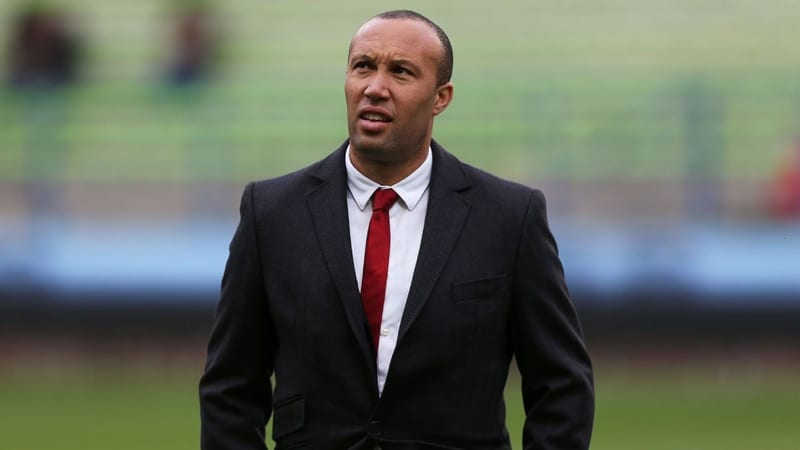
The Dutch Football Association has called for a complete overhaul of FIFA and argued that Infantino should be replaced by 2027. Former France and Manchester United defender Mikaël Silvestre has publicly called for Infantino to resign, citing concerns including ticket prices, Infantino's relationship with Donald Trump, the FIFA Peace Prize awarded to Trump and the failed World Cup commercialisation plan.
Infantino nevertheless continues to enjoy significant support, particularly in Africa, where CAF has 54 member associations and therefore holds substantial voting influence in a FIFA presidential election. Recent reporting has suggested that African support remains important to Infantino's political position, even as some signs of disagreement emerge.
This makes communications and public perception a particularly important part of the politics surrounding FIFA's presidency. When an organisation spends millions of pounds on social media management and its contract expressly refers to protecting the president's image, the public is entitled to ask how the work is assessed, who approves the messaging, what safeguards exist against the organisation's communications becoming too closely tied to an individual office holder and whether the spending primarily serves FIFA as an institution or the political interests of its president.
The people responsible for answering those questions are not difficult to identify. Infantino remains FIFA president, while Mattias Grafström serves as FIFA Secretary General and David Farrelly remains central to the organisation's communications operation. Kevin Lamour, who signed the agreement as COO, has since left FIFA. Thomas Peyer, FIFA's Chief Financial Officer, is relevant to the wider financial and governance questions surrounding the FIFA Forward Enterprise proposal.

On the agency side, Ten Toes Media was founded by Ben Weisfeld, who remains its founder and CEO. UK Companies House records identify Benjamin Marc Weisfeld as an active director and person with significant control, while Carlton Johnson is listed in corporate records in connection with the company. Ten Toes publicly describes itself as a sports marketing agency and lists FIFA among organisations it has worked with, alongside UEFA, Arsenal, Newcastle United, The FA and Chelsea.
There is nothing inherently improper about FIFA hiring an external communications agency. The issue is the combination of cost, scope and the contract's explicit reference to the president's image, particularly when the president himself is seeking another term and when the organisation is facing questions over major decisions made under his leadership.
What procurement process was followed before Ten Toes was awarded the contract? How many companies were considered? Why was the external operation considered necessary? What internal communications capacity did FIFA already have? How was the £2.3 million figure calculated? What performance targets were attached to the contract? How does FIFA measure whether the spending has delivered value? And how does the organisation separate the protection of FIFA's institutional reputation from the protection of an individual president's political reputation?
There should be nothing secretive about that if the work is legitimate. But FIFA's size and influence make transparency necessary. The organisation should be able to show what it purchased, what it received and how the public interest was protected throughout the arrangement.
FIFA presidents do not simply manage football competitions. They build alliances with national associations, meet presidents and heads of government, influence major commercial decisions and increasingly use social media to communicate directly with millions of people. When an organisation's communications machinery is built around both the institution and its president, the line between promoting FIFA and promoting the person leading FIFA can become an important governance question.
UEFA was considering legal action over that proposal, while national associations were publicly questioning FIFA's direction and Infantino was preparing for another presidential election.
The central issue is therefore not whether FIFA is allowed to spend money on social media. It plainly is. The question is whether the organisation can demonstrate that nearly £2.3 million of football's money was spent primarily to serve FIFA's institutional interests and whether the contract's reference to protecting the president's image was appropriate for an organisation whose president is himself a political candidate for another term.
FIFA has said the agreement should be understood as a wider social media and communications operation rather than a personal service for Infantino. The contract itself supports the first part of that argument, but the same contract also contains the language about safeguarding the president's image and telling stories in line with his vision.
How much of the £2.3 million was spent promoting FIFA as an institution, and how much was spent protecting and strengthening the public image of Gianni Infantino at a time when he was preparing to seek another term as FIFA president?
Because when millions are spent on protecting an image, the public has a right to know exactly whose image is being protected, why it needs protection and who ultimately benefits from the spending.