
For years, the name Peter Haris Kimathi Kinyua has circulated through Kenya's coffee industry, business circles and political spaces, with the businessman becoming a familiar figure around some of the country's most influential personalities, but a criminal case involving more than 2,300 bags of coffee worth about KSh115 million has now brought his name back into public attention and opened a much wider conversation about the people who control Kenya's coffee trade, the networks surrounding the industry and, most importantly, whether the farmers who produce the coffee are receiving the value they deserve from a business that generates millions of shillings.
The case currently before the courts involves Kinyua and his co-accused, Ibet Torut, who obtained 2,383 bags of Kenya Arabica coffee, each weighing 60 kilograms, with a stated value of about KSh115 million, through false pretences.
The prosecution says that the two represented that there was a genuine coffee supply contract between Servicoff Limited and Gilley Investment Limited. Kinyua and Torut appeared before Milimani Principal Magistrate Irene Thamara on August 24, 2026, denied the charges and were released on a Sh700,000 bond each or an alternative cash bail of Sh350,000, with the matter scheduled for mention on September 8, 2026.
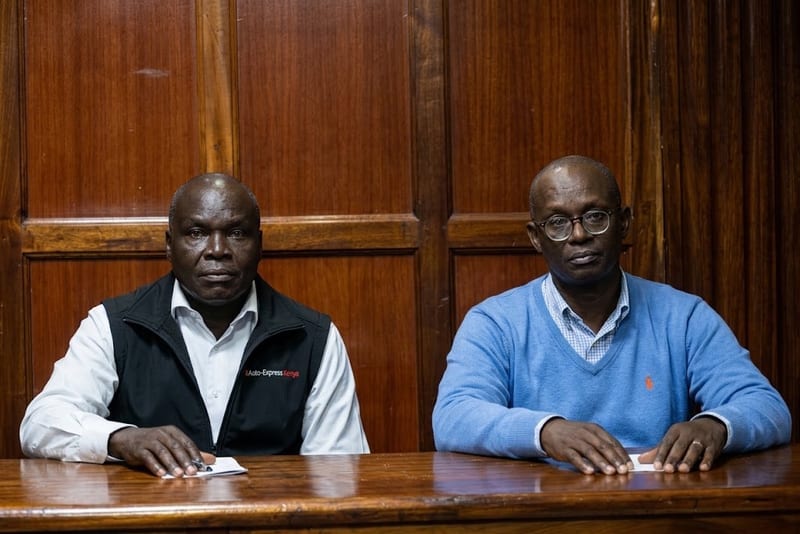
Where did the 2,383 bags of coffee come from, who owned them, who controlled the transaction, who negotiated the deal, what documents were presented to the supplier, who signed those documents, who received the money and what exactly was the relationship between Servicoff Limited and Gilley Investment Limited?
How did a transaction involving coffee worth approximately KSh115 million move as far as it did before the problem was detected?
Kinyua's name has also appeared in public records long before the current criminal case. In 2018, he appeared before Parliament's environment committee following his appointment as chairman of the Kenya Forest Service board, where MPs questioned him about a restaurant operating inside the Karura Forest area.
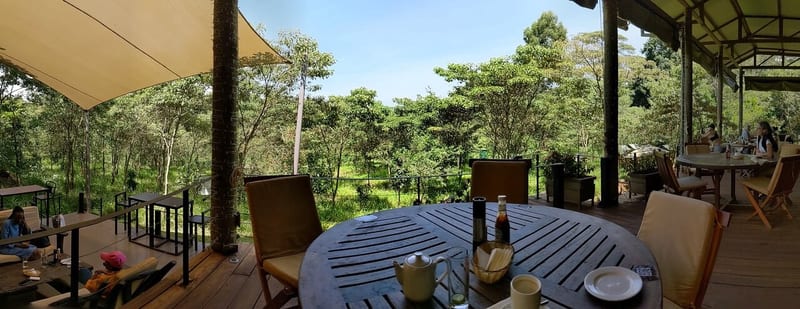
Kinyua told the committee that the restaurant, The River Café, was operated by his wife, Sophie. The matter generated questions around possible conflict of interest because of his position at the Kenya Forest Service.
Some MPs argued that the circumstances required further examination, while others pointed out that the restaurant had existed before his appointment and that the interest had been declared.
It is precisely the intersection between private business interests, public positions and access to influential networks that makes transparency important whenever questions are raised about his activities.
In the Karura Forest matter, MPs had already asked whether disclosure of an interest was enough or whether the circumstances created a possible conflict that required further investigation.
The latest case now takes the conversation back to coffee, an industry that has for years been central to the economy of Meru and the wider Mt Kenya region.
Coffee farmers have repeatedly complained about the amount of money reaching them after their produce passes through cooperatives, millers, marketers and buyers, while disputes over payment systems have regularly placed farmers, county governments and industry players on opposite sides.
In 2018, Meru coffee farmers rejected a proposed monthly payment arrangement, arguing that the amounts being offered were too low, while the county government at the time blamed what it described as coffee cartels for resistance to the proposed system. Farmers were receiving an advance of about Sh20 per kilogramme, with a further bonus expected after the coffee had been marketed and sold.
In 2019, then Meru Governor Kiraitu Murungi spoke about the need for changes that would give coffee farmers better and more timely payments, with the county promoting a system intended to give farmers money for coffee already delivered as wider national reforms in the sector were being discussed.
The repeated nature of those concerns is important because coffee is not simply another commercial crop in Meru. For thousands of families, coffee income goes towards school fees, farm inputs, household expenses and the continued maintenance of farms, meaning that delays or unexplained deductions can have a direct effect on the lives of farmers.
There have also been periods when farmers received significant payments, showing the amount of money that can circulate through the sector when coffee is properly produced, marketed and sold.
In 2017, more than 42,000 farmers across 12 cooperative societies in the Mt Kenya region shared Sh630 million through a coffee programme, with the average payment reported at Sh87 per kilogramme compared with about Sh42 five years earlier. The figures show why control of coffee transactions matters.
When thousands of farmers produce a commodity that can generate hundreds of millions of shillings, the question of who controls the marketing chain and how the proceeds are distributed cannot be treated as a minor administrative issue.
The case involving Kinyua and Torut will have to answer some of those questions if the prosecution succeeds in proving the case.
But the wider industry cannot wait for a criminal trial to determine whether its systems are strong enough to prevent disputes involving thousands of bags of coffee. If a transaction involving 2,383 bags worth about Sh115 million can end up before a criminal court over a false supply contract, then the coffee sector needs to ask what checks were carried out before the transaction was allowed to proceed and whether similar weaknesses could affect other farmers and suppliers.
There is already another legal proceeding involving some of the same names. A 2026 High Court matter lists Gilley Investments Limited, Peter Njuki Githinji, Servicoff Limited and Peter Kimathi Kinyua among the parties in a constitutional and human rights petition. The existence of that case shows that the dispute surrounding the companies and individuals connected to the coffee transaction has extended beyond the criminal proceedings.
The original anonymous statement 
PRESS STATEMENT: THE MAN BEHIND THE COFFEE EMPIRE AND THE QUESTIONS MERU DESERVES ANSWEREDFor years, his name has circulated quietly in Meru's coffee circles. He is a familiar face at the weddings, funerals and private gatherings of some of the country's most powerful families. His name has become synonymous with coffee. To many, he is presented as a man of influence and immense connections. But there is another story, one that ordinary coffee farmers have been asking about for years. Where did their coffee money go? How many farmers have waited and continue to wait for coffee bonuses while a powerful few appear to prosper? For a long time, people were reluctant even to mention his name. He was regarded by many as a "touch him not", a man whose connections appeared to place him beyond ordinary scrutiny.But now his name is in the public domain. On 29 March 2018, Peter Haris Kimathi Kinyua appeared before Parliament following his appointment by the President. Members of Parliament questioned him about a restaurant associated with him and reportedly situated in the Karura Forest area. The response, as reported at the time, was that his wife, Sophie, was the person running the restaurant.That answer raises an obvious question. How does a business operate in such a sensitive public forest without the authorities and the public demanding answers about its ownership, licensing and legality? These are not questions of jealousy. They are questions of public accountability.And now the story has taken a much more serious turn. According to the allegations surrounding the criminal case, Peter Haris Kimathi Kinyua was arrested and subsequently arraigned in court over allegations concerning 2,383 bags of coffee, each weighing 60 kilograms, said to have a value of approximately KSh115 million. The allegation before the court is that the coffee was obtained from Peter Njuki through false pretences, specifically, by allegedly representing that there was a genuine coffee supply contract between Servicoff Limited and Gilley Investment Limited.Those are serious allegations. And because they are now matters for the courts, the proper question is not whether anyone should pronounce him guilty before trial. The proper question is: what happened? Where did the coffee come from? Who authorised the transaction? Who received the money?Who signed the documents? Who were the beneficial owners? Who else knew?And, most importantly, were coffee farmers ultimately the people who lost out? There is another striking part of this story.It is alleged that, during his arrest, names of powerful and politically connected individuals were invoked in an attempt to influence or complicate the situation.But when he eventually appeared before the court, those names were not standing beside him. That should remind Kenyans of something important. A name is not evidence. A connection is not immunity. And proximity to power should never place anyone above the law.Peter Haris Kimathi Kinyua is entitled to the presumption of innocence and to a fair hearing. If the allegations are false, the courts should establish that. If they are proven, the law should take its course. But regardless of the outcome, Meru's coffee farmers deserve answers.They deserve to know why some people become enormously powerful through the coffee industry while farmers struggle to receive what they are owed. They deserve transparency. They deserve accountability. And they deserve a coffee industry where the farmer, not the politically connected middleman, sits at the centre of the story.This is not about one man.It is about a system.And perhaps the time has finally come to ask the questions that many people have been too afraid to ask. Who really controls Meru's coffee money? Who has benefited? And who has been left waiting?
The history of Meru's coffee industry shows why these questions cannot simply be dismissed as political noise.
Farmers have been promised better payment systems for years, and governments have repeatedly announced reforms aimed at giving them a larger share of the value generated by their produce.
Yet every time another dispute emerges over coffee transactions, the same basic question returns. Who controls the coffee after the farmer delivers it, who controls the money after it is sold and what system exists to make sure the farmer can follow that money from the farm to the final buyer?