
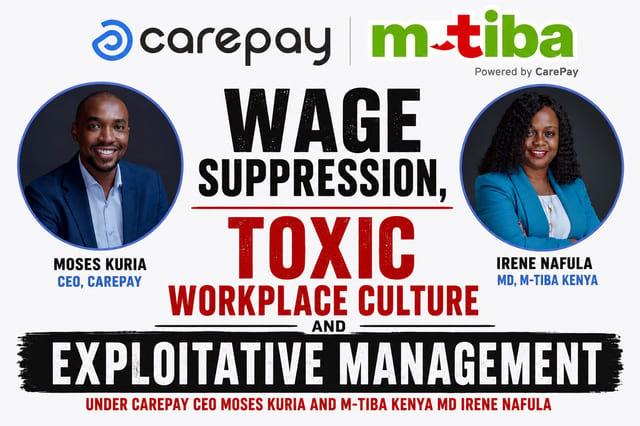
Whistleblowers have blown the lid off an escalating workplace crisis inside CarePay and M-TIBA Kenya, exposing severe wage suppression, toxic management, and systemic employee exploitation under senior leadership.
A scathing insider account reveals how CarePay International CEO Moses Kuria and M-TIBA Kenya Managing Director Irene Nafula have fostered a high-pressure culture that forced out top talents while ignoring mounting staff grievances
The current employees morale, remuneration, career growth and working conditions have deteriorated following management changes over the past year, while employees are further questioning the company's repeated efforts to discourage staff from moving to competing employers.
According to the whistleblower, the situation changed following management changes over the past year, with staff increasingly feeling that their contribution is not being recognised and that opportunities for career growth have become limited.
The concerns are particularly worrying given the nature of the work handled by employees, who are involved in healthcare administration and deal with insurance claims, case management, follow ups, billing and technology platforms used by insurers.
CarePay describes M TIBA as a digital health platform that connects patients, healthcare providers, insurers and other players in healthcare. The company has previously described its work as including healthcare financing and claims related services, making the handling of medical and insurance information a major part of its operations.
These are employees who routinely deal with claims and cases involving tens and hundreds of millions of shillings, including urgent and emergency cases where delays or mistakes can have serious consequences for patients and insurers.
Yet, these oftenly ignored employees are expected to meet tight turnaround times and maintain high levels of accuracy while dealing with demanding workloads.
Original complaint received by our desk 
“ Hey Cyprian Nyakundi, Kindly keep this anonymous for obvious reasons. I’m an ardent follower of your work and someone who genuinely appreciates your commitment to advocating for the common mwananchi, particularly your courage in exposing rogue employers and unfair labour practices. I have worked at CarePay M TIBA for several years, and I have personally witnessed a worrying decline in employee welfare. In the past, the working environment, remuneration and employee morale were considerably better. However, following changes in management over the past year, employee morale, recognition, career growth and the overall working environment have deteriorated at an alarming rate. CarePay M TIBA operates as a critical third party healthcare administration partner for several insurance companies, handling claims adjudication, case management, follow ups, billing and the development of systems and platforms that support insurers’ operations. The workload is substantial, and employees routinely handle claims and cases running into millions of shillings, including urgent and emergency cases where accuracy and turnaround time are critical. Yet, for the past year, employees have received no salary increment, not even KSh 100, despite the rising cost of living and despite assurances that remuneration would be reviewed after the six month probation period. What is even more concerning is what appears to be an attempt to restrict employees from seeking better opportunities elsewhere. CarePay has written to a competing insurance company complaining about the recruitment of its employees and asking the competitor to stop employing them. This raises a fundamental question: If an employer will not improve an employee’s remuneration, recognise their contribution, provide meaningful career growth or improve the working environment, on what basis should it prevent that employee from leaving for a better opportunity? Fighting brain drain is understandable. But you cannot reasonably expect to retain talent by restricting their movement while simultaneously offering poor remuneration, extended working hours, limited recognition and a toxic working environment. These are professionals handling sensitive medical and insurance claims every day. They are expected to process millions in claims, manage complex cases, respond to emergencies, meet extremely tight turnaround times and maintain the highest level of professionalism while feeling undervalued and inadequately compensated. The bigger question is: How long can such a model be sustained before the cost is ultimately paid by employees, patients and the insurers who depend on these systems? I believe this deserves scrutiny. There are hardworking professionals inside CarePay M TIBA who have given years of their lives to the organisation. They deserve to be heard, not restrained when they seek better opportunities, but recognised, fairly compensated and given an environment in which they can genuinely grow. Sometimes the real story isn't that employees are leaving. The real story is why they feel they have no reason to stay.”
The polished narrative of CarePay International’s executive team crumbles under the weight of growing employee grievances.
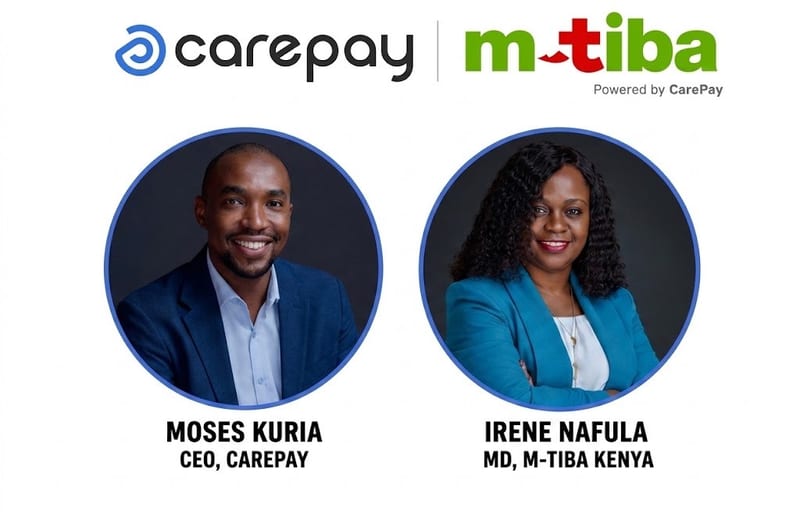
Group CEO Moses G. Kuria and Kenya MD Irene Nafula—the duo tasked with steering the healthtech platform's expansion and local delivery—are now being directly called out by staff for overseeing an environment of worker exploitation.
Rather than delivering on internal stability, leadership under Kuria and Nafula is being blamed for severe wage suppression, collapsing morale, and a mounting retention crisis.
Under Kenya's Employment Act, employees are entitled to regulated working hours and rest periods, while the law also provides rules on overtime and work performed beyond normal hours.
CarePay M-TIBA promised to revolutionize healthcare access across the region, but under current leadership, it is its own staff in desperate need of emergency care.
For Moses G. Kuria and Irene Nafula, true leadership isn't about pitching global expansion—it's proving your success isn't built on exploiting your workforce
Silence will not make these serious grievances go away; it only confirms that behind CarePay's glossy corporate profile lies a management team running out of excuses.
When a major healthtech player squeezes the very workers processing life-or-death medical claims, the entire business model is living on borrowed time.