
Victims of the Kenya Pipeline Company bus and Kenya Railways train collision in Naivasha say they have reached the one year mark without receiving the compensation they were promised, despite being assured through a conference meeting involving KPC and its insurer that their claims would be settled within 90 days.
The victims say August 7, 2026 marked exactly one year since the accident, turning what they had expected to be a short wait for compensation into a full year of uncertainty, follow ups and what they describe as a frustrating back and forth between the institutions and insurance processes involved.
The accident occurred on August 7, 2025 near the Morendat area of Naivasha when a KPC staff bus collided with a Kenya Railways cargo train at a railway crossing.
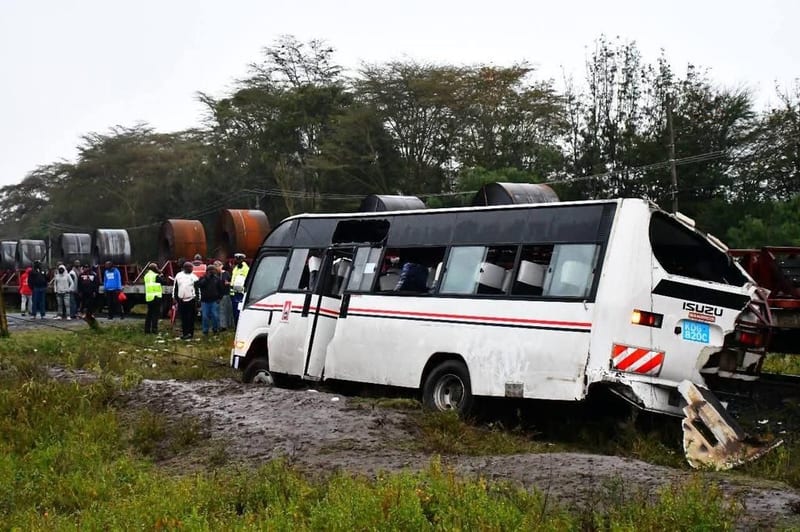
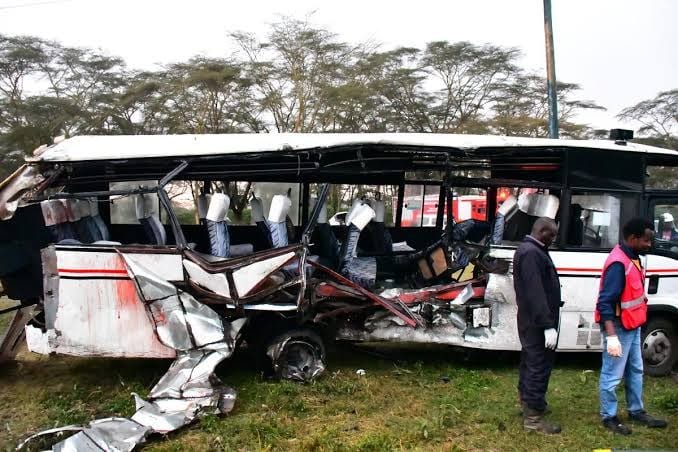
The bus was carrying KPC employees returning from a morning shift, and the crash left several people dead and others injured. KPC and Kenya Railways subsequently formed a joint technical committee to investigate the circumstances surrounding the collision, with traffic police also involved in the investigations.
For the victims who survived the crash, however, the end of the investigation has not brought an end to their financial difficulties.
One of the affected victims, speaking on behalf of several others, says the compensation process has turned into what they describe as a “dog and cat chase” between KPC, Kenya Railways and the parties involved in processing the insurance claims.
The complainant says victims were given a clear assurance that compensation would be paid within 90 days during a conference meeting, only for that deadline to pass without the promised payments being made.
“It's been a dog and cat chase between them, a year has passed by, with KPC through their insurance, promising us via a conference meeting that they'll pay us, the victims, within 90 days. Came to know that it was a big lie.”
The victims say the situation has been particularly painful because many of them have continued dealing with the consequences of the accident while waiting for compensation that they believed had already been committed to.
“Just clocked on August 7th 1 year which was so sad for most of us because we've been forgotten. We want justice, and we've got evidence of everything just in case you need them.”
The group says it has receipts, videos and other documentation relating to the accident and the subsequent compensation discussions, and is willing to provide the evidence to support the claims.
A year after the crash, victims are still waiting 
The accident attracted national attention when it happened, with KPC confirming that its staff bus had been involved in a collision with a Kenya Railways train near the company's Morendat Training and Conference Centre.
At the time, KPC said emergency teams had been deployed and injured employees taken to hospitals in Naivasha, while critically injured victims were considered for evacuation to facilities capable of providing specialised treatment.
The scale of the tragedy was significant, with the Kenya News Agency later reporting that nine people had died and more than a dozen others had been injured.
The victims now say the attention that surrounded the accident has disappeared, leaving those who survived to continue pursuing compensation privately.
Their complaint raises a straightforward issue for KPC and the insurer handling the claims. If victims were formally informed that their compensation would be settled within 90 days, what happened to that commitment and why has the process remained unresolved for a full year?
KPC is a government owned company, and its own customer complaints policy provides mechanisms for handling complaints and lists a toll free emergency and incident reporting number.
The victims therefore deserve a clear explanation of the current position of their claims, including whether individual claims have been assessed, whether liability has been determined, whether the insurer has approved the payments and what remains outstanding before compensation can be released.
This is not the first time compensation involving public bodies has dragged on 
There are previous cases showing how victims can spend years pursuing compensation after incidents involving state corporations.
In July 2025, the Environment and Land Court awarded more than KSh2.1 billion to thousands of petitioners affected by an oil spill involving KPC in the Thange River area, while the court also issued an environmental restoration order. The judgment found KPC liable and addressed compensation for loss of water, livestock, medical treatment, pain and suffering and other losses.
In another 2025 case involving KPC and residents affected by an oil spill in Taita Taveta, the Environment and Land Court awarded KSh200 million to the affected petitioners after finding violations of their constitutional rights.
Kenya Railways has also faced long running compensation complaints. In a November 2025 National Assembly debate, a case was raised concerning a victim who had still not received compensation and reimbursement for medical and burial expenses linked to a railway accident, despite the passage of many years.
These cases demonstrate why accident victims need a transparent compensation process with clear timelines, rather than being left to repeatedly chase insurers, corporations and government offices after suffering injuries or losing loved ones.
KPC and Kenya Railways need to account for the delay 
The victims are not asking for another meeting in which they are given another deadline. They want the institutions involved to explain what has happened to the compensation process and provide a definite position on when eligible claims will be settled.
KPC should explain whether the 90 day commitment was formally made, who made it, what stage the claims reached and why the promised payments were not made.
The insurance company handling the claims should also account for the status of the victims' files, while Kenya Railways should clarify its position in relation to the accident and any liability or compensation obligations arising from the collision.
Where victims have sustained injuries, incurred medical expenses or suffered other documented losses, their claims should be assessed individually and settled according to the applicable legal and insurance processes.
The Insurance Regulatory Authority can also be called upon where there are complaints concerning delays or the handling of insurance claims, while the Ministry of Labour and Social Protection and relevant legal channels may become necessary depending on the nature of individual claims and the relationship of the victims to KPC.
Most importantly, the victims should not have to spend another year moving from one office to another trying to establish what happened to a compensation promise made after an accident that changed their lives.
A year is already too long for victims who say they were promised payment within 90 days. KPC, Kenya Railways and the insurer now owe the affected families a clear account of the outstanding claims and a transparent explanation of when the compensation process will finally be brought to an end