
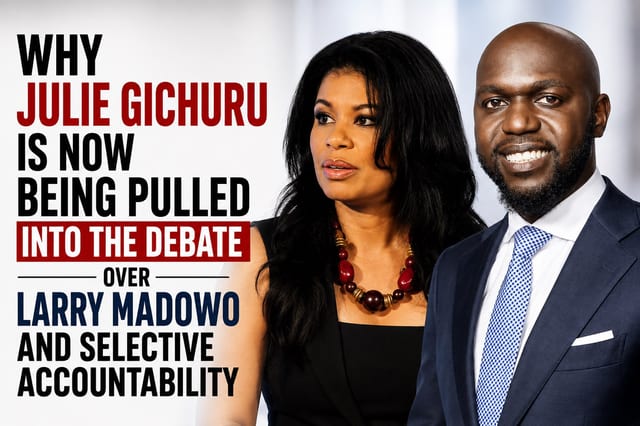
A fresh debate has erupted online over the different standards Kenyans appear to apply to prominent journalists and media personalities, with Julie Gichuru becoming the latest figure drawn into the controversy surrounding Larry Madowo.
The debate gained momentum after Madowo's appearance at a public event in early August triggered criticism from Kenyans who contrasted his presence there with his previous reporting and public positioning around political protests and government accountability.
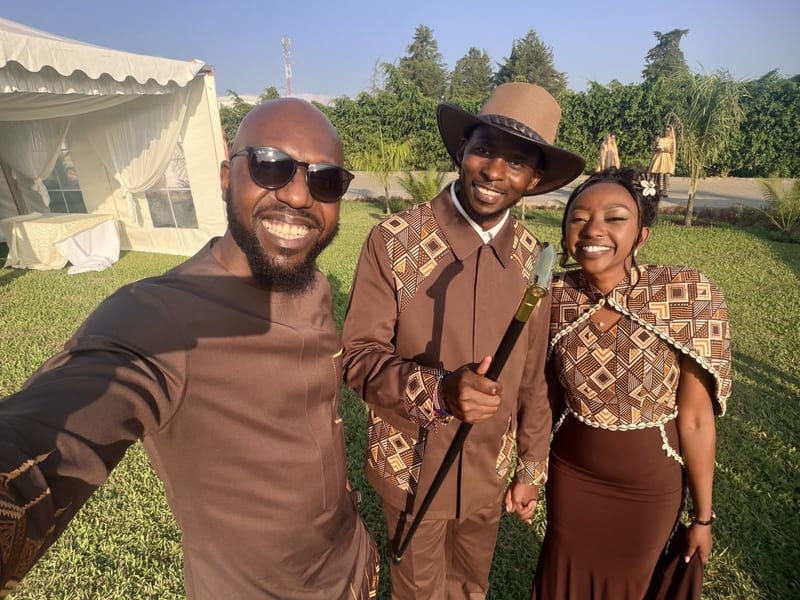
Some users have now asked why the same level of scrutiny directed at Madowo has not been extended to Gichuru, a veteran media personality whose career has placed her among Kenya's most recognisable television journalists.
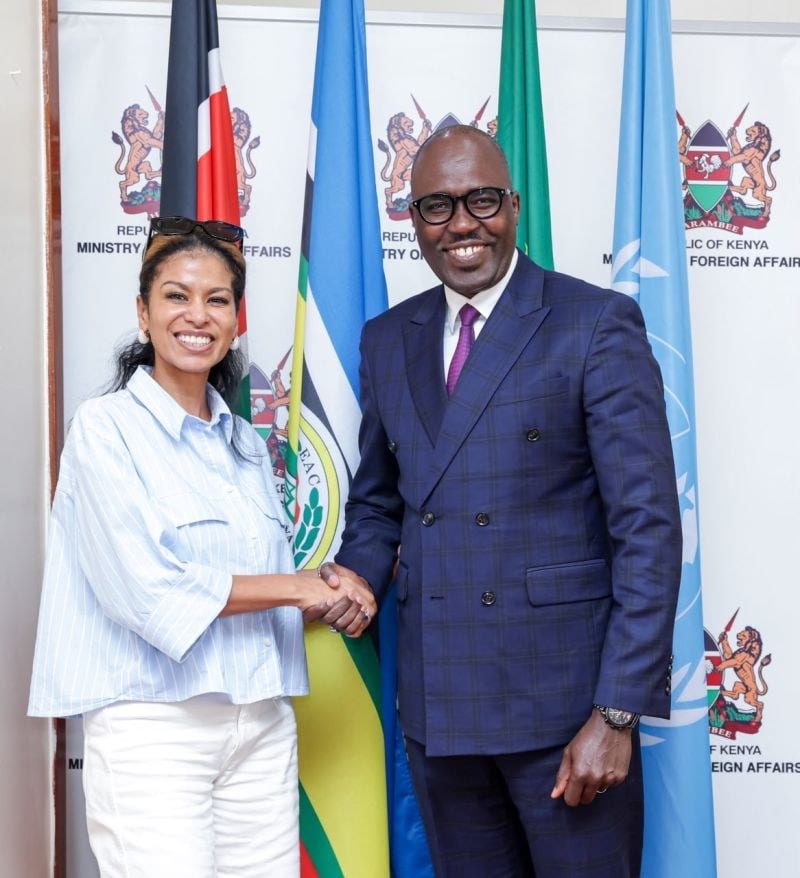
Julie Gichuru is serving as the lead moderator for the inaugural Global Trust Summit, a landmark international event taking place in Nairobi, Kenya. The Global Trust Summit is organised by the Kenyan State Department for Foreign Affairs in collaboration with international bodies like the Open Government Partnership, the Ford Foundation, and the UNDP
The criticism is largely being driven by social media users and should not be presented as an established finding that Gichuru has committed any wrongdoing.
What the debate does expose, however, is a bigger problem in Kenya's public conversation: accountability is increasingly selective, depending on who the public figure is, which political camp they are associated with, and how much attention they attract online.
Gichuru's long media career puts the criticism in a different category 
Gichuru is not an unknown media personality who suddenly appeared in the public spotlight.
She has had a media career spanning more than two decades, having worked in radio, television, print and digital media. She became particularly prominent through programmes such as Sunday Live and other current affairs productions. Her official biography also credits her with creating the investigative television series The Inside Story and with producing programmes focused on governance, leadership and social issues.
She subsequently moved beyond conventional newsroom work into leadership, communications, entrepreneurship and development focused initiatives.
That history is precisely why some Kenyans are questioning whether established public figures should receive less scrutiny simply because they are no longer constantly visible on television.
Being less active in the daily news cycle should not automatically mean being exempt from public examination.
The Larry Madowo controversy exposed a wider problem 
Madowo has faced significant criticism from Kenyans after appearing at an event where his presence was interpreted by some as inconsistent with his previous public stance.
The criticism has been particularly intense because Madowo is perceived by many younger Kenyans as a journalist who has actively reported on protests, government conduct and the treatment of citizens.
That creates a higher expectation of consistency.
But the principle should work both ways.
If journalists are going to be judged for where they appear, whom they interact with and the events they attend, then the same standard should be applied across the profession.
It should not depend on whether someone is popular with one section of the internet.
This is where the Julie Gichuru debate becomes relevant 
Gichuru's critics are essentially asking why a similar standard of scrutiny is not being applied to her.
Some social media users have brought up her history of engaging with political and business leaders, while others have questioned whether her public profile and connections have insulated her from the kind of online backlash experienced by younger media personalities.
There is, however, a legitimate public interest issue underneath the debate.
Kenya should not have one standard for journalists considered sympathetic to the government and another for journalists perceived to be critical of it.
The same principle should apply in reverse.
A journalist should not be condemned simply because they attend an event involving a politician, nor should another journalist be automatically protected from scrutiny because of their reputation or professional history.
What matters is the person's conduct, their professional obligations and the facts surrounding the particular situation.
The media itself has been warning about political involvement 
The debate comes at a time when the question of journalists crossing into political territory has become increasingly prominent.
In July, UDA Secretary General Hassan Omar publicly challenged journalists whom he accused of engaging in partisan politics to leave newsrooms and pursue politics openly. His comments sparked another debate about where journalism ends and political activism begins.
The irony is that political actors themselves frequently benefit from journalists and media personalities who have large public audiences.
That makes independence even more important.
A journalist does not lose their right to attend a political event, interview a politician or engage in public discourse simply because they work in media.
But when a journalist presents themselves as an independent voice, the public is equally entitled to examine whether their conduct matches the standards they demand from others.
Kenya has already seen what selective outrage can do 
The wider political environment provides several examples of how public outrage can become highly selective.
During the recent debate over public accountability, some journalists and activists have faced intense online campaigns, while equally prominent personalities have escaped similar attention for comparable conduct.
The result is a dangerous culture where the question becomes less about what happened and more about who did it.
That is not accountability.
That is tribal, political or personality driven punishment.
The recent public attacks on journalists and civil society actors have also demonstrated how quickly disagreement can turn into intimidation.
The Kenya Human Rights Commission and other civil society organisations recently raised concerns over what they described as increasing attacks on civic space and intimidation of accountability actors.
That environment makes consistency in public scrutiny even more important.
The Albert Ojwang case showed why credibility matters 
The death of blogger Albert Ojwang in police custody became one of the clearest recent examples of why journalists and public figures matter in holding institutions accountable.
The case attracted national attention because questions emerged over the initial account of what happened to him.
The subsequent investigations and forensic findings demonstrated why the public should never simply accept an official version without scrutiny.
Journalists who reported on the case were therefore exercising an important public function.
But the same principle should apply when journalists themselves become the subject of public scrutiny.
The media cannot demand transparency from government while treating questions about its own conduct as illegitimate.
The recent KDC debate offers another lesson 
The controversy surrounding public relations campaigns and government agencies has also shown how easily public communication can become promotional rather than investigative.
When a state corporation launches a sustainability strategy, for example, the public deserves more than promotional messaging.
Kenyans should be able to examine the money involved, the people responsible, the contracts awarded and whether the promised outcomes are actually being delivered.
The same standard applies to media personalities.
A polished public image should never replace scrutiny.
There should be no protected class of journalists 
The argument being made online should therefore not be reduced to whether Julie Gichuru deserves to be "cancelled".
That framing is too shallow.
The real issue is whether Kenya applies consistent standards to people who occupy positions of public influence.
If Larry Madowo's conduct deserves examination, examine it.
If Julie Gichuru's conduct raises legitimate questions, examine it.
If a government aligned journalist behaves questionably, examine it.
If a journalist critical of government behaves questionably, examine them too.
The answer should never depend on ethnicity, political affiliation, generation or which side of the political divide happens to like the journalist.
Gichuru's public record is available for scrutiny 
Gichuru's professional record is substantial and publicly documented.
She has received recognition for her media work, including an award for her contribution to nation building, and has held senior communications and leadership roles beyond traditional journalism.
That makes the current debate less about whether she is "relevant" and more about whether prominent people should remain accountable even after leaving the centre of daily media attention.
The answer should be yes.
Public influence does not expire simply because someone is no longer anchoring a prime time programme.
But accountability must also be evidence based 
There is an important line that should not be crossed.
Criticism of a journalist's choices is legitimate.
Accusations that someone is a "system operative", a "sleeper cell" or protected by political connections require evidence.
Social media comments making such claims do not establish them as facts.
The public deserves accountability, but accountability itself must be based on evidence.
Otherwise, Kenya simply replaces one form of propaganda with another.
The bigger lesson for Kenyan journalism 
The debate surrounding Madowo and Gichuru ultimately exposes a difficult reality for Kenya's media industry.
Journalists increasingly have personal brands that extend far beyond their newsrooms.
They appear at conferences, interact with politicians, build businesses, participate in public campaigns and develop enormous online followings.
That influence comes with responsibilities.
The public will naturally ask whether their conduct matches the standards they promote professionally.
But the public must also apply the same standard consistently.
If a journalist is criticised for standing next to power, then every journalist who stands next to power should be judged on the same facts. If one journalist is defended because of their reputation, that defence should not become a shield from legitimate scrutiny.
Kenya does not need more cancellation campaigns.
It needs consistent accountability.
And perhaps that is the uncomfortable lesson from the Julie Gichuru and Larry Madowo debate: the problem is not that Kenyans are asking too many questions about journalists.
The problem is that they do not always ask the same questions of everyone.