
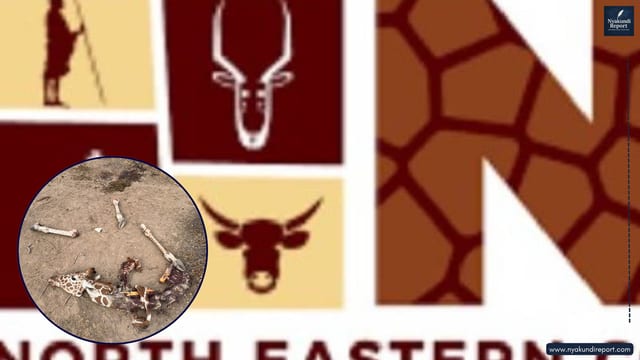
A fresh conservation storm is brewing after the North Eastern Wildlife Conservancies Association (NECA) accused the Kenya Wildlife Service (KWS) of failing to halt what it describes as an unprecedented wave of killings targeting the endangered Somali giraffe.
In a strongly worded petition to KWS Director General Prof. Erustus Kanga, the association claims at least three giraffes are being slaughtered every day across Garissa, Wajir and parts of Mandera counties.
The allegations, backed by photographs of butchered carcasses and years of intelligence reports, have raised difficult questions about whether Kenya is doing enough to protect one of the world's last remaining strongholds for the critically important species.
NECA Accuses KWS of Failing to Stop Escalating Somali Giraffe Killings 
The North Eastern Wildlife Conservancies Association has formally accused KWS of allowing organised wildlife crime to thrive across northern Kenya despite repeated warnings from conservation groups and local communities.
In a letter addressed to KWS Director General Prof. Erustus Kanga, the association warned that illegal killings of the endangered Somali giraffe have reached crisis levels, threatening one of the world's most significant remaining populations of the species.
According to the conservation lobby, field monitoring indicates that at least three Somali giraffes are being killed every day in Garissa, Wajir and parts of Mandera counties.
NECA argues that the killings are no longer isolated poaching incidents but a sustained assault on one of Kenya's most valuable wildlife populations.
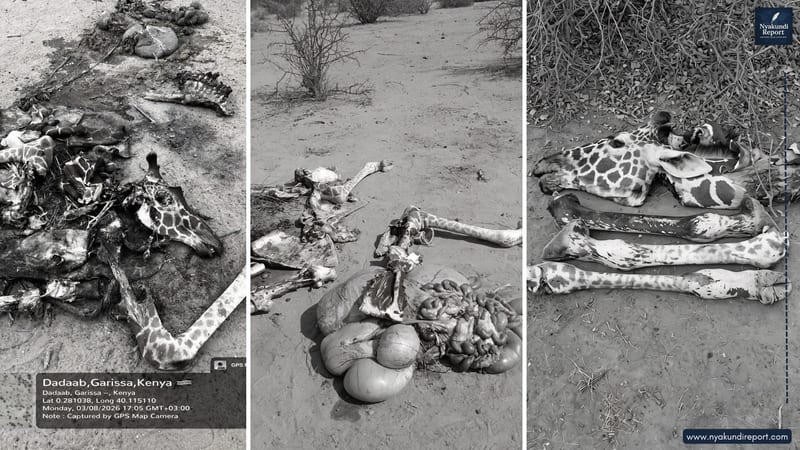
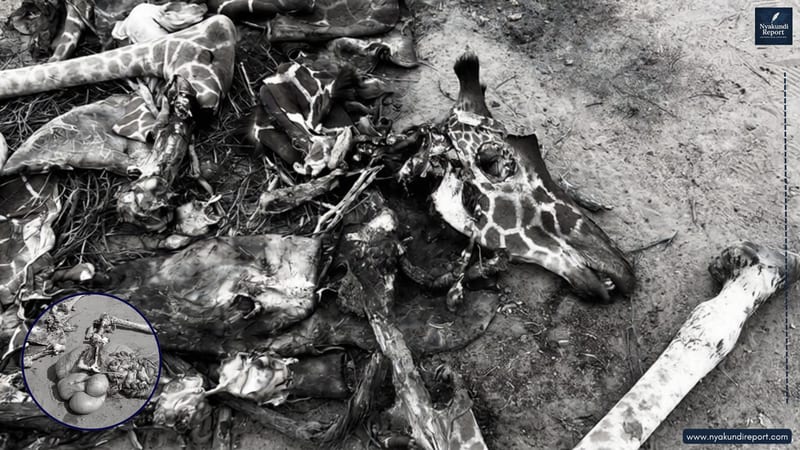
The organisation accompanied its letter with photographs showing freshly butchered giraffe carcasses reportedly recovered from Kumahumato in Dadaab, Garissa County, and Wajir South, images it says illustrate the scale of the crisis unfolding across the region.
“These images are not isolated incidents. They are evidence of a growing conservation crisis that has now reached an unacceptable level,” the association's Chief Executive Officer Sharmake Mohamed stated in the letter.
The warning comes at a time when Kenya continues to market itself globally as a leading wildlife conservation destination, making the allegations particularly significant for the country's conservation reputation.
Conservation Group Says Intelligence Has Been Ignored 
NECA claims the current crisis did not emerge overnight. According to the association, it has spent years supplying KWS with intelligence reports, GPS coordinates, photographs of poaching scenes, names of suspected offenders and details of emerging wildlife crime hotspots across northern Kenya.
Despite those reports, the organisation argues that enforcement efforts have largely consisted of temporary anti-poaching operations that end before criminal networks are dismantled.
Among the areas repeatedly flagged as high-risk are Ali Kune, Kumahumato, Dadaab, Abakore, Hare, Sabul, Sarif, Biyamadow, sections along the Tana River, and several wildlife landscapes stretching across Garissa, Wajir and Mandera counties.
The association maintains that these locations have become increasingly vulnerable because organised wildlife criminals understand the pattern of government enforcement.
According to NECA, anti-poaching teams are often deployed after public complaints or media attention, only to withdraw days later. The conservation lobby argues that the criminal networks simply suspend operations temporarily before resuming illegal hunting once security operations end.
"Poaching networks do not disappear after a week. Wildlife criminals simply wait for operations to end before resuming their activities. This reactive approach is failing. The current operational model is not protecting Northern Kenya's wildlife," the letter states.
NECA further contends that every delay in responding to intelligence reports allows wildlife trafficking syndicates to become more entrenched.
The association warns that if the reported rate of killings continues, Kenya risks overseeing the collapse of one of Africa's most important Somali giraffe populations.
Communities Demand Permanent Security Presence in Poaching Hotspots 
Beyond highlighting the alleged failures, NECA has proposed what it describes as a long-term strategy to reverse the trend.
The association argues that KWS should move away from short-term operations and instead establish permanent wildlife security deployments in major poaching hotspots throughout Garissa, Wajir and Mandera.
It is also calling for the establishment or strengthening of permanent operational stations in critical wildlife landscapes to improve surveillance and rapid response capabilities.
According to the lobby, community conservancies should become integral partners in planning anti-poaching operations rather than serving only as intelligence providers.
The association notes that the Wildlife Conservation and Management Act recognises community conservancies as legitimate conservation partners and argues that local communities possess valuable knowledge that can significantly strengthen wildlife protection.
"We are not asking KWS to surrender its mandate. We are asking KWS to fulfil it," Mohamed wrote.
NECA further wants KWS to adopt a coordinated intelligence-led anti-poaching strategy covering the three northern counties, review wildlife security deployments, strengthen structured partnerships with community conservancies and provide regular feedback to organisations reporting wildlife crimes.
The conservation body also argues that Garissa and Wajir continue receiving disproportionately limited operational investment despite hosting nationally and internationally significant wildlife populations.
It says the consequences are becoming increasingly visible through repeated discoveries of butchered giraffe carcasses.
"Every giraffe slaughtered represents a failure of the system designed to protect it. Every delay strengthens criminal networks. Every missed opportunity encourages further wildlife crime," the letter states.
While reaffirming its willingness to continue working with government agencies, NECA warns that patience among conservation stakeholders is running out.
Should sustained intervention fail to materialise, the organisation says it is prepared to escalate the matter by petitioning President William Ruto, Parliament's Wildlife Committee, the Senate and other oversight institutions to seek an independent review of wildlife protection in northern Kenya.
Such a move would significantly increase political pressure on wildlife authorities as Kenya faces growing international scrutiny over the protection of endangered species.
By the time of publication, KWS had not publicly responded to the allegations contained in NECA's letter or the demands for immediate intervention.