
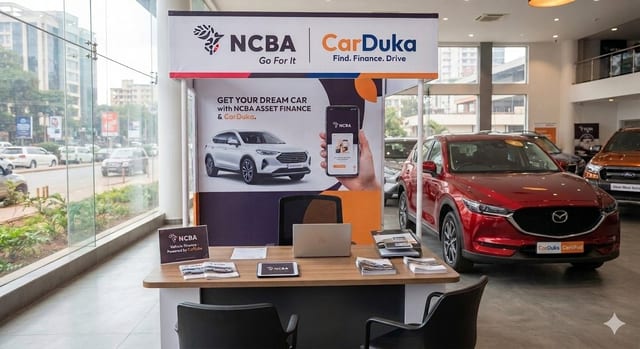
NCBA's digital vehicle marketplace, CarDuka, has found itself at the centre of another controversy after a repossessed 2019 Mazda CX-5 was listed for KSh34 million, complete with monthly repayments of KSh835,873 over five years.
The listing quickly spread across social media, leaving many Kenyans questioning how a six-year-old Japanese SUV could end up carrying the price tag of a luxury supercar.
Some users later claimed the intended price was KSh3.4 million, suggesting an extra zero had been entered into the system. Whether it was human error or a system failure, the incident has raised serious questions about the controls governing a platform that handles high-value financial transactions.
For many observers, the bigger issue is not the typo itself. It is what the incident says about the systems behind one of Kenya's largest asset financiers.
CarDuka is not simply another online car marketplace.
It is the platform through which NCBA disposes of repossessed vehicles after borrowers default on asset finance loans.
Over the years, borrowers have repeatedly complained about what happens after repossession.
Some say they spent years repaying their loans only to lose their vehicles after falling into temporary financial difficulty. Others complain that once a vehicle is repossessed, the costs escalate rapidly through towing charges, storage fees, auctioneer fees, valuation costs and legal expenses.
Several borrowers have alleged that even after clearing loan arrears, they were later informed they had to settle the entire outstanding balance before their vehicles could be released.
Others say they received conflicting explanations from different departments while storage charges continued accumulating.
Many borrowers also question how repossessed vehicles are valued before sale and whether former owners are given sufficient information about the auction process and final selling price.
The appearance of a KSh34 million Mazda has only intensified those concerns.
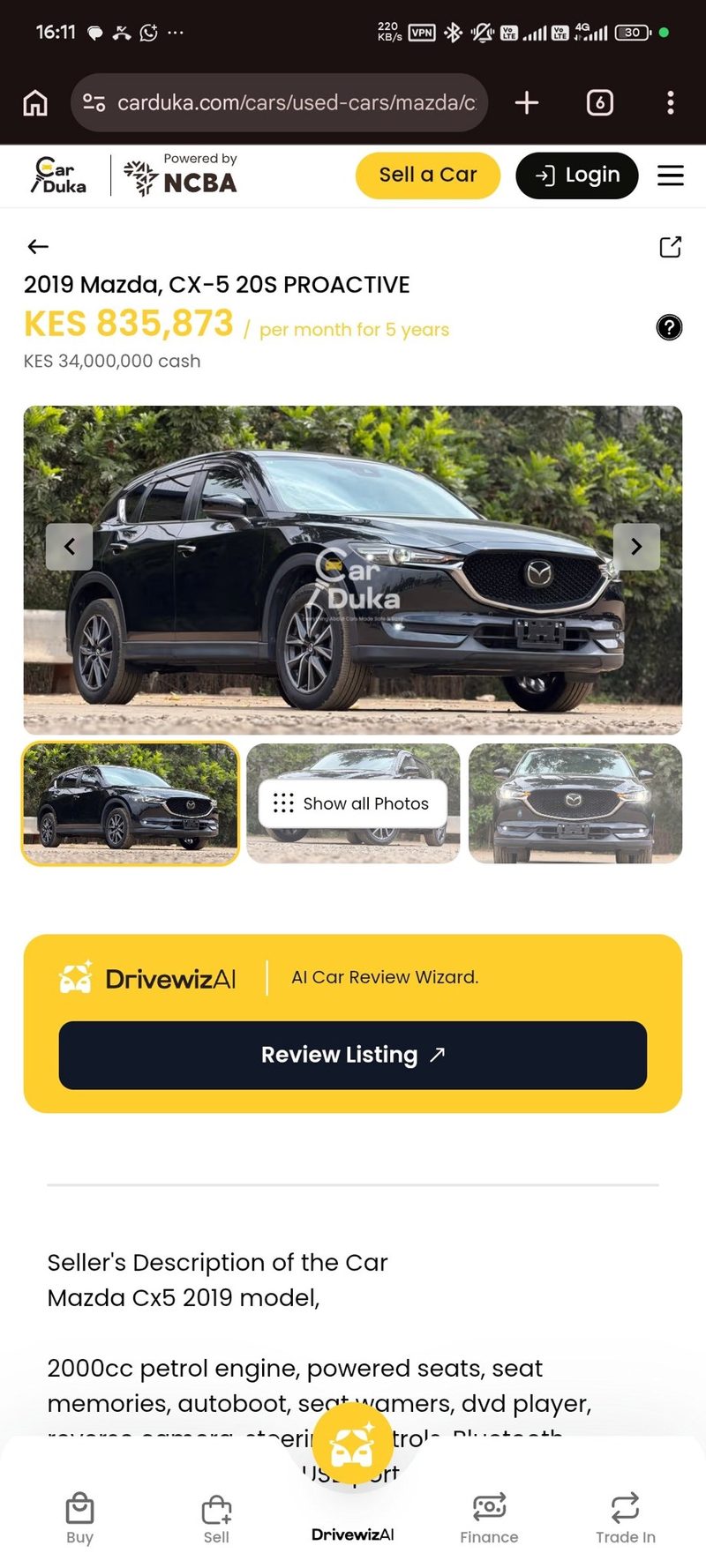
If a vehicle can be listed with an additional zero that changes its value by more than KSh30 million, borrowers are asking what other mistakes could occur within the system.
A Pattern of Questions 
The pricing controversy comes against the backdrop of a growing list of issues that have surrounded NCBA in recent years.
The bank has faced multiple fraud cases involving employees and contractors accused of abusing access to customer accounts and banking systems.
One former employee was charged over the alleged theft of more than KSh52 million from customer accounts.
Separate investigations have involved fraudulent activity linked to dormant accounts, contractors with privileged system access and the Fuliza platform.
While each case involves different individuals, together they raise broader questions about internal oversight and operational controls.
Data Protection Failures 
NCBA has also faced action from the Office of the Data Protection Commissioner.
In separate rulings, the regulator ordered the bank to compensate customers after confidential information was disclosed to unauthorised parties.
One case involved customer details being shared with individuals who were no longer employed by the bank.
Another involved transaction statements repeatedly being sent to the wrong email address despite the bank being notified of the error.
These findings add to concerns about how customer information and internal systems are managed.
Losing Ground 
While NCBA has continued reporting profits, the institution has steadily lost its competitive advantage.
Recent financial statements showed I&M Group overtaking NCBA in total assets, while the gap between the two banks' loan books has narrowed dramatically after years in which NCBA held a substantial lead.
Customer deposits also declined during parts of 2025, reflecting increasing competition in Kenya's banking sector.
The Kenyatta Legacy Nears Its End 
The controversy also comes at a time when the bank's ownership structure is undergoing its biggest change since the 2019 merger between Commercial Bank of Africa and NIC Group.
The institution, long associated with the Kenyatta and Ndegwa families, is in the process of being taken over by South Africa's Nedbank in a deal worth more than KSh100 billion.
The acquisition means the families that built and controlled the institution for decades are preparing to hand over control of one of Kenya's biggest banks.
Questions That Need Answers 
The Mazda listing may eventually be explained as a simple error.
But customers argue that such mistakes should never occur on a platform responsible for selling repossessed assets worth millions of shillings.
The incident raises legitimate questions that NCBA should answer publicly:
What quality assurance checks exist before vehicle listings go live? Was the KSh34 million price caused by human error or a systems failure? Are repossessed vehicle valuations independently verified before publication? How many other listings have contained pricing or financing errors? What safeguards protect borrowers from mistakes during the repossession and resale process?
These questions become even more important because CarDuka deals with vehicles belonging to borrowers who have already suffered financial hardship.
For customers, a repossessed vehicle is often the loss of years of repayments, not merely another car advertised online.
When mistakes appear on such a platform, they deepen concerns about transparency, accountability and whether sufficient safeguards exist throughout the repossession process.
The KSh34 million Mazda may disappear from the website, but the questions surrounding NCBA's asset finance business are unlikely to disappear with it.