
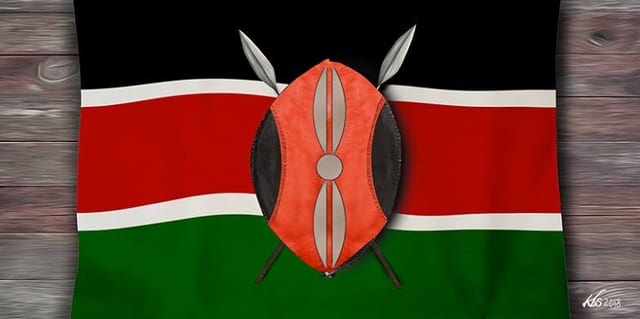
Any opposition leader who understands the depth of Kenya’s collapse should not be rushing to inherit State House as though winning an election will suddenly create the money, authority and freedom needed to repair a country buried under illegal debt, captured institutions, foreign lenders, local cartels, youth unemployment, police abuse, abductions and decades of theft.
The truth that many politicians refuse to say loudly is that Kenya has reached a point where ordinary government cannot fix the problems created by previous governments, because the same presidency that appears powerful from outside becomes helpless once it enters agreements with lenders, banks, foreign governments, contractors and powerful local interests that were never elected by Kenyans.
This is why replacing William Ruto with another politician from the same old system will not amount to liberation, since the new President will inherit the same debts, the same cartels, the same security structure, the same corrupt bureaucracy and the same foreign institutions dictating what Kenya can tax, sell, borrow and spend.
Kenya does not need another coalition government made up of politicians sharing Cabinet positions after defeating Ruto, because that government would begin its first morning inside the same cage and quickly discover that winning an election is completely different from taking control of the country.
What Kenya needs is a peaceful people led revolution followed by a temporary transition council, whose only duty would be to reset the State before normal elections are held under a system that belongs to Kenyans again.
The transition council would not be another government, would not exist to reward politicians and would not become a permanent authority, because its members would receive a limited mandate, a fixed period and clear tasks that must be completed before power returns to elected leaders.
Its first duty would be to audit every public debt and separate lawful borrowing that benefited Kenyans from odious debt that was contracted outside the law, hidden from the public, stolen by officials or attached to projects that never delivered what taxpayers were promised.
Kenya should not continue pretending that every figure appearing in a Treasury document automatically belongs to citizens, because money borrowed illegally, stolen before reaching the public or signed away through secret agreements cannot become a national obligation simply because foreign lenders demand payment.
Those debts must be rejected, and the people who borrowed, stole or benefited from the money must carry the burden themselves, since taxpayers cannot spend generations repaying money they never approved, never received and never benefited from.
No ordinary elected President can attempt this fight alone, because the pressure would immediately come from international lenders, ratings agencies, local banks, foreign governments, bondholders and powerful financial groups whose money and influence run through Kenya’s entire political system.
Even the most honest President would be isolated, threatened economically, sabotaged politically and possibly removed before completing the work, because the forces benefiting from Kenya’s weakness are larger than one individual sitting in State House.
That is why only the owners of the country can provide the authority needed for such a confrontation, and the owners of Kenya are the citizens whose labour, taxes, land and children have been used to finance a system that no longer serves them.
A transition council backed directly by Kenyans would negotiate from the strength of a national mandate rather than the weakness of one politician, because lenders and cartels can intimidate a President, but they cannot easily intimidate an entire population that has already decided the old arrangements are finished.
The council would audit public debt, recover stolen assets, publish secret contracts, break the cartels feeding on government, reform the police and intelligence services, rebuild the electoral system and create rules that stop future presidents from borrowing and signing away the country without public approval.
It would similarly examine the structure of taxation, public procurement, land ownership, banking, natural resources and government spending, because Kenya cannot keep squeezing workers and small businesses to finance theft, waste and debts created by people who remain untouched.
Members of the transition council must not be allowed to contest the election they prepare, since anyone joining it with presidential ambitions would immediately turn the national reset into another campaign vehicle and begin using public power to build personal support.
The council should contain respected people drawn from professional bodies, civil society, workers, youth, counties, religious groups, business, universities and communities, with no one person becoming the face or owner of the transition.
Its work must remain open to the public, every major decision must be explained and every member must declare their wealth, business interests and political connections before taking office.
This is not about replacing one dictatorship with another, and it is not about suspending democracy forever, because the entire purpose of the transition would be to create conditions under which genuine democracy can finally operate.
Kenya cannot hold meaningful elections when political parties depend on stolen money, police protect ruling party goons, electoral institutions look away from abuse and foreign lenders influence the policies of governments before citizens even vote.
An election held inside a captured system may change the President, but it does not necessarily change who owns the country, who controls the money or who decides what the government can do.
This is the question the united opposition must answer before asking Kenyans to hand it power, because defeating Ruto is not enough when nobody has explained how the next government will confront illegal debt, foreign pressure, local cartels, mass unemployment, police abuse and institutions that have already been captured.
Kalonzo Musyoka and other opposition leaders keep speaking about unity and removing Ruto, but Kenyans have not heard a serious explanation of what happens the morning after victory when lenders demand payment, the Treasury has no money and powerful interests warn the new government not to touch their contracts.
Saying Ruto must first go and the country will cross the bridge later is one of those Abunuwasi stories told by emotional people who fear difficult questions, because Kenya has crossed too many bridges blindly and repeatedly found another disaster waiting on the other side.
The opposition should stop treating Ruto’s weakness as an invitation to inherit the presidency, because any sensible leader who is not consumed by greed for power should understand that Kenya in its present condition cannot be repaired through ordinary succession.
A politician can win an election, appoint ministers, change permanent secretaries and make speeches, but none of that automatically gives him control over debt markets, foreign lenders, security networks, local banks and cartels that have grown stronger than public institutions.
The opposition knows this, which is why its leaders speak confidently about removing Ruto but become vague when asked whether they will cancel illegal debts, recover stolen billions, expose secret agreements and confront the international interests behind Kenya’s economic suffering.
They know that any President attempting to do these things alone would face economic warfare, political sabotage and threats from forces whose influence stretches far beyond Kenya.
The money involved does not end with one local bank, one contractor or one corrupt politician, because global finance passes through large investment funds, bond markets, multinational companies and institutions whose decisions can destabilise entire countries.
A normal government will always be pressured to compromise, borrow again and protect the same people, because the President will fear currency collapse, shortages, political unrest and international isolation.
A transition council created through a peaceful national revolution would have a different purpose, because it would not be looking for reelection, protecting party financiers or negotiating positions for political allies.
Its mandate would be to clean the State, restore sovereignty and prepare a new political order before stepping aside.
Kenya has reached the stage where the owners of the country must take it back, repair the structure and then return it to elected leaders under rules that cannot be changed by one President, one Parliament or one foreign lender.
This does not mean chaos, violence or burning the country, because a genuine people led revolution can be disciplined, organised and clear about what it wants to replace.
The revolution begins when Kenyans reject the idea that another election between the same political families will solve problems created by those families, and it succeeds when the public creates a transition council with enough authority to dismantle the system before handing power back.
The opposition must decide whether it wants to help Kenyans reclaim the country or merely inherit a broken government and enjoy its privileges for another five years.
Any opposition leader who truly loves Kenya should support a transition that makes it possible for future presidents to govern freely, rather than rushing into State House and becoming the next manager of a system controlled by debt, cartels and foreign interests.
The real question is no longer whether the opposition can defeat Ruto, because a united opposition may defeat him if the public anger continues growing.
The real question is whether the opposition is honest enough to admit that defeating Ruto will not fix Kenya, and whether it has the courage to support a people led transition council instead of another government assembled from the same KANU era politicians.
Kenya does not need another politician promising to repair the country from inside a system built to defeat reform.
Kenya needs its owners to take charge, create a temporary transition council, clean the State and return the country to democracy only after the debt, cartels, institutions and rules have been reset.