
Has MSRA Lost Its Way?
For nearly three decades, the Marketing and Social Research Association (MSRA) has positioned itself as the professional body responsible for promoting ethics, quality and professionalism in Kenya's market and social research industry.
Established in 1998, the association promised to raise standards, bring researchers together, promote ethical practice and become the voice of an industry that plays a critical role in business, public policy and governance.
Today, some researchers say that vision has faded. Instead of being an engine for innovation, critics argue that MSRA has become increasingly inward-looking, bureaucratic and disconnected from the realities facing researchers on the ground.
The concerns raise broader questions about whether the association is still fulfilling the purpose for which it was created.
According to the information that Nyakundi Report has gathered, many researchers no longer see practical value in maintaining MSRA membership despite paying annual subscription fees.

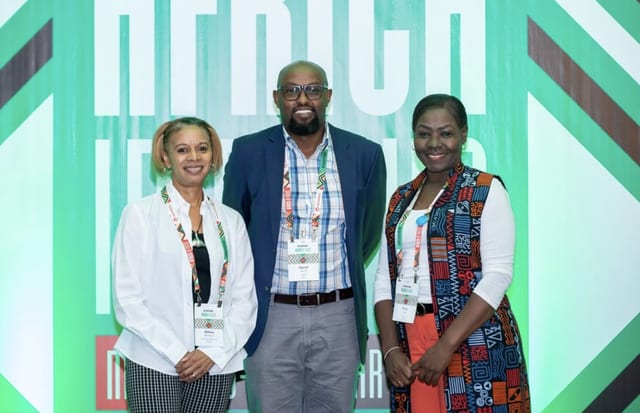
Marketing and Social Research Association (MSRA) in Kenya is currently led by by Chairperson Emily Were from Ipsos Kenya.
The executive team includes Vice Chairperson Althea McCourt of Infinite Insight, Treasurer Lucy Mbaire from Frontier Consulting, and Secretary Purity Ngure representing SBO Research.
Together with long-standing industry leaders like Daniel Ogechi, this team was meant to actively drive regional development by maintaining professional codes of conduct, fostering industry networks, and organising flagship learning programs—such as the annual MSRA Conference and high-profile collaborative events alongside international regulatory bodies like ESOMAR.

An anonymous whistleblower states that the MSRA under current leadership has gradually become more focused on preserving its internal structures than advancing the interests of the wider research profession.
One of the strongest criticisms is that MSRA no longer appears to be the industry's ethical watchdog.
The complainant argues that researchers who are members and those who are not continue operating in the same market with little meaningful distinction in accountability or professional oversight.
If membership does not improve professional standing, strengthen ethical compliance or provide meaningful representation, some researchers now ask what value the annual membership fees actually deliver.
Another concern relates to governance.
The whistleblower states that new ideas are rarely embraced and that younger researchers and new firms struggle to find space within the MSRA.
Some researchers claim membership applications and registrations are at times delayed or blocked without sufficient transparency, creating the perception that access to the association depends more on internal preferences than objective criteria.
Critics also question whether MSRA has done enough to keep pace with the rapidly changing research industry.
Artificial intelligence is changing survey design.
Digital platforms are transforming consumer research.
Data protection laws have altered how researchers collect and process personal information.
Yet some members say the association's programmes and conferences continue to focus on familiar themes year after year without offering practical leadership on emerging issues.
The whistleblower argues that annual conferences have become predictable networking events rather than forums where difficult conversations about research ethics, innovation, artificial intelligence, data governance and industry reform are openly discussed.
Another concern raised is the association's influence.
The complainant says researchers increasingly turn to the Office of the Data Protection Commissioner (ODPC) for guidance on data governance and to the National Commission for Science, Technology and Innovation (NACOSTI) for research oversight, leaving many questioning what unique role MSRA now performs within Kenya's research ecosystem.
Professional associations exist to advocate for their members, raise standards, develop talent and protect the integrity of their profession.
Critics argue that if members begin questioning whether those objectives are still being achieved, then honest reflection becomes necessary.
The questions now being raised include:
What tangible benefits does MSRA membership provide today?
How many new researchers and firms have joined the association in recent years?
How transparent is the membership approval process?
What disciplinary action has MSRA taken against members found to have breached ethical standards?
What concrete programmes has the association introduced to prepare researchers for artificial intelligence, digital research and evolving data protection requirements?
How is the association ensuring younger researchers have a voice in shaping the future of the profession?
These are questions that many members believe deserve clear answers.
Below is the concerns received.
MSRA has become the graveyard of research ambition.
It was established in 1998 to promote ethics and professionalism, but today many researchers feel it has become bureaucratic and disconnected.
There is little difference between being an MSRA member and not being one because unethical research still happens.
Sometimes new memberships are blocked, and innovation has stalled.
Kenya's research industry deserves an organisation that encourages new ideas instead of protecting the status quo.
Research is supposed to challenge the status quo. Ironically, some researchers now say the biggest obstacle to progress is the very organization that claims to represent them.
If MSRA cannot fix itself, perhaps it is time for the industry to build something that actually works.
You cannot call yourself the guardian of research while researchers are losing faith in you. MSRA should stop defending its image and start defending the profession.