
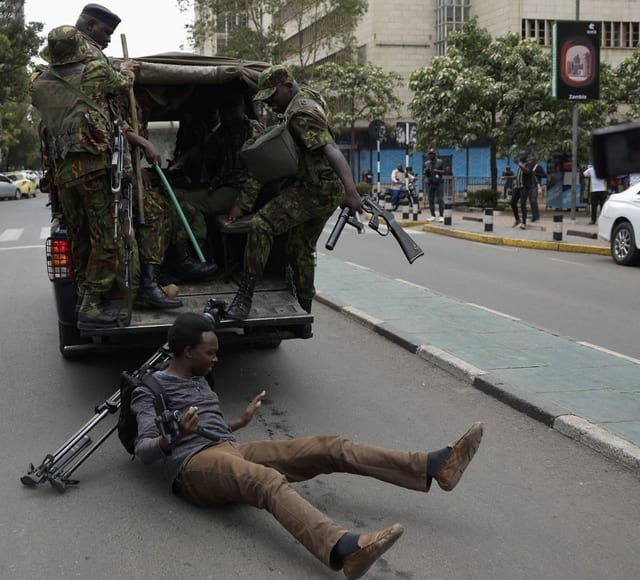
Every time protests erupt in Kenya, journalists leave home carrying cameras, microphones and notebooks, knowing they could become targets before the day ends.
Some are caught in running battles between police and protesters. Others are assaulted by criminal gangs.
Cameras are smashed.
Equipment is stolen.
Reporters are beaten while broadcasting live.
Photojournalists are forced to flee simply for documenting events unfolding before the public.
Then, almost on cue, the same cycle repeats itself.
The Media Council of Kenya (MCK) issues a strongly worded statement condemning the attacks.
The Kenya Union of Journalists (KUJ) condemns the violence.
The Kenya Editors Guild (KEG) condemns the attacks.
The Association of Media Women in Kenya (AMWIK) expresses concern.
A few hashtags trend for a day or two.
Then silence.
Many journalists now say they are growing frustrated with organisations that were created to defend them. They argue that statements alone have become predictable and ineffective. Every attack is met with another press release, yet little seems to change on the ground.
The latest criticism follows a press conference by United Democratic Alliance Secretary General Hassan Omar Hassan, who spent more than two hours criticising sections of the media. During the briefing, one journalist asked about compensation for media workers injured while covering recent protests. The response left many journalists disappointed, with some saying it reflected how little attention is paid to the risks they face while carrying out their work.
Days later, many journalists say they are still waiting to see strong follow-up from the very organisations mandated to defend press freedom and journalists' welfare.
The government has since announced compensation for some victims affected by the recent anti-government protests. That announcement has raised another question within newsrooms.
Will journalists injured while covering those protests also be compensated?
Many say they should.
Journalists do not join demonstrations as protesters. They attend as observers performing a constitutional duty to inform the public. When they are assaulted, shot with rubber bullets, tear-gassed, robbed or injured while working, many believe their employers and representative bodies should immediately demand justice, accountability and compensation.
Many still remember the incident in Nakuru where a female journalist, after allegedly being assaulted by police officers while covering demonstrations, cried out on camera.
"Umenipiga haga!"
That moment quickly spread across the country. It became one of the defining images of the dangers journalists face in Kenya.
Yet many journalists ask what happened after the cameras were switched off.
Was anyone held accountable?
Was the journalist compensated?
Did the institutions representing journalists pursue the matter until justice was achieved?
Those questions remain unanswered for many in the profession.
Critics now argue that organisations representing journalists need to move beyond issuing statements every time a reporter is attacked.
They say these institutions should be filing court cases, financing strategic litigation, demanding criminal investigations, following up with the Independent Policing Oversight Authority (IPOA) where police are implicated, providing legal representation, supporting injured journalists with medical expenses and counselling, and publicly tracking every case until there is accountability.
Instead, many journalists feel abandoned once the headlines disappear.
The criticism has even turned inward.
Some journalists now joke that the most efficient departments within some media organisations are the design teams responsible for preparing condolence posters whenever a journalist dies.
According to critics, award congratulatory posters and condolence graphics appear with remarkable speed, yet meaningful support for journalists who are assaulted while still alive seems far less visible.
It is a harsh criticism, but one that is increasingly being voiced inside Kenyan newsrooms.
The leadership of the Media Council of Kenya, led by Chief Executive Officer David Omwoyo, together with the leadership of the Kenya Union of Journalists, the Kenya Editors Guild and AMWIK, now face growing pressure to explain what concrete measures they are taking beyond issuing statements after every attack.
Many journalists say they want to see results.
They want injured colleagues represented in court.
They want compensation pursued.
They want attacks documented and followed until those responsible are prosecuted.
They want safety training expanded.
They want emergency welfare funds activated.
Above all, they want organizations that fight for journalists with the same energy journalists use to report stories every single day.
One frustrated journalist summed up the growing mood within the profession.
Every time there are protests, journalists are injured, whether by police or criminal gangs. The media bodies issue statements saying they strongly condemn the attacks. Then the matter ends there.
Journalists are tired. Condemnation statements do not stop attacks, secure justice or compensate injured journalists.
The government has announced compensation for victims of the protests. Where are these organisations in demanding that injured journalists also be compensated?
Sometimes it feels like the only department that works efficiently is the one designing obituary posters after journalists die. Journalists deserve organisations that fight for them before they become statistics. If the current leadership cannot do that, perhaps it is time for leaders who will.