
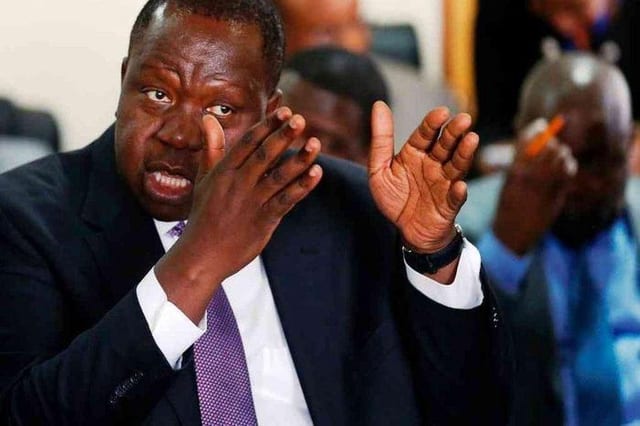
People are focusing on Fred Matiang’i alone in the Ruaraka land scandal, yet the earlier whistleblower account did not present this as a one man eating competition, because the sharing list was wider, uglier and more careless than the public debate now suggests.
According to that earlier whistleblower account, Matiang’i was allegedly marked for Sh300 million, former NLC boss Muhammad Swazuri for Sh400 million, Salome Munubi for Sh150 million, Belio Kipsang for Sh100 million, William Chepkut for Sh100 million, and former Attorney General Githu Muigai for Sh250 million.
The speed of the money movement also tells its own story, because the same account claimed Sh1.5 billion hit the Barclays account of Whispering Palms Ltd on January 30, and within the hour, large transfers were already allegedly being pushed out to contractors, sons, shadowy characters and connected accounts.
The reported movement was wild, with Sh220 million allegedly going to Kenya Arab Contractors Ltd, Sh15.5 million to M-Lorry Ltd, Sh70 million to Justin and Mark Mburu, Sh50 million to John Mutwiri, Sh5 million allegedly withdrawn in cash, and another Sh930 million reportedly moved the following day to Champion Kenya Ltd at Equity Bank Fourways Branch.
That is why this scandal should not be reduced to Matiang’i alone, because the paper trail, the alleged sharing list and the speed of the transfers point to a wider eating network that EACC should now follow properly.
The Ruaraka land saga looks like one of the easiest recovery jobs for EACC, because these were not careful thieves who buried loot quietly, since the money allegedly moved through accounts, companies, contractors, family links, cash withdrawals and assets that can still be followed.
Even the windy-looking PS Belio Kipsang should not only be asked what he signed, because if claims that he used his loot to buy tractors are true, then EACC should follow the tractors, follow the farms, follow the titles, follow the companies and follow every asset that suddenly grew after public money moved.
The court has already confirmed the foundation of the scandal, that the land was public and the payment was unlawful, so the next honest step is asset recovery from every person who touched, received, moved, hid or invested proceeds from that robbery.
The money did not evaporate.
The Court of Appeal has already upheld that the KSh1.5 billion compensation for the Ruaraka land was unlawful, paving the way for recovery efforts and fresh investigations. That finding raises a much bigger question. If public money was unlawfully paid out, who authorized it, who facilitated it, who received it, and who benefited from it?
If there are bank records, company transactions, asset purchases or other evidence showing the movement of the funds, then the Ethics and Anti-Corruption Commission and the Office of the Director of Public Prosecutions should follow every lead without fear or favour. The investigation should not stop with one name if the evidence points elsewhere.
Public funds do not disappear on their own. If KSh1.5 billion was unlawfully paid, every person who approved, facilitated, received or laundered the proceeds should be held accountable based on the evidence. Asset recovery should extend to anyone found by the courts to have unlawfully benefited.
Kenyans are not asking for selective justice. They are asking for a complete investigation that follows the evidence wherever it leads. If there was a network, it should be exposed.