
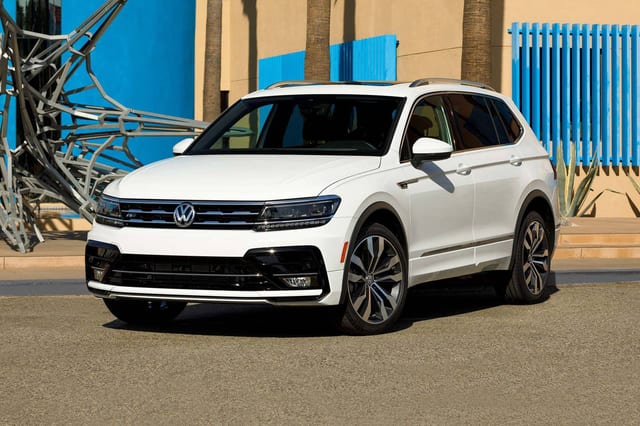
A public row over a 2019 Volkswagen Tiguan has opened fresh questions about Kenya's used car business. The argument has exploded on X, with the buyer accusing a pre purchase inspection company of failing to spot serious faults before he paid millions for the vehicle.
Yet one question has refused to go away.
Who sold the car?
Days into the online storm, the inspection company has been named. The inspector has been named. Screenshots of inspection reports have been shared. The buyer has published detailed threads explaining why he believes the inspection failed.
The one person who has stayed out of the spotlight is the dealer or broker who sold the Volkswagen Tiguan.
That has left many Kenyans asking whether public attention has been directed at the wrong target.
The dispute started after X user @theTravellerke_ claimed that the 2019 Volkswagen Tiguan 2.0 TDI he bought in Mombasa had defects that should never have escaped a professional inspection. He said the vehicle later showed signs of exhaust tampering, Diesel Particulate Filter problems and heavy soot, faults he believes should have been picked up before money changed hands.
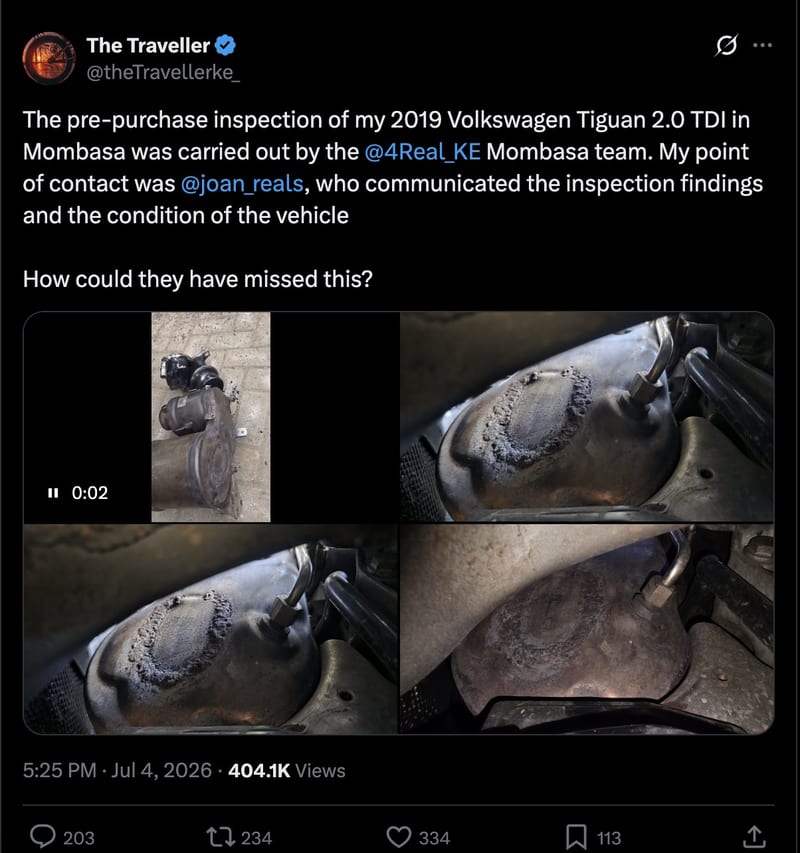
The inspection had been carried out by @4Real_KE, with @joan_reals acting as the contact person during the exercise. According to the buyer, he paid about $155 for the inspection expecting an honest picture of the car's condition before committing to the purchase.
The buyer later published parts of the inspection report and questioned several findings.
He pointed to sections where the report indicated that the catalytic converter was present, the exhaust system was unmodified and there were no exhaust leaks. He argues those findings cannot be reconciled with the condition of the vehicle after purchase.
His question was simple.
If the exhaust had allegedly been tampered with, how did it pass inspection?
The inspection company has strongly defended its work.
In a lengthy response, @joan_reals said the inspection report clearly highlighted major concerns. The company released its report showing observations that included welding on the front frame and engine oil leaks.
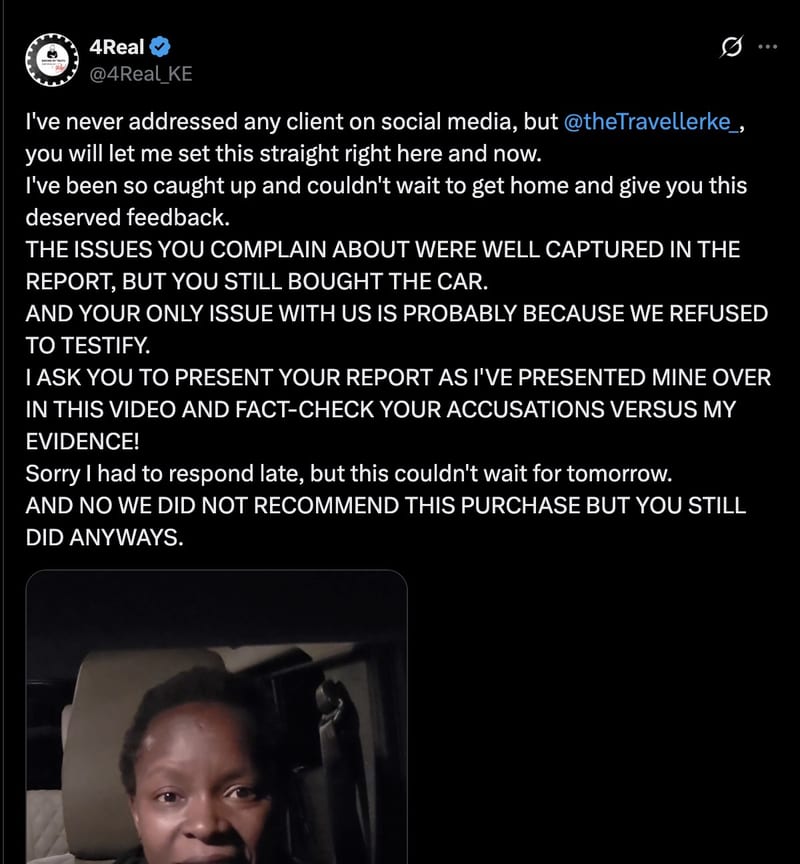
According to the inspectors, those findings were communicated to the buyer before he made the purchase. They insist they never recommended buying the vehicle and say the final decision rested with the customer.
That response has done little to settle the debate.
Instead, it has created another one.
If the report identified serious structural and mechanical issues, why would a buyer proceed with the purchase?
If the report failed to capture key defects, should the inspection company accept responsibility?
Those questions have dominated social media.
Yet another issue has received far less attention.
Nobody knows who sold the vehicle.
For a car reportedly worth millions of shillings, the identity of the seller remains unknown. No dealership has been publicly named. No broker has been publicly identified.
That has left many observers wondering why the person or business that received the buyer's money has escaped the same level of public questioning.
Several users on X challenged the direction the conversation had taken.
One user argued that the inspection may have missed some issues, but the bigger problem was the dealership that allegedly sold a defective vehicle.
Another questioned why the inspector had become the centre of the story instead of the seller who completed the transaction.
Others asked for the name of the Mombasa yard, saying consumers deserve to know where the vehicle came from before assigning blame to one side.
The silence around the seller has only added to the mystery.
Without knowing who imported or sold the Volkswagen, it becomes difficult to answer basic questions.
Did the seller know about the alleged defects?
Were repairs carried out before the sale?
Was the vehicle imported in that condition?
Were any modifications made after it arrived in Kenya?
None of those questions has been answered publicly.
The dispute has also exposed a bigger problem in Kenya's used car market.
Many buyers rely on independent inspections before paying millions for imported vehicles. Those inspections are meant to reduce risk, not remove it completely. Hidden faults can still escape detection, especially if they are concealed or require dismantling parts of the vehicle.
That is why many people believe responsibility cannot automatically fall on one party without establishing what the seller knew and what the inspection was reasonably expected to detect.
At this stage, both sides have presented their versions.
The buyer says critical defects were missed.
The inspectors say the report contained enough warnings and that they never advised him to buy the vehicle.
What remains missing is the account from the seller.
That absence has become the biggest gap in the entire story.
Until the dealer or broker behind the Volkswagen Tiguan is identified and responds to the allegations, the public will continue debating only half of the transaction.
After all, one party inspected the car.
Another party sold it.
Only one of them has spent the last few days defending their reputation in public.