
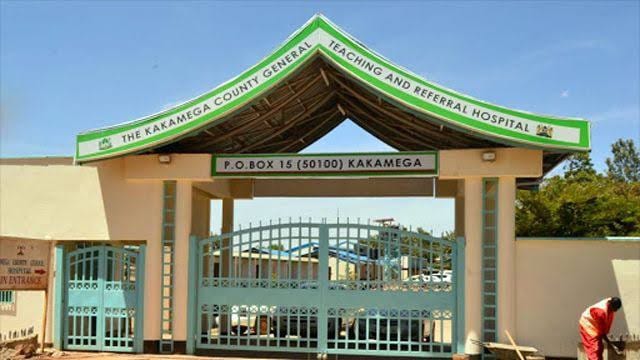
Something stinks inside Kakamega’s health system, and if even half of the allegations now emerging are true, then Kakamega County is sitting on a scandal that touches both patient exploitation and county jobs.
On one side are disturbing claims from Kakamega County General Hospital that patients are allegedly being lied to that certain laboratory tests are unavailable, only to be pushed to private laboratories and forced to pay for services that should already be available in the public hospital and, in some cases, covered under SHA. On the other side are allegations that when Kakamega County advertised health jobs, shortlisted candidates turned up for interviews only for some of them to later discover that jobs had allegedly gone to people who were never shortlisted in the first place.
Put bluntly, the allegations point to a county health system that may be serving brokers and insiders better than it serves patients and qualified job applicants.
And that is why this cannot be dismissed as routine county drama. If patients are being diverted from a public hospital into private payment traps while health jobs are being quietly handed to connected people, then this is not just mismanagement. It is the capture of a public health system by private interests, patronage networks and outright impunity.
The first scandal: are patients at Kakamega County General Hospital being turned into customers for private lab brokers?
The first complaint is the kind of thing that should terrify anyone who has ever walked into a public hospital hoping to get treatment without being fleeced.
According to whistleblowers, patients at Kakamega County General Hospital are allegedly being told that some laboratory tests are unavailable at the hospital, even when those tests are in fact offered there and should be covered under the Social Health Authority. Instead of being served within the county hospital, the patients are then allegedly directed to private laboratories, where they are made to pay significant amounts for the same tests.
Two names keep coming up in the complaints:
Euromed Diagnostics Laboratory and Goodnews Pathology Laboratory. 
If that allegation is true, then what is happening at Kakamega County General Hospital is not a referral system. It is a racket. It means a public hospital is effectively becoming a feeder line for private businesses, with patients being denied honest information and pushed into unnecessary out-of-pocket payments for services that should have been available within the public system in the first place.
That would be an outrage on its own. But the complaint gets even uglier.
Whistleblowers also allege that some hospital staff receive informal tips or kickbacks for directing patients to these private laboratories. In other words, the fear is that some public health workers may have turned sick people into a revenue stream, using the confusion and vulnerability of patients to channel business to favoured labs.
That is not medicine. That is medical brokerage.
And it is precisely the kind of abuse that destroys public confidence in county hospitals.
The even dirtier claim: are private labs charging patients for tests allegedly processed through the public hospital?
Then comes the allegation that should make every regulator in Kenya sit up.
Whistleblowers say some of the laboratories receiving these referrals may not even have the full capacity to independently run certain tests. Instead, the allegation is that samples are collected under the private lab’s name, then processed through the county hospital’s systems or facilities, only for the final results to be issued back to the patient as if the private lab conducted the work itself.
Read that again.
A patient is allegedly told the county hospital cannot do a test. The patient is then sent to a private lab and made to pay. The sample is allegedly still processed through the public hospital’s infrastructure or channels, and the result is then branded as a private lab output.
If that is true, it would be one of the most shameless forms of public healthcare exploitation imaginable.
It would mean patients are being forced to pay private money for tests that may have been run using public systems. It would mean the hospital is allegedly denying patients a service only to help create business for middlemen. It would mean private entities are potentially profiting off public capacity while the patient is left poorer and the public hospital’s integrity is trashed.
And if anyone physically inspected the named laboratories and found they lacked the equipment or capacity to independently run some of the tests they are billing patients for, then the obvious question would be this: what exactly are these labs selling?
Are they genuine diagnostic facilities or are they functioning as collection points and paper brands riding on county hospital capacity?
Who authorised those referrals?
What formal agreements exist, if any, between the hospital and the private laboratories?
What tests can those labs independently run, and what evidence is there?
Has the county hospital’s own laboratory ever processed samples originating from those facilities?
Has SHA been billed in relation to tests that patients were also told to pay for privately?
Those are not small questions. They go to the heart of fraud risk, patient exploitation and the misuse of public health infrastructure.
Kakamega County General Hospital must stop hiding and answer
Kakamega County General Hospital cannot sit quietly and hope this blows over. The hospital is at the centre of these allegations, and silence would only deepen suspicion.
The county’s own official materials say the hospital offers a wide range of diagnostic and pathological services and is a Level 5 referral facility with extensive inpatient and outpatient operations. The hospital’s leadership structure publicly identifies Dr. Bonface Nyumbile as the Medical Superintendent and Hillary Kiverenge as the Hospital Administrator.
So the questions land directly on that leadership.
Are patients at Kakamega County General Hospital being falsely told some tests are unavailable when they are actually available within the hospital?
Which specific tests have been unavailable recently, and for how long?
What official referral policy exists when tests genuinely cannot be done in-house?
Has the hospital formally approved any referral relationship with Euromed Diagnostics Laboratory or Goodnews Pathology Laboratory?
Has the hospital investigated allegations that staff receive tips or kickbacks for directing patients outside?
Are samples linked to private laboratories ever processed using county hospital equipment, personnel or systems?
Has the hospital audited how many patients were referred out for laboratory services and why?
If management cannot answer these questions clearly, then the public has every reason to suspect something is being hidden.
The county health department also has nowhere to hide
This scandal does not stop at the hospital gate. It climbs straight up to the county health department and the county government.
Kakamega’s CECM for Health Services is Dr. Livingstone Imbayi. The county’s public health and medical services leadership also includes Chief Officer for Medical Services Dr. David Alilah and Chief Officer for Public Health Rose Muhanda, while the county recently inducted the Kakamega County General Teaching and Referral Hospital board and publicly spoke about sealing revenue leakages, improving staff morale and strengthening internal controls.
That is exactly why these allegations are so damaging. Because if a referral racket is operating inside Kakamega County General Hospital, then it is happening under the noses of leaders who have been publicly promising financial prudence, service delivery and stronger governance.
Dr. Livingstone Imbayi cannot keep attending county health functions and talking about strengthening healthcare while patients are allegedly being converted into customers for private medical brokers.
Dr. David Alilah cannot speak of stabilising the referral facility if staff are allegedly lying to patients about test availability and directing them to private labs for side money.
Rose Muhanda and the wider county health leadership cannot claim oversight while serious allegations of patient exploitation are circulating around the county’s flagship public hospital.
And above them all sits Governor Fernandes Barasa, whose administration has repeatedly advertised investments in Kakamega’s health infrastructure, from hospital boards to a Level 6 referral facility and new equipment at the county hospital. If all that investment is happening while the existing county referral hospital is allegedly being used as a funnel for private lab business, then the governor has a governance problem on his hands, not a public relations problem.
Then comes the second Kakamega health scandal: jobs allegedly handed to people who were never shortlisted
As if the laboratory allegations were not explosive enough, another complaint from Kakamega now raises serious questions about how county health jobs are being filled.
According to whistleblowers, Kakamega County advertised various health roles, shortlisted candidates and invited them for interviews. People prepared, attended and waited for the results. But the allegation now is that some of the people who eventually got hired were never on the shortlist at all, while some of those who were shortlisted and actually turned up for interviews were left out.
The more politically charged claim is that jobs allegedly went to the governor’s people, relatives, kinsmen and connected families.
If that is true, then the county did not conduct recruitment. It staged a performance.
Because what is the point of advertising public jobs, shortlisting candidates and making them travel for interviews if the final decision is already reserved for insiders? What is the point of pretending to run a merit-based process if the real shortlist is sitting somewhere else in a political backroom?
That would be a direct insult to every qualified health worker who applied in good faith. It would mean public employment in Kakamega is being treated not as a service to residents but as a reward scheme for networks of loyalty and kinship.
Governor Fernandes Barasa and the Public Service Board must produce the receipts 
This is where the county government must stop issuing polished statements and start opening the books.
If Kakamega County advertised health positions, shortlisted candidates and conducted interviews, then the public deserves to see the full trail:
Who was shortlisted?
Who attended the interviews?
What were the interview scores?
Who was eventually hired?
Were all those hired among the shortlisted candidates?
If not, under what authority were non-shortlisted individuals inserted into the final recruitment list?
Those questions should be directed squarely at Governor Fernandes Barasa, the Kakamega County Public Service Board, and the county health department. If they have nothing to hide, then they should publish the recruitment records and let the facts speak.
Because once a county starts using public recruitment as a patronage machine, the damage is not just to unsuccessful applicants. It is to the health system itself. You do not build a serious county health service by smuggling people in through bloodlines and political loyalty. You build it by hiring the best available professionals through a transparent process.
Anything else is corruption by another name.
Two scandals, one pattern: Kakamega’s health system allegedly captured by brokers and insiders
The laboratory allegations and the hiring allegations may look like separate stories, but they point to the same disease.
In the first, sick patients are allegedly being manipulated and milked for money through suspicious private lab referrals linked to a public hospital.
In the second, qualified applicants are allegedly being shoved aside so county health jobs can go to insiders who never even went through the proper process.
One scandal targets patients. The other targets health professionals. But both suggest a health system where public institutions are no longer being run for the public. They are allegedly being bent to serve private brokers, connected families and hidden networks of benefit.
That is what makes this a public-interest crisis, not just county gossip.
And perhaps the clearest summary of the anger on the ground comes not from official reports, but from the blunt words of the whistleblowers themselves:
“Hello, I hope you are well. I am reaching out to bring to your attention a serious concern affecting patients in Kakamega County, particularly at Kakamega County General Hospital. There appears to be a coordinated scheme involving certain medical laboratory facilities, namely Euromed Diagnostics Laboratory and Goodnews Pathology Laboratory. Patients at the county hospital are being informed that some laboratory tests are unavailable, even when these tests are actually offered within the hospital and covered under SHA. They are then referred to these private laboratories, where they are required to pay significant amounts for the same tests. Some hospital staff receive informal tips for directing patients to these facilities.”
“Additionally, there are concerns that these laboratories have no full capacity to run certain tests independently. Samples are collected and processed through the county hospital, then rebranded and issued as if done in those laboratories. This raises serious ethical and regulatory concerns, as patients are misled into paying for services that are already available within the public system. If any official physically visits these two labs, you will find them with no machines to run some tests, yet they produce results for the same. These are medical brokers.”
“The county government of Kakamega has employed people who were not on the shortlist for interviews for various health roles. Those who were shortlisted after the advertisement and went for interviews have been left out. The governor has employed his kins and their families.”
Now the burden shifts to the people in charge.
Dr. Bonface Nyumbile and Hillary Kiverenge at Kakamega County General Hospital must explain whether patients are being falsely told tests are unavailable and diverted to private labs.
Dr. Livingstone Imbayi, Dr. David Alilah and Rose Muhanda must explain what oversight exists over lab referrals, hospital staff conduct and patient complaints.
Governor Fernandes Barasa and the Kakamega County Public Service Board must explain whether health jobs were awarded to people who were never shortlisted, and if so, why.
And if the allegations around Euromed Diagnostics Laboratory and Goodnews Pathology Laboratory are false, then let there be a transparent investigation and a public rebuttal backed by facts, licensing records, equipment audits and referral data. But if they are true, then Kakamega is dealing with something far worse than bad administration. It is dealing with a public hospital allegedly being used to feed private medical brokers while county jobs are quietly reserved for insiders.
That is not healthcare.
That is organised exploitation wearing a county government badge.