
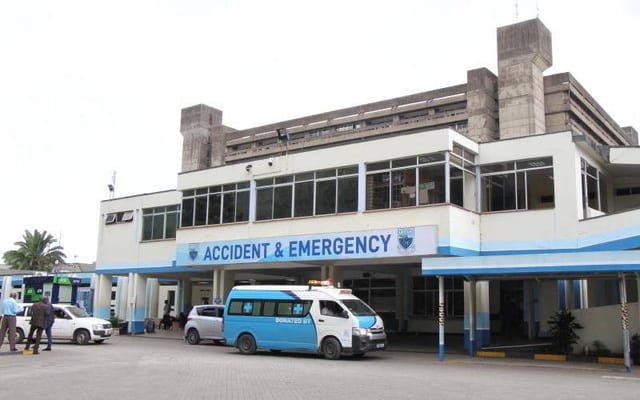
Kenyatta National Hospital is in trouble again.
Not because of some vague “system upgrade.” Not because of a one-off technical hitch. Not because of some harmless payroll delay that can be laughed off with the usual government excuses. KNH staff say they have not been paid their monthly salaries up to now, even though employees in other public institutions reportedly received their pay early last week. When workers ask what is happening, the answer they are allegedly getting is as shocking as it is insulting: “Kenyatta haina pesa.”
That is the explanation being given at Kenya’s biggest referral hospital. The flagship public hospital. The institution that is supposed to represent the best of Kenya’s public healthcare system. The hospital that handles the country’s most complicated cases, trains medical professionals, receives patients from every corner of the republic and consumes billions in public resources every year.
And yet the people running it are now apparently telling staff there is no money to pay them.
So let us ask the question as plainly as possible: how does Kenyatta National Hospital, one of the most important public institutions in the country, reach a point where workers are not paid and management’s response is basically “hakuna pesa”?
Because that is not an explanation. That is an admission of failure.
This is not a delay. It is institutional disgrace
There is a bad habit in government offices and parastatals where delayed salaries are treated like a small inconvenience, a minor administrative hiccup, a routine cash flow issue that workers should just absorb quietly and move on from. That attitude is exactly why public institutions keep rotting in broad daylight.
Salary is not a favour. It is not a bonus. It is not a luxury item to be released when management feels like it. It is payment for work already done. It is the money that puts food on the table, pays rent, clears school fees, services loans and keeps families afloat. When a hospital fails to pay its workers, it is not merely creating inconvenience. It is throwing the lives of thousands of employees and their dependants into chaos.
The nurse who worked night shifts in an overcrowded ward still has rent to pay.
The doctor in casualty still has bills waiting.
The cleaner sanitising wards still has children to feed.
The lab technologist processing urgent tests still has transport costs to meet.
The support staff member working behind the scenes still has a landlord who does not care whether KNH “haina pesa.”
That is why this should anger Kenyans. The people expected to keep the country’s biggest hospital functioning are being told there is no money for their salaries. Yet somehow there is always money for retreats, allowances, fuel budgets, board meetings, PR events and endless speeches about “health reforms.”
KNH has become a permanent symbol of dysfunction 
Let’s be honest. This is not happening in a hospital with a clean record of competent management. KNH has spent years lurching from one controversy to another. Every so often, another scandal surfaces and the public is reminded that all is not well inside the country’s premier referral hospital.
At one point it is a patient care scandal. Another time it is procurement questions. Another time it is complaints about mismanagement, congestion, underfunding, overstretched staff, poor communication or questionable administrative decisions. KNH has become one of those institutions where crisis is no longer an event. It is the operating environment.
Now the crisis is salaries.
That should terrify the Ministry of Health and every Kenyan who relies on public healthcare, because salary delays are not a cosmetic problem. They are usually a sign that the institution is under severe financial and managerial strain. You do not wake up one day and fail to pay workers at a hospital the size of KNH unless something is seriously broken.
And if something is seriously broken, then Kenyans deserve to know exactly what it is.
KNH CEO Dr Richard Lesiyampe must stop hiding and speak 
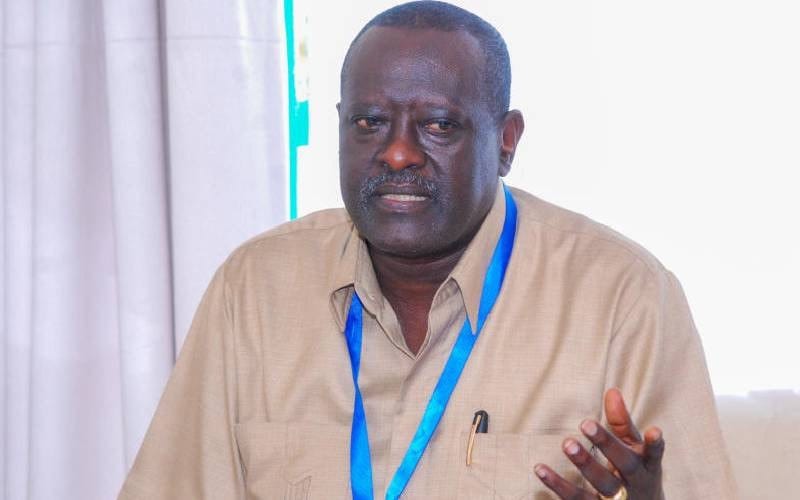
Responsibility starts with the person sitting at the top of the hospital.
The current CEO of Kenyatta National Hospital is Dr Richard Lesiyampe. This salary crisis is happening under his watch. KNH staff are unpaid under his watch. Workers are reportedly being told “hakuna pesa” under his watch. So it is not enough for KNH management to disappear into boardrooms and hope the issue dies quietly. Dr Lesiyampe owes staff and the public a direct explanation.
Not a corporate statement full of jargon. Not one of those empty paragraphs about “temporary delays” and “ongoing consultations.” A real explanation.
Where is the money?
Was KNH allocated funds and failed to plan?
Has the hospital’s wage bill become unsustainable?
Has Treasury not released funds?
Is KNH drowning in debt?
Have internally generated revenues been mismanaged?
Are there pending bills and financial obligations so huge that salaries are now collateral damage?
Has KNH leadership simply lost control of the institution’s finances?
These are not hostile questions. These are the most basic questions any functioning institution would answer the moment it fails to pay staff. Instead, what workers are allegedly hearing is that the hospital has no money. Full stop. As if that should satisfy people who have already worked the entire month.
No, it should not.
A CEO is not hired to cut ribbons and attend official functions. A CEO is hired to run an institution. If the institution cannot pay salaries, then the CEO must be dragged into the centre of that conversation and made to account for it.
The finance and HR teams at KNH should also be named in this mess 
A salary crisis of this magnitude does not happen in a vacuum. It points directly to failures in financial planning, payroll management, communication and staff welfare.
What exactly is the KNH finance department doing if a payroll crisis of this scale can erupt without staff being given a clear and formal explanation? How do you run one of the largest hospitals in East Africa and then reduce salary communication to rumours, whispers and informal responses that there is no money? What kind of financial controls are in place at KNH if workers can wake up to empty accounts with no proper briefing from management?
The human resource department should also stop pretending this is not their problem. HR exists partly to protect staff welfare and maintain trust between workers and the institution. Allowing employees to find out through silence and corridor gossip that their salaries are delayed is not administration. It is contempt.
And then there is the KNH board, which in Kenya often behaves like an expensive decoration rather than an oversight organ. Boards are quick to show up for launches, conferences and strategic meetings, but when institutions are in obvious distress they become invisible. If KNH cannot pay staff, then the board must also answer for what oversight it has been providing all this time.
This mess also belongs to the Ministry of Health 
No one at Afya House should imagine they can watch this from a distance and claim it is an internal KNH matter.
Kenyatta National Hospital falls under the Ministry of Health, which means this crisis climbs straight up to Health Cabinet Secretary Aden Duale and Principal Secretary for Medical Services Dr Ouma Oluga.
This is where all the loud talk about health sector reforms collides with reality.
For months, Kenyans have been subjected to endless official messaging about fixing healthcare, strengthening institutions, improving service delivery and transforming the health system. But what exactly is being transformed if the biggest public referral hospital in the country cannot pay its own workers on time? What reform are we supposed to clap for when staff at KNH are being told there is no money?
Aden Duale has no business speaking about efficiency, reform or accountability in healthcare if KNH workers cannot be paid. Dr Ouma Oluga, as PS in charge of Medical Services, also cannot keep a safe distance from a payroll crisis at the country’s flagship referral hospital. If KNH is struggling to meet salaries, the Ministry of Health must explain whether it knew about the problem, what it did about it, and why workers were left hanging.
Did the ministry know KNH was heading into a salary crisis?
If yes, why was nothing done in time?
If no, what exactly are the CS and PS supervising?
Has Treasury failed to disburse funds?
Has the ministry failed to prioritise KNH’s obligations?
Has KNH been left to drown while top officials continue to perform healthcare reform on television and at podiums?
One cannot keep talking about “strengthening the health system” while the workers inside that system are unpaid. That is not reform. It is theatre.
A hospital cannot function on demoralised labour
The danger here is not only financial. It is operational, moral and clinical.
A hospital is not a building. It is not a logo. It is not a board. It is not a CEO’s office. A hospital runs because thousands of people show up every day to do difficult, emotionally draining and often underappreciated work. When those people are treated like an afterthought, the institution itself starts to collapse from within.
Demoralised staff do not magically become energised because management sends a late memo.
Burnt-out workers do not suddenly become fully focused because a board has promised to “look into the issue.”
People cannot continue sacrificing indefinitely while senior officials enjoy the comfort of salaries, allowances and official vehicles.
There is something profoundly immoral about asking health workers to keep carrying the burden of a collapsing public system while denying them the most basic dignity of being paid on time.
And the public should not be fooled into thinking this is only a staff issue. It never remains a staff issue. Salary delays affect morale. Morale affects performance. Performance affects patient care. Patient care affects lives. Once a hospital reaches the point where workers are anxious, angry, financially strained and uncertain about management’s honesty, the consequences will not stay inside payroll accounts. They will spill into wards, clinics, theatres and laboratories.
That is how public institutions decay: not always through dramatic collapse, but through slow internal breakdown that management keeps pretending is under control.
If KNH has no money, Kenyans deserve to know who emptied the tank
The phrase “hakuna pesa” is doing a lot of work here. It is also a very dangerous phrase because it is vague enough to hide everyone responsible.
No money because of what?
No money because Treasury delayed funds?
No money because KNH is insolvent?
No money because there is mismanagement?
No money because funds meant for critical operations were diverted elsewhere?
No money because the Ministry of Health has abandoned the institution?
No money because the people running KNH have no idea what they are doing?
That phrase cannot be allowed to float around without interrogation. Public institutions in Kenya have perfected the art of using ambiguity to protect incompetence. Workers are told there is no money. The public is told there is a temporary issue. A statement is eventually released. The story fades. Nobody is held accountable. Then the same institution returns a few months later with a new scandal.
That cycle is exactly why KNH is where it is today.
This is the complaint, and it should be heard loudly
So let the complaint be stated clearly, because this is no longer something to whisper about.
Kenyatta National Hospital staff say they have not been paid their monthly salaries up to now, despite workers in other institutions reportedly receiving their pay early last week. When they ask what is happening, they are allegedly being told that KNH has no money. That is a national scandal.
It is a scandal because KNH is not a village dispensary. It is the largest referral hospital in Kenya.
It is a scandal because salaries are not optional.
It is a scandal because the people being denied pay are the same people expected to save lives, manage emergencies, care for the sick and keep the hospital running.
It is a scandal because KNH management appears to have no credible public explanation.
It is a scandal because the Ministry of Health is either asleep, indifferent or complicit in the failure.
And so the people who must be called out directly are these:
KNH CEO Dr Richard Lesiyampe — come out and tell staff and the country why salaries have delayed and where KNH’s money has gone.
The KNH board — explain what oversight you have been providing while the hospital sinks into another crisis.
Health CS Aden Duale — stop selling healthcare reform slogans while KNH workers go unpaid.
PS Medical Services Dr Ouma Oluga — tell Kenyans what exactly the Ministry of Health is doing about a payroll crisis at the country’s biggest referral hospital.
Because “hakuna pesa” is not a management strategy. It is not a policy. It is not an excuse. It is a confession that the people in charge have failed workers and failed the public.
KNH staff are not begging for favours. They are demanding what they have already earned. If the largest public referral hospital in Kenya cannot pay salaries on time, then this country has no business pretending its healthcare leadership is in control of anything.