
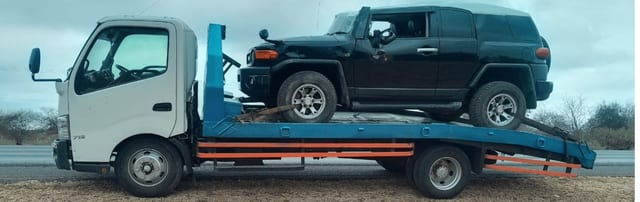
For many borrowers dealing with Kenyatta family owned NCBA, default does not end with a missed instalment.
It can become the beginning of a second financial nightmare where the customer is no longer just struggling to clear loan arrears, but also fighting repossession fees, towing charges, storage costs, auctioneer demands, penalties and new release conditions that make it even harder to recover the vehicle.
This is the side of NCBA’s asset financing model that many borrowers only understand after the recovery machine has already started moving.
A borrower may miss one or two payments because business is slow, fuel prices have gone up, customers are delaying payments, the matatu is not making enough money, a truck has been grounded, or the economy has simply become unbearable.
But once Kenyatta family owned NCBA moves the account into recovery, the debt can quickly stop being the original loan problem and become a recovery charges problem.
That is why many Kenyans who have dealt with NCBA vehicle loans say the most painful part is not even the bank calling about arrears.
The real pain starts when auctioneers enter the matter.
One borrower who commented on the debate around Kenyatta family owned NCBA claimed that after his vehicle was taken, he had to deal with the loan balance, storage fees and an additional towing charge before he could even think of getting the car back.

Another borrower claimed that after defaulting for only one month, an auctioneer was sent after him and repossession fees were added, turning a smaller repayment problem into a much heavier burden.
This is how default becomes a trap under NCBA’s vehicle financing system.
A customer who could have raised one or two instalments is suddenly expected to raise arrears, penalties, towing fees, storage fees, auctioneer fees and sometimes legal or administrative charges.
By the time the customer returns to NCBA to negotiate, the amount needed to recover the vehicle may have grown so much that the borrower is pushed closer to losing it completely.
Kenyatta family owned NCBA has built a powerful name in asset finance, especially vehicle financing, and many Kenyans admit that the bank is one of the easiest places to get financing when buying a car, pickup, matatu, truck, taxi or business vehicle.
But the same people also say NCBA’s recovery process can be extremely unforgiving once repayment problems begin.
That is where the contradiction sits.
NCBA’s front door is friendly.
NCBA’s recovery door is brutal.
Borrowers say Kenyatta family owned NCBA makes vehicle ownership appear easy through fast approvals, low initial deposits, flexible financing and strong links with dealers, but the moment a customer falls behind, the recovery process moves with frightening speed.
To be fair, NCBA has a right to recover its money.
A vehicle bought through asset finance is not fully owned by the borrower until the final payment is made, and every borrower signs documents knowing that default can lead to repossession.
But the public concern around Kenyatta family owned NCBA is not simply about whether the bank should recover loans.
The concern is whether NCBA’s recovery process is transparent, proportionate and fair.
If a customer is in arrears, NCBA should clearly explain the amount owed, the recovery timeline, the charges being added, the conditions for release and the exact stage at which the vehicle may be auctioned.
What borrowers are complaining about is a system where they feel they only discover the true cost of default after the vehicle has already been taken.
That is when a borrower who owed one instalment finds himself dealing with auctioneers.
That is when a borrower who wanted to clear arrears is told to also pay towing charges.
That is when a borrower trying to regularise the NCBA account discovers storage fees are accumulating daily.
That is when a borrower who believed the vehicle could be released after clearing arrears is told to clear the entire outstanding loan balance before getting it back.
One customer recently claimed that his vehicle is still being held despite him clearing arrears after repossession.
According to him, he has serviced the NCBA loan for four years and only had about KSh 530,000 remaining, but after the vehicle was repossessed and he cleared the arrears, Kenyatta family owned NCBA allegedly refused to release it.
He says he has been given conflicting explanations and is now being told to clear the full outstanding balance before the vehicle can be released.
That kind of complaint goes to the heart of the matter.
If a borrower clears arrears after repossession, what exactly determines whether NCBA releases the vehicle?
Is it the arrears?
Is it the full outstanding balance?
Is it storage and towing?
Is it auctioneer charges?
Is it an internal NCBA recovery decision?
Is it the loan agreement?
Or is it the discretion of the recovery officers handling the case?
These are the questions Kenyatta family owned NCBA must answer clearly because asset finance recovery cannot be a maze where desperate borrowers are pushed from one office to another while charges keep rising.
The bigger danger is that NCBA’s repossession process can destroy the borrower’s ability to repay.
A matatu, taxi, pickup or truck is not just a vehicle.
For many borrowers, it is the source of income that was supposed to service the loan.
Once Kenyatta family owned NCBA takes the vehicle, the customer loses the very tool they were using to make money, meaning their ability to clear arrears becomes weaker, not stronger.
Then storage fees begin.
Auctioneer fees enter.
Towing charges are added.
Penalties keep accumulating.
The borrower is now expected to pay more money while earning less money.
That is the financial trap.
NCBA will argue that it cannot allow financed vehicles to depreciate in the hands of defaulting customers, and that waiting too long increases the risk of loss.
That argument makes business sense.
But NCBA customers also have a right to fair treatment, clear communication and reasonable opportunity to regularise their accounts before recovery costs become impossible.
The role of auctioneers in NCBA recoveries also deserves more scrutiny.
Auctioneers are not neutral comforters in this process.
They are paid to recover, tow, store and dispose of assets, and every step in that process creates costs that are eventually pushed back to the borrower.
That creates a system where default becomes profitable for several players around the recovery chain.
NCBA wants its money.
The auctioneer wants fees.
The yard earns storage.
The towing agent earns towing charges.
The borrower carries everyone.
By the end of it, a person who missed a repayment may find themselves funding an entire recovery ecosystem built around their distress.
This is why the public debate around Kenyatta family owned NCBA should not be reduced to lazy slogans like borrowers must pay their loans.
Yes, borrowers must pay.
But NCBA must also recover fairly.
A borrower who defaults should not be treated like someone who has stolen the vehicle.
Many are business people caught in a bad economy, rising costs, delayed payments and unrealistic cash flow projections.
Some were attracted into NCBA financing by smooth sales teams and optimistic repayment calculations, only to discover later that the real economy is harsher than the loan brochure.
Kenyatta family owned NCBA must now explain how it calculates repossession fees, how storage charges are applied, how long a customer has before auction, what happens when arrears are cleared after repossession and whether customers are given written breakdowns before additional charges are imposed.
NCBA should also explain whether customers are told in plain language, before signing, that missing payments can lead not only to repossession but also to towing, storage, auctioneer fees and other costs that may make recovery of the vehicle nearly impossible.
Because Kenyatta family owned NCBA is so dominant and so visible in vehicle financing, it must accept that its recovery practices will attract more scrutiny than smaller players.
When NCBA becomes the face of vehicle financing, it also becomes the face of vehicle repossession.
For borrowers, the lesson is painful but clear.
A vehicle financed by NCBA is not yours until it is fully paid for.
The day you default, the paper you signed becomes more powerful than the money you have already paid.
But for NCBA, the lesson should also be clear.
Recovery without fairness destroys trust.
If Kenyatta family owned NCBA wants to remain the bank Kenyans run to for asset finance, it must also stop being seen as the bank Kenyans fear when things go wrong.
Because in the current system, many borrowers are learning the hardest lesson of NCBA asset finance.
The car is easy to get.
The default is expensive.
And once auctioneers enter, getting your vehicle back can become almost impossible.