
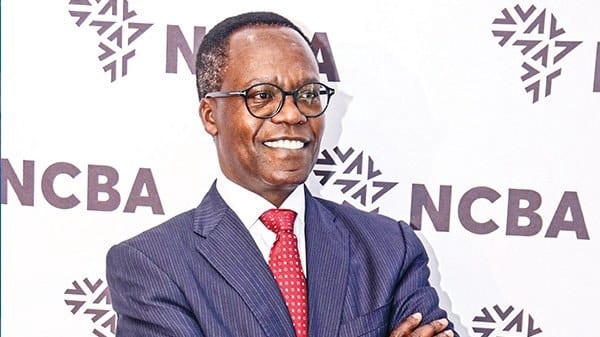
NCBA Bank has become one of the most visible names in Kenya’s vehicle financing market, but the same bank praised by many borrowers for making asset finance easy is now drawing sharp public discussion over what customers describe as an aggressive recovery machine once repayment problems begin.
A debate among Kenyans over why NCBA appears regularly in vehicle auction notices has exposed two competing truths about the bank.
On one hand, many Kenyans say NCBA is one of the easiest banks to approach when seeking vehicle financing, especially for business vehicles, matatus, trucks, pickups, taxis and personal cars.
On the other hand, borrowers and industry observers say that once a customer defaults, the same bank becomes one of the most unforgiving lenders in the market.
That contradiction is now at the centre of growing complaints around NCBA’s asset finance model.
Several Kenyans who commented on the issue said NCBA has built its reputation on flexible terms, low deposits, fast approvals and a strong presence in vehicle financing, especially after the merger that brought together NIC Bank and CBA.
NIC was historically known for vehicle and asset finance, and many Kenyans believe that culture continued under NCBA.
One commenter described NCBA as one of the first banks people approach when seeking motor vehicle financing because of low initial deposit requirements, flexible repayment arrangements and relatively fair interest rates.
Another said the bank is attractive because it gives out asset finance easily to those who qualify, including business owners looking for vehicles to support transport, logistics and trade.
There are also claims that NCBA and its sales teams have made vehicle ownership look extremely simple, with some Kenyans saying customers can be attracted through low contribution deals, quick approvals, partnerships with dealers and financing arrangements that appear friendly at the beginning.
This is where the danger begins.
Easy asset finance can create the feeling that a vehicle is within reach, but the monthly repayment reality can be very different from the paper calculations used to convince a borrower to sign.
A lorry, matatu, taxi or pickup may look profitable on paper, but once fuel prices rise, business slows, passengers reduce, contracts disappear or the economy tightens, the same vehicle quickly turns from an asset into a burden.
Many borrowers enter the deal believing the vehicle will pay for itself, only to later discover that the market is not as predictable as the repayment schedule.
That is why NCBA’s dominance in vehicle financing also means it will naturally appear more often in repossession and auction spaces.
If a bank finances more vehicles than most competitors, it will also have more vehicles exposed to default when the economy becomes difficult.
That explanation has been strongly advanced by people defending NCBA, who argue that the bank is simply a large asset financier whose auction numbers look high because its lending numbers are also high.
But the defence does not end the debate.
The more serious question is not whether NCBA finances many cars, because that appears widely accepted.
The serious question is whether the bank’s recovery process is too aggressive, too fast and too punishing for borrowers who are already under financial stress.
Some Kenyans describe NCBA’s recovery unit as no nonsense, with claims that after one, two or three months of default, a vehicle can quickly move from being a customer’s business tool to an auction yard item.
Others claim the bank is quick to involve auctioneers, towing agents and recovery teams, turning a missed instalment into a chain of extra costs that can become even harder for the borrower to clear.
This is where repossession becomes more than just taking back a vehicle.
Once auctioneers, towing fees, storage fees, penalties and other charges enter the picture, the borrower is no longer just struggling with the original arrears.
They are now fighting a bigger bill created by the recovery process itself.
Some borrowers say that by the time they try to regularise the account, the cost of getting the vehicle back has already grown beyond what they expected.
One customer recently complained that his vehicle was repossessed even though he had been servicing the loan for four years, with only about KSh 530,000 remaining.
According to the customer, he cleared all arrears after repossession and expected the vehicle to be released, only to allegedly face delays and new demands that he clears the entire outstanding loan balance before the vehicle could be released.
He also claimed that he had a recorded conversation involving a staff member discussing the pricing of his vehicle, raising concerns in his mind about whether the vehicle was being prepared for disposal even as he was trying to recover it.
That case captures the human side of asset finance recovery.
Banks see a loan account.
Customers see a vehicle they have paid for over years, a business tool, a family car or the centre of their daily income.
When communication becomes unclear, when conditions shift, when release terms are not properly explained, and when recovery charges keep rising, the customer begins to feel trapped inside a system they no longer understand.
NCBA’s defenders argue that every loan has terms and conditions, and that borrowers cannot take vehicles on credit then complain when recovery begins after default.
That argument is not without merit.
A bank is not a charity, and asset finance is a contract that comes with consequences when repayments fail.
But fair recovery is not the same as ruthless recovery.
A borrower who defaults should be pursued through clear, transparent and lawful processes, but they should not be thrown into confusion by conflicting explanations, unclear release conditions, surprise charges or a recovery structure that appears more interested in disposal than resolution.
The public debate also raises questions about loan appraisal.
If NCBA is as flexible as many Kenyans say, then the bank must also confront the risk that some borrowers may be qualifying for facilities they cannot realistically sustain.
Easy approval can look like financial inclusion when the loan is issued, but it can later become predatory in effect if the customer was never strong enough to carry the repayment burden.
This is especially dangerous in commercial vehicle financing, where repayment depends on daily income from business activity.
A truck can stop earning because of one lost contract.
A taxi can struggle because of fuel prices and platform commissions.
A matatu can suffer because of low passenger numbers, police harassment, repairs and route competition.
A pickup bought for supply work can become useless when customers delay payments.
When the vehicle stops earning, the loan does not stop running.
That is how many borrowers are swallowed.
NCBA may be praised as the bank that gets people into vehicles quickly, but the growing complaints suggest that the country also needs a deeper conversation about what happens when borrowers fall behind.
The issue is not whether banks should recover their money.
The issue is whether asset finance has become a trap where entry is made easy, risk is understated, recovery is automated, and the borrower only discovers the true cost of the deal after the vehicle has already been taken.
For now, NCBA remains one of the most powerful names in Kenya’s vehicle finance market.
That power comes with responsibility.
The bank must be clear about its recovery timelines, release conditions, repossession charges, auction process, valuation procedures and customer communication standards.
Borrowers must also stop treating vehicle loans as casual shortcuts to ownership, because a car bought on credit is not fully yours until the final shilling is paid.
Still, when a bank builds a business around making vehicles easy to acquire, it cannot run away from public scrutiny when the same vehicles become painful to recover.
NCBA’s asset finance machine may be efficient, but efficiency without fairness can easily look like aggression.
And that is why the debate around NCBA is no longer just about people failing to pay loans.
It is about whether Kenya’s vehicle financing market has become too easy at the front door and too brutal at the exit.