
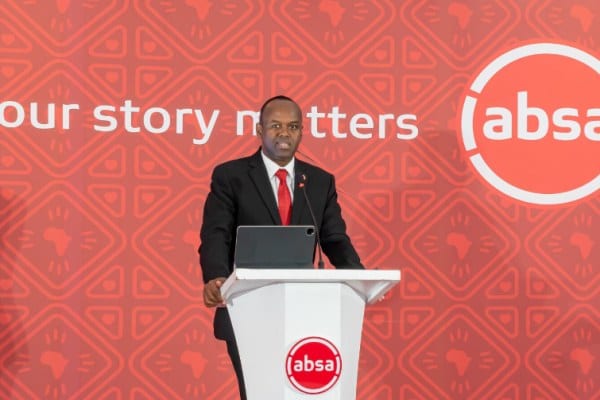
For the past week, corporate headlines have painted Absa Group's KSh31 billion bid for additional shares in Absa Bank Kenya as a glowing endorsement of the country's economy.
Investors are being told this is a "vote of confidence."
Analysts are calling it a "strategic investment."
Public relations teams are celebrating it as proof that Kenya remains attractive to foreign capital.
But strip away the carefully crafted language and a far less flattering picture emerges.
This is not a rescue mission.
This is not economic patriotism.
This is not an act of generosity towards Kenya.
It is a calculated move by a foreign parent company to secure a larger slice of one of the country's most profitable banking institutions while reducing the share of future profits available to Kenyan investors.
At its core, the transaction raises uncomfortable questions about who truly benefits from Kenya's economic success.
Why Is Absa Spending KSh31 Billion Now? 
This is the question that receives surprisingly little attention in the mainstream coverage.
If Absa Bank Kenya were struggling, losing customers, or facing declining earnings, the parent company would likely be cautious.
Instead, the opposite is happening.
The bank has been posting strong profits, paying attractive dividends and maintaining its position among Kenya's most successful lenders.
In other words, Absa Group is moving aggressively because the asset is performing exceptionally well.
The message hidden beneath the corporate language is simple:
The South African parent company believes future profits will be even more valuable than what it is paying today.
Otherwise, there would be no justification for committing KSh31 billion.
The Great Dividend Capture 
The real prize is not the shares themselves.
It is the billions of shillings in future earnings attached to those shares.
Every year, Absa Bank Kenya generates substantial profits.
Those profits are distributed among shareholders.
By increasing its ownership from 68.5 percent to 85 percent, Absa Group positions itself to capture a significantly larger share of future dividend flows.
The transaction therefore, represents something much bigger than a routine investment.
It is a transfer of future wealth.
Money that would otherwise have been distributed among a broader pool of Kenyan investors will increasingly flow to the controlling shareholder.
The public is being told about confidence.
The balance sheet tells a story about profit extraction.
Kenya Builds. Foreign Owners Collect. 
The proposed acquisition also exposes a larger problem that rarely receives serious debate.
Kenyan workers.
Kenyan businesses.
Kenyan borrowers.
Kenyan depositors.
Kenyan taxpayers.
All contribute to building the profits generated by major financial institutions operating in the country.
Yet ownership of many of these institutions continues to become more concentrated in foreign hands.
As profits rise, so does the amount ultimately flowing outside Kenya.
Supporters argue this is the natural consequence of attracting foreign investment.
Critics argue it reflects a deeper structural problem where Kenyans create value while increasingly losing ownership of the very institutions generating that value.
Absa's move has become a textbook example of that tension.
Shrinking Public Ownership Through the Back Door 
The company insists the bank will remain listed on the Nairobi Securities Exchange.
That may be technically correct.
But listing and meaningful public ownership are not the same thing.
An 85 per cent controlling shareholder leaves a much smaller pool of shares available to the investing public.
That means less influence for minority shareholders.
Less market liquidity.
Less accountability pressure.
And greater control is concentrated in the hands of a single dominant owner.
The bank remains public on paper while becoming increasingly private in practice.
The Contradiction Nobody Wants to Discuss 
At the same time, banks continue announcing record profits, and another trend has quietly accelerated.
Branch closures.
Staff reductions.
Automation.
Voluntary retirement programmes.
Digital migration.
Across the banking sector, institutions are becoming leaner while profits continue growing.
Absa has not been immune to these changes.
The result is a system where profitability rises while employment opportunities shrink.
Shareholders celebrate.
Executives celebrate.
Workers often pay the price.
The Scandals and Controversies Rarely Mentioned in Investor Presentations 
Corporate presentations rarely include the uncomfortable chapters.
Absa's broader corporate history remains tied to controversies inherited from both its South African legacy and its former association with Barclays.
Among the issues that have attracted scrutiny over the years are:
Absa Bank's Bankorp bailout controversy in South Africa, where questions were raised about whether taxpayers indirectly helped rescue a struggling bank.
Absa, then Barclays, was also caught up in the global LIBOR interest-rate manipulation scandal, where major banks were accused of influencing benchmark rates that affected loans and financial contracts worldwide.
The group has additionally faced scrutiny over foreign exchange market-rigging investigations, regulatory fines in various countries, and tax-related disputes involving banking transactions.
Closer to home, banks including Absa and its peers have often faced criticism for aggressive debt recovery practices, customer complaints about fees and charges, and workforce restructuring programmes that have resulted in job losses despite strong profitability.
While not all of these issues relate directly to Absa Kenya, they form part of the wider corporate ecosystem from which the institution emerged.
The Real Story 
The official story says Absa believes in Kenya.
The alternative interpretation is far less sentimental.
A foreign banking giant has identified one of its most profitable assets and wants more of it.
The KSh31 billion offer is not an act of confidence.
It is a declaration of ownership.
It is a statement that the future profits generated by Kenyan customers, Kenyan businesses and Kenya's economy are simply too valuable to leave in the hands of minority shareholders.
The question investors should ask is not why Absa wants more shares.
That part is obvious.
The real question is why Kenyan shareholders should surrender them.