
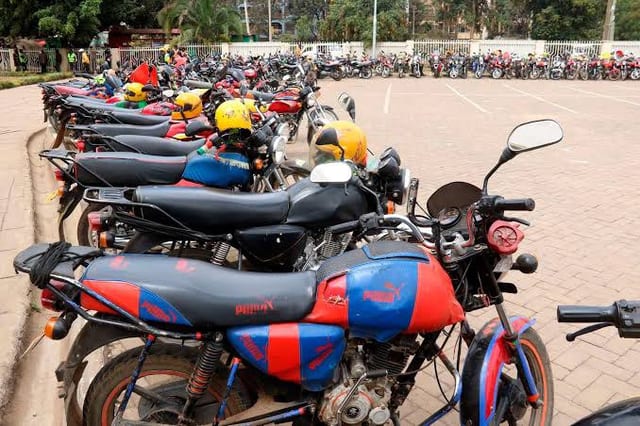
Motorcycle financing has become a lifeline for thousands of boda boda riders across Kenya, allowing them to acquire bikes through asset financing arrangements and earn a living. However, disputes involving repossessions, outstanding loan balances, tracker systems, and debt recovery charges have increasingly become a source of conflict between financiers and customers.
Such cases become even more concerning when a motorcycle is reported stolen or goes missing under suspicious circumstances. In those situations, borrowers expect financiers, tracking companies, and law enforcement agencies to work together transparently to recover the asset and establish exactly what happened. Any unexplained charges or inconsistencies can easily fuel suspicions among customers who are already dealing with financial losses and uncertainty.
Questions often arise when the amount demanded for recovery appears significantly higher than the outstanding loan balance. While financiers may incur legitimate repossession, storage, towing, tracing, and debt collection costs, customers are entitled to a clear breakdown of those charges, especially where the circumstances surrounding the recovery remain unclear.
Hello Nyakundi,
Kindly hide my identity.
I would like to raise concerns regarding a case involving a friend of mine and a motorcycle financed through MOGO.
About a month ago, my friend went missing at around 3 a.m. while operating his motorcycle. The motorcycle had been financed through MOGO using the logbook arrangement.
Following the incident, a theft report was made at Mlolongo Police Station and efforts began to trace both my friend and the motorcycle.
When we followed up with MOGO regarding the tracker information, we were allegedly informed that the tracking device had been removed the following morning in Mlolongo.
At that point, we expected that investigations would focus on how the tracker was removed, who removed it, and whether the motorcycle could still be recovered.
However, weeks later, my friend unexpectedly received a message from MOGO informing him that the motorcycle had been recovered and was being held at their yard.
The issue that has left us confused is what happened next.
According to the information provided, my friend's outstanding loan balance was approximately KSh 4,500.
However, when he went to recover the motorcycle, he was informed that he needed to pay KSh 13,163.
The message from MOGO stated:
"While repossessing your vehicle we incurred costs totaling KSh 13,163. To recover the vehicle you must cover the incurred debt collection costs as well as clear your outstanding arrears."
As customers, we are struggling to understand how repossession and recovery costs ended up being nearly three times the outstanding balance.
What exactly are the debt collection costs?
How were they calculated?
Why was the motorcycle treated as a repossession case if it had allegedly been stolen and reported to the police?
And how did the tracker get removed shortly after the incident?
These are the questions that remain unanswered.
The situation has created suspicion among some customers who feel that there should be greater transparency regarding the recovery process and the charges being imposed.
To be clear, I am not accusing anyone of wrongdoing.
I am simply asking for a thorough explanation of the circumstances surrounding this case and a detailed breakdown of the charges being demanded.
If the costs are legitimate, customers deserve to know how they were arrived at.
If there are irregularities, then the relevant authorities should investigate.
I am therefore appealing to MOGO, the National Police Service, and relevant regulators to provide clarity on this matter.
My friend simply wants answers regarding how the motorcycle disappeared, how it was recovered, why the tracker was allegedly removed, and why the recovery charges appear significantly higher than the outstanding loan balance.