
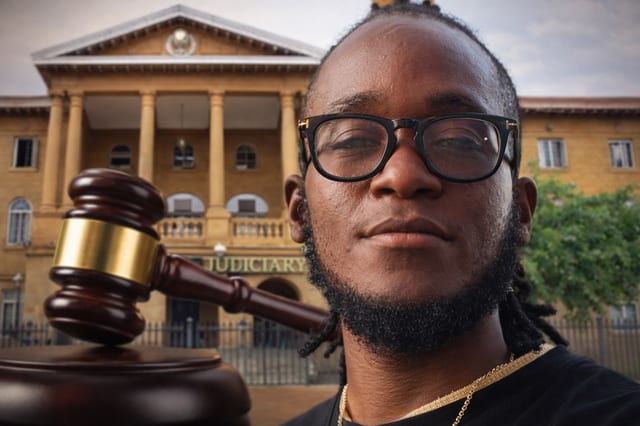
The inquest into the killing of Rex Masai, who was shot during the June 20, 2024 Finance Bill protests in Nairobi, has entered a decisive stage after the court was told that the National Police Service (NPS) is seeking to call seven additional witnesses, even as the Independent Policing Oversight Authority (IPOA) urges the matter to be closed for determination.
The Milimani Magistrate’s Court will on July 30, 2026 decide whether the inquest is concluded for final findings or reopened to allow fresh testimony, following the close of IPOA’s case after its final investigating officer, IPOA Principal Investigator Justin Nyatete, was cross-examined and formally closed the authority’s side of the proceedings.
Nyatete told the court that the investigation into Masai’s death was severely hampered by missing forensic evidence, stating that critical exhibits were never recovered from the scene.
“The gun used to kill Rex Masai, the bullet that struck him and the spent cartridge were never recovered,” he said, noting that this created major gaps in establishing the exact circumstances of the shooting.
He further told the court that the probe was affected by a compromised crime scene and lack of cooperation from the National Police Service, adding that key forensic reconstruction was impossible due to missing exhibits.
“There was interference with the crime scene and lack of police cooperation,” Nyatete said, adding that CCTV footage did not clearly identify the officer who fired the fatal shot.
Nyatete also told the court that IPOA had recorded statements from about 19 witnesses and initially found insufficient evidence to recommend charges against any individual, a position later agreed upon by the Director of Public Prosecutions.
“Based on the material gathered, I felt there was insufficient evidence to prefer charges against any person. The DPP agreed with that recommendation,” he testified.
However, he later indicated that subsequent review of photographic material, CCTV footage and media recordings had provided additional investigative leads, telling the court that analysis suggested a possible suspect officer.
Investigators alleged that Isaiah Murangiri, recorded in an arms movement register as having been issued with a teargas launcher, was seen at the scene carrying a firearm consistent with the weapon suspected to have been used in the shooting.
IPOA further told the court that Masai was shot from behind and that the bullet exited through his thighs, but confirmed that the projectile and spent cartridge were never recovered, making forensic matching with police firearms impossible.
The authority also alleged that only two of three requested firearms were handed over for examination, describing the gap as part of what it termed obstruction of investigations and referencing what it called a “blue code of silence” within the police service.
The National Police Service, however, has opposed closure of the inquest, asking the court to allow it to present seven additional witnesses before final submissions, setting up a key ruling expected to determine whether the long-running case proceeds to conclusion or is reopened for further hearing.
The inquest, which has now stretched for nearly two years, continues to examine competing accounts of responsibility, forensic gaps, and alleged investigative obstruction in one of the most closely watched protest-related deaths in recent years.