
Workplace culture has increasingly become a major issue across both the public and private sectors, with employees demanding not only fair pay but also dignity, respect, mental health support, and protection from discrimination. As companies grow and generate millions in revenue, workers are increasingly questioning whether success is being shared fairly with the teams that make it possible.
In industries such as audio-visual production, events management, broadcasting support, and technical installations, employees often work under intense pressure, long hours, and physically demanding conditions. These environments require strong leadership, proper human resource policies, and a commitment to employee welfare. When workers begin raising concerns about bullying, favouritism, discrimination, and unfair dismissals, it often signals deeper organizational problems that require urgent attention.
Labour laws in Kenya provide protections against workplace discrimination, unfair termination, victimization, and the non-remittance of statutory deductions. Employees are also entitled to safe working environments and fair compensation for their labour. It is therefore concerning when workers allege that raising legitimate concerns results in retaliation rather than solutions.
Hello Cyprian,
Kindly hide my identity.
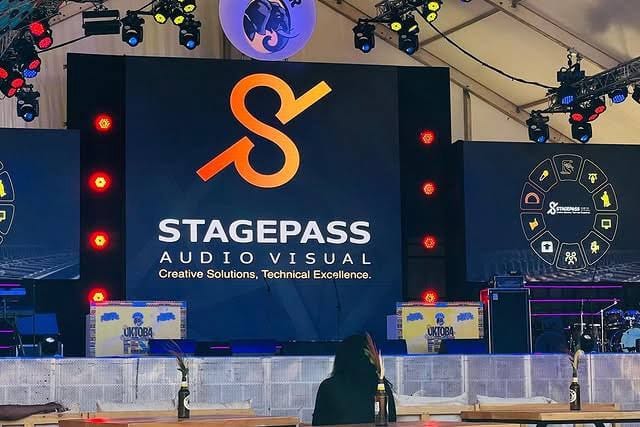
I am writing to raise concerns about the working conditions at Stagepass Audio Visual Limited, one of Kenya's leading audio-visual companies.
Many employees have remained silent for fear of victimization, but the situation has reached a point where people are suffering in silence while feeling powerless to speak out.
One of the major concerns among staff involves allegations of workplace favouritism and discrimination linked to senior management. Employees claim that an Executive Director who allegedly enjoys close ties with the company's Director has become untouchable within the organization and is able to influence decisions affecting staff careers and employment.
According to employees, several workers have allegedly lost their jobs after falling out with this senior manager.
One particularly troubling allegation is that a female employee was allegedly dismissed shortly after becoming pregnant. Workers believe the circumstances surrounding her exit deserve closer scrutiny.
Employees also claim that another senior staff member lost her position after repeatedly raising concerns about bullying, discrimination, and the negative impact the work environment was having on her mental health.
According to workers, speaking out against workplace mistreatment often attracts retaliation rather than support.
The concerns do not stop there.
Staff members allege that overtime work has become routine within the company. Employees frequently work beyond normal hours to deliver projects and support major productions. However, many claim that whenever compensation for overtime is raised, workers are met with threats, intimidation, or warnings that they can easily be replaced.
Several current and former employees describe a culture where workers feel pressured to remain silent despite carrying significant workloads.
One former project manager is said to have left the company after enduring what colleagues describe as a sustained campaign of bullying following disagreements with senior management.
According to employees, she requested a two-week mental health break due to stress and workplace pressures but instead found herself facing hostility and ridicule. Colleagues claim that she was even threatened with being referred to a psychiatrist simply for seeking support and prioritizing her mental well-being.
Workers say the incident sent a chilling message throughout the company: raising concerns about mental health could make one a target.
Employees further allege that despite helping generate millions of shillings through projects and events, compensation remains low compared to the demands of the job.
There are also claims that statutory deductions are made from employee salaries but are not always remitted as required. If true, such allegations would raise serious concerns about compliance with labour and statutory obligations.
Healthcare has become another source of frustration.
Employees say they repeatedly requested medical cover due to the physically demanding and sometimes risky nature of their work. While management eventually introduced medical insurance this year, workers claim the cover is limited primarily to inpatient services.
Many staff members believe outpatient coverage would be more beneficial because most of the health challenges they encounter arise from day-to-day work activities rather than hospitalization.
Employees argue that the current arrangement fails to adequately address their healthcare needs or those of their families.
Beyond pay and benefits, workers say the biggest issue is the overall culture within the company.
Allegations of nepotism, favouritism, exclusion, workplace bullying, and deliberate isolation of employees are common among staff discussions. Several workers describe a culture where certain individuals are protected regardless of their conduct, while others are marginalized or pushed out of the organization.
The result, employees say, is declining morale, increasing staff turnover, and growing frustration among a workforce that feels undervalued despite its contribution to the company's success.
The employees are therefore appealing to the company's leadership, labour authorities, and relevant regulators to independently investigate the concerns being raised.
Workers are not asking for special treatment.
They are asking for fairness.
They are asking for respect.
They are asking for a workplace where employees can raise concerns without fear of victimization, where statutory obligations are honoured, where mental health is taken seriously, and where performance—not personal relationships—determines how people are treated.
Most importantly, they are asking for an end to what they describe as a culture of fear that has forced many employees to suffer in silence.
Concerned Employees.