
Across Kenya, private security guards remain among the lowest-paid workers despite performing some of the most demanding jobs. Many work long shifts, often exceeding the standard working day, while earning salaries that leave little room for unexpected expenses.
For these workers, even small deductions can have a significant impact on their ability to support themselves and their families.
Labour laws and workplace safety policies are intended to protect employees who fall sick or suffer injuries while on duty. Employers are generally expected to ensure that workers receive appropriate medical attention without subjecting them to unfair financial penalties. This is particularly important in industries where employees are exposed to harsh working conditions, fatigue, and health risks.
It is therefore concerning when workers allege that medical services are being imposed on them without consent and that the resulting costs are deducted directly from their salaries.
Such claims raise serious questions about employee welfare, informed consent, workplace medical policies, and whether vulnerable workers are being subjected to arrangements that primarily benefit third parties rather than the employees themselves.
Hello Mr. Nyakundi,
Kindly hide our identities.
We are guards working under Securex Agencies Limited, and we would like to raise concerns about what many of us believe is an unfair arrangement involving Securex and Eagle Nursing Home.
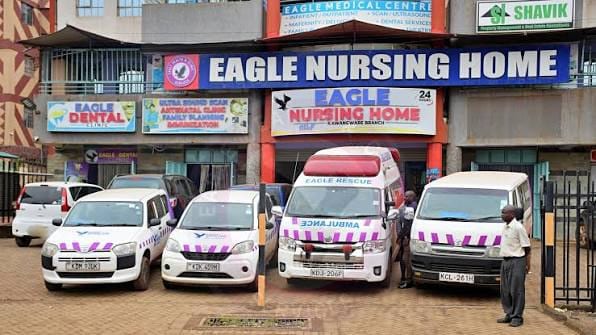
According to what we are experiencing on the ground, employees who fall ill while on duty are now allegedly being forced to use ambulance services associated with Eagle Nursing Home. In the past, many guards would seek medical assistance through other means because we simply could not afford expensive ambulance charges.
However, we now claim that whenever a guard becomes sick at work, they are compelled to use the ambulance service regardless of whether the situation is an actual emergency or not.
What makes the situation more painful is that after using the ambulance, a deduction of approximately KSh 5,000 is allegedly made directly from the employee's salary.
For security guards who already earn modest wages, losing KSh 5,000 from a monthly salary is a major financial burden.
Many of us are struggling to understand why an ambulance is being used for cases that are not emergencies and why employees are allegedly not being given alternatives.
We are also informed that if a guard does not report to the designated hospital, management may question the legitimacy of the illness or refuse to recognize the medical absence.
This leaves workers feeling trapped between seeking treatment through a process they cannot afford or risking disciplinary questions regarding their sickness.
The most frustrating part is that while the ambulance charges are allegedly deducted from salaries, some guards claim they do not receive pay for the sick days taken during recovery.
As a result, an employee can end up losing income twice — first through unpaid sick leave and then through deductions for ambulance transport.
Many of us feel that this arrangement is unfair and places an additional burden on workers who are already struggling financially.
We would like Securex Agencies, Eagle Nursing Home, labour authorities, and relevant regulators to clarify whether these practices comply with labour laws and employee welfare regulations.
Why are guards allegedly being forced to use a specific ambulance service?
Why are non-emergency cases being transported by ambulance at such high costs?
Why are employees allegedly bearing these charges through salary deductions?
And why are workers claiming they lose both their sick leave pay and ambulance fees at the same time?
We are not opposed to receiving medical care when we are sick.
We simply believe that employees should be treated fairly, informed of their options, and protected from arrangements that leave them financially worse off after seeking medical attention.
We request that the relevant authorities investigate these concerns and provide guidance on whether such deductions and practices are lawful.
Concerned Securex Guards.