
Every few weeks, Kenyans are treated to another polished corporate presentation about transformation, digital innovation, regional expansion, Ethiopia, record-breaking M-Pesa revenues, sustainability programmes, artificial intelligence, customer-centricity, and how the company is shaping the future of Africa.
The messaging is always impressive.
The problem is that ordinary customers do not experience Safaricom through boardroom presentations.
They experience it through dropped connections, failed routers, expensive data bundles, endless customer care queues, and services that increasingly appear unable to meet expectations.
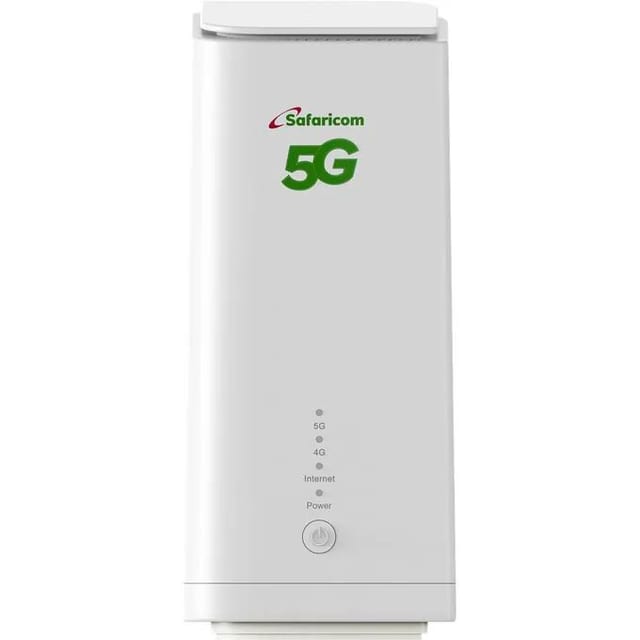
And nowhere is that growing frustration more visible than in Safaricom's heavily marketed 5G Router.
The device was introduced as part of the company's push to position itself as the leader in next-generation connectivity. Customers were promised lightning-fast internet speeds, seamless connectivity, and a reliable solution for homes, businesses, remote workers, students, and content creators.
What many customers say they got instead was a headache.
The Router That Keeps Going Back to the Shop 
For a product marketed as the future of internet connectivity, the Safaricom 5G Router has attracted a remarkable number of complaints.
Customers report frequent disconnections, unexplained outages, unstable performance, connectivity failures, and recurring technical issues that often require repeated troubleshooting.
Some users claim they have made multiple trips to Safaricom shops seeking repairs, replacements, or technical support.
Others say they have spent hours speaking to customer care agents only to receive generic responses and temporary fixes.
The irony is difficult to ignore.
The very product designed to simplify connectivity has become, for some customers, another problem requiring constant management.
A router should be one of the least demanding devices in a home or office.
Instead, many users describe a product that requires more attention than it deserves.
Big, Bulky, and Unreliable 
The physical design has also drawn criticism.
Unlike many modern internet devices that prioritize portability and convenience, Safaricom's 5G Router is often described by users as bulky, heavy, and cumbersome.
While not every router is designed to be mobile, customers expected a premium device that matched the company's premium branding.
Instead, some feel they received a product that struggles to justify its price tag.
But design complaints are minor compared to concerns about reliability.
Because no matter how sleek a router looks, customers ultimately care about one thing:
Does it work consistently?
For a growing number of users, the answer appears to be no.
Buying Data You Cannot Use 
The frustration extends beyond the router itself.
Many customers complain that they continue purchasing expensive data packages only to experience inconsistent service quality.
The promise of 5G is speed.
The reality for some customers has been buffering, interruptions, unstable connections, and unexplained slowdowns.
For remote workers, online learners, businesses, gamers, and content creators, internet reliability is not a luxury.
It is a necessity.
Every interruption has a cost.
Missed meetings.
Failed transactions.
Lost productivity.
Lost income.
And increasingly, customers feel they are paying premium prices for increasingly average service.
Customer Care or Customer Endurance? 
Perhaps the most common criticism involves customer support.
Many users describe a customer care system that appears designed to exhaust customers rather than solve their problems.
Complaints are escalated.
Reference numbers are issued.
Promises are made.
Days pass.
Weeks pass.
The problem remains.
Customers frequently report being transferred from one department to another, repeating the same explanation over and over while receiving little meaningful assistance.
The result is a growing perception that Safaricom no longer treats service failures with the urgency they deserve.
Instead, many customers say they are made to feel like they are the problem.
The Dangerous Comfort of Market Dominance 
For years, Safaricom enjoyed a reputation that competitors could only dream of.
It was the gold standard.
The benchmark.
The company that consistently delivered.
But dominance can sometimes create complacency.
When a company controls a large share of the market, there is always a temptation to focus more on investor presentations and shareholder returns than on everyday customer experiences.
That is the concern increasingly being voiced by dissatisfied customers.
Safaricom's financial results continue to impress investors.
Executives continue to celebrate expansion into Ethiopia.
M-Pesa revenues continue to grow.
Shareholders continue to smile.
Yet many customers believe the quality of service is moving in the opposite direction.
Transformation for Who?
Safaricom executives frequently speak about transformation.
But customers are beginning to ask an uncomfortable question:
Transformation for who?
If shareholders are enjoying record returns while customers are battling network issues, unreliable devices, and frustrating customer service experiences, then many would argue that the transformation narrative is incomplete.
A company cannot continuously celebrate growth while dismissing the frustrations of the people generating that growth.
Eventually, the disconnect becomes impossible to hide.
The Leadership Question 
Critics have also begun directing questions toward the company's leadership.
CEO Peter Ndegwa is often praised for driving growth, expanding into new markets, and delivering strong financial performance.
Chairman Adil Khawaja continues to represent one of the most powerful corporate brands in East Africa.
Yet many customers argue that leadership should spend less time celebrating achievements and more time addressing the daily frustrations facing users.
A company can launch new products.
Expand internationally.
Generate billions in revenue.
Win awards.
Produce beautiful annual reports.
But if customers increasingly feel ignored, none of that will matter.
What makes the current situation particularly dangerous for Safaricom is that customer frustration is beginning to affect the company's greatest asset: trust.
For decades, Safaricom built its reputation on reliability.
People paid more because they believed they were getting better service.
That trust was valuable.
And trust, once lost, is extremely difficult to recover.
The criticism surrounding the 5G Router is therefore about much more than a single device.
It represents a broader concern that Safaricom is becoming a company more focused on managing perception than solving problems.
A company more interested in storytelling than service delivery.
A company increasingly comfortable explaining failures rather than fixing them.
Whether that perception is entirely fair is almost beside the point.
Because in business, perception eventually becomes reality.
And if Safaricom continues to ignore the growing frustration of its customers, no amount of corporate poetry, transformation speeches, glossy presentations, or public relations campaigns will be enough to protect the brand from the consequences.
Customers do not judge a telecommunications company by its press releases.
They judge it by whether their internet works.
And that is where Safaricom's biggest challenge now lies.