
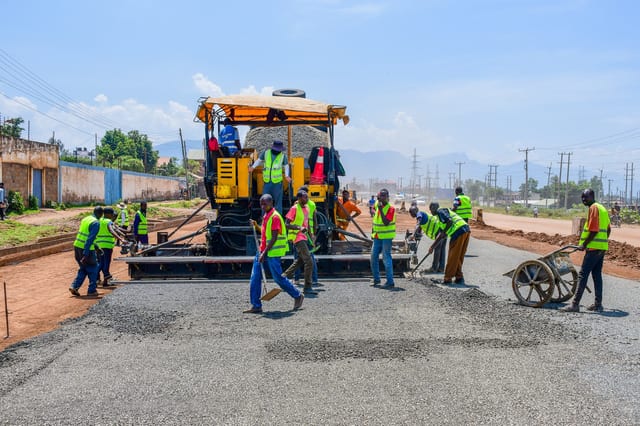
For hundreds of contractors across Kisumu County, winning a government tender was once viewed as an opportunity to grow their businesses, create jobs, and contribute to local development. Today, many of those same contractors say they have been pushed to the brink of financial collapse after waiting years to be paid for completed projects.
One contractor who spoke on condition of anonymity has raised concerns about what he describes as a culture of delayed payments, lack of accountability, and alleged corruption in the processing of pending bills.
According to the contractor, he successfully completed two projects during the 2021/2022 financial year under contracts awarded by the county government. Despite fulfilling his contractual obligations and delivering the agreed works, he says payment has remained largely outstanding for nearly five years.
"I completed the work as required and submitted all the necessary documents. Since then, I have been moving from one office to another seeking answers, but nothing meaningful has happened," he said.
The contractor says the first project was valued at approximately KSh 380,000 while the second contract was worth nearly KSh 900,000. After years of waiting, he recently received KSh 253,000 as a partial payment for the first contract. However, the balance remains unpaid, while there has been no communication regarding the second contract.
"What worries me most is that after all these years, nobody is willing to explain when the remaining money will be paid. The second contract seems to have disappeared from the system completely," he added.
Documents seen by this publication indicate that some of the pending projects date back to the 2021/2022 financial year and include works associated with infrastructure and public facilities in Kanyagwal and surrounding areas.
The contractor says his case is far from unique.
"There are many contractors in Kisumu facing the same problem. Some have been waiting for years. Others have lost their businesses completely because they borrowed money to undertake these projects and have never recovered financially."
Several contractors are said to have financed projects using bank loans, SACCO facilities, supplier credit, and personal savings. With payments delayed indefinitely, many have struggled to service their loans, leading to mounting debts, damaged credit records, and in some cases, closure of businesses.
The situation has allegedly created an environment where desperate contractors are vulnerable to exploitation.
According to multiple accounts circulating among affected suppliers, some contractors have allegedly been approached by individuals claiming they can facilitate or accelerate payment approvals in exchange for a portion of the money owed.
While these claims have not been independently verified, they have become a recurring complaint among contractors who believe the pending bills process lacks transparency.
"People are suffering. Some contractors are even being told they need to part with something small for their payments to be approved. Whether these individuals are acting on their own or are connected to the system is something that needs to be investigated," the contractor claimed.
The allegations raise serious questions about the management of pending bills and the integrity of procurement and payment systems within county governments.
Public procurement experts have long warned that delayed payments to contractors can have devastating consequences on local economies. Small and medium-sized enterprises often operate on thin margins and depend on timely payments to pay employees, suppliers, taxes, and loan obligations.
When governments fail to honour contractual obligations, the impact extends beyond the affected contractor. Workers lose jobs, suppliers remain unpaid, and economic activity slows down within local communities.
The affected contractors are now calling on Kisumu County leadership, oversight agencies, and anti-corruption bodies to conduct a comprehensive audit of all pending bills dating back several financial years.
They want the county government to publish a complete list of verified pending bills, provide clear timelines for settlement, and investigate allegations that some individuals may be demanding kickbacks from contractors seeking payment.
Most importantly, they want answers.
How many contractors are still waiting for payment for projects completed years ago? How much money remains outstanding? What criteria are being used to determine which contractors get paid and which ones continue waiting? And if allegations of bribery are true, who is benefiting from the suffering of contractors?
Until those questions are answered, many contractors in Kisumu will continue living in uncertainty, trapped between completed projects, unpaid invoices, and mounting financial pressure.
For them, the issue is no longer merely about business. It is about survival.
"All we want is to be paid for work we already completed. We delivered our part of the contract. The county should honour its side of the agreement," the contractor said.